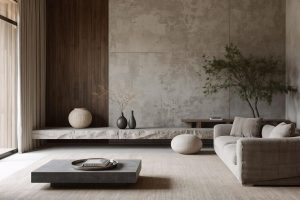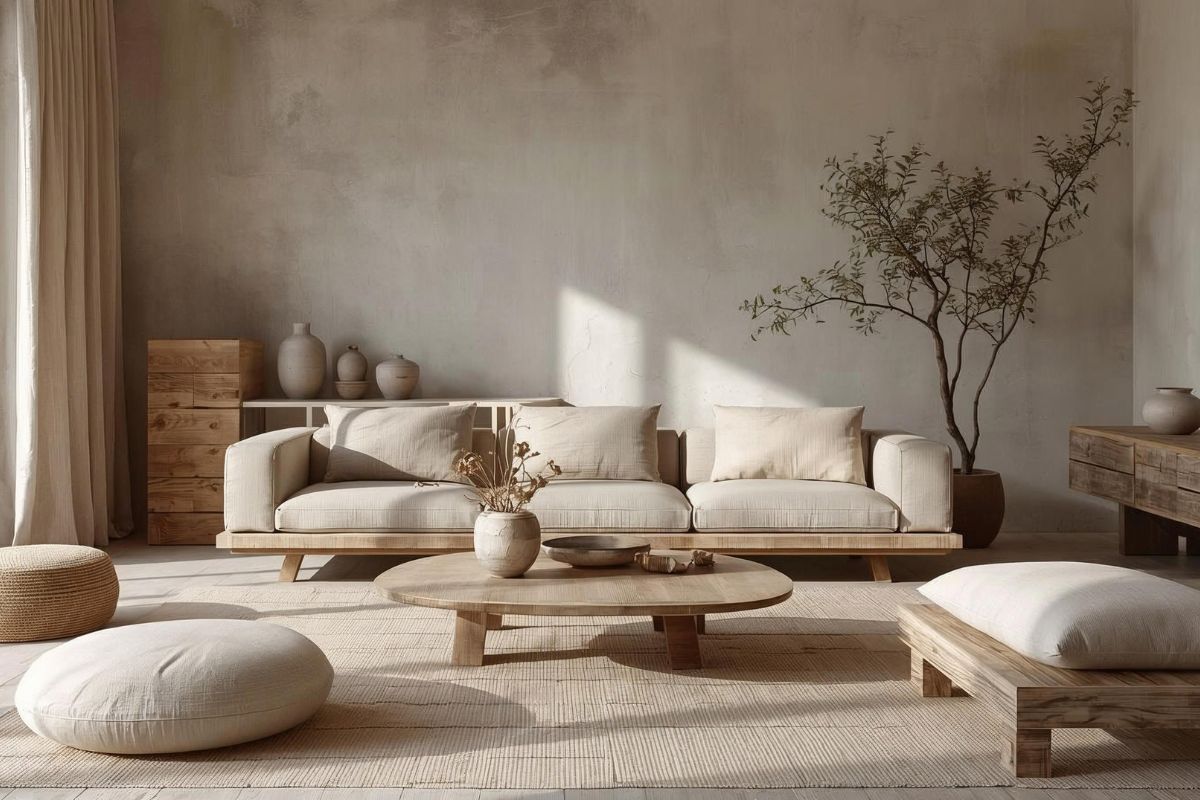
A wabi sabi style living room is a space that grows more beautiful as it is lived in. A low linen sofa softened by use, a solid wood coffee table with worn edges, limewashed walls that shift with the light, and a few handmade ceramics create a room that feels calm, honest, and welcoming.
Instead of chasing trends or perfect symmetry, a wabi sabi living room celebrates impermanence. It invites you to slow down, gather with others, and appreciate the quiet beauty of natural materials and well-loved objects.
Key Takeaways
- Wabi sabi living rooms embrace imperfection, age, and natural change.
- Low, relaxed seating with linen or cotton slipcovers creates comfort.
- Solid wood, stone, clay, and plaster give the room honest texture.
- Muted, earthy colors keep the atmosphere calm and grounded.
- Handmade, vintage, and repaired objects tell personal stories.
- Empty space and soft light are as important as furniture.
Understanding the Wabi Sabi Living Room
The living room is where daily life unfolds, which makes it the perfect place to apply wabi sabi thinking.
Celebrating Impermanence
Wabi sabi teaches that nothing lasts and nothing is complete. In the living room, that means welcoming the softening of a sofa, the patina on a wooden table, and the seasonal change of branches in a vase. These changes give the room life.
Comfort Without Excess
A wabi sabi living room should be comfortable enough to relax in, yet uncluttered enough to feel peaceful. Every piece earns its place by being useful, beautiful, or meaningful.
Seating and Furniture
Furniture in a wabi sabi living room is simple, low, and crafted from natural materials.
Low, Relaxed Sofas
A low-slung sofa with loose linen or cotton slipcovers is the ideal centerpiece. Choose soft, rounded shapes and natural tones such as oatmeal, sand, or stone. Washable slipcovers make it easy to live with and only look better as they relax.
Wooden Tables
A solid wood coffee table with a live edge, a reclaimed timber slab, or a simple low table inspired by Japanese design anchors the room. Stone or clay side tables add an earthy, sculptural touch.
Floor Seating and Accent Chairs
Floor cushions, a woven pouf, or a low wooden bench offer flexible seating. A vintage wooden chair or a simple armchair in leather or linen adds character and comfort.
Walls, Floors, and Colors
Textured surfaces and a quiet palette set the mood.
Textured Walls
Lime plaster, clay plaster, Venetian plaster with a matte finish, or limewash paint create subtle movement and depth. Exposed beams or reclaimed wood paneling add warmth.
Natural Floors
Oiled wide-plank wood, stone, or polished concrete floors provide an honest base. Layer with a jute, wool, or hand-knotted rug in natural, faded tones.
An Earthy Palette
Warm white, oatmeal, sand, clay, and stone gray form the base, with charcoal, umber, moss, or indigo adding depth in textiles and ceramics. The palette should feel like it came directly from nature.
Lighting and Atmosphere
Light in a wabi sabi living room should be soft and gentle.
Daylight and Shadow
Keep windows simple with sheer linen curtains or paper shades. Let natural light move across textured walls and enjoy the shadows it creates throughout the day.
Warm, Low Lighting
Paper floor lanterns, ceramic table lamps, and candles provide a warm evening glow. Use several low light sources rather than bright overhead lighting, and choose warm bulbs around 2700K.
Decor and Display
Wabi sabi decor is sparse and thoughtfully chosen.
Handmade Ceramics and Vessels
Hand-thrown vases, stoneware bowls, and textured vessels bring an earthy, artisanal feel. Group a few pieces with varied heights on a console or shelf, leaving space between them.
Nature Indoors
A sculptural branch, dried grasses, an olive tree in a clay pot, or stones collected on a walk bring the outdoors in. Change them with the seasons to honor impermanence.
Books, Art, and Textiles
Stacks of well-read books, abstract art in earthy tones, and woven wall hangings add personality. Layer linen cushions and a wool throw on the sofa for warmth.
Storage and Simplicity
To keep a wabi sabi living room calm, store everyday clutter out of sight. A low wooden sideboard, built-in cabinets with plain fronts, and woven baskets work well. Open shelves should be edited, holding only a few books, ceramics, and natural objects. Embrace empty space as part of the design rather than something to fill.
Wabi Sabi Ideas for Small Living Rooms
In a smaller space, choose a compact low sofa, a round wooden coffee table, and floor cushions for extra seating. Keep walls light and textured, use a single paper floor lamp, and limit decor to a few handmade pieces. A large mirror with a simple wooden frame can reflect light and make the room feel larger.
Planning the Wabi Sabi Living Room Layout
Layout is just as important as furniture in a wabi sabi living room, because open space is a central part of the design.
A Low, Relaxed Seating Group
Arrange a low sofa, floor cushions, and perhaps a simple wooden chair around a low coffee table to create an intimate conversation area. Leave about 14 to 18 inches between seating and the table, and keep main walkways around 30 to 36 inches wide so the room feels easy to move through.
Orient Toward Light and Nature
Where possible, orient the seating toward a window or a view of greenery rather than a television. This simple choice reflects the wabi sabi connection to nature and encourages quieter, more mindful use of the space.
Budget-Friendly Wabi Sabi Living Room Ideas
Linen or cotton slipcovers can soften an existing sofa and give it a relaxed, natural look. A secondhand wooden coffee table with a worn surface suits the style perfectly, and old wooden stools make useful side tables.
Limewash paint, a jute rug, and a paper floor lamp transform the atmosphere at modest cost. For decor, look outdoors: branches, stones, and dried grasses arranged in simple clay vessels are free and beautifully in keeping with the philosophy.
Common Mistakes to Avoid
A common mistake is filling shelves with too many handmade objects. Even beautiful ceramics lose their impact when crowded together. Display a few pieces and store the rest, rotating them occasionally. Another is choosing furniture that is too sleek or glossy, which feels out of place among natural, aged materials.
Finally, do not neglect comfort. Wabi sabi should feel calm and inviting, not austere. Soft cushions, warm throws, and gentle lighting are just as important as texture and simplicity.
Styling the Coffee Table and Sideboard
Surfaces are where a wabi sabi living room either feels serene or slips into clutter. A simple formula keeps them looking intentional.
The Coffee Table
Group no more than three objects in varied heights and textures: for example, a shallow wooden tray, a squat stoneware vase with a single stem, and one or two books stacked flat. Leave at least half the tabletop bare so it remains useful for cups and plates. Change the stem or branch every week or two as a small seasonal ritual.
The Sideboard or Console
Work asymmetrically. Place a taller element, such as a ceramic lamp or a large branch in a clay jar, toward one end, then balance it with a low bowl or a pair of stones at the other. Keep the center open. Lean an unframed piece of art or a textile against the wall behind rather than hanging it, which adds a relaxed, unforced feel.
Color Combinations for a Wabi Sabi Living Room
Wabi sabi palettes are quiet, but choosing pairings deliberately keeps the room from looking flat.
- Warm white walls, an oatmeal linen sofa, and a charcoal wool throw for soft contrast.
- Sand-colored plaster, walnut furniture, and rust or terracotta cushions for warmth.
- Stone gray walls, a moss green armchair, and pale oak floors for a calm, grounded feel.
- Mushroom and clay tones with indigo accents in a rug or a handmade vase for gentle depth.
Whatever the combination, repeat each color at least twice in the room, such as a rust cushion echoed by a rust-glazed bowl, so the palette feels cohesive.
A Family-Friendly Wabi Sabi Living Room
The style’s acceptance of wear makes it a forgiving choice for households with children and pets.
Durable Materials
Choose a sofa with removable, washable linen or cotton slipcovers, and favor leather or tightly woven wool for armchairs, since both develop character as they are used. An oiled wood coffee table can be sanded and re-oiled when it gets marked, rather than replaced.
Safe Displays
Keep delicate ceramics on high shelves or inside a cabinet with glass or plain wooden doors. On lower surfaces, use sturdy wooden bowls, baskets, and thick stoneware that can survive a knock. Floor cushions and poufs double as play seating and are easy to move aside.
Hidden Toy Storage
Lidded baskets in seagrass or rattan and a low cabinet with plain fronts keep toys out of sight at the end of the day. Because everything has a home, resetting the room to calm takes only a few minutes.
Blending Wabi Sabi With Modern Living Room Style
If your living room has modern architecture or furniture, you do not need to start over. Keep a modern sofa but soften it with linen cushions and a wool throw. Pair a sleek media unit with a rough wooden stool and a hand-thrown lamp. Swap shiny accessories for matte ceramics and natural fibers, and the room will gain warmth while keeping its clean structure.
Conclusion
A wabi sabi style living room celebrates impermanence through natural materials, earthy colors, handmade objects, and gentle light. It is a space that welcomes wear and change rather than resisting them.
By choosing fewer, more meaningful pieces and giving them room to breathe, you can create a living room that feels peaceful, personal, and more beautiful with every passing year.