
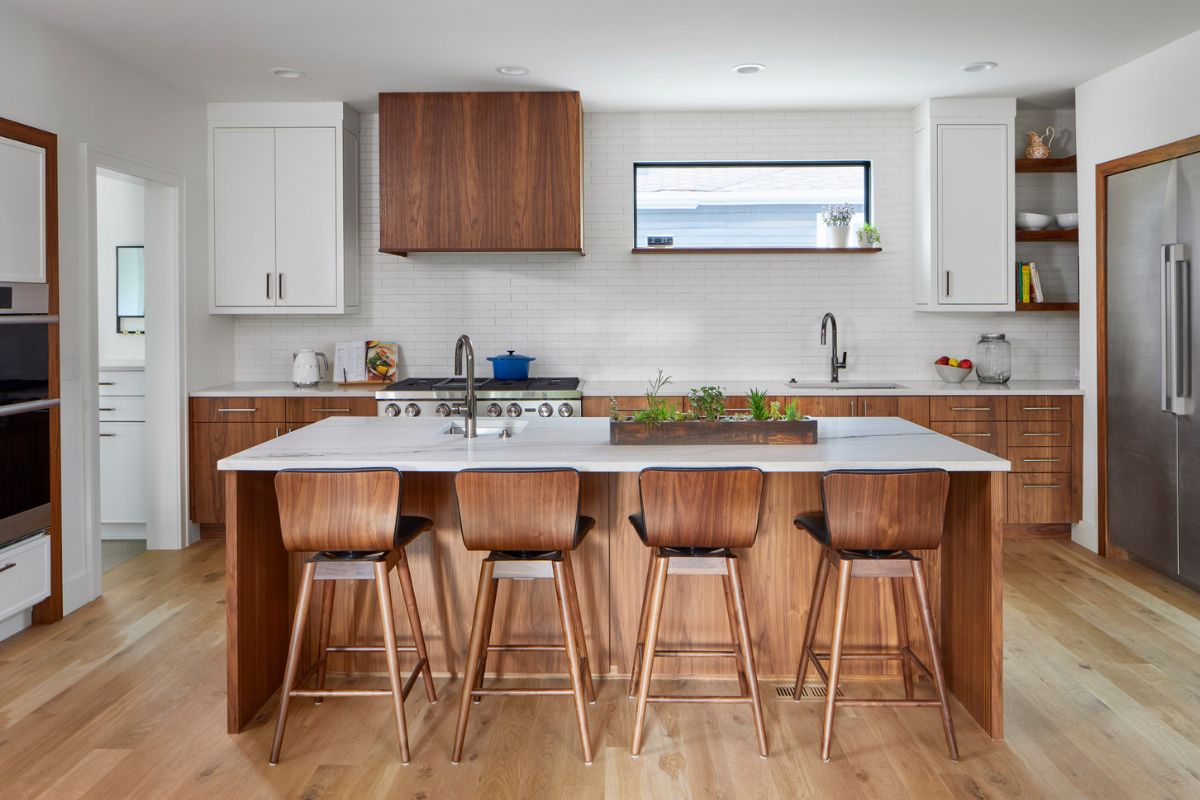
A Scandinavian kitchen is bright, calm, and quietly practical. Flat-front cabinets in soft white run to the ceiling, a light oak countertop warms the island, and matte white tile reflects the daylight from an uncovered window. A few ceramic bowls sit on a single open shelf, a row of simple pendants hangs over the counter, and a wooden chair or two invites people to stay for coffee.
Scandinavian design grew from long, dark northern winters, when homes needed to make the most of every hour of daylight and feel warm and welcoming indoors. In the kitchen, that means pale surfaces, natural materials, clever storage, and nothing that does not earn its place. The style values function first, but it is never cold: wood, linen, plants, and soft light make the room feel relaxed and lived in.
Key Takeaways
- Scandinavian kitchens use pale colors and natural light to keep the room bright year-round.
- Flat-front or simple shaker cabinets with slim or handleless hardware keep lines clean.
- Light woods such as oak, ash, birch, and beech add warmth to white and gray surfaces.
- Smart, mostly closed storage keeps counters clear, with one or two open shelves for display.
- Layered lighting, from pendants to under-cabinet strips, adds coziness during darker months.
- Durable, natural materials and a few well-made objects matter more than decoration.
The Ideas Behind the Style
Understanding the thinking behind Scandinavian design makes it easier to apply in any kitchen.
Function Comes First
Every element in a Scandinavian kitchen should be useful and easy to use. Drawers open fully, the most-used tools sit within reach, and work zones are clearly defined. Beauty comes from simple, well-made forms rather than ornament.
Light as a Material
Daylight is precious in the north, so Scandinavian kitchens treat it as part of the design. Windows are left bare or dressed lightly, walls and cabinets reflect light, and glossy or satin finishes on tile help bounce it deeper into the room.
Warmth Through Coziness
The Danish idea of hygge and the Swedish idea of lagom, roughly meaning “just enough,” shape the mood. A kitchen should feel calm and balanced, with a candle on the table, a linen towel by the sink, and a warm wooden surface to touch.
Cabinetry and Hardware
Cabinets make up most of a kitchen’s visual surface, so their style sets the tone.
Door Styles
Flat slab doors are the most typical choice, giving a smooth, quiet surface. Simple shaker doors with a narrow frame are a softer alternative and suit older homes. Painted white, pale gray, soft sage, or natural oak veneer all work well.
Handles and Pulls
Slim bar pulls in matte black, brushed steel, or brass, small leather tabs, and wooden knobs suit the style. Handleless cabinets with integrated finger grooves or push-to-open hardware create the cleanest look. Whatever you choose, keep it consistent across the kitchen.
Tall and Full-Height Units
Running cabinets all the way to the ceiling avoids dust-catching gaps and adds storage for seldom-used items. A tall pantry unit with internal pullouts holds dry goods neatly. Integrated, panel-ready refrigerators and dishwashers keep the wall of cabinets uninterrupted.
Colors and Materials
The Scandinavian palette is light and natural, with texture doing the work that pattern does in other styles.
Whites and Soft Neutrals
Warm white, chalky off-white, and pale gray are the classic base. Very cool, bluish whites can feel harsh, so choose shades with a slight warm or neutral undertone. A soft greige or mushroom tone on lower cabinets adds depth without darkening the room.
Muted Accent Pairings
- Sage green lower cabinets with white uppers and oak open shelving.
- Dusty blue cabinets with white tile, birch counters, and brass pulls.
- Charcoal island with white perimeter cabinets and light oak stools.
- Warm white throughout with black accents on lights, faucet, and handles.
Wood, Stone, and Ceramic
Oak and ash are the most common woods, with birch and beech offering paler options. Use wood on countertops, open shelves, an island, or flooring, and keep to one main wood tone. White or light gray quartz, honed marble, and terrazzo make durable counters, while handmade-look ceramic tile adds subtle texture to the backsplash.
Floors
Light oak or ash planks, pale wood-look porcelain, and large-format light gray tile all suit the style. Wide boards with a matte or oiled finish feel especially Nordic. In busy family kitchens, porcelain or a durable lacquered wood is easier to keep looking good, and a flat-woven cotton runner by the sink adds softness.
Countertops and Backsplashes
Work surfaces in a Scandinavian kitchen need to be practical as well as beautiful.
Wood Countertops
Solid oak or ash countertops bring instant warmth. They need oiling a few times a year and are best kept away from the sink area if you want low maintenance. Many kitchens combine a wood island top with stone or quartz around the sink and range.
Stone and Composite Options
White quartz is hard-wearing and resists stains. Honed marble looks soft and natural but etches with acidic foods, which some people accept as patina. Thin countertops, around 3/4 inch to 1 1/4 inch, suit the light, streamlined look.
Backsplash Ideas
White square or rectangular tile in a stacked or vertical layout looks clean and modern. A full-height slab backsplash in the same material as the counter creates a calm, continuous surface. Soft green or pale blue glazed tile adds gentle color behind the range.
Storage That Keeps Counters Clear
Scandinavian kitchens look calm because most items are tucked away.
Drawers Over Doors
Deep drawers in base cabinets make pots, pans, and dishes easy to reach without kneeling. Use peg or wooden dividers to keep plates and lids upright and organized. Shallow top drawers with cutlery and utensil inserts keep daily tools tidy.
One or Two Open Shelves
A single oak shelf above the counter or beside a window can hold everyday glasses, a few plates, and a plant. Display only items you use often or truly love, and leave space between them. Too many open shelves quickly look cluttered.
Hidden Helpers
A pull-out recycling station, an appliance garage for the toaster and coffee machine, and wall rails with hooks for utensils keep surfaces clear. A small magnetic knife strip saves drawer space and looks neat.
Lighting for Every Season
Good lighting is vital in a style shaped by long winters.
Pendants and Ceiling Light
Simple pendants in white enamel, opal glass, paper, or wood veneer are classic choices. Hang them about 30 to 36 inches above the island, and choose two or three depending on length. Recessed lights or a flush-mount fixture provide even general light.
Task and Accent Light
Under-cabinet LED strips light the counters without shadows. A small wall sconce near the window or a candle on the table adds a cozy glow in the evening. Warm white bulbs around 2700K to 3000K keep the room inviting, and dimmers allow the mood to shift through the day.
Layout and Small-Space Planning
Scandinavian design is well suited to compact kitchens because it emphasizes order and light.
Smart Layouts
Galley and L-shaped layouts work well in smaller rooms, while larger kitchens benefit from an island with seating. Keep the sink, range, and refrigerator within easy reach of each other, and plan landing space beside each. Leave at least 42 inches of walkway around an island.
Small Kitchen Strategies
In a small kitchen, use full-height cabinets, light colors, and a single material for counters and backsplash to reduce visual breaks. A wall-mounted drop-leaf table or a slim bench along one wall creates a dining corner without crowding the room.
Renter-Friendly Touches
Swap cabinet knobs for slim wooden or black pulls, add a freestanding oak shelf or trolley, and bring in a paper pendant on a plug-in cord. Linen towels, a woven runner, and a few ceramic pieces shift a rental toward Scandinavian style without permanent changes.
Finishing Touches and Sustainability
Natural Details
The final details make a Scandinavian kitchen feel personal. A potted herb on the windowsill, a stack of wooden cutting boards, a stoneware jug of utensils, and a linen tea towel hanging from the oven handle are often enough. A simple wooden bench or a pair of classic bentwood chairs adds a place to sit. Rotate a few seasonal elements, such as birch branches in winter or a jar of wildflowers in summer, to keep the room feeling fresh.
Choosing for the Long Term
Sustainability is part of the Nordic tradition. Choose responsibly sourced wood, durable finishes that can be repaired rather than replaced, and energy-efficient appliances and LED lighting. Well-made cabinets and solid wood counters can last for decades with care. Vintage chairs, secondhand pendants, and handmade ceramics also add character while keeping waste down.
Common Mistakes to Avoid
A few missteps can make a Scandinavian kitchen feel cold or cluttered instead of calm.
- Using only stark white and gray with no wood, textiles, or plants, which leaves the room feeling clinical.
- Filling every wall with open shelves, which turns everyday dishes into visual clutter.
- Relying on a single overhead light, which casts shadows on the counters and feels gloomy in winter.
- Mixing several wood tones and metal finishes, which breaks up the quiet, unified look.
Conclusion
A Scandinavian kitchen blends clean lines, pale colors, natural wood, and clever storage into a calm, functional room. Plenty of light and a few warm, natural details keep it from ever feeling cold.
Focus on good cabinetry, durable materials, and layered lighting, and keep counters clear. The result is a kitchen that is simple to use, easy to maintain, and pleasant to spend time in all year long.
Frequently Asked Questions
- Scandinavian Style: The Absolute Guide
- Scandinavian Style Bedroom: Simplicity and Serenity in Sleep Spaces
- Scandinavian Style Living Room: Cozy Minimalism and Functional Comfort
- Scandinavian Style Bathroom: Tranquil Elegance and Functional Beauty
- Scandinavian Style Dining Room: Functional Charm and Simple Elegance
- Scandinavian Style Entryway: Bright and Inviting with Natural Touches


