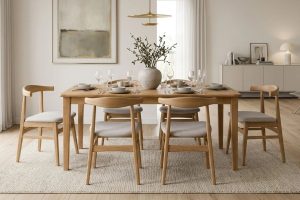
A Scandinavian living room looks bright even on a cloudy day. Warm white walls and pale oak floors catch the light from a bare window, a low sofa in oatmeal wool faces a wooden lounge chair with a sheepskin over its back, and a round coffee table holds a stack of books and a single ceramic vase. In the evening, a paper pendant, a floor lamp, and a few candles turn the same room into a soft, glowing place to read and talk.
The style comes from the Nordic countries, where long winters made light, warmth, and comfort indoors a priority. In the living room, that means simple furniture with good proportions, natural materials, a calm palette, and enough texture and lamplight to make the space feel cozy rather than bare. Everything has a job, and the room is designed for daily life, not for show.
Key Takeaways
- Scandinavian living rooms pair simple, functional furniture with real comfort.
- Warm whites, soft grays, and pale wood keep the room bright through dark months.
- A comfortable sofa, a wooden lounge chair, and a low coffee table form the core.
- Closed storage keeps media and everyday clutter out of sight.
- Several warm lamps work better than one bright ceiling light.
- Wool, linen, sheepskin, and plants supply the hygge that keeps the look inviting.
Scandinavian design rests on three ideas: simplicity, function, and natural beauty. Each piece in the living room should be comfortable and useful, and its appeal should come from good shape and honest materials rather than ornament.
Simple Lines, Honest Materials
Expect tapered wooden legs, slim arms, soft curves, and visible wood grain. Fabrics are natural and slightly textured, and metals appear in small doses, usually as black or brass details. The result is a room that feels light and orderly without looking clinical.
Built for Long Winters
In Denmark, Norway, Sweden, and Finland, winter daylight can last only a few hours. That shaped a living room built around maximizing light by day and creating warm pools of lamplight at night. The same approach suits any home that gets limited natural light or simply needs to feel calmer.
Why It Works in Everyday Homes
Scandinavian living rooms are practical. They favor durable furniture, washable textiles, and clear floor space, which makes them easy to keep tidy and comfortable for families, pets, and guests.
Planning the Room
A little planning saves money and prevents the classic mistake of buying pieces that do not fit the space or each other.
Start With an Honest Edit
Remove everything that is not used or loved, then look at what remains. A solid wooden table, a simple bookcase, or a well-shaped armchair may only need refinishing or a new cover. Note where the light comes from, where people walk, and where the television or reading corner naturally sits.
Plan the Layout Around Conversation
Group the sofa and chairs so people can talk easily, ideally facing each other across a coffee table. Leave about 16 to 18 inches between sofa and coffee table and keep main walkways around 30 to 36 inches wide. Choose a rug large enough for at least the front legs of every seat to rest on it.
Work in Stages
Quick weekend changes include decluttering, rearranging furniture, swapping cushion covers, and adding lamps. Larger steps, such as repainting, replacing the sofa, or refinishing floors, can follow over months as budget allows.
Building the Color Palette
Scandinavian living rooms use color to stretch daylight and create calm. Light walls do most of the work, while wood tones and a few muted accents add warmth.
Warm Whites and Soft Neutrals
Choose a warm or soft white for walls, especially in north-facing rooms where cool whites can look gray. Pale greige, light stone, and soft gray also work well. A matte or eggshell finish reduces glare and gives walls a gentle, chalky look.
Muted Accents
Bring in color through textiles and art rather than paint. Proven pairings include:
- Warm white, oak, and sage green with black accents.
- Soft gray, pale wood, and dusty blue with natural linen.
- Cream, walnut, and rust or ochre for a warmer, mid-century feel.
Balancing Wood Tones
Keep the dominant wood light, such as oak, ash, or birch, then add one or two deeper tones like teak or walnut in a side table or picture frame. Repeating each wood tone at least twice in the room makes the mix look intentional.
Choosing the Furniture
Scandinavian living room furniture is modest in size, sturdy, and comfortable. Fewer, better pieces leave space around each one, which is part of the look.
Sofa and Lounge Chairs
A sofa with a clean silhouette, slim arms, and raised wooden or metal legs keeps the room airy. Upholster it in wool, linen blend, or a tight bouclé in oatmeal, light gray, or soft green. Pair it with one or two wooden lounge chairs, perhaps with a woven or leather seat, inspired by mid-century Danish designs such as Hans Wegner’s chairs.
Tables and Storage
A low oak coffee table, round or rectangular, anchors the seating group. Add a slim side table by each seat for a lamp or a cup. For storage, a long low sideboard or media unit with closed doors hides cables, remotes, games, and paperwork, while a simple wall shelf displays books and a few ceramics.
Multifunctional Pieces
In smaller rooms, choose furniture that does more than one job: a storage bench under the window, an ottoman with a lift-up lid, nesting tables, or a wall-mounted desk that folds away. Shop secondhand for solid wooden pieces, and save larger investments for the sofa and lounge chair, which see the most use.
Lighting the Living Room
Lighting is where a Scandinavian living room really earns its cozy reputation. The goal is soft, glare-free light coming from several sources at different heights.
Make the Most of Daylight
Keep windows as clear as possible. Use sheer linen curtains or simple roller blinds, and avoid heavy drapes that block light. A large mirror opposite or beside a window bounces daylight deeper into the room.
Layer Three Kinds of Light
Combine ambient light from a pendant or ceiling fixture with task light from a floor lamp beside the reading chair and accent light from table lamps, a picture light, or candles. Warm bulbs around 2700K and dimmers on the main fixtures let the room shift from bright daytime use to a softer evening mood.
Fixtures With Nordic Character
Look for shades that hide the bulb and diffuse light: layered metal pendants inspired by Poul Henningsen’s PH lamps, wood veneer pendants, opal glass globes, and paper lanterns. Thin black or brass floor lamps add a graphic line without bulk.
Warmth and Texture: Bringing in Hygge
Hygge, the Danish idea of cozy contentment, is what keeps a Scandinavian living room from feeling sparse. It comes from texture, natural elements, and personal touches.
Layered Textiles
Start with a large wool, jute, or flatweave rug, then add cushions in linen, wool, and bouclé in two or three tones of the same color. Drape a chunky knit or waffle throw over the sofa arm and a sheepskin over the lounge chair. Swap to lighter linen and cotton in summer.
Natural Elements
Plants such as a fiddle leaf fig, a tall olive tree, or trailing pothos on a shelf bring life to the room. Wooden bowls, stone coasters, branches in a vase, and woven baskets add organic shapes and texture.
Art and Personal Touches
Hang one or two larger pieces rather than many small frames: an abstract print, a botanical study, or black-and-white photography in thin oak or black frames. Keep shelves loose, with books, a few ceramics, and space between groups.
Making It Work in a Small Living Room
Compact living rooms suit the style well because it already favors light colors and lean furniture.
Keep the Floor Visible
Choose furniture on legs, a glass or slim-framed coffee table, and wall-mounted shelving so more floor shows. A round coffee table eases movement in tight spaces.
Scale Everything Down
A loveseat or apartment-size sofa with one lounge chair may serve better than a large sectional. Paint walls and ceiling the same soft white to blur edges, and hang curtains high and wide to make windows look larger.
Zone a Multipurpose Room
When the living room also serves as a dining area or home office, use rugs and lighting to define each zone. A rug and floor lamp mark the seating area, while a pendant over a small round table signals the dining spot. A low bookcase or open shelving unit can divide spaces without blocking light.
Caring for a Light, Natural Room
Pale fabrics and light wood stay fresh with a little routine care. Choose removable, washable covers for the sofa and cushions, or a performance linen blend if the room sees children and pets. Oiled or soaped wood benefits from occasional re-oiling, and wool rugs only need regular vacuuming and prompt spot cleaning.
Common Mistakes to Avoid
The most frequent mistake is a room that is all white and gray with no wood or texture, which feels cold. Add warm wood, wool, and a few muted colors. Another is relying on a single overhead light; add at least two lamps and candles for evening.
Buying a full matching furniture set can also make the room look flat. Mix wood tones and pair a modern sofa with a vintage chair. Finally, avoid open shelves crammed with objects. Without closed storage, everyday clutter quickly undermines the calm look.
Conclusion
A Scandinavian living room balances simplicity with comfort. Light walls, pale wood, a well-made sofa, and a wooden lounge chair create a bright, uncluttered base, while closed storage keeps daily life in order.
Layer warm lamps, wool and linen textiles, plants, and a few meaningful objects, and the room becomes a place that feels calm by day and cozy every evening.
Frequently Asked Questions
- Scandinavian Style: The Absolute Guide
- Scandinavian Style Bedroom: Simplicity and Serenity in Sleep Spaces
- Scandinavian Style Bathroom: Tranquil Elegance and Functional Beauty
- Scandinavian Style Dining Room: Functional Charm and Simple Elegance
- Scandinavian Style Entryway: Bright and Inviting with Natural Touches