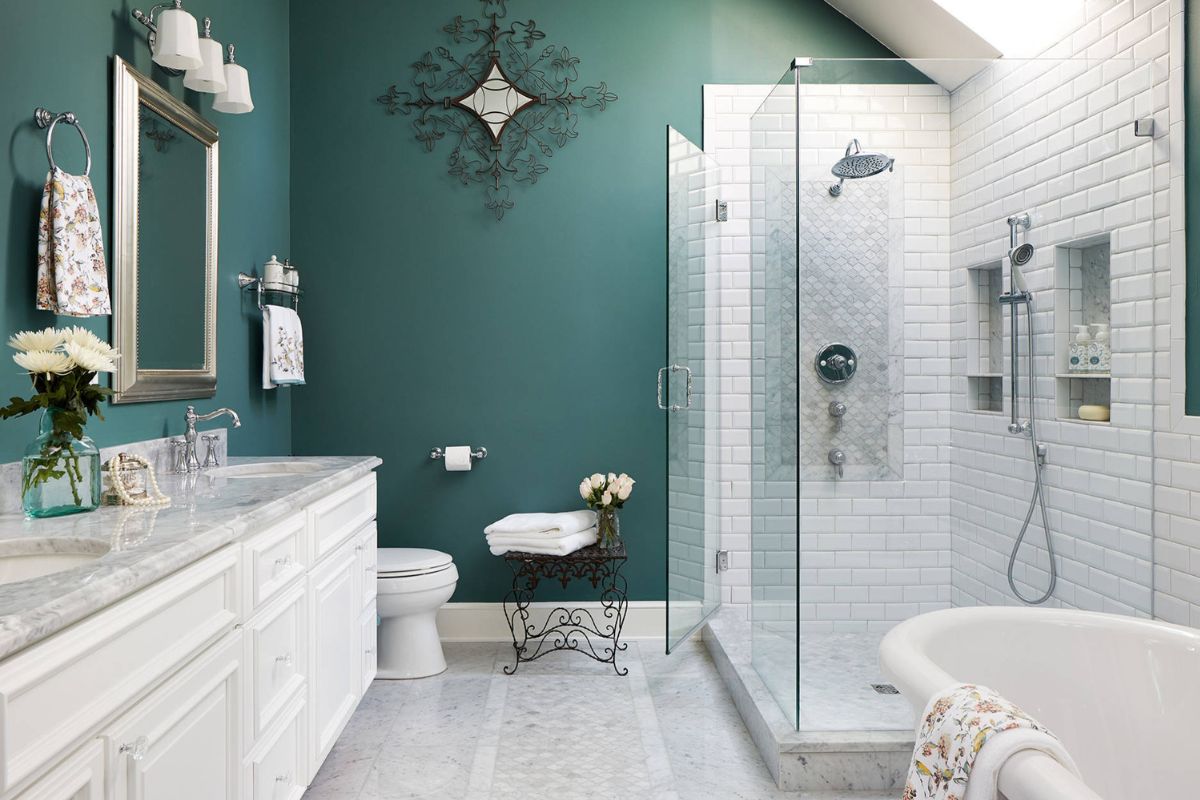
A traditional style bathroom feels calm, polished, and reassuringly classic. Painted wainscoting wraps the lower walls, a marble-topped vanity with inset doors sits beneath a framed mirror, a pair of fabric-shaded sconces casts a soft glow, and a deep tub waits under a window dressed in a simple Roman shade. Polished nickel taps and a basketweave marble floor complete a room that feels as if it has always been there.
Traditional bathroom design borrows from the grand homes and well-built houses of the late nineteenth and early twentieth centuries, when bathrooms first became dedicated rooms. Symmetry, fine millwork, natural stone, and furniture-like cabinetry give the style its quiet sense of order. The aim is tranquility: a bathroom that feels restful and refined, with modern plumbing and storage working discreetly behind classic details.
Key Takeaways
- Traditional bathrooms rely on symmetry, millwork, and furniture-style vanities.
- Marble, porcelain, and painted wood are the core materials.
- Cross-handle or lever faucets in polished nickel, chrome, or brass set the period tone.
- Soft whites, warm grays, and muted blues or greens create a restful palette.
- Layered lighting with sconces flanking the mirror gives flattering light.
- Good ventilation and moisture-resistant finishes protect classic materials.
What Gives a Bathroom Traditional Character
A few defining qualities separate a traditional bathroom from a simply old-fashioned one.
Symmetry and Proportion
Traditional rooms are built around balance. A vanity centered on a wall, matching mirrors over double sinks, and sconces placed evenly on each side create a composed, restful look. Even in a small bathroom, centering the main fixture on the wall facing the door makes a strong first impression.
Craftsmanship and Detail
Raised-panel cabinet doors, crown molding, chair rails, and turned vanity legs give the room a handcrafted quality. These details read as permanent and well made, which is the heart of the style’s appeal.
Restraint Rather Than Ornament
Traditional bathrooms are refined rather than ornate. Pattern appears in the floor tile or a wallpaper, but rarely everywhere at once. The overall effect should feel serene, not busy.
Fixtures and Fittings
Fixtures carry much of the period character, so their shapes and finishes deserve careful selection.
Tubs
A freestanding clawfoot or slipper tub creates a classic focal point, especially when placed beneath a window. A built-in drop-in tub surrounded by a paneled apron and a marble deck offers a more tailored alternative with useful ledge space.
Sinks and Toilets
Undermount sinks in a marble-topped vanity are the most common choice, while pedestal and console sinks suit smaller rooms. Toilets with a traditional profile, sometimes called classic or heritage styles, have softer curves and a taller tank that complements the room.
Faucets and Showers
Cross-handle or lever faucets with porcelain indicator buttons, bridge faucets for the sink, and exposed thermostatic shower valves with a large round shower head all suit the style. Choose fittings with modern ceramic cartridges inside so they look classic and perform reliably.
Vanities and Storage
Storage in a traditional bathroom is designed to look like fine furniture.
Furniture-Style Vanities
A vanity with inset doors, bun or turned feet, and a marble top resembles an antique chest. Painted finishes in white, cream, gray, or navy are popular, while stained walnut or cherry brings warmth. Allow at least 30 inches of width per sink, and more if two people share the vanity.
Linen Cabinets and Medicine Cabinets
A tall linen cabinet with paneled doors holds towels and spare supplies. Recessed medicine cabinets with framed mirror doors provide hidden storage without adding bulk.
Keeping Counters Clear
Use drawer organizers, a lidded jar for cotton balls, and a small tray for daily items. Clear counters let the stone and fittings stand out and make cleaning easier.
Walls, Floors, and Tile
Surfaces give a traditional bathroom much of its texture and its sense of quality.
Wainscoting and Paneling
Painted beadboard or raised-panel wainscoting around the lower third of the walls is a defining feature. Use moisture-resistant MDF or primed hardwood, seal it with a semi-gloss or satin paint, and cap it with a chair rail.
Floor Patterns
Classic floors include marble basketweave, small white hexagons with a black border, and black-and-white checkerboard. Heated floors are easy to add under tile and make a stone floor comfortable in winter.
Shower and Wall Tile
White subway tile with a pencil liner or a narrow marble border is timeless. Marble slabs or large marble-look porcelain tiles in the shower add a sense of luxury. Choose a light gray grout rather than bright white to hide wear.
Colors and Finishes
Color in a traditional bathroom is soft and restrained, chosen to feel calm in both morning and evening light.
Timeless Palettes
These pairings work especially well:
- White marble with soft gray walls and polished nickel fittings
- Cream wainscoting with pale blue walls and chrome taps
- Navy vanity with white marble and unlacquered brass hardware
- Warm greige walls with a walnut vanity and oil-rubbed bronze
Wallpaper
A small-scale damask, a fine stripe, or a classic toile above the wainscoting adds pattern and personality. Choose vinyl-coated or moisture-resistant papers and keep them away from direct shower spray.
Metal Finishes
Polished nickel has a warm, soft shine, chrome is crisp and easy to maintain, and brass adds warmth that ages over time. Keep the faucets, shower fittings, and towel bars consistent, and allow cabinet hardware or a mirror frame to introduce a second finish if you like.
Lighting a Traditional Bathroom
Lighting should be flattering for grooming and soft enough for a relaxing evening bath.
Sconces at the Mirror
Sconces with fabric or frosted glass shades mounted on either side of the mirror at roughly eye level give even, shadow-free light on the face. This is far more flattering than a single fixture above the mirror.
Ceiling and Accent Light
A small chandelier or a flush-mount fixture with a glass dome provides general light. Over a tub or inside a shower, use fixtures rated for wet locations and follow local electrical codes. Dimmers and warm white bulbs help the room feel restful at night.
Making the Most of Daylight
Natural light shows off marble and polished fittings beautifully. Frosted or reeded glass in the lower sash, a top-down bottom-up shade, or interior shutters with adjustable louvers let daylight in while keeping the room private. A large mirror placed to catch light from the window brightens the whole space.
Textiles and Finishing Touches
Soft furnishings and a few well-chosen accessories make a traditional bathroom feel finished and personal.
Towels and Window Treatments
Thick white or ivory cotton towels, perhaps with a simple monogram or a contrasting border, suit the style perfectly. A Roman shade in linen or cotton, or a pair of cafe curtains on a slim rod, softens the window while preserving privacy. For a shower, a crisp white fabric curtain with a liner looks more traditional than a plastic one.
Rugs and Seating
A washable cotton bath mat or a small vintage-style runner in muted reds, blues, or creams adds warmth underfoot. If space allows, a small upholstered bench, a wooden stool, or a skirted vanity chair offers a place to sit and a hint of dressing-room elegance.
Art and Accessories
A framed botanical print, a small landscape painting, or a set of antique engravings brings a sense of a lived-in home. Finish with a few practical but pretty objects: a silver or porcelain soap dish, glass apothecary jars for cotton and bath salts, and a small vase of fresh flowers on the vanity.
Planning, Comfort, and Care
A traditional bathroom should be as practical as it is beautiful.
Space Planning
Codes typically require at least 21 inches of clear space in front of the toilet and sink and 24 inches in front of a shower opening, though 30 inches feels far more comfortable. In smaller rooms, a pedestal sink, a wall-mounted towel warmer, and a shower with a glass door instead of a curtain keep the room feeling open.
Ventilation and Maintenance
Painted wood and natural stone need protection from humidity. Install a quiet exhaust fan vented outdoors, run it for 20 minutes after showering, and seal marble surfaces as recommended. Wipe up standing water on wood vanities promptly.
Budget-Friendly Updates
Small changes can give an existing bathroom traditional character without a full remodel:
- Add beadboard wainscoting and a chair rail to plain walls
- Replace a builder-grade mirror with a framed one and add a pair of sconces
- Swap modern faucets for cross-handle styles in polished nickel
- Repaint the vanity in a muted color and change the hardware
Common Mistakes to Avoid
Traditional bathrooms are forgiving, but a few missteps can make them feel dated rather than timeless.
Too Much Pattern
Patterned floor tile, a busy wallpaper, a printed shower curtain, and a decorative vanity all in one small room compete for attention. Choose one or two patterned elements and keep the rest quiet.
Mismatched Scale
A tiny mirror over a wide vanity or an oversized chandelier in a small bathroom throws off the room’s proportions. Mirrors usually look best slightly narrower than the vanity below them.
Skipping Moisture Protection
Unsealed marble, raw wood, and paper wallcoverings will not last in a steamy room. Plan ventilation and protective finishes from the start rather than after damage appears.
Conclusion
A traditional style bathroom offers classic tranquility through symmetry, fine millwork, natural stone, and timeless fixtures. Furniture-like vanities, soft colors, and gentle lighting create a room that feels restful and refined.
Behind the classic details, modern plumbing, good ventilation, and smart storage keep the space practical for daily use. The result is a bathroom that looks timeless and offers a calm place to start and end each day.
Frequently Asked Questions
More Traditional Style Decor
- Traditional Style: The Absolute Guide
- Traditional Style Bedroom: Timeless Elegance and Comfort
- Traditional Style Living Room: Creating a Cozy Haven
- Traditional Style Kitchen: Blending Charm with Modern Functionality
- Traditional Style Dining Room: A Showcase of Comfort and Tradition
- Traditional Style Entryway: Timeless Elegance from the First Glance