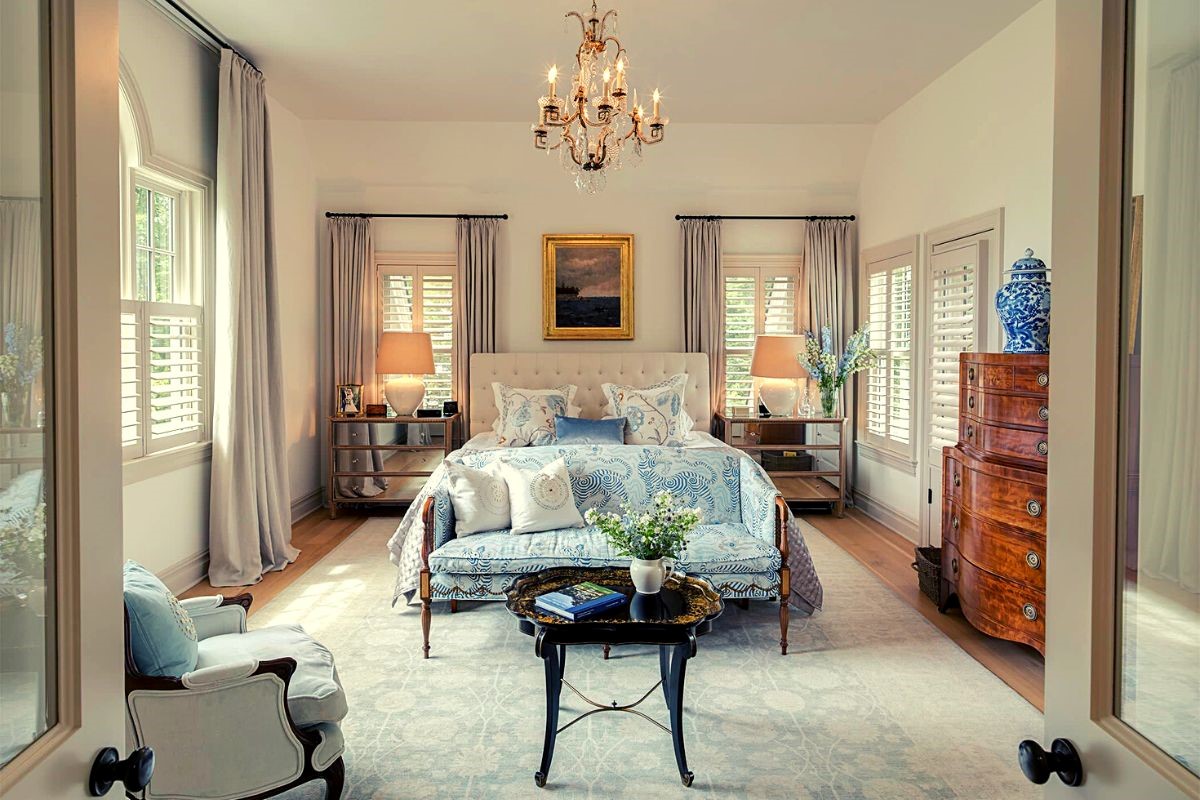
A traditional bedroom invites you to slow down the moment you step inside. A carved four-poster bed is dressed in crisp white linens and a quilted coverlet, matching nightstands hold pleated lamps, and floor-length drapes in a soft floral pool gently on a wool rug. A gilt mirror catches the evening light, and an upholstered bench waits at the foot of the bed.
Traditional style brings the order and craftsmanship of classic European and American interiors into the most private room of the house. In a bedroom, that means symmetry around a strong bed, solid wood furniture, layered fabrics such as linen, cotton, silk, and damask, and a restful palette with measured accents. The result is a room that feels collected and lived in rather than new or showroom perfect.
Key Takeaways
- Symmetry and a strong, well-dressed bed are the foundation of a traditional bedroom.
- Restful palettes, from creams and soft grays to blue and white or deep green, set a calm, classic mood.
- Wallpaper, paneling, and full-length drapery add character and frame the room.
- Layered lighting from sconces, lamps, and a chandelier keeps the space warm and practical.
- Dark wood furniture mixed with a few vintage or repurposed pieces gives the room personality.
- Plan in stages, test samples in your own light, and add special pieces over time.
What Defines a Traditional Bedroom
A traditional bedroom combines classic furniture shapes with soft, comfortable textures. Balance and symmetry guide the layout, so a centered bed, matching nightstands, and art hung on the center line read as calm and ordered in rooms of any size.
A tailored headboard and bed skirt set the tone, while paired lamps or sconces reinforce the sense of order. Soft neutrals and measured accents keep the colors restful, and interest comes from pillows, trims, and perhaps a patterned bench.
Patterns, Textures, and Scale
Florals, stripes, toile, and damask appear on walls and fabrics, but they are scaled to the room so they never overwhelm it. Linen and cotton breathe well, silk adds a soft sheen, and wool and grasscloth bring quiet texture. Wall finishes such as paneling, Venetian plaster, or painted shiplap give surfaces depth without clutter.
Start With One Hero Element
Pick one piece to build around, such as a favorite headboard fabric, an heirloom dresser, or a hand-painted wallpaper. Pull the room’s colors from it, then layer compatible fabrics and finishes. This approach produces a room that feels composed and personal and that still looks right years later.
Classic Traditional Bedroom Ideas at a Glance
Traditional bedrooms come together in steps. Choose one starting move that suits the budget and add more as time allows, since a slowly gathered room looks more authentic than one bought all at once.
The most impactful starting point is usually the bed. A four-poster or a carved wood frame anchors the room and sets its scale, and a gentle wallpaper or calm paint color ties everything around it together.
Once the bed is in place, these ideas build out the look, alone or together:
- Fitted wardrobes with mirrored or paneled doors to hide clutter and expand the sense of space.
- Floor-length curtains hung high to frame windows and make ceilings feel taller.
- A textured wall finish, such as Venetian plaster, a painted mural, or shiplap.
- Wall sconces and shaded lamps for warm, layered evening light.
Repurposed furniture adds personality at modest cost. A vintage side table, a salvaged bench, or a painted chest of drawers keeps the room from looking like a matched set and gives it the collected character traditional style depends on.
Make the Bed the Focal Point
The bed directs the scale, colors, and layout of the whole room, so it deserves the most thought and, when possible, the largest share of the budget.
Four-Poster and Canopy Beds
A canopy bed adds romance and strong vertical presence, while a four-poster without fabric is more flexible and feels lighter. A dark wood four-poster carries a formal, Southern plantation air, while a turned-post or rattan version reads more relaxed. Check ceiling height before buying: posts need comfortable clearance from the ceiling and any light fixture, and an 8-foot ceiling usually calls for lower posts or a simple frame.
Statement Headboards
An upholstered, tufted, or channel-stitched headboard brings softness and comfort for reading in bed. Velvet, linen, and patterned cotton all suit the style, and nailhead trim adds a tailored edge.
A slipcovered headboard lets you introduce pattern without replacing the frame, and it can change with the seasons. Coordinate the headboard fabric with the bed skirt or drapery trim for a connected look that stops short of matching everything.
Placing the Bed
Center the bed on the main wall, ideally the first wall seen from the door, to strengthen symmetry. Leave about 24 to 36 inches of clear floor on each side and at the foot, and add a low bench at the end of the bed for function without blocking circulation.
Color Schemes That Set a Classic Mood
Start with a small group of reliable shades so each element supports the others. Choose two main colors and one accent, then repeat them across trims, textiles, and art to create a quiet rhythm.
Creams, Beiges, and Soft Grays
Neutral palettes let texture lead. Grasscloth walls, a wool rug, and linen bedding add interest while keeping the room calm, and a neutral base makes it easy to change accents later.
Blue and White
Blue and white is one of the most enduring traditional pairings, rooted in centuries of blue-and-white porcelain and toile. Soft blue walls with white trim and bedding feel fresh and restful. Add a piece of modern art or a sculptural lamp so the scheme feels current rather than stuck in the past.
Blue and Yellow
A buttery yellow headboard or drapery lining brings cheer to a blue room without upsetting its balance. Mix prints of different scales and repeat one key blue in pillow piping or window trim to keep it all connected.
Deep Greens, Teals, and Taupes
Rich, moody colors work beautifully on bedroom walls when balanced by cream bedding and reflective accents such as brass and mirrors. A leafy botanical wallpaper on one wall, paired with soft aqua or sage drapery, creates a cocooning but lively room. Always test large paint samples and check them in daylight and lamplight before committing.
Brown Walls for Warmth and Heritage
Rich brown and dark beige walls make a bedroom feel warm, gathered, and quietly elegant without closing it in. Paired with lighter elements, they add the sense of history that traditional rooms do so well.
Choosing the Right Brown
Earthy tans, mushroom, cocoa, and warm taupe offer depth without heaviness. In large, bright rooms these colors feel cozy while the space stays light. In smaller rooms with limited daylight, choose a mid-tone with gray or green undertones so it does not read too dark at night.
Pairing Brown With Ivory, Brass, and Blue
Ivory curtains and crisp white bedding keep the bed as the visual anchor against a brown wall. Brass frames and lamps reflect light, and a few blue pillows or a blue landscape painting cool the warm undertones. A neutral rug and layered linen and cotton keep the wall color from overpowering the room.
Testing and Flow
Paint large samples on several walls and check how the undertones look beside the wood floors and furniture. Echo a related tan or beige in the hallway or adjoining rooms for a calm transition, and use mirrors and metallic frames to bounce light where windows are few.
Wallpaper and Wall Treatments That Add Character
A well-chosen wall treatment adds depth and sets the tone for every other choice in the room. It also offers a lot of character for the effort, especially in a bedroom where the walls are seen at rest.
Florals and Bird-and-Vine Prints
Soft florals, chinoiserie-inspired bird-and-branch designs, and toile scenes look elegant behind a bed when the scale is right. Paper one wall or the whole room, and echo the print in a bed skirt or valance for a coordinated, decorator finish.
Murals, Plaster, and Shiplap
If pattern is not to your taste, Venetian plaster gives walls a soft, luminous texture, and painted shiplap or beadboard adds quiet structure. Grasscloth grounds a room and pairs well with upholstered headboards and tailored drapery. A painted mural behind the bed can act as a headboard in itself.
Scale and Care
Larger motifs suit tall walls and high ceilings, while small repeats work best in intimate rooms. Natural-fiber papers can stain and fade, so keep them away from humid areas and direct sun where possible. With a restrained palette, wallpaper reads fresh and becomes a lovely backdrop for art.
Window Treatments That Frame the Room
Window treatments shape light, height, and comfort in a bedroom, and in a traditional room they also add a strong decorative layer.
Floor-Length Curtains
Hang full-length curtains high and wide to raise the ceiling visually and make the room feel larger. Mount the rod about 4 to 6 inches above the window frame or close to the crown molding, and extend it beyond the frame so panels stack clear of the glass.
Layering Drapery and Shades
A neutral shade or blackout liner under decorative drapery controls light for sleep while the curtains handle style. This also lets you change the curtain color later without touching the functional layer. Interlinings help panels hang in rich folds and add insulation in winter.
Valances and Tailored Trims
Banding, contrast piping, pleated headings, or a soft shaped valance add a finished, polished edge. When several windows sit behind or beside the bed, treat them symmetrically with matching rods and equal returns. Linen and cotton blends move gently and can repeat a color from the bedding or wallpaper.
Lighting for a Soft, Layered Glow
Layered lighting makes the bedroom usable for reading, dressing, and winding down. Combine an overhead fixture, wall lights, and table lamps so the room never relies on a single bright source.
Bedside Sconces
Wall-mounted sconces free up space on small nightstands and keep the look tidy. Hardwired fixtures look cleanest, but plug-in sconces with a neat cord cover work well in rentals. Matching sconces on each side of the bed create instant symmetry and draw the eye to the headboard.
Chandeliers and Statement Fixtures
A small crystal chandelier, a lantern, or a pleated fabric pendant turns the ceiling light into a decorative feature. Keep metal finishes consistent, such as aged brass with a little iron, and check clearance above a canopy or footboard before installing.
Warm Bulbs and Dimmers
Choose warm-white bulbs around 2700K for a flattering glow and put the main circuits on dimmers so the room can shift from bright to restful. Plan outlets and switches before placing furniture, and repeat the same shade fabric across lamps to unify different bases.
Textiles That Deliver Comfort and Elegance
Linens, quilts, and throws make the bed the heart of the room. Choose a simple plan and repeat a consistent set of colors and textures to tie walls, wood, and upholstery together.
White Bedding as a Classic Anchor
White bedding resets a busy room and keeps the bed crisp. It works especially well when walls or drapery carry pattern or deep color. A white duvet or matelasse coverlet with embroidered or scalloped shams is a timeless traditional choice.
Linen, Silk, and Cotton
Linen has a relaxed texture and stays comfortable year round. Silk adds subtle sheen on pillows or a throw. Cotton percale feels cool and crisp, while sateen is smoother and slightly warmer. Mixing these fabrics balances temperature and texture.
Quilts, Throws, and Bed Skirts
Fold a quilt or coverlet at the foot of the bed and add one or two throws for warmth and depth. A tailored or pleated bed skirt can echo the wallpaper or bring in a small-scale print. In a busy household, choose washable, durable fabrics for the layers that get the most use.
Furniture Choices From Dark Wood to Repurposed Finds
Traditional bedroom furniture balances weight and warmth. A few solid pieces give the room permanence, and a few unexpected ones make it personal.
Dark Wood and Antique-Style Pieces
Begin with sturdy anchors: a mahogany or cherry dresser, a classic bed frame, and a pair of nightstands. These pieces give the room visual weight and a sense of history.
An antique chest, a highboy, or a secretary desk adds height and storage for jewelry, books, or letters. Pieces do not need to match exactly; related wood tones and similar proportions are enough.
Repurposed Side Tables and Benches
Vintage side tables, benches, and flea market finds add character and a collected feel. Refresh older pieces with aged brass or ceramic knobs while keeping their period details intact. Reclaimed wood is a sustainable choice that suits the style.
Balance and Circulation
Balance heavy wood with lighter fabrics, mirrors, and glass lamps so the room stays airy. Measure before buying so furniture leaves clear paths around the bed and to the windows and closet. Repeat one dominant wood tone and use others sparingly.
Storage That Blends In
When storage is built into the walls, the room looks larger and calmer. Fitted wardrobes with mirrored or paneled doors expand the space visually and reflect daylight, and matching their finish to the bed frame or trim keeps the room cohesive.
Built-Ins That Act Like Architecture
Built-ins set slightly back from the surrounding trim look architectural rather than added on. A cornice, crown molding, or simple wood trim along the top helps the cabinetry read as part of the house.
Function Inside and Out
Inside, prioritize adjustable shelves, drawers, valet rods, and integrated lighting so everything has a place. Soft-close hinges and drawers make daily use quieter. A neutral paint finish lets storage recede and keeps future palettes flexible.
Keeping Paths Clear
Consolidating storage into walls frees floor space and keeps routes around the bed open. Window seats with drawers, a storage bench at the foot of the bed, and under-bed drawers add more capacity without new furniture.
Art and Decor as a Gentle Focal Point
One painting or mirror can tie the room’s finishes together and give it a calm center. Choose a primary piece above the bed to set the palette and support the restful mood.
Art Above the Bed and Gallery Walls
A soft landscape, a sky painting, or a pastoral scene above the headboard keeps the view calm. A gallery of botanical prints or travel sketches adds a collected feel when the frames align for quiet order.
Large Art and Mirrors to Expand Light
An oversized painting or mirror bounces light and visually enlarges the room. A mirror hung above a low headboard, or used in place of one, adds elegance and function in a small bedroom.
Scale and Framing
Art above the bed should be about two-thirds the width of the headboard, with the bottom edge 6 to 10 inches above it. Gilded or wood frames warm the wall and link to nearby furniture, and a picture light or discreet lamp keeps the art visible at night without glare.
Create a Sitting Area for a True Retreat
A small seating nook turns a bedroom into a private retreat for reading, phone calls, or a slow morning coffee away from the rest of the house.
Look for a window corner, the space at the foot of a large bed, or an alcove. Even a single comfortable chair with a small table and a lamp is enough to create a second zone.
Small Sofas, Lounge Chairs, and Benches
A loveseat, a slipper chair, or a pair of small armchairs with a round side table fits most larger bedrooms. A sturdy bench at the foot of the bed adds daily function for putting on shoes or holding the decorative pillows at night.
Making the Nook Work
Add a reading lamp or sconce so the area works after dark, and position seating to catch natural light or a view. One special piece, such as an inherited chair or a vintage ottoman, gives the corner personality. Keep walkways clear and repeat wood finishes or fabrics from the rest of the room so the sitting area looks like it belongs.
Mixing Patterns the Traditional Way
Layering prints within one color story makes bold combinations feel composed. A clear plan keeps several patterns reading as one scheme instead of a clash.
A Simple Formula for Mixing Prints
Pick one dominant pattern, such as a floral or toile, then a supporting geometric or stripe, and a small-scale texture or dot. Keep the palette limited and vary shades rather than colors. Place the largest pattern on the wall or headboard, medium patterns on drapery or quilts, and small ones on pillows.
Repetition and Rest
Repeat the lead pattern or a key color at least three times across the room for continuity. White bedding or a solid rug gives the eye a pause so a lively room still feels restful.
Grounding Prints With Texture
Wood furniture and natural textures, such as grasscloth, wool, and rattan, add warmth and weight that balance busy prints. Always look at swatches together in the room’s own light before ordering.
Traditional Style in Small Bedrooms
Small bedrooms benefit from choices that maximize natural light and keep surfaces clear. Make daylight the priority and scale furniture to suit.
Mounted Lighting and Compact Furniture
Wall sconces in place of table lamps free nightstand surfaces for essentials and keep the area tidy.
Choose modest nightstands with drawers, which add storage without taking more floor space. A narrow chest or a tall dresser uses vertical space better than a long, low one.
Windows, Finishes, and Layout
Keep windows open with light-filtering shades that preserve privacy without blocking daylight. Paint walls or paneling a pale color to reflect light, and hang a mirror across from a window to amplify brightness.
Scale and Storage
Furniture with slim, raised legs and lighter fabrics makes a small room feel airier. A clear path matters more than a large bed, so a full or queen may suit the room better than a king. Use under-bed drawers or a storage headboard for disciplined storage.
Plan Before You Buy
A little planning saves money and prevents returns, especially for large pieces like beds, wardrobes, and drapery.
Measure and Mock Up
Measure the room, doors, windows, and outlets, then mark furniture outlines on the floor with painter’s tape. Check the bed size, nightstand width, and chandelier drop so nothing crowds doors or walkways. A simple sketch or a free room-planning app helps compare a four-poster with an upholstered bed before buying.
Test Colors and Fabrics
Order fabric swatches and large paint samples and view them in the room, morning and evening. Check undertones against the floor and existing wood, then commit in phases, starting with the bed and walls and adding art and accessories last.
Conclusion
A traditional bedroom grows from balance: a well-dressed bed as the clear focal point, layered light, and rich materials given room to breathe. A guiding palette, crisp white bedding, and thoughtful window treatments keep the room restful and cohesive.
Pair deeper walls or patterned papers with mirrors and daylight, add a few special pieces, and plan in stages. Done patiently, the room becomes a lasting retreat that feels right every single day.
Frequently Asked Questions
More Traditional Style Decor
- Traditional Style: The Absolute Guide
- Traditional Style Living Room: Creating a Cozy Haven
- Traditional Style Kitchen: Blending Charm with Modern Functionality
- Traditional Style Dining Room: A Showcase of Comfort and Tradition
- Traditional Style Entryway: Timeless Elegance from the First Glance