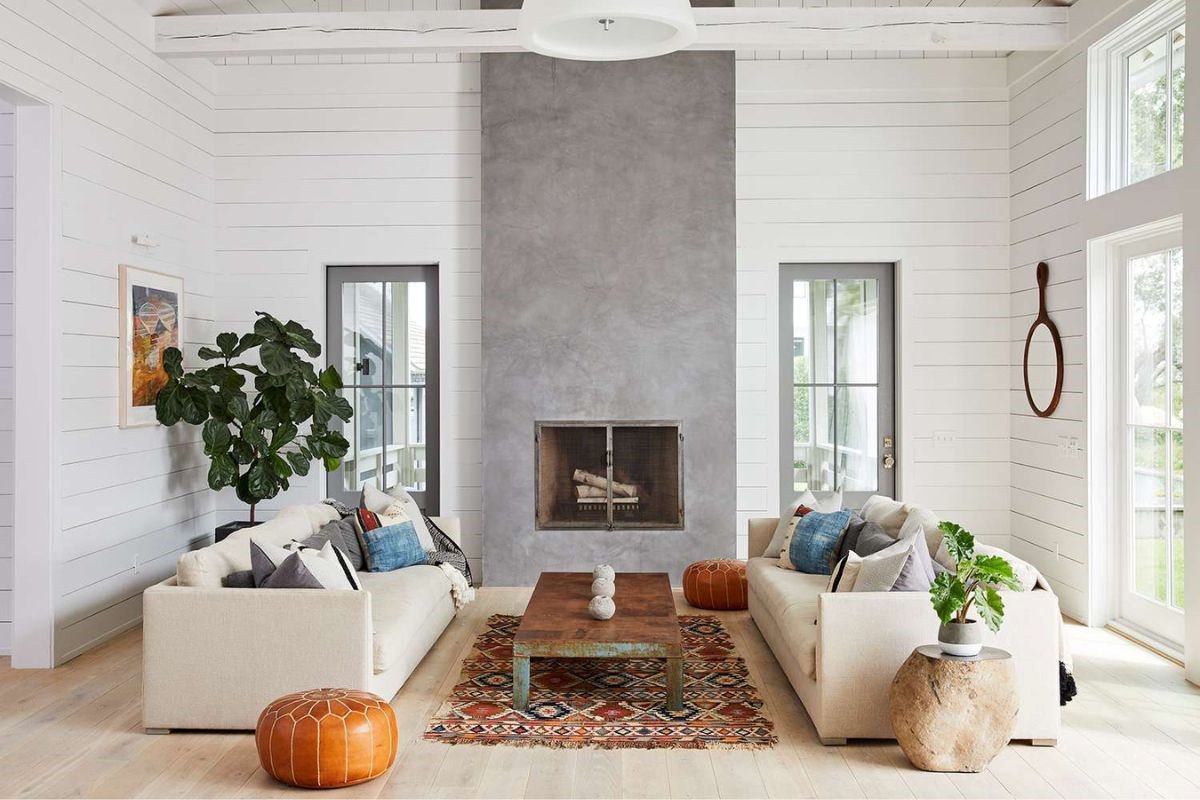
Picture a farmhouse living room on a fall evening. A deep slipcovered sofa faces a whitewashed brick fireplace, a reclaimed pine coffee table holds a stack of books and a stoneware crock of cut branches, and a wool plaid throw hangs over the arm of a worn leather club chair. Overhead, rough-sawn beams cross a white plank ceiling, and an iron lantern casts a low, warm glow across wide oak floorboards.
Farmhouse style in the living room is about comfort with roots. It borrows the honest materials and practical layouts of old rural homes, then pairs them with soft upholstery, good lighting, and a calm, light palette that suits modern life. The best versions feel gathered over years rather than bought in one weekend, and they are built to be lived in by families, guests, and pets alike.
Key Takeaways
- Farmhouse living rooms grew out of hardworking rural homes, so durability and comfort come before formality.
- Warm whites, soft grays, and natural wood tones form the base, with black iron and aged brass as accents.
- Exposed beams, plank walls, and a stone or brick fireplace give the room its architectural backbone.
- Slipcovered or leather seating, sturdy wood tables, and mixed vintage pieces create a collected look.
- Layered lighting and bare or simply dressed windows keep the room bright by day and cozy by night.
- Heirlooms, quilts, and family photos make the room personal instead of themed.
The Roots and Appeal of the Farmhouse Living Room
Historic farmhouses were working buildings first. The main room was where a family warmed up by the stove, mended tools, read by lamplight, and gathered after supper, so everything in it had to be tough, repairable, and easy to clean.
Built for Everyday Life
That practical history still shapes the style. Furniture is solid rather than delicate, fabrics can be washed or simply worn in, and nobody worries much about a scuff on a pine table. This relaxed attitude is a big part of the appeal, since the room welcomes muddy boots, board games, and long conversations without fuss.
Space, Light, and Air
Many older farmhouses had tall ceilings and large, evenly spaced windows to keep rooms cool and bright before electric lighting and air conditioning. Modern farmhouse rooms echo that openness with generous ceiling heights, uncluttered layouts, and light walls. The aim is to capture the spirit of those homes, not to recreate the drafts or the peeling paint.
What Sets a Farmhouse Living Room Apart
The style stands out because it mixes rustic architecture with comfortable, everyday furniture and lets each piece show its age. Texture does much of the work that color does in other styles.
Layered Texture
Think weathered wood next to smooth leather, nubby linen beside a chunky knit, and a matte plaster wall behind a glazed stoneware vase. Layering these surfaces gives a neutral room depth, so even an all-white scheme never feels flat.
A Collected, Imperfect Look
Farmhouse rooms favor a collected-over-time feel. A painted cupboard might sit near a newer sofa, and a pair of mismatched side chairs can flank a window. Worn finishes, small dings, and softly faded fabrics are welcome because they suggest a room that has been loved for years.
Natural Foundations
Real materials anchor the style. Exposed beams, a fieldstone or brick fireplace, wide plank floors, and wood trim give the room a sturdy base that decor alone cannot provide.
Classic Farmhouse Decor Elements
Decor is where the style can tip into cliché, so the goal is to choose pieces with genuine character and use them with restraint. A few authentic finds will always look better than a shelf of mass-produced signs.
Reclaimed Wood and Salvage
Reclaimed wood is the backbone of farmhouse decor. A barn-wood coffee table, a beam used as a mantel, or a set of open shelves cut from old flooring shows real grain, nail holes, and saw marks. Architectural salvage adds history too: an old paneled door can become a console top, and a multi-pane window sash works as wall art above a sofa.
Vintage Accessories Worth Keeping
Look for objects that once had a job. Enamelware pitchers, wire egg baskets, ironstone platters, wooden dough bowls, and old crocks all suit the style and still serve as useful catchalls. Group them in odd numbers on a mantel or open shelf, and leave space between groupings so each piece can be seen.
A Quiet Backdrop
Walls in warm white, cream, or soft greige let wood tones and vintage finds stand out. Mixing wall treatments, such as plaster on most walls with board and batten on one, adds interest without adding more objects.
Choosing Farmhouse Living Room Furniture
Furniture should be comfortable enough for movie nights and sturdy enough for children and dogs. The sofa is usually the biggest decision, so start there and build outward.
The Sofa
A slipcovered sofa in white or oatmeal cotton or linen is a farmhouse classic because the cover can be removed and washed. Leather is the other strong choice: a cognac or saddle-brown leather sofa develops a rich patina over time and looks good against painted walls and pale wood. In larger rooms, an L-shaped sectional defines a conversation zone and seats the whole family at once.
Chairs and Accent Seating
Pair the sofa with chairs that do not match it. A worn leather club chair, a ladder-back or Windsor chair, or a pair of upholstered wingbacks gives the room a gathered look. Swivel chairs are useful when a room has two focal points, such as a fireplace and a view, because they turn easily without moving heavy furniture.
Scale and Traffic
Farmhouse furniture tends to be generous, so measure carefully before buying. A few spacing guidelines keep the room comfortable:
- Leave about 30 to 36 inches for main walkways, especially in rooms with several doorways.
- Keep seating within about 8 to 10 feet of each other so conversation feels natural.
- Allow at least 3 feet in front of a fireplace hearth for safety and easy access.
- Choose a sofa depth that suits the room rather than the deepest one available.
Iconic Architectural Features and Modern Updates
Architecture gives a farmhouse living room its sense of permanence. Even in a newer house, a few structural details can carry the style further than any amount of decor.
Beams and Vaulted Ceilings
Exposed wood beams are the most recognizable farmhouse feature, recalling traditional timber-frame construction. In a new build they may be structural or decorative, but either way they draw the eye up and add warmth to a white ceiling. Vaulted ceilings amplify the effect, making the room feel open and airy, especially when beams are left in a natural or lightly stained finish.
The Fireplace as Anchor
A stone or brick fireplace is the natural focal point. River rock reads softer and more rounded, while rough-cut fieldstone feels rugged and substantial. Painted or limewashed brick offers a lighter version, and a thick reclaimed beam makes an ideal mantel.
Plank Walls and Quiet Technology
Shiplap or tongue-and-groove boards painted white bounce light around the room and contrast nicely with dark beams. Modern comforts can be hidden in plain sight: in-wall speakers, concealed wiring, and a television set inside a built-in cabinet with doors keep the architecture in the spotlight.
Comfortable, Functional Layouts
A good farmhouse layout puts comfort and conversation first. Seating should face each other, with every spot within easy reach of a surface for a mug or a book.
Working With Doorways and Open Plans
Rooms with several doorways need clear paths that skirt the seating area rather than cutting through it. In open plans, the back of a sofa or a long console table creates an implied boundary between living and dining zones without blocking light or sightlines.
Balancing Two Focal Points
When a room has both a fireplace and a television, position the sofa to face one and use angled chairs or a swivel chair to take in the other. Mounting the screen beside the fireplace rather than above it is often more comfortable for the neck.
Long, Narrow Rooms and Family Life
In a long room, split the space into two zones, such as a main seating group and a reading corner. A sofa placed perpendicular to the long wall can also correct awkward proportions. For families, choose performance or washable fabrics, a sturdy coffee table with rounded corners, and baskets that make tidying toys a two-minute job.
Making the Most of Natural Light and Windows
Daylight is a big part of the farmhouse feeling. Bright, sunny rooms make wood tones glow and keep a neutral palette from looking dull.
Choosing Window Treatments
Simple is best. Linen or cotton panels in white, flax, or soft gray filter harsh sun and add gentle movement. Hang rods high and wide, close to the ceiling and several inches past the frame, so the windows look taller and the glass stays clear when panels are open.
Layering for Privacy and Texture
For more control, layer sheer panels over woven wood shades or interior shutters. Black window frames are a popular modern farmhouse detail, creating crisp lines against white walls that frame the view like a painting.
Maximizing Daylight
Large picture windows and French doors bring in the most light and connect the room to the porch or yard. Transom or clerestory windows add light from above while preserving wall space for furniture and shelving.
When windows are this strong, keep treatments minimal or skip them entirely on upper panes. Let the architecture and the view take the lead.
Lighting and Accessories for a Warm Atmosphere
Lighting is what makes a farmhouse living room feel cozy after dark. A single ceiling fixture is never enough, so plan several layers that can be used together or alone.
Layered Lighting
Combine ambient, task, and accent light. A central fixture provides general light, floor and table lamps cover reading spots, and picture lights or small lamps on shelves add glow. Choose warm bulbs around 2700K and put fixtures on dimmers.
Statement Fixtures
A lantern pendant in black iron, a wood bead chandelier, or a simple wagon-wheel style fixture can act as the room’s jewelry. In a vaulted room, a larger fixture suspended from a beam fills the vertical space. Wall sconces on either side of a fireplace add soft, symmetrical light.
Mixing Finishes and Reflective Accents
Mix metals with intention, such as oil-rubbed bronze with aged brass, so the room does not look like it came from one catalog. Mirrors with simple wood frames, glass bottles, and pewter or brass candlesticks reflect light into dim corners. Woven rattan or seagrass shades soften the glow and add organic texture.
Natural Materials and Wood Tones
Wood is the main character in a farmhouse living room. Getting the tones to work together is what separates a cohesive room from a mismatched one.
Choosing the Right Floor
White oak is a versatile choice because its neutral grain takes many finishes well, from a pale natural matte to a deep brown stain. Wide planks, often 6 inches or more, feel rustic and relaxed, while narrower boards look more refined.
Light Floors Versus Dark Floors
Light floors maximize brightness and keep heavy, dark beams from feeling oppressive. Dark brown floors against white walls create a dramatic, grounded look and can hide some everyday wear, though they show dust and pet hair more readily.
Mixing Wood Tones With Confidence
Mixing tones looks intentional when there is a clear pattern. Try a light floor, medium-toned furniture, and darker beams or a mantel, then repeat each tone at least twice in the room. Keep undertones related, all warm or all cool, so the mix reads as one family.
Coffee Tables and Smart Storage
The coffee table sits at the center of daily life in a living room, holding drinks, books, board games, and sometimes feet. In a farmhouse room, it is also a chance to show off real wood.
Coffee Table Ideas
Rough-hewn reclaimed wood, an old trunk, or a low trestle table all suit the style. For a cleaner, modern farmhouse look, choose a rectangular table with simple square legs, or mix materials with a wood base and a honed stone top.
Getting the Size Right
The coffee table should be about two-thirds the length of the sofa. Leave roughly 14 to 18 inches between the table and seating so it is easy to reach without bumping knees.
Hidden and Open Storage
Storage keeps a family living room calm. Look for tables with a lower shelf for baskets and books, lift-top designs, or shallow drawers for remotes and chargers. Elsewhere in the room, a painted cupboard, a bench with baskets underneath, or built-ins flanking the fireplace hold blankets, games, and media.
Textiles: Rugs, Throws, and Cushions
Textiles soften all that wood, stone, and iron. They add warmth, absorb sound, and make the room feel ready for a nap.
Choosing a Rug
A rug defines the seating area, especially in an open plan. Choose one large enough that at least the front legs of every sofa and chair sit on it, often 8 by 10 feet or larger in a typical living room. Jute and wool blends, faded vintage-style patterns, and simple stripes all work well.
Pattern and Color
A patterned rug is an easy way to add personality to a neutral scheme. Muted blue, rust, or sage tones bring color into a white room, while a cream rug creates contrast on a dark floor. Pull one or two colors from the rug into pillows and throws so the palette feels connected.
Throws and Cushions
Mix textures freely, keeping to a palette of three or four colors and varying the scale of patterns. Fabrics that suit the style include:
- Chunky knits and wool plaids for cold-weather warmth.
- Washed linen and cotton in solid neutrals.
- Ticking stripe and small checks for a classic country note.
- Quilted cotton and vintage quilts for color and history.
Drape throws casually over a chair arm or fold them into a basket by the fireplace. Avoid stacking too many pillows on the sofa, since three to five usually look relaxed and still leave room to sit.
Wall Art and Decorative Accents
The walls are where the room starts to tell a story. Farmhouse art should feel personal and a little unexpected rather than themed.
Photos and Vintage Prints
Black-and-white family photos in simple wood or black frames have a timeless quality and connect the room to real history. Vintage botanical prints, old maps, and landscape paintings found at estate sales fit the style well, and a few colorful vintage posters add life to a neutral scheme.
Relaxed Arrangements
Skip perfectly matched gallery walls. Lean framed pieces on a mantel or picture ledge so they can be swapped with the seasons, or hang an asymmetrical grouping with consistent spacing between frames.
Shelves and Frames
Open shelves near windows hold books, small pottery, and plants, adding depth beyond flat walls. When reframing old artwork, simple, clean frames let the piece stand out without making it look dated.
Modern Farmhouse Ideas for Open, Multi-Purpose Spaces
Many homes now combine the kitchen, dining area, and living room in one open space. Modern farmhouse style suits this setup well because its calm palette and natural materials tie different zones together.
Designing an Open Plan
A successful open plan balances connection with definition. Keep sightlines open between the kitchen and seating area so cooking and conversation can happen together. Repeat the same wall color, wood tone, and metal finish throughout so the space reads as one room. Exposed beams running the full length of the ceiling also help unify the zones.
Creating Distinct Zones
Use rugs, lighting, and furniture to signal where one zone ends and another begins. A large rug anchors the living area, while pendants hung low over a dining table mark a place for meals. In the kitchen, a herringbone or stone backsplash adds a change in texture.
Flexible Furniture
Choose pieces that can multitask. A sturdy wood dining table can double as a homework or work surface, and storage ottomans in the living area hide toys or blankets but keep them within reach. A long bench can serve the dining table one day and extra seating for guests the next.
Blending Farmhouse Warmth With Other Styles
Farmhouse style mixes easily with other looks that share its love of natural materials and simple shapes. Blending can keep the room from feeling too rustic or too themed.
Scandinavian design shares the farmhouse focus on function and natural wood. Borrowing its clean lines, pale woods, and restrained palette of white, gray, and black creates a lighter, more streamlined version of the style.
Coastal Touches
Coastal elements lighten the look further. Whitewashed woods, airy linen slipcovers, and soft blue or sea-glass green accents give a breezy feel that suits homes near the water or in warm climates.
Keeping the Mix Cohesive
The key to blending is consistency. Repeat natural wood, simple textiles, and unfussy details across the room, and limit the palette so different influences feel related. Regional twists, such as the warm terracotta and woven textiles of a Southwestern farmhouse or the relaxed whites of a California farmhouse, show how local character can shape the style.
Personalizing Your Farmhouse Living Room
A farmhouse living room feels complete when it reflects the people who live in it. This final layer is about story, not shopping.
Mixing Vintage and New
Pair one or two good vintage pieces with comfortable new upholstery. A classic midcentury design such as Hans Wegner’s Papa Bear chair, a vintage chaise, or an old school desk can sit easily beside a modern slipcovered sofa.
The contrast between old and new adds depth and keeps the room from looking like a single furniture set. Let one or two vintage pieces stand out rather than filling every corner.
Heirlooms and Collections
Incorporate items with meaning, such as a quilt from a grandparent folded at the foot of a chair, a vintage photo, or a well-used cutting board leaned on a shelf. Books, musical instruments, and souvenirs from travels make the room unmistakably personal.
Trusting Your Instincts
Mix high and low, old and new, and trust what feels right. The most memorable farmhouse rooms break a few rules in favor of what the family actually loves.
Conclusion
A farmhouse living room works best when it honors the practical spirit of old rural homes while making room for modern comfort. Sturdy furniture, natural materials, layered light, and soft textiles create a space that feels welcoming every day of the year.
Start with the architecture and the big pieces, then build slowly with vintage finds and personal treasures. Over time, the room will gather the character and warmth that define this enduring style.
Frequently Asked Questions
More Farmhouse Style Decor
- Farmhouse Style: The Ultimate Guide
- Farmhouse Style Bedroom: Rustic Charm and Cozy Elegance
- Farmhouse Style Kitchen: Mixing Nostalgia with Modern Convenience
- Farmhouse Style Dining Room: Infusing Rustic Charm into Your Space
- Farmhouse Style Entryway: Rustic Charm at the Doorstep