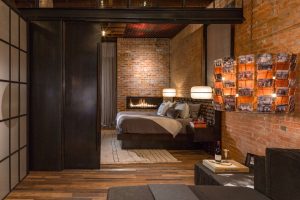
Picture a former warehouse floor turned into a home. Tall steel-framed windows let in hard daylight, a red brick wall runs the length of the room, and silver ductwork crosses a concrete ceiling above a worn leather sofa. A reclaimed wood dining table sits on black iron legs beneath a row of enamel pendants, and everything, from the pipes to the rivets, is left out in the open.
Industrial style celebrates the bones of a building instead of hiding them. It pairs raw materials such as brick, concrete, steel, and salvaged wood with sturdy, practical furniture and generous open space. Done well, it feels honest, relaxed, and full of character, and it adapts surprisingly well to ordinary houses and apartments that were never factories. This guide covers where the look came from, what defines it, and how to use it room by room.
Key Takeaways
- Industrial style grew out of converted factory and warehouse lofts and celebrates exposed structure.
- Brick, concrete, steel, iron, and reclaimed wood are the core materials.
- A palette of grays, charcoal, black, rust, and warm wood tones keeps the look grounded.
- Furniture is sturdy and utilitarian, often mixing metal frames with wood or leather.
- Factory-style pendants, task lamps, and warm bulbs define the lighting.
- Rugs, textiles, plants, and warm wood stop the look from feeling cold.
Where Industrial Style Came From
Industrial interiors trace back to the shift of manufacturing out of city centers in the mid 20th century. Large brick and cast-iron buildings that once housed workshops and warehouses were left empty, and new residents began moving in.
From Factory Floor to Loft Living
In New York’s SoHo during the 1960s and 1970s, artists moved into former manufacturing lofts because they offered huge, cheap, light-filled spaces for studios and living. With little money to spare and no interest in disguising the architecture, they left brick walls, columns, beams, and pipes exposed. What began as necessity gradually became a recognizable look, and as the neighborhood grew fashionable, loft living spread to other cities with similar empty industrial buildings.
Roots in the Machine Age
The style also draws on earlier design. Early 20th century factory and workshop furniture was built for durability, with steel frames, adjustable mechanisms, and simple forms. Pieces such as Xavier Pauchard’s galvanized steel A chair from the 1930s, Jean Prouvé’s folded steel furniture, and the adjustable Gras lamp designed by Bernard-Albin Gras became classics that still define the industrial look.
Industrial Style Today
From the 1990s onward, loft conversions spread to cities worldwide, and the look moved into suburban homes, restaurants, and offices. Modern industrial interiors tend to be warmer and more refined than the original lofts, balancing raw surfaces with comfortable upholstery, rugs, and plants.
The Defining Features of Industrial Design
Industrial design is defined less by specific furniture than by an attitude toward the building itself. Structure is something to show, not to cover up.
Raw, Unfinished Surfaces
Exposed brick, polished or sealed concrete floors, plaster left patchy, and steel beams with visible bolts are typical. These surfaces are cleaned and sealed rather than covered, so their texture and age remain part of the room.
Exposed Structure and Services
Ductwork, water pipes, electrical conduit, timber or steel beams, and columns stay visible. Rather than boxing them in, industrial interiors often paint them black, leave them galvanized, or treat them as a graphic element that runs across the ceiling.
Open Plans and Big Windows
Loft spaces rarely have many interior walls. Living, dining, and cooking areas flow together, divided by rugs, furniture, or steel-framed glass partitions. Tall windows with slim black frames and high ceilings give the style its sense of scale.
Key Materials in Industrial Interiors
Materials carry most of the industrial look. Choose a few of them, use them generously, and let their texture and patina show.
Steel, Iron, and Warm Metals
Blackened steel and cast iron appear in furniture frames, shelving, stair rails, and window frames. Galvanized steel and aluminum add a lighter, utilitarian note. Copper and aged brass, used sparingly for pendants, taps, or hardware, add warmth against the darker metals.
Reclaimed and Distressed Wood
Salvaged wood from old floors, beams, barns, and factories brings history and warmth. Saw marks, nail holes, and uneven color are part of the appeal. Solid wood tabletops, open shelves, and wide plank floors are the most common uses.
Concrete, Brick, and Stone
Concrete appears in floors, worktops, and even bathroom sinks, while brick walls are perhaps the most recognizable industrial feature. Where a building has no original brick, thin brick veneer or a limewashed brick-effect wall can give a similar texture. Slate and dark stone tiles also suit the palette.
The Industrial Color Palette
Industrial color schemes come largely from the materials themselves. Paint plays a supporting role, and accents are used sparingly.
A Neutral, Material-Led Base
Concrete gray, charcoal, black, soft white, and the warm reds and browns of brick and wood form the base. White or pale gray walls help balance dark floors and metal, especially in rooms with less natural light than a real loft.
Strategic Accent Colors
Accents often reference old factory paint and signage: deep green, navy, mustard, oxblood, and burnt orange. A navy velvet sofa against brick, a mustard metal locker, or a deep green kitchen island are typical uses. Limit accents to one or two colors so the room stays calm.
Depth Through Texture and Patina
Industrial rooms rely on texture to keep a limited palette interesting. Rusted steel, worn leather, distressed wood, and matte concrete all age with use, and that patina is welcome. Mixing smooth and rough surfaces, such as polished concrete beside rough brick, adds depth.
Choosing Industrial Furniture
Industrial furniture is built to last and to be used. Pieces are often heavy, simple, and honest about how they are made, with visible joints, bolts, and welds.
Signature Pieces
Classic choices include a solid wood table on steel trestle or hairpin legs, metal stacking chairs, a leather club chair or chesterfield sofa with a worn finish, steel and wood open shelving, and metal storage lockers or flat file cabinets. Swivel stools, drafting tables, and rolling carts show the workshop roots of the style.
Balancing Toughness With Comfort
A room full of metal and wood can feel hard. Choose a deep, comfortable sofa in leather, canvas, wool, or velvet, and add upholstered dining chairs or seat cushions where people sit for long periods. Rounded edges and softer fabrics make the room easier to live in, especially with children.
Vintage Finds Versus New Pieces
Authentic vintage industrial furniture, such as old factory stools, school chairs, or workshop benches, adds character that new pieces struggle to match. New industrial-inspired furniture offers consistent sizes and durability. Most successful rooms mix the two, with a couple of genuine vintage pieces as focal points.
Accessories and Styling
Accessories are where an industrial room shows personality. The best choices have a story, a function, or both.
Salvaged and Repurposed Objects
Old factory signs, metal letters, vintage scales, wall clocks, wire baskets, and wooden crates work well as decor. Repurposed items, such as a workbench used as a console or pipe fittings used as shelf brackets, add authenticity when used with restraint.
Art and Wall Decor
Large black-and-white photography, architectural drawings, vintage maps, and bold abstract canvases suit big brick or concrete walls. Lean oversized art against the wall or hang it on a simple rail for a relaxed gallery feel.
Textiles and Plants
Textiles soften the hard edges: a vintage wool or flatweave rug, linen or canvas cushions, wool throws, and heavy cotton curtains. Plants such as fiddle leaf figs, monstera, snake plants, and trailing pothos bring life to concrete and steel, especially in terracotta or galvanized pots.
Industrial Lighting
Lighting is one of the easiest ways to bring industrial character into any room, even one with plain drywall and carpet.
Factory Pendants and Task Lamps
Enamel or metal dome pendants, often hung in rows over a dining table or kitchen island, are the signature fixture. Adjustable articulated task lamps and wall-mounted swing-arm lights add function for reading and working.
Exposed Bulbs and Cage Fixtures
Bare filament bulbs, cage pendants, and pipe-style fixtures emphasize the raw look. Choose warm LED filament bulbs around 2200K to 2700K so the light stays cozy, and use dimmers, since bare bulbs can glare at full brightness.
Layering Light in Big Spaces
High ceilings and open plans need more than one light source. Combine pendants or track lighting for general light with floor lamps, wall sconces, and table lamps to create pools of warm light that make large rooms feel intimate in the evening.
Industrial Style Room by Room
The same materials and ideas adapt to every part of the home. Adjust the balance between raw and soft depending on how each room is used.
Living Room
Anchor the seating area with a large rug, then add a leather or canvas sofa, a reclaimed wood and steel coffee table, and a metal floor lamp. Open steel shelving can hold books and records, while a brick or concrete feature wall provides the backdrop. Layer in a wool rug, linen cushions, and a large plant so the room feels lived in rather than staged.
Kitchen and Dining Room
Stainless steel worktops or appliances, concrete or butcher block counters, open metal shelving, and subway tile are classic. A long wood dining table with metal chairs and a row of pendants above completes the scene. A wall-mounted rail with hooks for pans and utensils keeps tools within reach and adds to the workshop feel.
Bedroom and Bathroom
In the bedroom, a metal or reclaimed wood bed frame, simple linen bedding, and a wall-mounted swing-arm lamp keep things restful. Bathrooms suit concrete or cement tile, black metal fittings, exposed pipe-style shower sets, and a vanity made from reclaimed wood. A black-framed glass shower screen and a large round mirror with a thin metal frame complete the look, while thick cotton towels and a wooden bath mat keep it comfortable underfoot.
Blending Industrial With Other Styles
Pure industrial can feel stark in a typical home, so many people mix it with another style. Keep one style dominant and borrow selectively.
Industrial and Minimalist
Pair concrete, steel, and white walls with a pared-back furniture list and plenty of empty space. This creates a crisp, gallery-like room where each material stands out. Hide storage behind flat-fronted cabinets, keep accessories to a handful of large pieces, and let the texture of brick or concrete provide the visual interest.
Industrial and Rustic
Reclaimed wood, leather, and wool combine with steel and brick for a warmer, cabin-meets-loft look. This mix suits family homes well, since distressed finishes hide everyday wear. Add a chunky wool throw, a vintage kilim, and a wood-burning stove or simple fireplace to lean into the cozy side.
Mid-century wooden chairs and sideboards, or pale Scandinavian woods and textiles, soften industrial bones with lighter forms and warmer tones. Clean-lined modern sofas also sit comfortably against exposed brick.
Planning an Open-Plan Industrial Space
Large open rooms are part of the industrial appeal, but they need careful planning to feel comfortable rather than cavernous.
Create Clear Zones
Use rugs, lighting, and furniture placement to define separate areas for sitting, dining, cooking, and working. A sofa with its back to the dining area, a long console behind it, or a freestanding bookcase can divide space without closing it off. Steel-framed glass partitions offer privacy for a bedroom or office while still sharing light.
Control Echo and Scale
Hard surfaces such as concrete, brick, and glass bounce sound around. Large rugs, upholstered seating, heavy curtains, bookshelves full of books, and acoustic panels in felt or cork absorb noise and make the space quieter. Oversized furniture and art also help, since small pieces can look lost under high ceilings.
Getting the Look Without a Loft
Most homes have drywall, standard ceilings, and no exposed beams. The style still works when you focus on furniture, lighting, and finishes.
Add Architectural Character
Brick veneer on one wall, a concrete-effect plaster finish, black-framed interior glass doors, or exposed wooden ceiling beams can introduce structure where there was none. Painting existing radiators or pipes black makes them part of the design.
Use Furniture and Lighting to Carry the Style
Even in a small apartment, a steel and wood table, metal stools, open shelving, and a few factory pendants deliver a clear industrial feel. Keep the walls light to stop smaller rooms from feeling heavy, and choose slimmer metal frames and open-legged pieces so floor space stays visible.
Caring for Industrial Materials
Raw materials look best when they are protected without losing their character. A little maintenance keeps them practical for daily life.
Concrete and Brick
Seal concrete floors and worktops with a penetrating or matte sealer to resist stains, and reseal high-use areas every few years. Interior brick walls should be cleaned with a soft brush and sealed with a breathable, matte sealer to stop dust and crumbling without adding shine.
Metal and Wood
Wax or clear matte lacquer keeps raw steel from rusting and from marking hands and walls. Reclaimed wood tables benefit from a hard-wearing oil or wax finish that tolerates spills while keeping the surface natural. Leather sofas and chairs need occasional conditioning, but scuffs and creases simply add to the patina.
Industrial Style on a Budget
Industrial style rewards patience and resourcefulness more than spending, which makes it one of the friendlier looks for tight budgets.
Shop Salvage and Secondhand
Salvage yards, flea markets, and secondhand listings are full of metal chairs, stools, lockers, filing cabinets, and solid wood tables. Look past chipped paint, since sanding back to bare metal or wood often reveals exactly the finish the style calls for.
Simple DIY Projects
Pipe shelving, a plank tabletop on hairpin legs, a concrete-effect plaster finish on a feature wall, and swapping a builder-grade ceiling light for a metal dome pendant all deliver the look affordably. Spend the savings on a comfortable sofa, which matters more for daily life than any decor.
Common Industrial Styling Mistakes
The look is easy to overdo. Common mistakes include:
- Using too much dark metal and gray, which makes the room feel cold and gloomy.
- Adding factory-themed decor everywhere instead of a few meaningful pieces.
- Skipping rugs and textiles, which leaves large spaces echoing and uncomfortable.
- Relying on bare bulbs alone, which creates harsh glare instead of a warm glow.
Conclusion
Industrial style is built on honesty: showing the structure of a building, choosing durable materials, and furnishing with pieces made to be used. Brick, concrete, steel, and reclaimed wood create its character, while open layouts and factory lighting give it scale.
The most livable industrial rooms balance that toughness with warmth. Add leather, wool, plants, and layered warm light, and the style becomes a relaxed, characterful backdrop for everyday life.
Frequently Asked Questions
More Industrial Style Decor
- Industrial Style Bedroom: Raw Aesthetics and Cozy Comfort
- Industrial Style Living Room: Urban Vibes and Relaxed Appeal
- Industrial Style Kitchen: Functional Design with Urban Edge
- Industrial Style Bathroom: Utilitarian Elegance and Modern Flair
- Industrial Style Dining Room: Harmonizing Urban Edge and Rustic Flair
- Industrial Style Entryway: Raw Charm with Urban Functionality