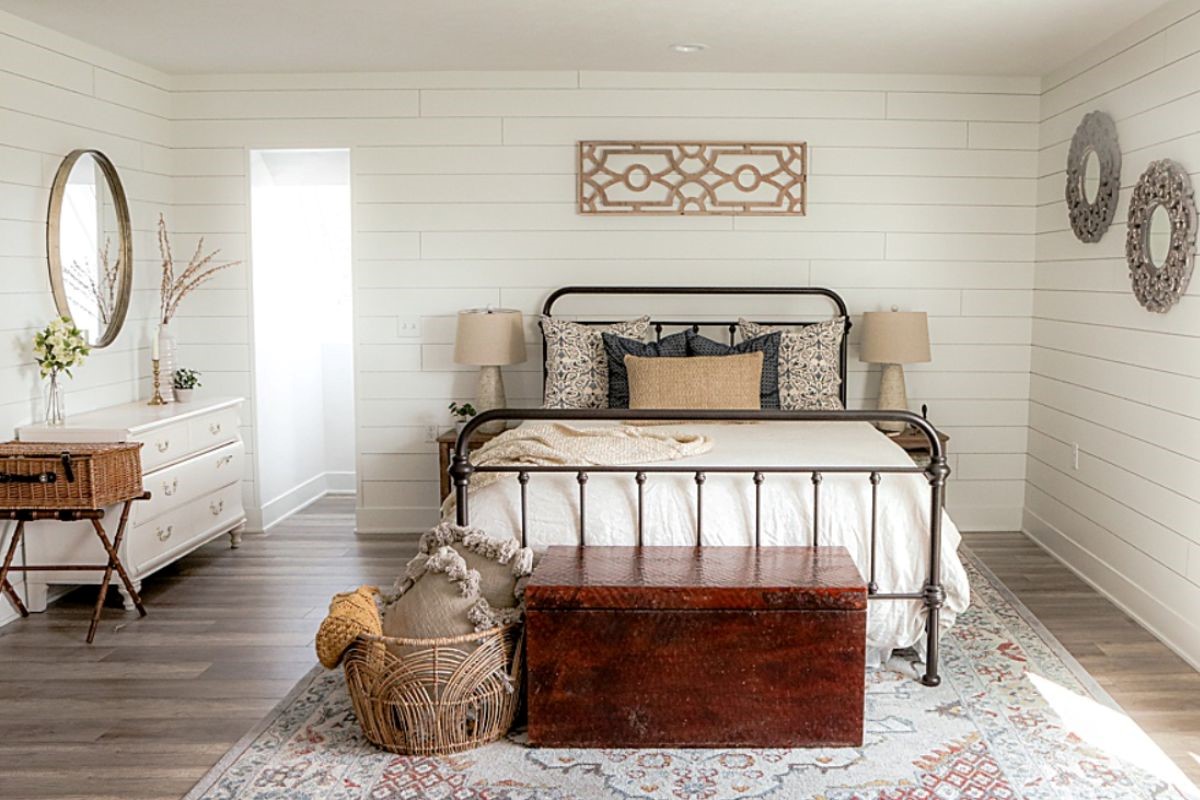
Picture a farmhouse bedroom on a quiet Sunday morning. Sunlight filters through linen cafe curtains onto white shiplap walls, a wrought iron bed is piled with a washed linen duvet and an old patchwork quilt, and a painted pine trunk at the foot of the bed holds extra blankets. A bronze swing-arm sconce hangs beside the bed, and a jute rug softens wide wood floorboards underfoot.
Farmhouse style suits the bedroom because it puts comfort first. Honest materials, soft neutral colors, and well-worn textiles create a room that feels restful and lived-in rather than staged. Modern versions keep the warmth of the country look but edit it down, pairing a few vintage pieces with clean-lined furniture so the room stays calm and uncluttered.
Key Takeaways
- Shiplap or beadboard walls, wood beams, and a soft neutral palette form the core of the look.
- Warm whites and taupes make the base, with sage, olive, or terracotta for depth and black hardware for contrast.
- Linen bedding, a quilt or coverlet, and a few textured throws make the bed the focal point.
- Iron beds, reclaimed headboards, and mismatched nightstands create a collected, personal feel.
- Bedside sconces and warm, dimmable light keep the room cozy and surfaces clear.
- Fewer, better pieces keep the style fresh and free of kitsch.
Core Elements of a Farmhouse Bedroom
A farmhouse bedroom starts with calm walls, natural wood, and soft fabrics. The rest of the room builds on those three foundations.
Texture Over Ornament
Shiplap, beadboard, or limewashed plaster add quiet texture to the walls without any extra decor. Layered textiles, such as linen sheets, a cotton quilt, and a wool throw, add depth to the bed. Natural or painted wood furniture grounds the room, and mixing painted finishes with raw grain keeps it from looking too uniform.
Useful, Characterful Pieces
Woven baskets, a jute rug, and one or two repurposed pieces, such as an old crate used as a bedside table, give warmth and purpose without clutter. Keep silhouettes simple so the rustic textures stand out.
A Restful Finish
Soft lighting completes the look. Vintage-style sconces, pleated lampshades, and a small chair or window seat for reading reinforce the room’s slow, comfortable pace.
A Modern Farmhouse Color Palette for Bedrooms
Color sets the mood before anything else in the room. The farmhouse bedroom palette is soft, warm, and grounded, with just enough contrast to feel fresh.
Soft Neutrals as the Backdrop
Start with warm whites, cream, taupe, and gentle greige. These shades brighten the room through the day, flatter natural wood, and give textiles room to show their weave. Avoid stark, blue-tinged whites, which can feel cold next to linen and pine.
Earthy Accents for Depth
Sage, olive, terracotta, and soft rust bring in color without disrupting the calm. Use them on an accent wall, a quilt, a lumbar pillow, or a vintage rug. Muted blue, such as faded denim or slate, also works well in a farmhouse bedroom and feels classic.
Crisp Contrast With Dark Details
Black or charcoal in curtain rods, sconce arms, picture frames, and door hardware gives the soft palette some definition. A few dark lines keep a neutral room from looking washed out and tie in with iron bed frames and vintage hardware.
Walls That Warm the Room
Walls are the largest surface in the bedroom, and treating them with texture is one of the most effective farmhouse moves. Shiplap and beadboard add architectural interest even in a plain, newer room.
Board Direction and Partial Treatments
Horizontal boards make a room feel wider, while vertical planks draw the eye up and make ceilings seem taller. Wainscoting or half-height beadboard balances budget and impact. Paint the upper wall in soft beige or sage and the boards in warm white for a layered look.
Wallpaper, Brick, and Paint Finish
Muted florals, small botanicals, or grasscloth introduce gentle pattern without overwhelming the room. A painted white brick wall pairs well with shiplap elsewhere for layered depth.
Choose a matte or eggshell finish for walls, since lower sheen absorbs light and feels more restful at night. A single botanical print or simple landscape on a white plank wall personalizes the room while keeping it calm.
Natural Materials and Wood Tones
Wood brings the warmth that makes a farmhouse bedroom feel inviting. Exposed beams, pine floors, and solid wood furniture anchor the room and age gracefully.
Painted and Raw Wood Together
Combine painted dressers or bed frames with raw or reclaimed wood tops and benches. Visible grain on nightstands and dressers adds tactile texture. Reclaimed planks used for a headboard, a bench, or even ceiling boards give instant character and reuse old material.
Woven and Organic Accents
Jute baskets, cane-backed chairs, and rattan trays add organic texture and double as storage. They soften the hard lines of wood and metal and help the room feel relaxed.
Keeping Wood Tones Cohesive
Mix species such as oak, pine, and maple, but keep their undertones similar so the palette stays unified. Warm woods pair beautifully with creams and taupes, while cooler, gray-washed woods suit sage and soft gray. Balance heavier pieces with light bedding and airy curtains so the room never feels heavy.
Caring for Wood
Dust wood furniture with a soft, dry cloth and refresh waxed or oiled finishes once or twice a year. Use coasters and trays on nightstands, since water rings show easily on raw or lightly finished tops. Painted pieces can be touched up with a small pot of matching paint, and minor chips on vintage furniture are part of the charm.
Bedding: Quilts, Coverlets, and Lived-In Linens
The bed is the heart of a farmhouse bedroom, and its textiles carry much of the style. Choose fabrics that breathe well, last for years, and soften with use.
Linen Layers
Linen sheets and duvet covers are ideal for this style. They are breathable, get softer with every wash, and have a natural, slightly rumpled texture that looks right unpressed. Washed or stonewashed linen in oatmeal, flax, white, or soft sage suits the farmhouse palette best.
Quilts and Coverlets
A quilt or matelassé coverlet layered over the duvet adds vintage warmth and a place for gentle pattern. Tonal neutrals let the stitching and texture lead, while an antique patchwork quilt can bring in color and history.
Cotton Weaves and Pillows
Crisp percale feels cool and fresh, while sateen adds a soft sheen. Brushed cotton or flannel is cozy in winter. Finish with two to four decorative pillows in a tight palette and a knit or wool throw folded at the foot of the bed. Ticking stripes and small florals work well when used sparingly.
Lighting: Sconces, Pendants, and a Warm Glow
Lighting decides how a bedroom feels at night. Farmhouse lighting combines practical reading light with warm, vintage-inspired fixtures.
Bedside Sconces
Wall sconces free up nightstand space and give focused reading light. Plug-in models with cord covers work well for renters. Swing-arm designs are especially useful because they adjust for reading and fold back when not needed.
Vintage and Industrial Finishes
Antique bronze, unlacquered brass, and black iron add a gentle vintage glint that pairs with wood and linen. Fabric or pleated shades soften industrial notes. A beaded or woven pendant above a reading chair or dresser adds texture and a focal point.
Three Layers of Light
Plan three layers in the room:
- Ambient light from a ceiling fixture or semi-flush mount for general use.
- Task light from sconces or bedside lamps for reading.
- Accent light from a small lamp on a dresser or a picture light over art.
Use warm bulbs between 2700K and 3000K and put the overhead fixture on a dimmer so the room shifts easily from bright mornings to a soft evening glow.
Furniture: From Iron Beds to Reclaimed Headboards
Start with the bed, then add pieces that support daily routines. The right mix balances scale, finish, and comfort so the room stays airy and collected.
Choosing the Bed Frame
A wrought iron bed gives classic farmhouse character and a light visual weight. A slim wood or metal canopy adds height without bulk. A light wood frame keeps sightlines open in smaller rooms.
Reclaimed Wood Headboards
A reclaimed headboard shows off grain, nail holes, and patina. It grounds the wall behind the bed and ties the floor and furniture together.
Nightstands and Storage
Mismatched nightstands, such as an antique chest on one side and a painted table on the other, feel personal. Trunks and crates add storage and character. A bench at the foot of the bed provides a place to sit and to keep blankets. Choose dressers with visible grain and simple cup pulls or knobs, and favor a few standout pieces over a matching set.
Decor That Adds Charm Without Clutter
A few meaningful objects give a farmhouse bedroom personality. The key is restraint, so each item has room to breathe.
Repurposed Accents
An old door turned headboard, a salvaged mirror with a worn frame, or vintage metal pulls add history and warmth. Woven baskets by the bed hold blankets and slippers, keeping everyday items close.
Small Edits With Big Impact
Hang one still-life or botanical print over a textured wall. A seasonal wreath or a jar of dried stems adds a quiet note of color. Style a crate or trunk as a side table with a lamp and a small stack of books, and keep surfaces edited to a carafe, a tray, and one framed photo.
Avoiding Over-Theming
A restored vintage chandelier can be a single statement piece that carries the style. Skip word signs, piles of trinkets, and rooster motifs so the farmhouse bedroom stays calm instead of themed.
Smart Layouts for a Calm Bedroom
Good layout makes a bedroom feel larger and easier to use. Start by choosing the bed wall, which sets circulation paths for the whole room.
Placing the Bed and Seating
Place the bed so there are clear walkways on both sides, ideally around 24 to 30 inches. A compact chair, ottoman, or built-in window seat creates a reading nook without crowding the room.
Space-Saving Moves
A slim bench or trunk at the foot of the bed adds seating and storage in one. A sliding barn door saves swing clearance at a closet or bathroom entry and adds farmhouse character. Keep dressers out of main paths and choose shallower pieces where floor space is limited.
Keeping Surfaces Clear
Corral chargers and remotes in a lidded box or wooden tray. Limit furniture to the essentials plus one accent piece so the room stays restful and easy to tidy.
Rugs and Floors
A large rug under the bed should extend at least 18 to 24 inches beyond the sides so feet land on something soft each morning. Jute, wool, or a faded vintage-style rug suits wood floors, and a small runner on each side works when a large rug is not practical.
Modern Farmhouse Versus Traditional Farmhouse
Both approaches share the same roots, but the mood differs. Modern farmhouse feels edited and calm, while traditional farmhouse leans cozy and nostalgic.
Traditional Farmhouse
Traditional rooms lean on vintage checks, toile, deep burgundy or forest green, and visible patina on metal and wood. Layered patterns and worn finishes feel collected over generations.
Modern Farmhouse
Modern farmhouse uses clean-lined furniture, a light neutral palette, and fewer accents. Pattern stays minimal, with soft stripes or muted florals in place of bold checks.
Bridging the Two
Warm metals such as unlacquered brass work in both approaches. Prioritize quality craftsmanship and natural materials either way. To blend them, start with a neutral modern base and add one heritage quilt or a pair of vintage curtains.
Small Bedrooms With a Big Farmhouse Feel
A small bedroom can still carry the style with careful choices and a light touch.
Light Furniture and Tall Lines
Choose leggy furniture and a slim-profile bed so more floor is visible. A metal canopy or narrow wood frame reads light. Hang gauzy curtains high and wide to exaggerate ceiling height, and run vertical shiplap or beadboard to stretch the walls.
Clever Surfaces and Brightness
Replace bulky nightstands with a single trunk, a wall-mounted shelf, or a small crate. Wall sconces or plug-in pendants free up surfaces.
Keep the palette to soft whites and pale woods so the eye reads one continuous surface. A mirror placed across from a window or lamp boosts brightness without adding clutter.
Farmhouse Guest Rooms and Kids’ Rooms
Guest rooms and children’s rooms can share the farmhouse look with a few practical, playful adjustments.
Guest Rooms
Keep walls light and bedding crisp, with a warm throw and mismatched side tables. Twin metal beds with an antique trunk between them make a flexible setup for visiting friends or family.
Kids’ Rooms
Choose durable rugs, washable linens, and simple wall accents such as framed prints or a row of peg hooks. A small chandelier or playful sconce adds soft sparkle.
Painted or natural wood furniture with rounded edges is safer and ages well. A small rocker or window seat creates a calm reading nook for bedtime stories. Add one sentimental vintage piece, such as a quilt or a mirror, to give the room its story.
Budget-Friendly Farmhouse Bedroom Updates
Small, targeted swaps can refresh a bedroom quickly without a big budget. Focus on the elements you see first.
High-Impact, Low-Cost Swaps
Hang sheer or gauzy curtains on black iron rods for an instant frame around the window. Repaint walls in warm white or sage, and update pillows and a throw to lift the bed without replacing all the bedding.
Secondhand and Small Fixes
Change knobs and pulls to black or aged brass for a small change with a big visual return. Look for a secondhand trunk, mirror, or dresser for authentic country character. Wicker baskets hide everyday items, and plug-in sconces add layered light for renters. When in doubt, pick one meaningful project, like repainting a dresser, over many small purchases.
Conclusion
A farmhouse bedroom comes together with a soft neutral base, honest materials, and simple forms. Layered linen and quilts, warm lighting, and one or two characterful pieces, such as a reclaimed headboard or vintage trunk, make the room both restful and personal.
Start with the walls and the bed, then add texture and light slowly. Edit often, keep only what is useful or loved, and the room will stay calm, cozy, and welcoming for years.
Frequently Asked Questions
More Farmhouse Style Decor
- Farmhouse Style: The Ultimate Guide
- Farmhouse Style Living Room: Inviting Warmth and Serenity
- Farmhouse Style Kitchen: Mixing Nostalgia with Modern Convenience
- Farmhouse Style Dining Room: Infusing Rustic Charm into Your Space
- Farmhouse Style Entryway: Rustic Charm at the Doorstep