Picture a living room with a carved marble fireplace at its center, a pair of rolled-arm sofas facing each other across a mahogany coffee table, and silk lampshades glowing on matching side tables. Crown molding frames the ceiling, a Persian rug grounds the seating, and a gilt mirror above the mantel reflects the soft light of a crystal chandelier. Nothing is flashy, yet everything feels considered.
That is the essence of traditional style. It draws on European design of the 18th and 19th centuries and favors symmetry, fine craftsmanship, rich materials, and layered detail. Done well, it feels polished without being stiff, and it grows more comfortable and more personal as the years pass.
Key Takeaways
- Traditional style is rooted in 18th- and 19th-century European design, especially Georgian, Regency, and French neoclassical interiors.
- Symmetry and a strong focal point, such as a fireplace or chandelier, organize every room.
- Architectural details like crown molding, wainscoting, and paneled doors provide the backbone of the look.
- Warm neutral bases pair with jewel tones such as burgundy, navy, and forest green, plus classic patterns like damask and plaid.
- Dark wood furniture with refined silhouettes, layered lighting, and quality hardware complete the style.
- Buy the large, lasting pieces first and add accents slowly over time.
What Is Traditional Interior Design?
Traditional interior design is a broad style built on the furniture, architecture, and decorating habits of Europe in the 18th and 19th centuries. It values proportion, comfort, and quality, and it layers color and pattern in a way that feels collected rather than staged.
Roots in 18th- and 19th-Century Europe
Much of the vocabulary comes from Georgian and Regency England and from France under Louis XV, Louis XVI, and the Empire period. Classical antiquity shaped many of these designs, which is why columns, urns, laurel wreaths, and acanthus leaves appear so often. Cabinetmakers such as Thomas Chippendale, George Hepplewhite, and Thomas Sheraton defined furniture forms that are still copied in reproduction pieces.
Formality, Craftsmanship, and Balance
The core traits are orderly symmetry, careful proportion, and visible craftsmanship. Carved chair backs, dovetailed drawers, molded trim, and fringed or tasseled trimmings known as passementerie all signal a house built and furnished with care.
Why the Style Still Works
Traditional design has stayed popular because it is comfortable and forgiving. It welcomes inherited furniture, flea market finds, and family photographs, and it adapts easily to contemporary art and modern lighting. A traditional room rarely looks dated because it never chased a trend to begin with.
The Defining Elements of Traditional Style
A few structural ideas show up in almost every traditional room, whatever its size or budget.
Symmetry and Order
Symmetry is the backbone of the style. Center the room on a fireplace, a window, or a large piece of furniture, then mirror what sits on either side: two sofas, two armchairs, two lamps, or a pair of bookcases flanking the mantel.
Perfect symmetry is not required everywhere. A balanced room can include an asymmetrical gallery wall or a reading chair in one corner, as long as the main composition reads as ordered and calm.
Architectural Details
Crown molding, baseboards with a substantial profile, chair rails, and paneled wainscoting add depth and shadow. Coffered or tray ceilings, paneled doors, and deep window casings make a room feel solid and complete. In a newer home without these features, simple applied molding boxes on walls can suggest paneling at modest cost.
Classic Decor Pieces
Certain objects appear again and again: a crystal or brass chandelier, a gilt or carved wood mirror, built-in or freestanding bookcases, and collections of porcelain, books, or framed prints. Arrange collections in defined zones so they read as displays rather than clutter.
Traditional Colors and Patterns
A traditional palette sets the mood quietly and ties every surface together, from the walls to the rug border.
Start with a warm, soft base such as cream, ivory, taupe, warm white, or a gentle greige. These shades flatter wood tones and give saturated colors something calm to sit against.
Jewel Tones Used With Restraint
Burgundy, navy, forest green, deep gold, and claret are the classic accent colors. Use them where they will do the most work: a navy velvet armchair, forest green paint on built-in cabinetry, or a burgundy border on an oriental rug. Repeat each accent color in at least three places so the scheme feels intentional.
Classic Patterns
Damask, toile, chintz florals, plaids, stripes, and small geometric prints are the traditional pattern family. To mix them, vary the scale: pair a large floral drapery fabric with a medium plaid on a chair and a small stripe on a pillow. Use solid upholstery between patterned pieces so the eye has a place to rest.
Paint Finishes and Flow
Eggshell or matte finishes on walls hide imperfections and look soft in lamplight, while satin or semi-gloss on trim highlights molding profiles and stands up to wear. Keep a related palette across connected rooms so the house reads as one story.
Furniture and Materials
Traditional furniture anchors the room. Choose a few well-built main pieces and let softer, changeable accents keep the room fresh.
Classic Silhouettes
Look for Chippendale chairs with ball-and-claw feet or pierced backs, Queen Anne pieces with cabriole legs, Louis XVI chairs with straight fluted legs and oval backs, and Regency tables with saber legs or pedestal bases. Upholstered pieces include rolled-arm sofas, camelback sofas, tufted Chesterfields, and wingback chairs.
Wood, Fabric, and Finish
Dark woods such as mahogany, cherry, and walnut are typical, often with a hand-rubbed finish that shows the grain. Upholstery fabrics lean toward velvet, chenille, wool, linen, cotton, and damask. Brass, bronze, and gilt metal accents add warmth and a little shine.
Buying for the Long Term
Spend on the pieces you use every day, such as the sofa, the dining table, and the bed. Save trend-sensitive purchases like pillows, throws, and small lamps for easy swaps. When shopping, check these quality signs:
- Dovetail joints on drawers and solid wood frames rather than particleboard.
- Eight-way hand-tied springs or a firm, well-supported sofa seat.
- Wood tones and metal finishes that coordinate with what you already own.
- A scale that suits the room, leaving clear walkways around each piece.
Textiles and Window Treatments
Fabric does much of the softening in a traditional room. Layered textiles absorb sound, add color and pattern, and make formal furniture feel comfortable.
Drapery and Window Dressing
Full-length drapery is a hallmark of the style. Hang panels from a wood or metal rod mounted close to the crown molding, and let them just touch or lightly break on the floor. Lined silk, linen, velvet, or printed cotton all suit the look. Valances, swags, pleated headings, and decorative tiebacks add formality, while Roman shades in a coordinating fabric work well in kitchens and baths.
Rugs, Pillows, and Throws
Oriental and Persian rugs, needlepoint rugs, and wool rugs with simple borders anchor seating groups. On sofas, mix pillows in velvet, damask, and needlepoint, finished with welting or tassel trim. A cashmere or wool throw over an armchair keeps the room inviting in cooler months.
Choosing Fabrics That Last
Natural fibers look richest, but living rooms and dining chairs take real wear. Look for tightly woven fabrics, consider performance blends for everyday seating, and keep silk and delicate velvets for drapery and lightly used chairs.
Lighting That Sets the Tone
Lighting in a traditional room should flatter wood, fabric, and molding while creating a warm, inviting glow.
Chandeliers as Focal Points
A chandelier is often the centerpiece of a traditional dining room, entry, or bedroom. A common sizing rule is to add the room’s length and width in feet; the total in inches is a good chandelier diameter. Over a dining table, aim for a fixture roughly half to two-thirds the table’s width, hung about 30 to 36 inches above the tabletop.
Sconces, Lamps, and Candlelight
Layer the light so no single fixture does all the work. Pair sconces on either side of a mirror, bookcase, or fireplace to reinforce symmetry. Add table lamps with fabric or pleated shades beside sofas and beds, a floor lamp near a reading chair, and candles on the mantel or dining table for evening warmth.
Dimmers, Finishes, and Upkeep
Put each layer on a dimmer so the room can shift from bright and practical to soft and intimate. Match fixture finishes, such as aged brass or bronze, to door hardware and picture frames. Dust crystals and shades regularly, since grime dulls sparkle and warms the light in an unflattering way.
Hardware and Fine Finishes
Small metal details make a traditional interior feel finished. Swapping knobs, latches, and grilles is one of the easiest upgrades for an older home or a plain new one.
Door Hardware
Choose classic knobs or levers with backplates or rosettes in unlacquered brass, polished nickel, or oil-rubbed bronze. Unlacquered brass develops a soft patina with use, which suits the style. On tall doors, use larger backplates so the hardware does not look undersized.
Window Hardware
Sash locks, sash lifts, and cremone bolts on casement or French windows combine function and ornament. They give windows period character while staying simple to use every day.
Registers and Small Fittings
Replace plastic heating grilles with cast metal registers in a finish that matches the rest of the hardware. Coordinate hinges, strike plates, and keyhole escutcheons, and keep a simple list of finishes room by room so later purchases match.
Traditional Style Room by Room
Traditional principles translate well to every room in the house. Here is how the style adapts to different spaces.
Living Room
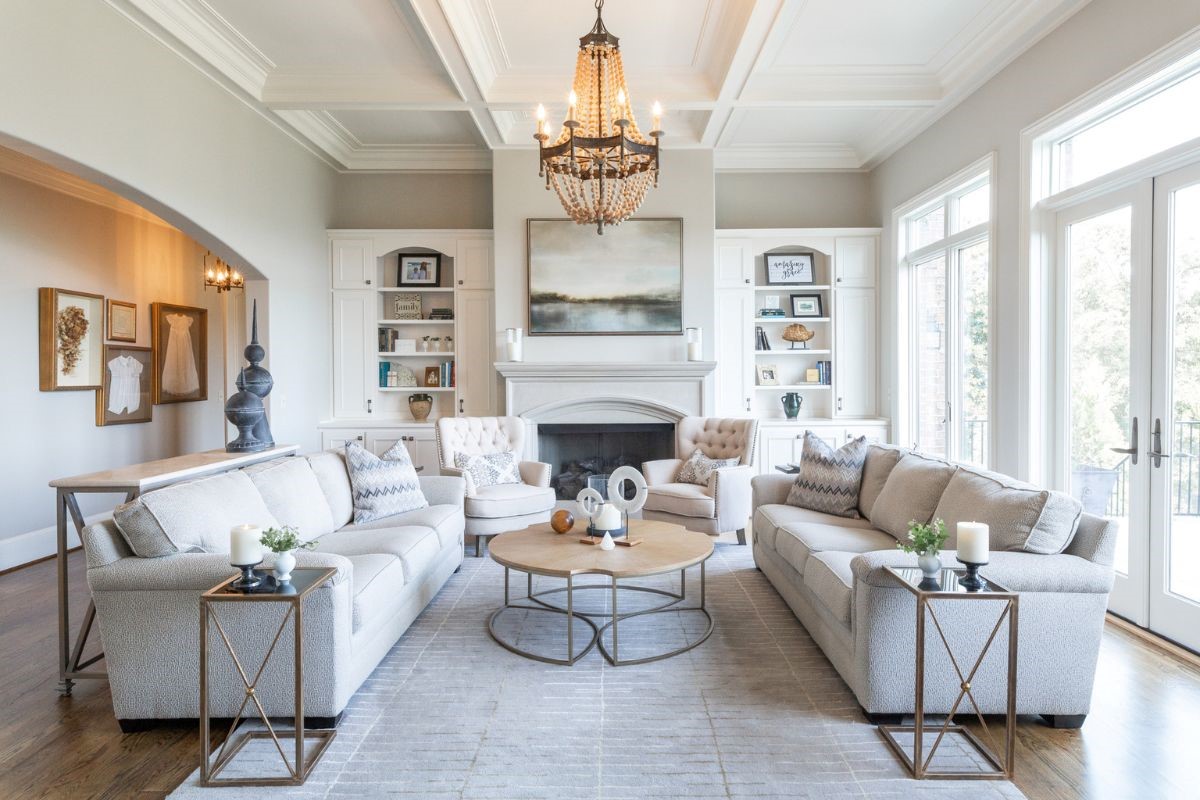
Center the room on the fireplace and arrange seating in a mirrored grouping. Bookcases on either side of the chimney breast, a pair of lamps, and art or a mirror above the mantel complete a classic composition.
Dining Room and Kitchen
In the dining room, use a dark wood table, upholstered or carved chairs, a sideboard for serving, and a chandelier centered over the table. A rug should extend at least 24 inches beyond the table edge so chairs stay on it when pulled out.
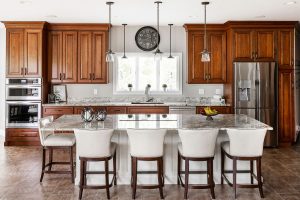
Traditional kitchens favor painted raised-panel or shaker cabinets, marble or granite counters, a farmhouse or undermount sink, and an island with seating. Panel-front appliances keep the cabinetry uninterrupted and let the woodwork take center stage.
Bedrooms, Baths, and Sunrooms
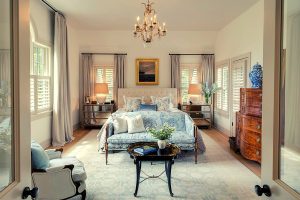
Bedrooms suit a tufted or carved headboard, matching nightstands with lamps, and layered bedding in cotton, linen, and velvet. Bathrooms work well with marble, wainscoting, a framed mirror, and polished nickel or brass fixtures. In a sunroom, wicker or rattan furniture with chintz cushions keeps the mood relaxed.
Floors and Rugs
Hardwood floors in oak or walnut tones, sometimes laid in herringbone or parquet, are classic. Soften them with oriental or Persian rugs, and use runners in halls to guide movement and quiet footsteps.
Decorating the Traditional Living Room
The living room is usually the most formal space in a traditional home, but it still needs to work for reading, conversation, and family evenings.
Start by planning how people will sit and move. A mirrored arrangement of two sofas, or a sofa facing two armchairs, centers conversation and keeps walkways open to doors and built-ins.
Balanced Seating Arrangements
Place a coffee table about 14 to 18 inches from the sofa, and choose one roughly two-thirds the sofa’s length. If the fireplace is off-center, restore balance with matched lamps, a pair of side chairs, or bookcases of equal height. Keep main walkways about 30 to 36 inches wide.
Walls, Wallpaper, and Art Above the Fireplace
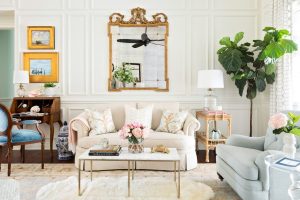
Paneled or painted millwork, or a deep-toned wallpaper on the fireplace wall, makes the mantel the clear focal point. Hang a landscape painting, a portrait, or a gilt mirror centered above the mantel, with the bottom of the frame about 6 to 12 inches above the shelf. A picture light adds a gallery feel.
Finishing Touches
Style the mantel with an odd-numbered grouping, such as a clock flanked by a pair of candlesticks and a single vase. Add a wool throw, a stack of books, and fresh flowers so the room feels lived in rather than formal for its own sake.
Layering and Balanced Maximalism
Traditional rooms are often richly layered, with several patterns, textures, and collections in one space. The key is a clear editing hand that keeps abundance from turning into chaos.
Coordinating Rich Colors and Patterns
Tie upholstery, drapery, and rugs together with a shared color or motif. Pick one fabric as the anchor, usually the largest pattern in the room, and pull the other colors from it.
Mix glossy and matte surfaces, such as polished wood beside velvet, so light plays across the room. Ground busy patterns with solid fields and classic rug borders.
Editing Collections
Group collections in defined places, such as a bookcase, a console, or a cabinet with glass doors, and allow each wall one strong moment. Rotate pieces seasonally rather than displaying everything at once.
Keeping Room to Breathe
Even a layered room needs clear pathways and some empty surfaces. Leave space around large furniture, keep at least part of the coffee table clear for use, and remove anything that does not add beauty, comfort, or meaning.
Modern Traditional: Classic Bones With Fresh Accents
Many people love traditional architecture and furniture but want a lighter, more current feel. Modern traditional, sometimes called transitional when it leans further toward contemporary, keeps the classic structure and updates the details.
Updating the Palette and Art
Keep tailored sofas, Louis XVI chairs, and a classic dining table as anchors, then lighten the walls to a crisp white or soft gray. Hang abstract art or black-and-white photography in place of oil landscapes for an unexpected contrast.
Lighting and Fabrics for Everyday Living
Sculptural or slim-profile lighting, such as a simple brass pendant or a linen drum shade, refreshes a classic room. Performance fabrics on traditional frames make it easier to live with children and pets without losing elegance.
Common Mistakes to Avoid in Traditional Design
Traditional rooms come together over time, and most problems come from rushing or overdoing it.
Over-Theming
Mixing too many historic periods, or collecting every object in a single motif, can make a room feel like a museum set. Choose one or two related influences, such as English Georgian with a little French, and let them complement each other.
Rushing Purchases
Buying a full matching furniture suite in one weekend often produces a flat, showroom look. Invest in the key pieces first, then add antiques, art, and accents gradually.
Ignoring Scale and Finishes
Oversized sofas in small rooms and tiny lamps in large ones throw off balance. Measure before buying, test layouts with painter’s tape, and coordinate wood tones and metal finishes so the room reads as one design.
Conclusion
Traditional style blends the order and craftsmanship of 18th- and 19th-century European design with the comfort of a lived-in home. Symmetry, architectural detail, rich color, dark wood furniture, and layered lighting create rooms that feel refined yet welcoming.
Start with a focal point and a few well-made pieces, then add pattern, collections, and fine hardware over time. With patience and a steady editing eye, a traditional home only becomes more beautiful and more personal as the years go by.
Frequently Asked Questions
More Traditional Style Decor
- Traditional Style Bedroom: Timeless Elegance and Comfort
- Traditional Style Living Room: Creating a Cozy Haven
- Traditional Style Kitchen: Blending Charm with Modern Functionality
- Traditional Style Dining Room: A Showcase of Comfort and Tradition
- Traditional Style Entryway: Timeless Elegance from the First Glance