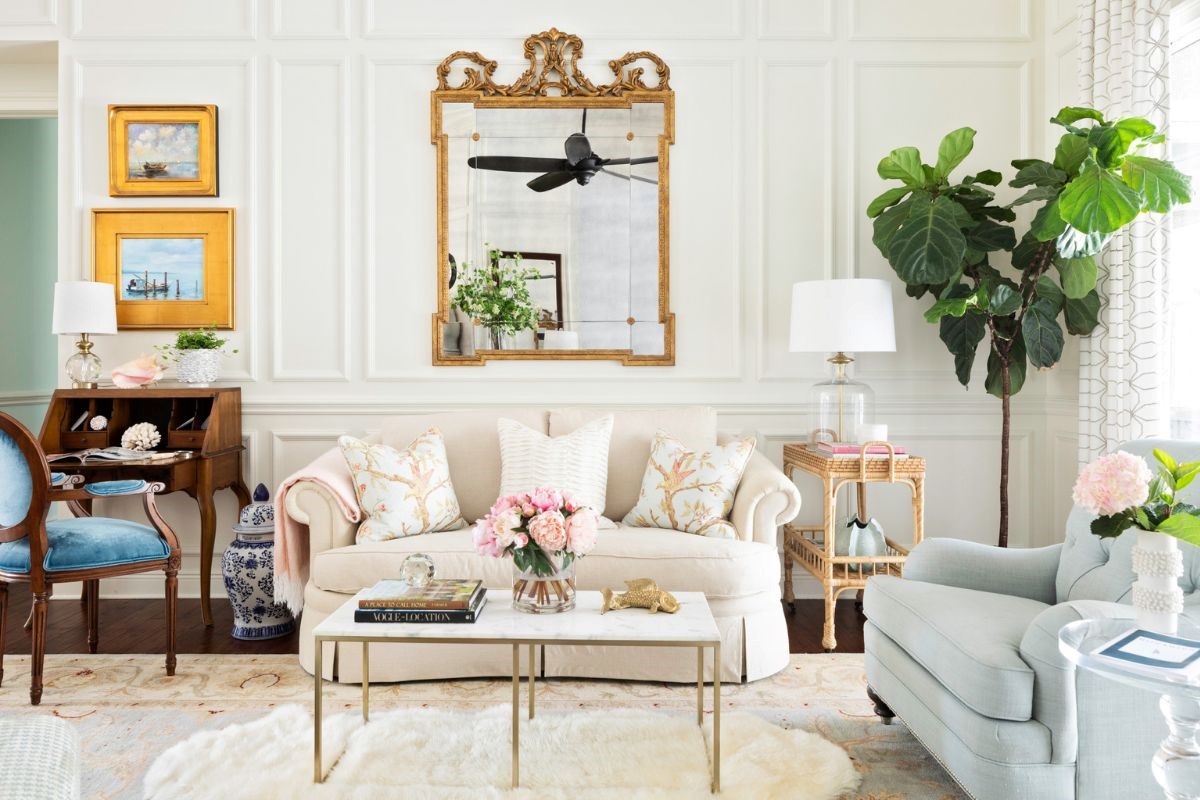
A traditional living room is the kind of space where a fire crackles behind a painted mantel, a rolled-arm sofa faces a pair of wingback chairs, and lamplight falls across a worn Persian rug. Books line the shelves beside the chimney, a gilt mirror reflects the room back at itself, and a tray of glasses waits on a mahogany coffee table. It feels formal enough for guests and easy enough for a Sunday afternoon with a novel.
Traditional style draws on 18th- and 19th-century European and early American interiors, but in the living room its real purpose is comfort with polish. Symmetry organizes the seating, warm wood and layered fabrics soften the formality, and classic details such as crown molding and fine lamps give the room a sense of permanence. The goal is a space that looks collected over time rather than bought in a single weekend.
Key Takeaways
- Traditional living rooms combine classic furniture shapes, warm wood, and layered fabrics with everyday comfort.
- Symmetrical seating around a fireplace or other focal point is the backbone of the layout.
- Warm neutrals paired with jewel-tone accents such as burgundy, navy, and emerald create a rich, welcoming palette.
- Layered lighting from a chandelier, lamps, and sconces flatters wood, fabric, and molding.
- Molding, paneling, wallpaper, and well-chosen art give the walls depth and character.
- Modern comforts and technology can be hidden or styled so the room stays authentic.
What Defines a Traditional Living Room
A traditional living room is built on classic furniture forms, rich wood tones, and decor with a sense of history. It borrows from Georgian, Regency, French, and Victorian interiors, yet it is meant to be lived in rather than admired from the doorway.
Key Characteristics
Look for rolled-arm or camelback sofas, wingback and bergere chairs, carved or turned wood legs, and tables in mahogany, cherry, or walnut. Fabrics such as velvet, damask, chintz, and wool add texture, while brass lamps, framed oil paintings, and porcelain add the finishing layer.
Historical Influences
Georgian rooms contributed balanced proportions and paneled walls, and English cabinetmakers such as Thomas Chippendale and Thomas Sheraton gave the style many of its furniture shapes. French interiors added curved chairs and gilded mirrors, while the Victorian era layered patterns, fringed upholstery, and collections of objects. A traditional room today usually blends a few of these sources rather than copying one period exactly.
Why the Style Endures
Traditional living rooms are forgiving and adaptable. They welcome inherited furniture, antiques, and family photographs, and they rarely look dated because they never depended on a passing trend. Good pieces can move from house to house and still feel right.
Planning the Layout
A traditional living room depends on a clear, balanced plan. Furniture placement decides whether the room feels gracious or awkward, so plan it before buying anything new.
Reading the Room
Measure the room and note doorways, windows, radiators, outlets, and the fireplace. The fireplace is usually the natural focal point; in a room without one, a large window, a built-in bookcase, or a substantial piece of art can take its place.
Symmetrical Conversation Areas
Arrange seating facing itself across the focal point. Two sofas facing each other with a coffee table between them is the classic plan; a sofa facing the fireplace with a matching pair of armchairs on either side works well in narrower rooms. Seats should be close enough for easy conversation, roughly 8 to 10 feet apart at most.
Traffic Flow and Spacing
Keep main walkways about 30 to 36 inches wide and route them around the conversation area rather than through it. Leave 14 to 18 inches between the sofa and coffee table, and choose a rug large enough for at least the front legs of every seat to rest on it. In large rooms, a second grouping near a window, such as two chairs and a small table, adds a quiet corner for reading or games.
Color Palettes for a Traditional Living Room
Color sets the mood of a traditional living room long before anyone notices the furniture. The best palettes feel warm, layered, and calm, with depth that grows richer in lamplight.
Classic Color Combinations
Start with a warm neutral base such as cream, ivory, beige, or taupe, and pair it with deep red, navy, or forest green. Soft sage with antique gold is another long-standing pairing, and blue and white, inspired by centuries of porcelain, feels especially fresh in a sunny room.
Rich, Warm Tones
Bring in depth through upholstery, rugs, and drapery rather than painting every wall dark. Wood tones count as color too, so walnut, mahogany, and oak furniture add warmth and anchor lighter walls.
Accent Colors
Jewel tones such as emerald, sapphire, garnet, and amethyst give pillows, lampshades, and a single armchair real presence. Brass, gilt, and bronze accents warm cooler colors and reflect light. Repeat each accent color at least three times across the room so it looks deliberate.
Choosing Traditional Furniture
Traditional furniture should look substantial and well made, with profiles that have lasted for generations. Buy the large pieces with care and let smaller ones come and go.
Sofas and Seating
Rolled arms, tight or tufted backs, skirted bases, and turned wood legs are typical. A Chesterfield, a camelback sofa, or a tuxedo-arm sofa can anchor the room, while wingback, bergere, or slipper chairs complete the grouping. Measure carefully so the sofa suits the room’s scale, and choose deep enough seats for real comfort.
Coffee, Console, and Side Tables
A wood coffee table with carved or turned legs, an upholstered ottoman with a tray, or a marble-topped table all suit the style. A console behind a floating sofa adds a surface for lamps, and side tables should sit roughly level with the sofa arm so a drink is easy to reach.
Storage and Cabinetry
Bookcases flanking the fireplace, a breakfront or display cabinet for china, and a chest or secretary along a wall provide storage with character. Closed cabinet doors below open shelves are especially practical for hiding games, remotes, and electronics.
Fabrics and Textiles
Fabrics shape how formal or relaxed a traditional living room feels, and they bring the pattern and softness that wood and molding alone cannot.
Upholstery Materials and Patterns
Velvet, linen, chenille, wool, and leather all work for traditional upholstery. On the sofa, choose a durable solid or small-scale pattern, and save bolder florals, damasks, and stripes for chairs, pillows, and ottomans. Tweed and wool bouclé add cozy texture in cooler months, while silk belongs on lightly used pieces and pillows.
Drapery and Window Treatments
Full-length lined drapery hung high on wood or brass rods is a classic choice. Pleated headings, a shaped valance, or swags add formality, while simple panels in linen feel more relaxed. Contrast banding along the leading edge ties curtains to other fabrics in the room.
Area Rugs
A Persian, Oriental, or needlepoint rug grounds the seating group and introduces color and pattern underfoot. Wool is durable and easy to clean. If the rug is busy, keep the upholstery calmer, and if the upholstery is patterned, choose a rug with a simpler field and border.
Lighting a Traditional Living Room
In a traditional living room, light fixtures are part of the decor. The aim is a warm glow that shows off wood and fabric while giving enough light to read and talk.
Chandeliers and Ceiling Fixtures
A crystal or brass chandelier is the signature fixture, especially in rooms with higher ceilings. In rooms with lower ceilings, a semi-flush fixture with a fabric or glass shade gives similar charm without crowding head height. Center the fixture on the seating area rather than the room if the two do not line up.
Table Lamps, Floor Lamps, and Sconces
Table lamps with ceramic, porcelain, or brass bases and pleated or drum shades sit beside the sofa and chairs. A floor lamp beside a reading chair adds task light.
Sconces flanking the mantel, a mirror, or a bookcase reinforce symmetry, and a picture light above a painting adds a gallery feel.
Layering for Ambiance
Combine overhead, lamp, and accent light so no single fixture dominates. Use warm bulbs around 2700K and put the chandelier and sconces on dimmers. In the evening, lamps alone usually give the most flattering, intimate light.
Wall Treatments and Architectural Details
The walls of a traditional living room carry much of its character. Molding, paneling, paint, and paper add depth and shadow that make even a plain room feel established.
Paint or Wallpaper
Paint offers flexibility, from soft cream and greige to deep green or oxblood in a library-style room. Eggshell walls with satin trim are a practical, classic combination. Wallpaper in a damask, stripe, toile, or floral adds pattern and works well above wainscoting or on a fireplace wall.
Crown Molding, Wainscoting, and Trim
Generous crown molding, raised-panel or picture-frame wainscoting, chair rails, and substantial baseboards are hallmarks of the style. In a newer home, applied molding boxes, a chair rail, and thicker door casings can add period character without major construction.
Gallery Walls and Art
Landscapes, portraits, botanical prints, and still lifes in gilt or wood frames suit traditional rooms. Above a sofa, choose art about two-thirds the sofa’s width. For a gallery wall, keep consistent spacing of 2 to 3 inches between frames and anchor the arrangement on a central piece.
Styling the Fireplace and Mantel
In most traditional living rooms the fireplace is the main event, so it deserves careful attention. A well-dressed mantel ties together the wall color, the art, and the seating plan.
The Surround and Hearth
Marble, limestone, and painted wood surrounds are all classic. A carved or paneled wood mantel painted the trim color suits most rooms, while a marble surround in white, gray-veined, or warm cream feels more formal. Keep the hearth clear except for a brass or iron fire screen, a log holder, and a set of tools.
Arranging the Mantel
Center a mirror or painting above the mantel, sized to cover about two-thirds of its width. Flank it with matching candlesticks, urns, or a pair of ginger jars for symmetry, then add one or two smaller objects, such as a clock or a small framed picture, to keep it from looking rigid. Seasonal greenery is an easy way to refresh the mantel throughout the year.
When There Is No Fireplace
A large painting over a console, a pair of tall bookcases with a window between them, or an antique cabinet can serve the same purpose. Arrange the seating to face this feature and frame it with matching lamps or sconces.
Decorative Accessories
Accessories give a traditional living room its personal, collected feel. Choose them with the same care as the furniture, and display them in groups rather than scattering them everywhere.
Mirrors, Clocks, and Wall Decor
A gilt or carved wood mirror above the mantel or a console bounces light and adds elegance. A mantel clock or a tall case clock in a corner brings a sense of history.
Decorative plates, framed silhouettes, and small sconces can round out a wall without crowding it.
Books, Vases, and Collections
Stack books horizontally and vertically on shelves, mixing in porcelain, brass objects, and small framed photographs. Ginger jars, blue-and-white vases, and silver bowls are classic choices. Group collections of similar objects together so they read as one display.
Plants and Flowers
A fern on a stand, a potted orchid, or a large arrangement of garden flowers or branches brings life to the room. Choose ceramic cachepots, brass planters, or woven baskets that suit the palette.
Regional Variations of Traditional Style
Traditional living rooms look different depending on where their influences come from. Knowing these variations helps narrow choices and gives the room a clearer identity.
American Traditional and English Traditional
American traditional rooms tend to favor comfort, with deep upholstered sofas, practical fabrics, and fewer formal flourishes. English traditional rooms, including the relaxed English country look, layer chintz, faded rugs, antiques, and plenty of books for a lived-in, slightly undone elegance.
French Provincial
French provincial living rooms have curved, carved furniture, often in painted or distressed finishes, with soft colors such as cream, dove gray, and pale blue. Toile fabrics, cabriole legs, and wrought iron details complete the look.
Southern and Colonial Styles
Southern traditional rooms emphasize hospitality, with symmetrical seating, heirloom furniture, crisp slipcovers in summer, and plenty of blue and white. Colonial-inspired rooms take a simpler, more restrained approach, with wide-plank floors, Windsor chairs, plain wood paneling, and practical furniture.
Blending Modern Comforts With Traditional Style
A traditional living room still needs to handle screens, chargers, and busy family life. The trick is to fit these in without breaking the classic mood.
Hiding Technology
Place the television inside a cabinet with doors, above a mantel only if viewing height is comfortable, or behind a framed art screen. Route cords through furniture and walls, add outlets in the floor beneath a floating sofa, and keep speakers inside bookcases.
Contemporary Touches
A piece of abstract art, black-and-white photography, or a modern lamp can freshen a traditional room without overpowering it. Performance fabrics on classic frames make the room friendlier to children and pets.
Keeping It Authentic
Mix antiques with a few modern pieces, but keep the overall palette and proportions consistent. When new furniture is needed, choose simple classic shapes that will sit comfortably beside older pieces.
Common Mistakes to Avoid
Most traditional living rooms that feel off suffer from one of a few predictable problems.
- Overcrowding: too much furniture or too many small accessories makes the room feel stuffy. Leave open floor and some empty surfaces.
- Mixing too many periods: a little variety adds interest, but combining several unrelated eras creates confusion. Choose one or two related influences.
- Ignoring scale: an oversized sectional or a tiny rug throws off proportion. Measure the room and furniture before buying.
- Neglecting lighting: relying on one ceiling fixture flattens the room. Add lamps and sconces at different heights.
Conclusion
A traditional living room brings together classic furniture, warm wood, layered fabrics, and balanced symmetry to create a space that is elegant and comfortable at once. Careful planning of layout, color, lighting, and walls gives it lasting character.
Build it slowly, starting with a solid sofa, a good rug, and a clear focal point, then add art, accessories, and personal collections over time. The result is a room that welcomes guests and family alike and only grows richer with age.
Frequently Asked Questions
More Traditional Style Decor
- Traditional Style: The Absolute Guide
- Traditional Style Bedroom: Timeless Elegance and Comfort
- Traditional Style Kitchen: Blending Charm with Modern Functionality
- Traditional Style Dining Room: A Showcase of Comfort and Tradition
- Traditional Style Entryway: Timeless Elegance from the First Glance