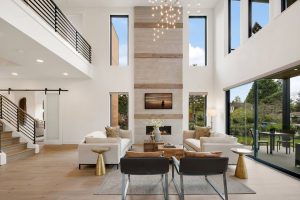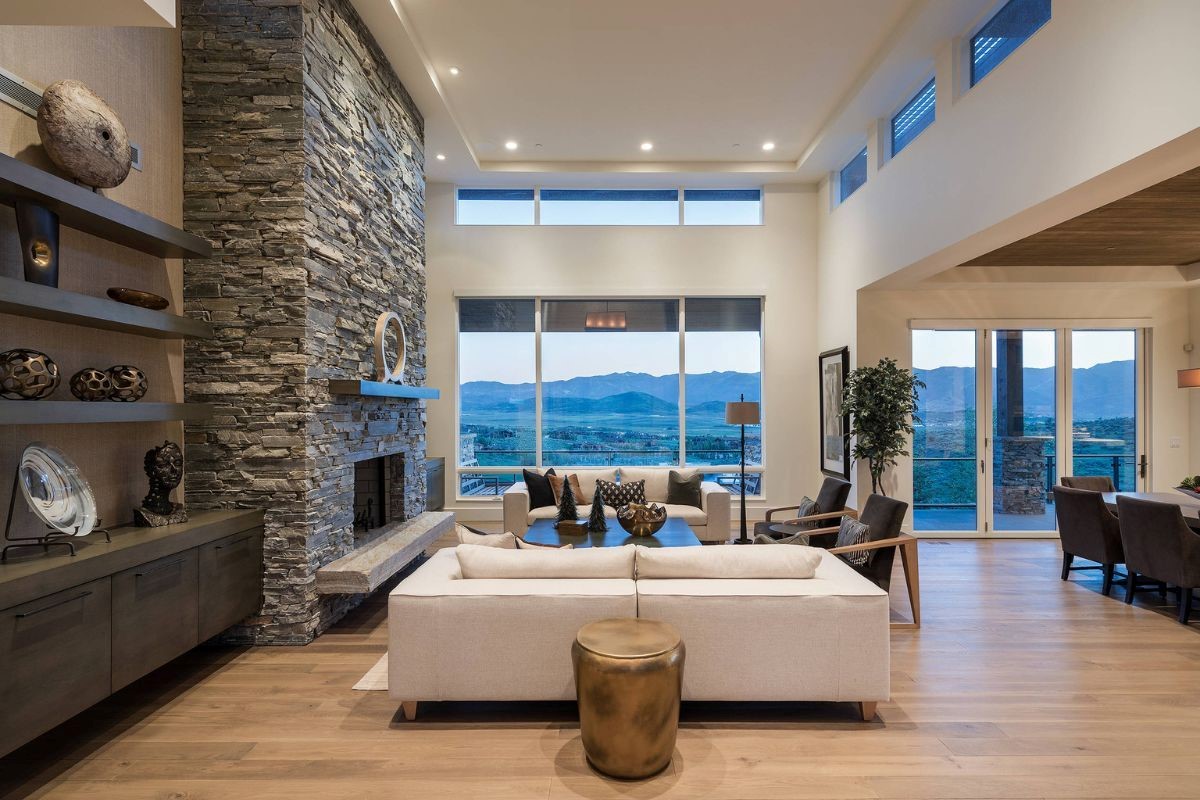
Picture a living room with a low, track-arm sofa in soft gray wool, a round marble coffee table on a slim metal base, and a large abstract canvas leaning against a warm white wall. Floor-to-ceiling windows wear nothing but sheer linen panels, the oak floor runs uninterrupted into the kitchen, and a sculptural floor lamp curves over a reading chair in cognac leather. Nothing is ornate, yet the room feels warm, current, and completely at ease.
That is contemporary style. Rather than following a fixed rulebook from one era, it reflects the design of the present moment: clean lines, open space, a mostly neutral palette, and a thoughtful mix of materials, with comfort given as much weight as looks. This guide explains what defines the style, where it came from, and how to apply it through color, furniture, surfaces, lighting, textiles, and room-by-room choices, including updates that work on a modest budget.
Key Takeaways
- Contemporary style means the design of now, so it evolves over time, while modern style refers to a specific 20th-century movement.
- Clean lines, open layouts, and minimal ornament define the look, but comfort and softness keep it livable.
- A neutral base of whites, grays, and warm earth tones is sharpened with black and enlivened by a few bold accents.
- Furniture favors simple silhouettes, exposed legs, and a mix of wood, metal, glass, and stone.
- Layered lighting and textured textiles do much of the decorating that pattern and trim did in older styles.
- Editing is the core skill: fewer, better pieces with space around them always read as contemporary.
What Defines Contemporary Style?
Contemporary style is fluid by nature. Because the word simply means “of the present,” the look shifts gradually as tastes, materials, and technology change. What stays constant is a preference for simplicity, open space, and furniture that is both comfortable and visually clean.
Key Characteristics of Contemporary Design
A contemporary room is recognizable by its clean, often curved or softly squared lines, uncluttered surfaces, and restrained ornament. Walls and large furnishings tend to be neutral, while interest comes from texture, shape, and one or two confident accents. Windows are dressed lightly, floors are kept open, and each piece of furniture is chosen for both function and form.
How Contemporary Differs From Modern Style
The two terms are often used interchangeably, but they describe different things. Modern style refers to a defined movement that took shape in the early to mid-20th century, with fixed hallmarks such as tapered wood legs, molded plywood, and a strong horizontal emphasis. Contemporary style borrows freely from modernism but also absorbs newer ideas, so it can include curved sofas, boucle upholstery, matte black hardware, and organic shapes that a mid-century room would not have featured.
The Feeling Contemporary Rooms Aim For
Beyond any checklist, contemporary interiors aim for calm and ease. Rooms should feel light, open, and practical, with nothing that needs fussing over. The best examples balance crisp architecture with soft, touchable materials so the space looks polished without feeling like a showroom.
The Evolution of Contemporary Style
Contemporary style did not appear from nowhere. It grew from the modernist movement and later absorbed influences from postmodernism, minimalism, and the growing interest in sustainable living.
Historical Context and Influences
Early modernists such as Le Corbusier and Mies van der Rohe stripped interiors of ornament and celebrated open plans, steel, and glass. Mid-century designers including Charles and Ray Eames and Eero Saarinen softened that rigor with molded forms and warmer materials. In the 1970s and 1980s, postmodern designers, most visibly Ettore Sottsass and the Memphis Group, pushed back with bold color and playful shapes. Contemporary style took something from each: modernism’s clarity, mid-century warmth, and a willingness to use the occasional surprising color or form.
Contemporary Style Since the Turn of the Century
Over recent decades, contemporary interiors have moved away from the stark, all-white look that once defined them. Warmer neutrals, natural wood, curved furniture, and layered textiles have become common. Sustainability now shapes material choices too, with reclaimed wood, recycled glass, low-VOC paints, and durable natural fibers appearing more often.
Technology Built Into the Design
Contemporary homes integrate technology quietly. Recessed speakers, dimmable LED lighting on smart controls, charging drawers in nightstands, and media walls with concealed cables let rooms stay visually clean while working hard behind the scenes.
Essential Elements of Contemporary Home Decor
A handful of principles carry the style from room to room. Get these right and almost any furniture choice will fall into place.
Clean Lines and Minimal Ornamentation
Contemporary furniture and architecture avoid carved details, heavy moldings, and fringe. Instead, the eye follows simple edges: a sofa with a slim track arm, a flat-panel cabinet, a frameless mirror. This restraint gives each shape more presence and creates a calmer room overall.
Open Spaces and Thoughtful Layout
Open floor plans suit the style, but even a closed room can feel contemporary when furniture is pulled slightly off the walls and pathways are kept clear. Leave at least 30 to 36 inches for walkways, group seating around a clear focal point, and resist filling every corner. Negative space is part of the design, not leftover room.
Balance Between Function and Form
Every piece should earn its place. A coffee table with a lower shelf, a bench with hidden storage, or a sleek sideboard that holds media equipment all keep surfaces clear while looking intentional. When a piece is beautiful but impractical, or practical but visually heavy, it usually breaks the contemporary mood.
Color Palettes for Contemporary Interiors
Color in contemporary design is controlled rather than timid. A calm base lets architecture and furniture stand out, while carefully placed accents add energy.
Neutral Foundations
Most contemporary rooms begin with warm white, soft gray, greige, or pale taupe on the walls. These shades reflect light well and give furniture a clean backdrop. Choosing one main wall color for connected spaces keeps an open plan feeling unified.
Working With Whites, Blacks, and Grays
The classic contemporary trio is white, gray, and black. Use white or off-white for large surfaces, mid-gray for upholstery or rugs, and black in thin lines such as window frames, lamp bases, picture frames, and cabinet pulls. This graphic contrast gives the style its crisp edge.
Incorporating Earth Tones
Beige, sand, camel, clay, and soft olive add warmth that keeps a neutral room from feeling cold. They pair well with walnut and oak, natural linen, and leather. Pairings such as warm white with camel and charcoal, or greige with olive and black, feel especially current.
Strategic Use of Bold Accent Colors
One saturated color, repeated two or three times, is usually enough. Deep teal, burnt orange, cobalt, emerald, or mustard can appear in a pillow, a piece of art, and a ceramic vase. Keeping accents to roughly 10 percent of the room stops the color from overwhelming the clean base.
Color Combinations That Work Best
- Warm white, charcoal, and walnut for a grounded, gallery-like look.
- Soft gray, navy, and brushed brass for a tailored feel.
- Greige, terracotta, and black for warmth with contrast.
- White, pale oak, and sage for a light, airy room.
Furniture Selection for Contemporary Spaces
Furniture carries most of the style. Choose pieces with clear shapes, comfortable proportions, and materials that show their quality.
Lines and Forms in Contemporary Furniture
Look for low-profile sofas, armless or slim-armed chairs, platform beds, and tables with simple plinth or pedestal bases. Contemporary furniture often sits on exposed legs, which lets light pass underneath and keeps rooms airy. Gently curved sofas and rounded coffee tables soften rooms dominated by straight lines.
Materials That Define Contemporary Pieces
Wood, metal, glass, and stone are the core materials. Oak and walnut add warmth, brushed steel and powder-coated metal add precision, tempered glass keeps small rooms open, and marble or sintered stone brings weight to a table or console. Leather, wool, linen, and boucle round out the upholstery choices.
Statement Furniture in Contemporary Design
One sculptural piece gives a contemporary room personality. That might be a curved lounge chair, a cantilevered side chair, or a pedestal dining table in the spirit of Eero Saarinen’s Tulip table. Classic designs such as the Barcelona chair by Mies van der Rohe also sit comfortably in contemporary rooms. Let the statement piece have space around it and keep nearby furniture quieter.
Flooring and Wall Treatments
Floors and walls set the backdrop for everything else. Contemporary surfaces are generally smooth, continuous, and understated, with texture added in measured doses.
Contemporary Flooring Options
Wide-plank wood in natural oak or a matte finish is the most popular choice. Large-format porcelain tile, polished concrete, and terrazzo also suit the style, especially in kitchens, entries, and open plans. Running the same flooring through connected rooms makes a home feel larger.
Hardwood and Alternative Materials
Engineered wood offers the look of solid hardwood with better stability over radiant heating or in humid climates. Bamboo and quality luxury vinyl plank are durable, practical alternatives for busy households. Matte and low-sheen finishes look more current than high-gloss and hide scratches better.
Area Rugs and Placement
Rugs define zones in open plans and add softness. Choose low-pile wool or flatweave rugs in solid colors, subtle tone-on-tone textures, or simple geometric patterns. In a living area, the rug should be large enough for at least the front legs of every seating piece to rest on it.
Wall Finishes and Treatments
Smooth painted walls in eggshell or matte finish are the default. For interest, consider one wall in limewash or textured plaster, slim vertical wood slats behind a sofa or bed, or a large-format stone or porcelain panel around a fireplace. Keep moldings minimal or paint them the same color as the wall.
Wall Art and Decorative Elements
Contemporary walls favor fewer, larger pieces. A single oversized abstract canvas, a large black-and-white photograph, or a simple grid of three matching frames looks more intentional than many small items. Frameless mirrors and gallery-style picture lights complete the look.
Lighting in Contemporary Design
Lighting is both functional and decorative in contemporary rooms. Fixtures often act as sculpture, while hidden sources keep the space evenly lit.
Natural Light Maximization
Keep windows as clear as possible. Sheer linen panels, roller shades, or simple ripplefold drapery mounted close to the ceiling let in light while adding height. Large mirrors placed opposite or beside windows bounce daylight deeper into the room.
Fixture Styles and Placement
Choose fixtures with simple geometry: globe pendants, linear suspensions over dining tables, arc floor lamps, and slim wall sconces. Finishes such as matte black, brushed brass, and satin nickel all suit the style. Center pendants on tables and islands rather than on the room itself, and hang them about 30 to 36 inches above the surface.
Layering Light Sources
Combine three layers. Ambient light from recessed downlights or a large flush fixture gives overall brightness. Task lighting from reading lamps, under-cabinet strips, and desk lamps supports daily activities. Accent lighting, such as LED strips in shelving or a picture light over art, adds depth. Put each layer on its own dimmer and choose warm white bulbs around 2700K to 3000K for living spaces.
Textiles and Fabrics in Contemporary Spaces
Textiles are how contemporary rooms stay warm. With little pattern or ornament, texture becomes the main source of comfort and visual interest.
Selecting Appropriate Textiles
Natural fibers such as cotton, linen, and wool are popular for their durability and texture, while performance fabrics suit homes with children or pets. Boucle, velvet, and nubby wool add depth to upholstery. Keep fabric colors within the room’s palette and let texture, not busy prints, carry the interest.
Patterns and Textures That Work
When pattern appears, it is usually geometric, linear, or abstract: subtle stripes, large-scale grids, or a painterly print on one cushion. Mixing textures matters more than mixing patterns. Pair smooth leather with chunky knit, glass with rough-hewn wood, or linen with velvet for a layered, inviting room.
Window Treatments
Contemporary windows wear simple treatments. Floor-length panels in a solid color, hung on slim rods or ceiling tracks, look clean and add softness. Roller or cellular shades in neutral fabric work where privacy or light control matters most.
Room-by-Room Guide to Contemporary Decor
The same principles apply throughout the home, but each room has its own priorities.
Contemporary Living Rooms
The living room should feel inviting and uncluttered. Anchor it with a sectional or a low sofa, add one or two accent chairs, and place a simple coffee table within easy reach. Arrange seating to face each other or a single focal point such as a fireplace or media wall.
Accessorizing With Purpose
Accessories should be few and well chosen. A large sculptural vase, a stack of art books, one or two plants with strong shapes, and a single statement artwork are enough for most living rooms. Group smaller items in odd numbers on trays to keep surfaces organized.
Contemporary Kitchens and Dining Areas
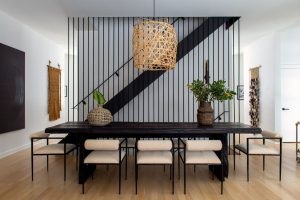
Flat-panel or slab cabinetry, integrated appliances, and quartz or stone countertops define contemporary kitchens. Handleless doors or slim bar pulls keep lines clean. In the dining area, a simple table in wood, stone, or glass paired with streamlined chairs, plus a linear or cluster pendant, completes the look.
Contemporary Bedrooms
A platform bed with a simple upholstered or wooden headboard is the centerpiece. Floating nightstands, wall-mounted sconces, and crisp layered bedding in neutral tones keep the room calm. Blackout roller shades behind sheer panels give both darkness and softness.
Contemporary Bathrooms
Wall-hung vanities, frameless glass showers, and large-format tiles make bathrooms feel open and easy to clean. A freestanding tub, matte black or brushed nickel fixtures, and natural materials such as stone or teak balance sleekness with warmth.
Implementing Contemporary Style on a Budget
Contemporary style is about editing as much as buying, which makes it surprisingly affordable. A few targeted updates can shift a room’s whole character.
Cost-Effective Contemporary Updates
Start by decluttering and clearing surfaces, which costs nothing and makes the biggest difference. Repaint walls in a warm neutral, swap dated light fixtures for simple globe or linear designs, and replace cabinet hardware with slim matte black or brushed brass pulls. Hanging curtains higher and wider than the window is another inexpensive change with large impact.
Upcycling Furniture for Contemporary Spaces
Older pieces with good proportions can be updated rather than replaced. Paint a dated dresser in matte black or warm white and add new hardware, swap turned legs for straight tapered or metal ones, or reupholster a chair in a solid wool or boucle. Removing ornate trim can be enough to give a piece cleaner lines.
Simple Weekend Projects With Big Impact
- Paint one wall in a deep accent color such as charcoal or olive.
- Create a large-scale artwork with canvas and a limited palette.
- Install plug-in wall sconces to add layered light without rewiring.
- Replace heavy drapes with simple linen panels on a slim rod.
Common Mistakes to Avoid in Contemporary Design
Because contemporary style relies on restraint, small missteps show quickly. Most problems come from too much stuff or too little warmth.
Overcrowding and Clutter
Filling a room with furniture or decor undermines the open feel the style depends on. Edit carefully, keep only the pieces that are useful or genuinely loved, and give each one space. Closed storage, such as cabinets with flat doors and baskets in consistent colors, keeps daily clutter out of sight.
Balancing Minimalism With Warmth
A room with only gray, glass, and chrome can feel cold. Add warmth with wood, leather, wool, plants, and warm-toned light. A textured throw, a jute or wool rug, and a few natural-material accessories make a sleek space feel lived-in.
Ignoring Scale and Proportion
Undersized rugs, tiny artwork, and furniture that is too large for the room all disrupt the clean lines contemporary style relies on. Measure before buying, choose larger rugs and art than seem necessary, and keep large pieces in proportion to ceiling height and floor area.
Conclusion
Contemporary style is less about following a strict formula and more about creating rooms that feel open, calm, and suited to how people live now. Clean lines, a measured palette, honest materials, and layered light form the foundation, while texture and a few bold choices supply personality.
Start with editing and a neutral base, then invest in a few well-made pieces, good lighting, and textiles that add warmth. Over time, the home will evolve along with the style itself, staying fresh without ever feeling dated.
Frequently Asked Questions
More Contemporary Style Decor
- Contemporary Style Bedroom: A Blend of Elegance and Simplicity
- Contemporary Style Living Room: Sleek and Sophisticated Design
- Contemporary Style Bathroom: Innovative Design for Modern Comfort
- Contemporary Style Dining Room: Embracing Trends for Stylish Dining Experiences
- Contemporary Style Entryway: Stylish Introduction to Modern Living