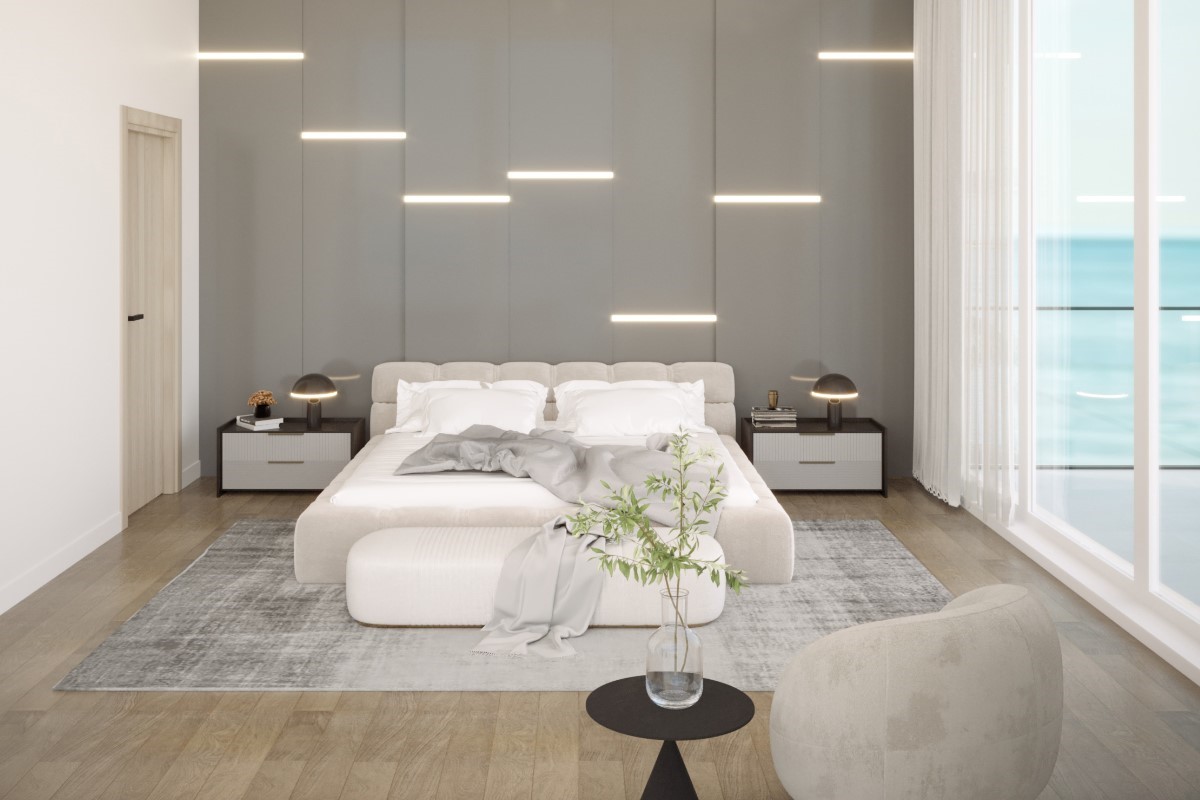
Picture a modern bedroom at dusk. A low walnut platform bed with a channel-tufted headboard sits against a soft taupe wall, crisp white percale sheets meet a nubby bouclé throw, and a pair of slim floating nightstands holds nothing more than a reading lamp and a small ceramic dish. A single large abstract canvas hangs above the bed, and sheer linen curtains glow in the last of the daylight.
Modern style in the bedroom is about clarity. Clean lines, a focused palette, and furniture that earns its place keep the room calm, while texture, warm wood, and good lighting stop it from feeling cold. The result is a space that supports sleep, reading, and quiet mornings, with just enough personality to feel like home.
Key Takeaways
- A restrained palette of cream, taupe, gray, or a single deep color sets a calm mood.
- Texture from bouclé, linen, plaster, and wood gives a pared-back room depth without clutter.
- Low, clean-lined furniture with one rounded or upholstered piece balances precision and warmth.
- One focal wall or artwork is stronger than many small decorations.
- Layered, dimmable lighting with warm bulbs supports reading and winding down.
- Built-in and hidden storage keeps surfaces clear and sightlines open.
Set the Tone With a Modern Color Palette
A good palette gives the room its mood before any furniture arrives. Start with a restrained base so shapes and fabrics can stand out without competing.
Calming Neutrals
Cream, taupe, and soft gray form a light, flexible backbone. Use them on walls and in large textiles such as the duvet and curtains, then add depth with slightly darker tones in a headboard or rug.
Moody Schemes
Deep colors can feel very modern in a bedroom. Walnut brown or charcoal walls create a cocooning effect, especially with a canopy bed and warm lamplight. Alternatively, let one strong element, such as an ocean blue upholstered headboard, anchor an otherwise neutral room.
High Contrast and Saturated Accents
Crisp white with black accents defines lines cleanly. Add energy with one saturated piece, such as a rust rug or a cobalt print, rather than spreading color everywhere. If using wallpaper, choose a tonal geometric or limit it to the wall behind the bed.
Test paint swatches by the window during the day and again under lamplight at night, since bedroom colors shift dramatically. For easy seasonal change, swap the duvet cover or rug instead of repainting.
Layer Texture for Depth Without Clutter
Texture is what makes a pared-back bedroom feel finished. Layering materials adds interest to the touch and eye without the visual noise of busy patterns.
Bouclé, Linen, and Quilted Bedding
Start with linen or cotton percale sheets as a calm base. Add a quilted coverlet or a bouclé throw for subtle depth, and limit decorative pillows to two or three in complementary weaves. A bouclé or wool upholstered headboard can be the textural hero of the room.
Grasscloth and Plaster Walls
Grasscloth softens and scatters daylight, giving walls a gentle glow. Limewash and plaster finishes add quiet movement, and their matte surfaces absorb glare to keep the room restful.
Wood Grain and Cane
Balance sleek lines with warm materials. A cane-fronted nightstand, a ribbed oak dresser, or a woven bench at the foot of the bed brings organic texture and prevents a sterile feel.
A simple rule keeps texture cohesive: pick three, such as smooth, nubby, and woven, and repeat each two or three times across the room.
Modern Bedroom Furniture With Warmth
Furniture should combine clean silhouettes with warm materials. Low profiles and open space around each piece make the room feel calm and intentional.
Upholstered and Canopy Beds
An upholstered bed or a slim walnut canopy frame anchors the room without needing many extra pieces. A velvet or wool headboard adds comfort for reading in bed, while a canopy in blackened steel or wood gives architectural presence.
A custom headboard with built-in shelves or hidden compartments can also hold books and chargers, keeping nightstands clear.
Sleek Lines Meet Rounded Forms
Pair straight-lined casegoods with one curved element, such as a rounded bench, a barrel chair, or a soft-edged side table. Coordinate finishes rather than matching them exactly: walnut side tables with a charcoal upholstered bed look collected rather than bought as a set.
Fewer, Better Pieces
Choose honest materials that age well, and size furniture to the room. A modern bedroom usually needs only a bed, two bedside surfaces, a dresser, and perhaps one chair. Add more only when it serves a clear purpose.
Walls That Work: Paint, Wallpaper, and Art
Treat the walls as the room’s backdrop and create one clear focal point. A single well-chosen treatment adds character without clutter.
Statement Wallpaper Used With Intent
Wallpaper works best in a modern bedroom when it is a single, considered gesture. A large-scale botanical, a bold graphic, or a hand-painted mural behind the bed can carry the whole design if the rest of the room stays quiet. In a child’s room, a playful botanical paper with yellow accents adds energy while still reading as one idea.
Monochrome Walls With Texture
A single wall color gains depth when paired with limewash, plaster, or grasscloth. These finishes catch light and add subtle dimension beside an upholstered headboard.
One Large Artwork
A single large canvas or photograph above the bed defines the room’s axis and acts almost as a headboard. Leave generous space around it, and pull one or two colors from the art into pillows or a throw. Use secure mounting for heavy pieces over the bed.
Layered Lighting for Reading and Mood
Lighting makes a modern bedroom easy to use at any hour. Combine ambient, task, and accent sources so the room supports reading, dressing, and winding down without glare.
Architectural Lamps and Sculptural Pendants
Directional lamps are ideal for bedside reading. Richard Sapper’s Tizio lamp, an icon of the 1970s, shows how a modern fixture can be both precise and beautiful. A single sculptural pendant or chandelier can serve as the room’s focal fixture.
Filtered Daylight
Sheer linen curtains or Korean bojagi-inspired patchwork panels diffuse daylight softly. Layer them with blackout lining or a separate shade for sleep.
Practical Lighting Details
A few details make lighting work better day to day:
- Put every circuit on a dimmer and use warm bulbs between 2700K and 3000K.
- Choose wall-mounted sconces in tight rooms to free nightstand space.
- Hide cords and place switches within reach of the bed.
- Add a thin LED strip under a floating shelf or headboard for a soft night glow.
Smart, Sleek Storage
When storage is built into the architecture, the bedroom reads calm and uncluttered. Built-ins along walls and in corners reclaim space and keep extra furniture out of sightlines.
Hidden Niches and Dual-Purpose Pieces
Integrated headboards with rear storage or recessed niches hold books and small items without breaking the clean silhouette. A floating side shelf can replace a bulky nightstand and reduce visual weight beside the bed.
Under-bed drawers and low dressers keep sightlines open so the room feels larger. A slim lift-top bench at the foot of the bed stores blankets out of view.
Closets and Cabinets
Use matching hangers, labeled bins, and sliding doors where space is tight. Keep built-in finishes to a limited palette that matches the rest of the room. Edit seasonally so the storage keeps working and surfaces stay clear.
Patterns and Prints, From Minimal to Bold
Modern does not have to mean plain. The key is to choose one dominant pattern and let everything else support it.
Botanical Wallpapers and Geometric Rugs
A large botanical wallcovering or a bold geometric rug can set the palette for the room. Counterbalance it with a simple bed frame and solid or lightly textured bedding so the hero pattern can breathe.
Velvet and Mixed Textiles
Velvet on a headboard or a single throw adds a note of glamour. Pillows can echo one or two colors from the main pattern, with any secondary prints in a smaller scale.
For guest rooms or shared spaces, keep patterns on removable items such as duvets, rugs, or framed art so updates are easy. In a more minimal room, swap a patterned layer for texture.
A simple sequence works well: choose one pattern, anchor it with a solid textile, add one small accent print, then stop.
Organic Modern Accents: Wood, Stone, and Nature
Natural materials bring warmth and quiet richness to a modern bedroom. They also change how light reads across the room through the day.
Warm Wood
Walnut on a bed frame or nightstands adds depth without ornament. Oak wall paneling behind the bed warms a room and pairs well with a simple globe or sculptural pendant. Burl wood nightstands bring subtle natural pattern to mocha and taupe schemes.
Stone and Living Elements
Introduce stone sparingly, with a marble side table or a travertine lamp base. Add one leafy plant or a branch arrangement in a simple vase to connect the room to the outdoors.
Keeping It Balanced
Match wood tones to the floor or choose clearly contrasting ones, and keep the surrounding palette neutral so wood and stone stay the focus. Soft textiles balance the hard surfaces so the room feels composed rather than rustic.
Modern Bedroom Ideas for Personality
A modern bedroom can be calm and still unmistakably personal. One bold gesture is usually enough.
One Focal Gesture
A large artwork, vivid wallpaper, or sculptural headboard can define the room. Repeat one of its colors in a throw or pillow so the choice feels intentional.
Playful and Dramatic Options
For a child’s room, a soft pink canopy or painted ceiling adds delight without chaos. For drama, try deep navy or even black walls balanced with light bedding, warm lamps, and generous windows. A carved stone or sculptural bedside table can read like art while keeping lines clean.
Editing for Comfort
Arrange furniture symmetrically or on a clear axis to hold the room together. Keep a dedicated reading spot with good light, and edit until only what is loved and useful remains.
Common Modern Bedroom Mistakes
A few missteps can make a modern bedroom feel cold or unfinished. Most are easy to avoid with a little planning.
- Choosing all hard, shiny surfaces, which makes the room echo and feel clinical. Add a wool rug, upholstered headboard, and lined curtains.
- Relying on one overhead fixture, which creates harsh shadows. Plan at least three light sources.
- Buying a rug that is too small. Choose one that extends well beyond the sides of the bed so bare feet land on something soft.
- Matching every finish exactly, which looks flat. Mix two wood tones and one metal for depth.
- Leaving walls completely bare. A single large artwork or textured wall finish adds warmth without clutter.
Conclusion
A modern bedroom works best with a clear framework: a disciplined palette, clean-lined furniture that earns its place, and layered lighting that supports reading and rest. Texture, warm wood, and a single focal point keep the room inviting.
Start by defining the palette and choosing the bed, then add storage, lighting, and textiles with care. Edit often, and the room will stay calm, practical, and easy to live with every day.
Frequently Asked Questions
More Modern Style Decor
- Modern Style: The Comprehensive Guide
- Modern Style Living Room: Creating a Sleek Oasis
- Modern Style Kitchen: The Art of Streamlined Culinary Spaces
- Modern Style Bathroom: A Tranquil Retreat with Contemporary Touches
- Modern Style Dining Room: A Sophisticated Dining Experience