Picture a living room with a long, low sofa in oatmeal wool, a walnut credenza with flat drawer fronts, and a wall of glass that lets afternoon light reach all the way to the back of the room. The floor is pale oak, the walls are warm white, and the only real ornament is a single abstract canvas and the shadow of a steel-framed chair. Nothing is fussy, yet the room feels warm, deliberate, and easy to live in.
That is modern style at its best. Born in the early to mid-20th century, it treats a home as a place built around how people actually live, with architecture, light, and honest materials doing most of the decorating. This guide explains where the style came from, what defines it, and how to bring it into real rooms through color, furniture, layout, lighting, and a few targeted updates that work at many budgets.
Key Takeaways
- Modern style grew out of the early 20th century and the idea that form should follow function.
- Modern is a defined historical movement, while contemporary simply means the design of the present moment.
- Warm whites, beiges, and soft earth tones form the base, with black used sparingly to sharpen edges.
- Low, long furniture on slim legs, flat-front storage, and clean horizontal lines keep sightlines open.
- Wood, leather, and wool pair with steel, glass, and molded plywood for a mix that feels both warm and precise.
- Bare or simply dressed windows, open layouts, and fewer, better pieces let the architecture lead.
Modern Style: Origins, Philosophy, and How It Differs From Contemporary
At the turn of the 20th century, architects and furniture makers began rejecting the heavy, ornamented interiors of the previous era. They wanted rooms organized around purpose rather than decoration, and new industrial methods gave them the materials to build that vision at a scale earlier designers never had.
What Modern Design Means in Interiors
In everyday conversation, “modern” often just means new. In interior design, it refers to a specific movement with a clear point of view: simple geometric forms, a restrained palette, honest materials, and strong horizontal and vertical lines. A modern room looks organized because every piece has a reason to be there and enough space around it to be seen.
Early to Mid-20th Century Roots
The Machine Age brought tubular steel, plate glass, reinforced concrete, and bent and molded plywood into homes. The Bauhaus school in Germany, founded by Walter Gropius, taught that art, craft, and industry should work together, and its last director, Ludwig Mies van der Rohe, became known for the motto “less is more.” In Finland, Alvar Aalto brought warmth to the same ideas with bent birch plywood, curved forms, and natural textures. Mid-century designers such as Charles and Ray Eames and Eero Saarinen later softened the look further with molded shapes and richer woods, which is why many people picture walnut and teak when they think of modern furniture.
Form Follows Function
The phrase comes from the American architect Louis Sullivan, who wrote in the 1890s that “form ever follows function,” and modernist designers adopted it as a guiding rule. It sums up the whole philosophy. Crown moldings, carved trim, and busy patterns were stripped away so that the shape of a chair, the grain of a tabletop, or the line of a staircase could carry the visual interest on its own.
In practice, it means asking what a piece does before asking how it looks. A coffee table with a lower shelf for books earns its place; a decorative object that only fills a gap usually does not. The result is calm, uncluttered rooms that are easier to clean and simpler to use.
Modern vs. Contemporary
Modern style is tied to a historical period and stays fairly consistent: warm neutrals, natural woods, and furniture shapes that have changed little in decades. Contemporary design describes whatever is current, so it shifts constantly and can be bolder, glossier, or more sculptural. The two often overlap because contemporary designers borrow modern principles, but knowing the difference helps you choose pieces that will still look right years from now.
The Defining Elements of Modern Style
A handful of principles shape every modern room, from the paint color to the height of the sofa back. On their own, each one is simple. Used together, they create spaces that feel open, orderly, and quietly confident.
A Restrained Neutral Palette
Walls and large surfaces stay in warm white, soft beige, greige, or pale stone. Black and charcoal appear in small doses, on a chair frame, a picture rail, or a lamp base, to outline shapes against the lighter field. Color, when it shows up, tends to be earthy and muted, such as mustard, olive, rust, or deep teal on a single chair or cushion.
Clean Lines and Low Silhouettes
Straight horizontal and vertical lines form the visual backbone of a modern room. Sofas sit low with tight backs and track arms, media units stretch wide rather than tall, and beds often have a simple platform base. Keeping most furniture below window height makes ceilings feel taller and rooms feel broader.
Raised legs matter as much as low backs. Seeing floor beneath a sofa, sideboard, or bed frame lets light travel through the room and makes even a large piece look lighter than its footprint suggests.
Natural Materials With Industrial Details
Wood, leather, wool, and linen bring warmth and texture. Steel, chrome, glass, and molded plywood add precision and nod to the industrial innovations that made the style possible. A walnut dining table on steel legs, a leather sling chair on a chrome frame, or a glass coffee table over a wool rug shows how the two sides balance each other. Mies van der Rohe’s Barcelona chair, with its leather cushions on a polished steel frame, is a classic example of that pairing.
Open Spaces and Abundant Light
Modern architecture favored open plans, large windows, and a strong connection to the outdoors, an idea taken to its limit in Mies van der Rohe’s glass-walled Farnsworth House. Inside, that translates to fewer walls, wide doorways, and windows left as bare as privacy allows. When coverage is needed, slim roller shades or simple sheer panels on a ceiling track keep the window reading as part of the architecture.
Exposed Structure and Little Ornament
Beams, columns, brick, and concrete are treated as features rather than flaws to hide. Where a home has none, the same honesty can come from showing how furniture is built: visible joinery, exposed steel frames, or a staircase with open treads. Decorative trim, swags, and fussy hardware are left out so proportions and craftsmanship read clearly.
Applying Modern Style at Home: Palettes, Furniture, Layouts, and Materials
Moving a home toward modern style is mostly a process of editing and then choosing carefully. Start with the envelope of walls, floors, and windows, then add furniture in order of importance, finishing with a small number of accents.
Planning the Color Palette
Pick one base neutral and use it across connected rooms so an open plan reads as a single space. Warm white with oak floors feels light and airy, while soft greige with walnut furniture feels richer and more mid-century. Add one darker accent, such as charcoal window frames or a black steel shelf, and keep secondary colors low in saturation.
Reliable pairings include warm white, walnut, and cognac leather; pale gray, white oak, and black steel; and cream, teak, and olive green. Each combination gives enough contrast to define shapes without breaking the calm.
Choosing Furniture Pieces
Look for low, long seating with tight upholstery, casegoods with flat fronts and recessed or slim pulls, and chairs that show their frame. Classic designs make useful references for proportion: the Eames lounge chair for low, reclined comfort, Marcel Breuer’s Wassily chair for the tension of tubular steel and leather straps, and Eero Saarinen’s Tulip table for a clean pedestal silhouette. A molded-shell dining chair, a steel-and-leather lounge chair, or a pedestal table with a single central base all carry the classic modern profile and help set the scale for everything else.
Buy the anchors first: the sofa, the dining table, and the bed. Once those pieces establish height and proportion, smaller items like side tables and stools are easier to match. Mixing a few vintage finds with newer pieces keeps the room from looking like a showroom.
Space Planning and Zones
Define areas with furniture and rugs rather than walls. Float a sofa with a slim console behind it to mark a walkway, place a rug that fits under at least the front legs of every seat, and let a kitchen island separate cooking from dining while keeping sightlines open. Leave roughly three feet for main walkways so the room feels generous.
Windows, Light, Materials, and Accents
Treat windows as architectural features. Inside-mounted roller shades, solar shades, or sheer panels on a slim track let in maximum light while keeping the frame visible. Mix matte wood and leather with glass and steel so no single material dominates.
For accents, think in terms of one strong gesture per room: a large abstract print, a sculptural floor lamp, or a ceramic vessel with a bold shape. Texture from a nubby wool rug, a linen throw, or a ribbed glass shade adds depth without introducing clutter.
Modern Style Room by Room
The same principles apply throughout the house, but each room has its own priorities. These notes focus on the pieces and choices that make the biggest difference in each space.
Living Room
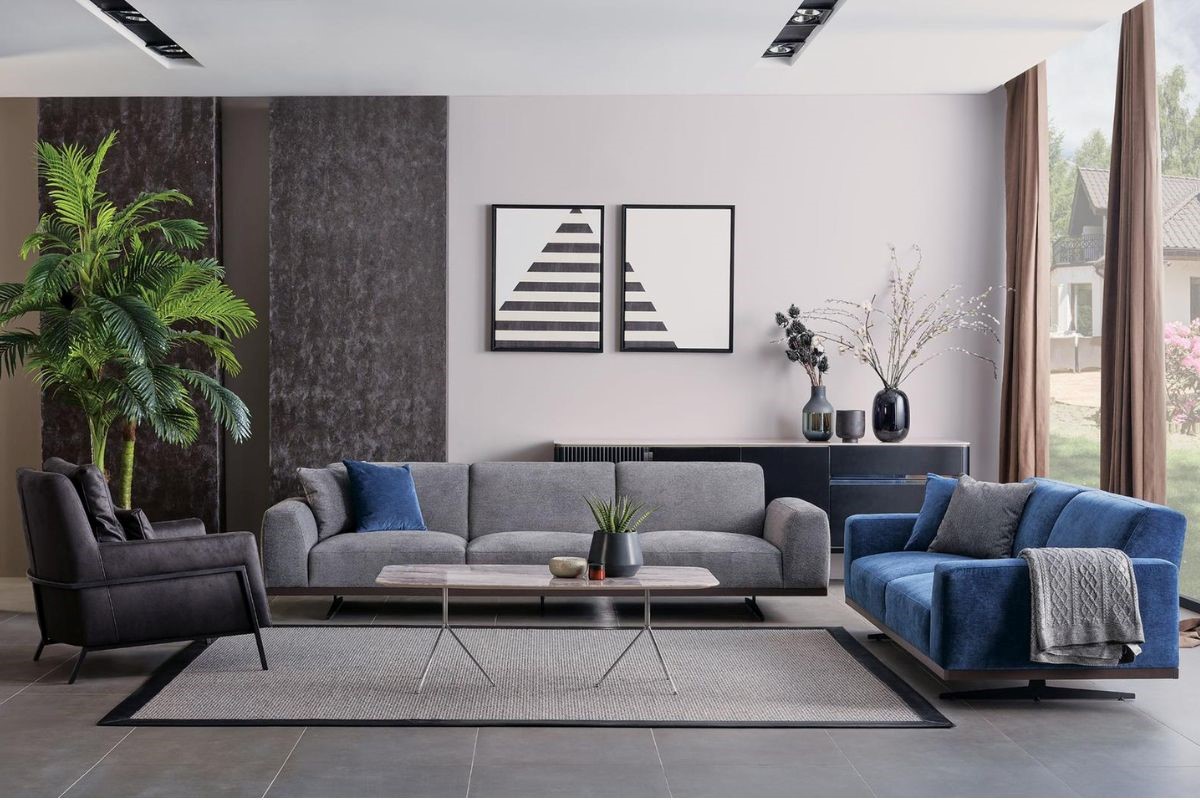
Build the room around a low sofa and one or two lounge chairs facing each other across a rectangular or oval coffee table. A long, low media unit keeps the television area tidy, and a single large rug ties the seating together. Limit shelf displays to books and a few objects with strong shapes.
Kitchen and Dining
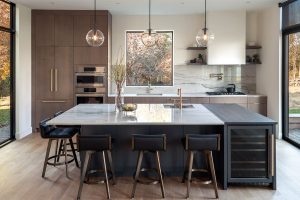
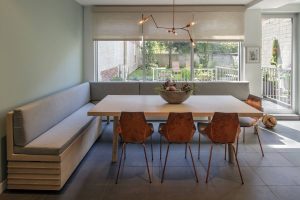
Flat-panel or slab cabinet doors, simple bar or edge pulls, and a solid surface countertop in white or pale stone set the modern tone. In the dining area, a wood table with molded or bentwood chairs works well, and a single linear pendant or a pair of simple globes centered over the table provides focused light.
Bedroom
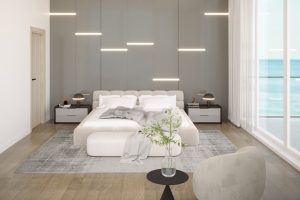
A platform bed or a frame with a low, upholstered headboard keeps the room calm. Floating nightstands or slim wall shelves free up floor space, and wall-mounted reading lights clear the bedside surfaces. Dress the bed in crisp white or oatmeal linen with one textured throw in a muted earth tone.
Bathroom
Wall-hung vanities, frameless glass shower panels, and large-format tiles with minimal grout lines all suit the style. Choose a rectangular or round mirror without a decorative frame, and keep counters clear with a recessed niche or a mirrored cabinet for daily items.
Home Office and Entry
A simple desk with a thin top and slim legs, paired with an ergonomic task chair in a neutral fabric, keeps a work corner from dominating the room. At the entry, a wall-mounted shelf, a few sturdy hooks, and a low bench with closed storage underneath handle keys, bags, and shoes without visual clutter.
Lighting a Modern Home
Because modern rooms carry so little ornament, light does much of the work of creating mood. A good plan layers several sources so the room looks right in daylight, at dusk, and late at night.
Ambient Light
Recessed downlights, flush ceiling fixtures, or a simple track system provide general light without drawing attention. Warm white bulbs around 2700K keep neutral walls and wood tones from looking cold, and dimmers let the same room shift from bright and practical to soft and relaxed.
Statement and Task Lighting
One sculptural fixture per room is usually enough: an arc floor lamp over the sofa, a sputnik-style chandelier above the dining table, or a paper globe pendant in the bedroom. Add focused task lights where they are needed, such as an adjustable desk lamp, under-cabinet strips in the kitchen, or swing-arm sconces beside the bed.
Making the Most of Daylight
Daylight is the original modern light source. Keep furniture away from the glass where possible, use a large frameless mirror opposite a window to bounce light deeper into the room, and choose matte or eggshell wall finishes that spread light softly instead of creating glare. Pale floors and light rugs help a north-facing room feel brighter through the day.
Textiles, Rugs, Art, and Plants
Soft finishes are where a modern room gains its warmth and personality. Because the backdrop is so quiet, every textile, frame, and plant becomes noticeable, so a small number of well-chosen pieces goes a long way.
Rugs and Upholstery
Flat-weave wool, hand-knotted rugs with simple geometric borders, and low-pile solids in cream, rust, or charcoal all suit the style. Upholstery looks best in tight-weave wool, bouclé, linen blends, or smooth leather that develops a patina over time. Keep patterns large-scale and graphic rather than busy, and repeat one accent color in two or three places so it feels intentional.
Art and Objects
Abstract paintings, black and white photography, and graphic prints in thin wood or metal frames echo the clean geometry of the furniture. One oversized piece above a sofa or sideboard usually reads better than a crowded gallery wall. On shelves and tables, group objects in odd numbers and vary their height, pairing a tall ceramic vase with a low bowl and a short stack of books.
Plants as Living Sculpture
Plants with strong silhouettes, such as a fiddle leaf fig, snake plant, or bird of paradise, work like sculpture against plain walls. Set them in simple ceramic or concrete planters on slim metal stands, and place them where they catch good light from those uncovered windows.
Storage That Keeps the Look Clean
Modern rooms depend on clear surfaces, so storage has to be generous and mostly hidden. Families and small households alike find the style far easier to maintain when every category of stuff has a closed home.
Closed Storage First
Credenzas, sideboards, and built-in cabinets with flat doors swallow electronics, paperwork, toys, and games. Push-to-open doors or integrated finger pulls keep fronts smooth. Open shelving works best in small amounts, styled with a few books laid horizontally and one or two objects.
Small Spaces and Rentals
In an apartment, choose furniture that does double duty, such as a storage bench at the entry or a bed with drawers beneath. Renters can add the look without construction by using tension-rod sheers, plug-in wall sconces, freestanding shelving units, and removable hardware swaps that go back on before moving out.
Modern Style on a Budget
The style rewards restraint, which makes it friendlier to modest budgets than many people expect. Spending less on accessories leaves room for one or two pieces that will last.
- Paint walls, trim, and ceilings in one unified warm white or greige to simplify the envelope.
- Swap ornate knobs and pulls for slim bar pulls in matte black or brushed steel.
- Replace heavy drapes with simple roller shades or sheer panels.
- Hunt secondhand shops and estate sales for vintage wood sideboards, molded chairs, and teak side tables.
- Put most of the budget into one lasting anchor, usually the sofa or dining table.
Common Mistakes to Avoid
Most modern rooms that feel off share a few predictable problems. Each one has a simple fix.
- Going cold and sterile: too much gray, gloss, and glass. Add wood, wool, and warm bulbs.
- Furniture that is too small for the room. Choose a larger rug and a longer sofa rather than many small pieces.
- Confusing minimal with empty. A room still needs texture, a focal point, and comfortable seating.
- Mixing too many wood tones. Stick to one main wood and one contrasting accent.
Conclusion
Modern style is built on a simple idea: rooms work best when every piece has a purpose and the architecture, light, and materials are allowed to speak. A restrained palette, low furniture on slim legs, and a thoughtful mix of wood, leather, steel, and glass create spaces that feel calm without feeling cold.
The best way to start is by editing. Clear surfaces, simplify the windows, unify the wall color, and then invest in one or two anchors that will last. Over time, those choices add up to a home with the clarity and warmth that have kept this style relevant for generations.
Frequently Asked Questions
More Modern Style Decor
- Modern Style Bedroom: Embracing Clean Lines and Comfort
- Modern Style Living Room: Creating a Sleek Oasis
- Modern Style Kitchen: The Art of Streamlined Culinary Spaces
- Modern Style Bathroom: A Tranquil Retreat with Contemporary Touches
- Modern Style Dining Room: A Sophisticated Dining Experience