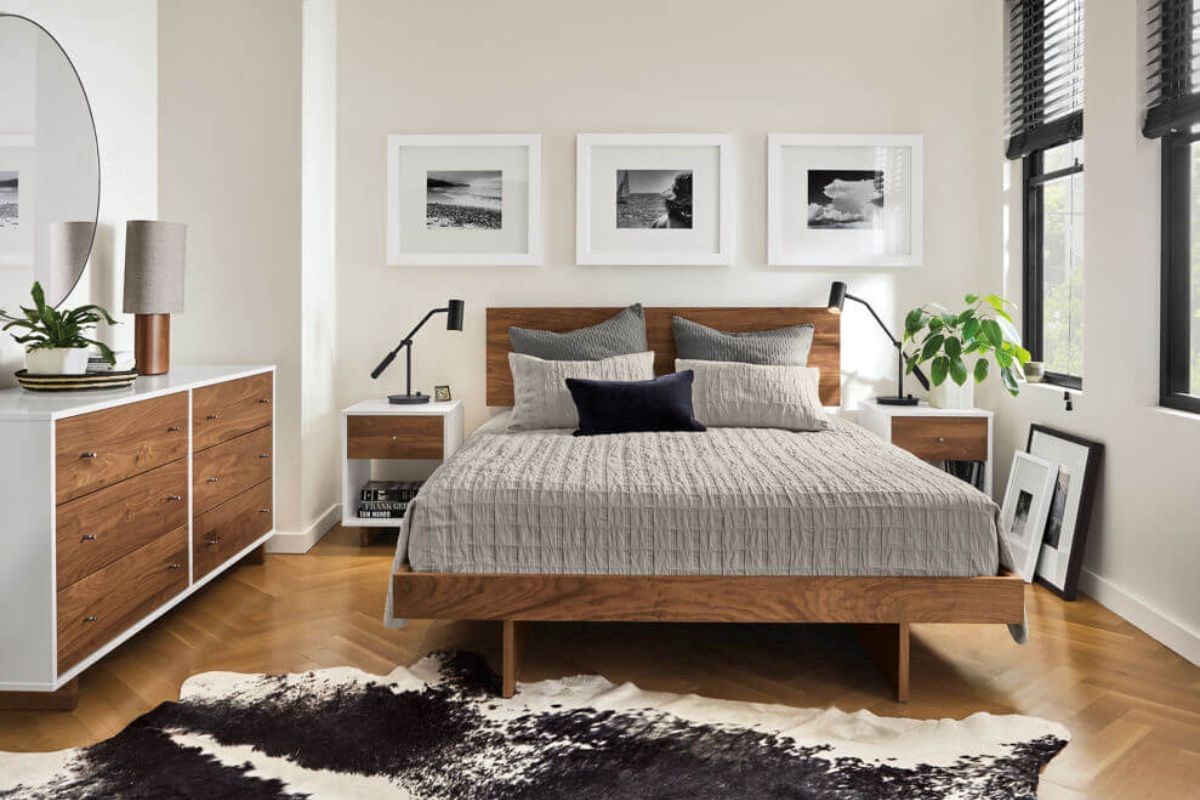
A mid-century modern bedroom starts with a low walnut platform bed on tapered legs, crisp white bedding, and a mustard wool throw folded at the foot. A slim brass lamp sits on a teak nightstand, a globe pendant glows overhead, and a long dresser with recessed pulls runs beneath a wide window. The room feels uncluttered and warm at the same time, a calm place to end the day.
The style took shape in the 1950s and 1960s, when designers stripped furniture back to clean silhouettes, honest wood, and practical storage. In the bedroom, that thinking produces a space where every piece earns its place, the floor stays visible beneath raised legs, and a few saturated colors add personality against a quiet base. It adapts easily to small apartments, rentals, and mixed decorating styles.
Key Takeaways
- A low platform bed in walnut or teak with tapered legs sets the scale and character of the room.
- Warm neutrals form the base, with one or two retro accents such as mustard, teal, or olive.
- Furniture on raised or hairpin legs keeps the floor visible and the room feeling larger.
- One sculptural light fixture, such as a globe or sputnik pendant, works as the focal point.
- Wood grain, brass details, and layered wool and cotton supply warmth without clutter.
- Coastal, boho, and Scandinavian touches blend well when they share a common color or material.
What Defines a Mid-Century Modern Bedroom
The style lasts because it values function as much as form. Designers of the era kept ornament to a minimum so the shape of each piece, and the grain of the wood, carried the look.
Clean Lines and a Clear Rhythm
Straight edges, gentle curves, and repeated shapes give the room a steady visual rhythm. Pick one organizing idea, such as rounded corners, tapered legs, or a horizontal line running from bed to dresser, and echo it in a few places. That repetition makes the room feel intentional rather than busy.
Wood, Daylight, and Open Space
Solid walnut, teak, and rosewood look their best in generous daylight. Simple window treatments, such as linen panels or wood blinds, let light reach the furniture and show off its grain. Floating pieces slightly away from walls and keeping profiles low reveal negative space, which makes even a small bedroom feel open.
Start With the Bed: Platform Frames and Low Profiles
The bed sets the proportions for everything else, so choose it first. A low platform frame with tapered legs opens sightlines and keeps the silhouette light.
Walnut or Teak Platform Beds
Solid wood frames in walnut or teak bring warmth and read as authentic to the era. Look for a minimal headboard, either a simple slab or a slatted panel, and a mattress that sits low on the frame so the bed does not look bulky. Raised legs also improve airflow and make cleaning easier.
A Reading Corner With a Classic Chair
If space allows, add a lounge chair and a slim floor lamp near the window. An Eames lounge chair or the LC4 chaise designed by Le Corbusier, Pierre Jeanneret, and Charlotte Perriand are iconic choices, and many simpler armchairs on wooden frames capture the same mood. Place the chair where daylight falls to create a natural spot for morning coffee or evening reading.
Mixing Vintage and New
Original and reproduction pieces can sit together comfortably. Coordinate wood tones without matching them exactly, since a slight variation between a walnut bed and a teak nightstand adds depth and looks collected over time.
Color Stories: Neutrals With Bold Retro Accents
A neutral base lets retro colors read as deliberate punctuation instead of clutter. Warm beige, tan, soft gray, and natural wood tones ground the room and keep it restful for sleep.
Earthy Bases
Paint the wall behind the headboard in a soft gray-blue for depth; it pairs especially well with walnut and brass. Keep the ceiling and trim lighter to bounce daylight around and highlight the low profiles of the furniture.
Mustard, Teal, Red, and Olive Accents
Choose one or two saturated colors and repeat each in about three places, such as a throw, a lamp base, and a print. Proven pairings include:
- Mustard with walnut and soft gray
- Teal with cream and brass
- Olive with tan and warm white
- Brick red with oatmeal and teak
Geometric Patterns on Bedding
Circles, chevrons, starbursts, and simple grids on pillows or a duvet echo period motifs. For a stronger statement, use a retro wallpaper on the headboard wall only, and keep the rest of the pattern quiet so the room’s geometry still shows.
Signature Woods and Materials
The material palette does much of the work in this style. Walnut is the foundation for most mid-century bedrooms, prized for its rich brown color and strong grain. Teak, rosewood, and oak can vary the tone so the furniture looks gathered rather than bought as a set.
Wood Furniture With Visible Grain
A rosewood nightstand or a teak bench at the foot of the bed can be the standout piece. Choose oil or satin finishes that show the grain rather than heavy, glossy coatings that hide it. Keep to one dominant wood and one secondary tone to avoid a patchwork effect.
Brass, Chrome, and Steel Accents
Slim brass or chrome details on lamps, drawer pulls, and mirror frames add polish. Keep metal lines thin so they match the delicate proportions of the furniture.
Wool, Velvet, and Cotton Layers
A wool rug, velvet cushions, and crisp cotton or percale bedding soften the clean silhouettes. Mixing smooth and nubby textures makes the bed inviting without adding visual clutter.
Lighting: Pendants, Globes, and Sputniks
Mid-century lighting is sculptural, so a single fixture can define the room. Choose one statement piece for the ceiling and support it with quieter lamps.
Statement Ceiling Lights
A white glass globe, a sputnik chandelier, or a bubble pendant gives the ceiling a focal point. Match the fixture’s scale to the ceiling height; in rooms with standard eight-foot ceilings, a flush or semi-flush globe often works better than a large hanging fixture.
Slim Bedside and Floor Lamps
Table lamps with tapered wooden or ceramic bases and drum shades suit the style, as do swing-arm wall sconces that free up nightstand space. Keep cords tidy and bases compact so surfaces stay open.
Warm Wood With Metallic Fixtures
Brass or chrome lighting set against walnut or teak creates a classic contrast. Repeat one metal finish across fixtures for continuity, then vary shapes such as globe, cone, and cylinder for interest.
Layering and Dimming
Combine the overhead fixture, bedside lamps, and a floor lamp so light can be adjusted through the day. Dimmers and warm bulbs around 2700K shift the room from bright and practical in the morning to soft and relaxed at night.
Walls, Windows, and Accent Moves
Walls and windows set the tone, and a single well-chosen treatment can change how the whole bedroom feels.
An accent wall in gray-blue, mustard, or deep olive behind the bed adds depth and energy. Matte or eggshell finishes diffuse light and flatter nearby wood grain.
Wallpaper, Paneling, and Tile
Retro wallpaper, wood slat paneling, or a band of three-dimensional tile works best in small doses, such as behind the headboard or inside a niche. Renters can use peel-and-stick wallpaper or a freestanding slatted screen for the same effect.
Clerestory Windows and Simple Trim
Clerestory windows, a classic feature of mid-century houses, bring in daylight while keeping privacy above the bed. Where they exist, leave them bare. Keep baseboards and trim simple and low-contrast so attention stays on the accent wall and furniture.
Furniture Silhouettes: Hairpin Legs, Nightstands, and Dressers
Lean, lifted furniture keeps the bedroom light and lets the architecture breathe. Pieces with exposed legs reveal the floor and create the floating effect the style is known for.
Hairpin and Tapered Legs
Hairpin legs, made from bent steel rod, lift benches, desks, and side tables without adding visual weight. Tapered wooden legs, often slightly splayed, do the same for dressers and nightstands. Both make large pieces read smaller.
Mix-and-Match Nightstands
Nightstands do not need to match. Two pieces in complementary woods, or one with drawers and one open, add rhythm. Keep tops tidy with a lamp, a small tray, and one or two books.
Clean-Lined Dressers and Storage
A long, low dresser with raised legs, straight edges, and recessed or finger-pull drawers is a signature piece. Use it for clothes and display, then add closed storage, such as under-bed drawers or a wall-mounted cabinet, to keep everyday clutter out of sight.
Decor and Details: Art, Plants, and Global Touches
Choose decor with intent so each object feels like a decision. Abstract and geometric art repeats the shapes of the furniture and lighting, and a single large print above the bed often looks better than many small ones.
Art and Mirrors
If you prefer a gallery wall, keep it tight and use matching walnut or oak frames to tie the art to the furniture. Pull one accent color from a painting into a pillow or throw. A starburst or round mirror above the dresser adds period character and reflects light.
Plants and Global Textiles
A snake plant, rubber plant, or fiddle-leaf fig in a ceramic planter on legs softens straight lines. Moroccan rugs with geometric patterns, a pompom blanket, or a leather pouf warm the floor and break strict geometry while keeping the room cozy.
Vintage Accents
A record player on a low cabinet, a ceramic lamp, or a sculptural vase brings nostalgia without kitsch. Rotate small pieces seasonally and limit tabletop items so the furniture and materials remain the stars.
Blending With Other Styles
Mid-century bones make a strong canvas for other influences, as long as the room keeps a shared thread of color, shape, or material.
Coastal Blues and Shiplap
A painted shiplap wall in soft blue, striped bedding, or navy pillows freshens the look while keeping classic silhouettes front and center. Pale wood and white walls help the two styles meet comfortably.
Boho Texture
Cane or rattan headboards, macramé wall hangings, and layered textiles add relaxed texture. Keep the furniture lines clean so the room still reads mid-century.
Pale oak, simple linen bedding, and minimal decor calm a busy room. Built-in storage and a restrained palette echo the practicality both styles share, and plug-in sconces offer a renter-friendly way to add Scandinavian-style lighting.
Conclusion
A mid-century modern bedroom comes together through a few strong choices: a low platform bed in warm wood, furniture lifted on slim legs, one sculptural light, and a neutral palette with one or two retro accents. Keep pieces in proportion so the floor stays visible and the room feels open.
Add texture through wool, cotton, and wood grain, edit decor down to what you love, and let vintage finds collect over time. The result is a bedroom that feels calm, practical, and personal.
Frequently Asked Questions
More Mid-century Modern Style Decor
- Mid-Century Modern Style: The Complete Guide
- Mid-Century Modern Style Living Room: Timeless Elegance
- Mid-Century Modern Kitchen: Stylish Culinary Spaces
- Mid-Century Modern Style Bathroom: Retro Charm in the Bath
- Mid-Century Modern Style Dining Room: A Fusion of Retro and Modern Elegance