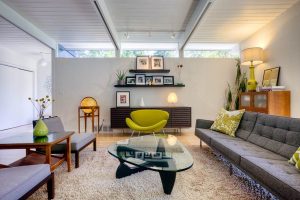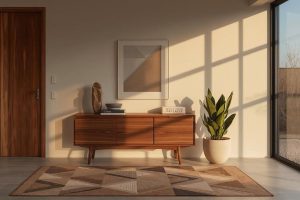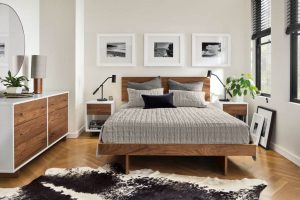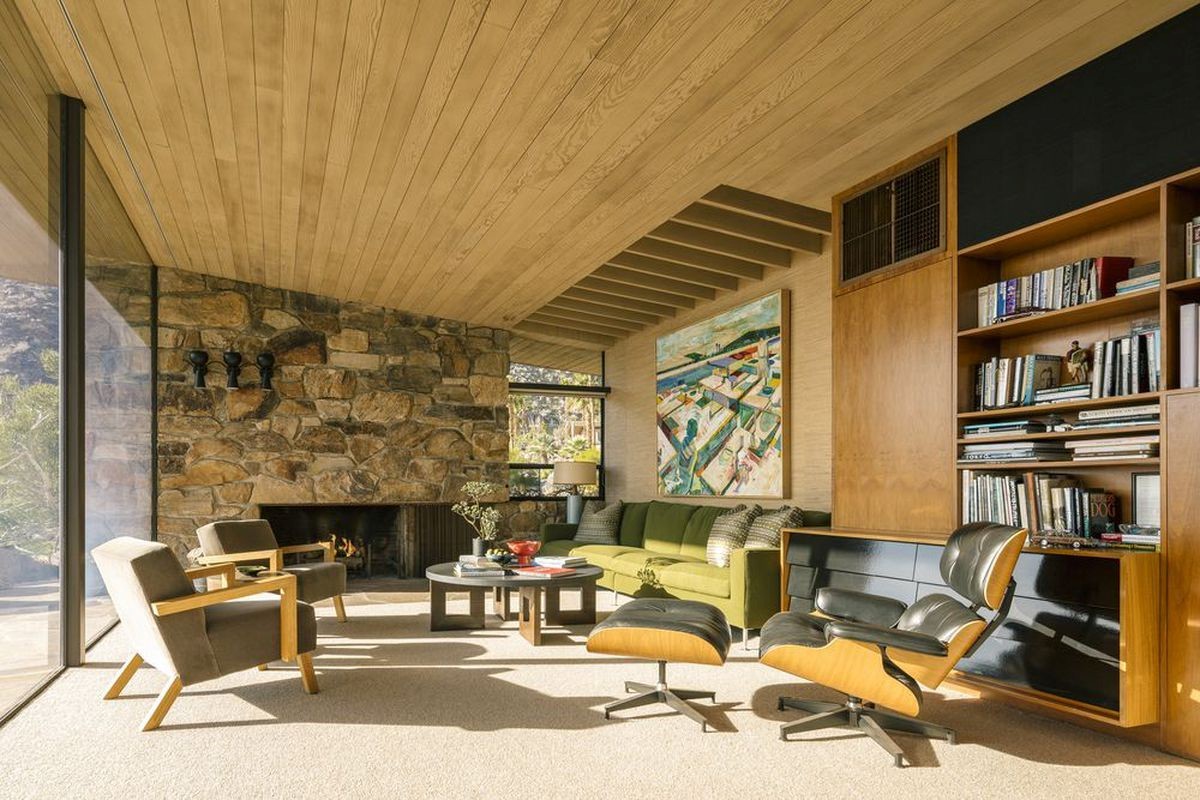
A mid-century modern living room is low, warm, and full of daylight. A walnut credenza runs along one wall, a leather lounge chair angles toward a picture window, and a sofa on slim legs faces a stone fireplace. A globe pendant hangs overhead, a wool rug anchors the seating, and the garden outside feels like part of the room.
The style grew out of the postwar decades, when architects and furniture designers favored clean lines, honest materials, and open plans that encouraged family life and easy entertaining. In the living room, that means sculptural seating, warm wood, durable surfaces such as stone and terrazzo, layered lighting, and a palette that runs from ivory and tobacco to avocado and mustard. Mixing vintage finds with well-made new pieces keeps it authentic and comfortable.
Key Takeaways
- One or two iconic or well-made seating pieces set the scale and character of the whole room.
- Walnut, teak, and Douglas fir in furniture, built-ins, or paneling supply the signature warmth.
- Sputnik, globe, and sculptural floor lamps define zones as much as they light them.
- Stone, terrazzo, and a strong fireplace give the room durable, natural anchors.
- Conversation groupings, low profiles, and clear views to the outdoors keep the room social and open.
- Buy vintage carefully, checking wood, joinery, and maker’s marks, and fill gaps with good reproductions.
Clean Lines and Iconic Forms: Start With Signature Pieces
Begin with one or two signature seating pieces, because they set the tone and proportions for everything else. A single strong chair or sofa gives the room instant authenticity.
Icons Worth Building Around
The Eames lounge chair and ottoman, Mies van der Rohe’s Barcelona daybed, and Hans Wegner’s lounge chairs are classic anchors from the period. Michel Ducaroy’s low, cushioned Togo sofa arrived a little later, in the 1970s, but its relaxed profile suits mid-century rooms well. Surround an icon with simpler Danish side chairs or a slim credenza so the room feels lived in rather than like a showroom.
Upholstery and Comfort
Low-slung profiles keep the room human-scaled. Choose upholstery that nods to the era and stands up to daily use, such as leather, mohair, wool, or tweed. Test seat depth and back height, since some original pieces sit lower and firmer than modern sofas.
Originals and Reproductions
Mix originals with quality reproductions to balance cost and finish. Reserve vintage pieces for visible, lower-wear spots, and choose new or reproduction seating where the family sits every day. Warm ivory walls flatter wood tones and soften the room’s geometry.
Warm Woods and Paneling: Walnut, Teak, and Douglas Fir
Rich wood can shift a living room from bright and airy to warm and enveloping. Walnut brings deep chocolate tones, teak a honeyed warmth, and Douglas fir a straighter, lighter grain often seen on ceilings and beams in mid-century houses.
Wood Paneling for a Cozier Room
Floor-to-ceiling paneling creates a cocooning effect that reads intentional when the rest of the room is restrained. Vertical slats or grooved panels make walls feel taller and lead the eye to high windows or beamed ceilings. Use paneling on one feature wall or around a fireplace if a whole room feels like too much.
Desert-Style Paneling
In Palm Springs-style homes, full-height panels frame views and contrast with bright exterior light. Pair darker finishes with lighter upholstery and a creamy rug so the palette stays balanced.
Getting the Finish Right
Coordinate wood tones across credenzas, shelving, and trim, but allow slight variation to avoid a flat look. Grazing light from sconces or ceiling spots highlights grain and seams. Near large windows, use finishes with UV protection so wood does not fade unevenly.
Lighting That Shapes Space: Sputniks, Globes, and Floor Lamps
Bold ceiling fixtures and slender floor lamps work together to shape how a living room feels. Start with one focal overhead piece, such as a sputnik chandelier or a cluster of glass globes, to set the room’s geometry.
Layering Ceiling, Floor, and Table Light
Pair the statement fixture with a sculptural floor lamp, such as Greta Magnusson Grossman’s Grasshopper lamp or an arc lamp curving over the sofa, to create a reading spot. Add table lamps and wall sconces to soften corners and wash paneling or stone with light.
Finishes and Bulbs
In rooms with tall ceilings, cluster globe pendants to fill vertical space and echo rounded furniture. Keep metal finishes consistent, choosing brass, blackened steel, or chrome, and use warm, dimmable bulbs to flatter wood and textiles in the evening. Translucent or opal glass shades reduce glare above seating.
Layout Principles for a Mid-Century Living Room
The style looks timeless when furniture stays lean, storage is restrained, and natural light guides placement. Low profiles and open sightlines are the foundation.
Choose a Focal Point
Define one clear focal point, such as a fireplace, picture window, or long built-in, and arrange seating around it for conversation. Size the rug to the seating group rather than the whole room, with at least the front legs of each piece resting on it. Leave about 16 to 18 inches between the sofa and coffee table, and keep main walkways roughly 30 to 36 inches wide so the room is easy to move through.
Keep Furniture Leggy
Sofas, chairs, and credenzas on raised legs show more floor, which makes the room feel larger and calmer. Mix closed cabinets for clutter with a few open shelves for books, ceramics, or records.
Plan for Daily Life
Balance vintage character with performance fabrics on the most-used seats. A sculptural plant near the glass softens straight lines and links the room to the landscape outside. Place the television on a low credenza or inside a cabinet with sliding doors rather than letting it dominate the focal wall.
Earthy to Avocado: Color Palettes With Modern Appeal
Earthy hues with one saturated accent keep the scheme fresh but faithful to the era. Warm ivory, cream, or soft beige walls flatter wood tones and soften strong geometry.
Using Avocado and Other Period Accents
Add avocado green sparingly on one wall, a cabinet front, or an upholstered chair as a nod to classic period color. Mustard, burnt orange, and teal work the same way. Pair any of them with moody neutrals such as charcoal, mushroom, and tobacco for depth. Reserve the brightest shades for pillows, art, or a side chair, which are easy to change later.
Testing and Tone-on-Tone
Tone-on-tone schemes keep contrast gentle so silhouettes read clearly. Test paint samples on several walls and view them morning and evening. Painting built-ins the same color as the walls makes storage recede and gives a tidy, period-appropriate look.
Stone, Terrazzo, and Quartzite: Natural Surfaces
Natural stone and terrazzo ground a living room with texture and durability that lasts for decades.
Poured-in-place terrazzo is an authentic choice for open-plan homes. It resists wear, runs continuously across thresholds, and ties adjacent rooms together.
Monumental Fireplaces and Stone Walls
A sculptural stone hearth can anchor the whole room. Stacked stone, split-face slate, or large slabs age well and give the space gravity without extra decoration.
Modern Updates With Quartzite and Marble
A quartzite wall above an original brass fireplace mixes heritage with a modern finish. A marble cocktail table adds a cool counterpoint to wood and leather. Choose honed finishes to cut glare, seal stone to protect its color, and add wool rugs to soften acoustics on hard floors.
Curved Sofas: Crescent, Kidney, and Modular Seating
Curved sofas soften strict geometry and draw people toward a shared center. Crescent and kidney shapes counterbalance straight architectural lines and create natural conversation groups.
Modular sofas in the spirit of Mario Bellini’s designs allow flexible layouts for small dinners or larger gatherings. Mohair or velvet upholstery adds plush contrast to concrete or stone floors.
Placing Curved Seating
Float curved sofas away from walls so the silhouette reads from every angle and traffic flows around it. Low backs preserve views to windows and the fireplace.
Completing the Composition
A round or triangular coffee table echoes the curve, while a linear console or credenza grounds the arrangement. Match leg finishes to lighting metals for a cohesive look.
Indoor-Outdoor Flow: Window Walls and Sliding Doors
When a living room opens to the outdoors, views and seating placement become the main design tools. In coastal California homes, floor-to-ceiling windows frame the ocean, and wide sliding doors open the room straight onto a patio.
Align low-profile sofas toward the view and keep a clear path to the doors. Where a freestanding fireplace sits in the middle of the room, two seating areas on either side create intimate zones without blocking flow.
Carrying Materials Inside
Repeat exterior materials such as stone and oak indoors to tie the patio to the room. Layer rugs to define zones and leave doorways open for entertaining.
Managing Sun and Glare
Choose performance or fade-resistant fabrics for sun-exposed seating. Sheer curtains, deep roof overhangs, or exterior shading reduce glare while keeping views intact, and potted plants at the threshold link inside and out.
Regional Takes: New York Apartments and Southern California Homes
Scale and climate guide design choices, from compact Manhattan apartments to airy Pacific coast houses.
Small-Space Strategy for City Apartments
In tight footprints, choose scaled furniture and compact classics, such as a lounge chair instead of a second sofa. Light walls and warm wood floors increase perceived height. Prioritize multiuse pieces, such as a credenza that holds media and storage. Wall-mounted shelving and slim sconces free up floor area, and a round coffee table eases movement in tight spaces where sharp corners get in the way.
West Coast Ease
On the West Coast, glazing and view-focused layouts define the look. Floor-to-ceiling windows, freestanding fireplaces, and stone or quartzite cladding make a bold statement without heavy ornament. Low seating and marble or stone tables complement terrazzo floors, and fade-resistant textiles handle strong sun.
Textures That Time-Travel: Velvet, Mohair, Leather, and Wool
Mixing plush and rugged fabrics brings lived-in sophistication without adding clutter.
A mohair sofa with a thick wool rug warms concrete floors, while leather lounge chairs add a tactile counterpoint that develops character over time. Use velvet sparingly, on one statement chair or a few cushions, so it does not overpower other pieces.
Balancing Texture and Color
Keep upholstery in earthy tones that sit comfortably with stone and wood. Combine bouclé and nubby knits with smooth leather for depth, and keep furniture silhouettes simple so materials remain the focus.
Durability Notes
Mohair resists crushing, leather gains patina with use, and wool rugs wear well and clean easily. A rattan or woven pendant adds soft, organic texture overhead.
Geometric Gestures: Triangular Tables and Boxy Sofas
Angular furniture set against soft shapes creates deliberate tension that energizes a living room.
A triangular coffee table introduces dynamic geometry without blocking circulation, reading almost like sculpture. A boxy sofa paired with rounded lounge chairs keeps clean lines while softening edges.
Contrast Between Architecture and Furniture
Spare, angular architecture and plush curvy seating balance each other, an approach seen in early houses by Frank Gehry. Echo shapes in fixtures, such as orb pendants and cylinder lamps, and keep geometric rugs to one per room so pattern supports the furniture.
Rhythm and Negative Space
Keep furniture heights fairly consistent to avoid a choppy skyline, and leave breathing room around each piece. Looking at the room from several angles, including from the doorway and the main sofa, shows whether the shapes work together. If one view feels crowded, removing a single accent table often fixes it.
The Power of the Fireplace
A fireplace is often the sculptural heart of a mid-century living room, organizing sightlines, seating, and circulation.
Refreshing Brick and Inserts
Painting dated brick charcoal keeps its texture while giving the wall instant clarity. A linear insert streamlines the firebox and improves efficiency without diminishing the wall’s presence.
Celebrating Originals
Original brass fireplaces and hoods are worth keeping. Pair them with stone or quartzite cladding, and extend the hearth into a long ledge that grounds low furniture and offers display space. Asymmetric styling, such as off-center art or a stack of firewood, keeps the composition lively.
Entertaining Essentials: Bar Carts, Built-Ins, and Conversation Pits
Entertaining was central to mid-century living, and a few practical pieces make a room ready for guests.
A brass bar cart beside a geometric mirror adds retro charm without taking much floor area. Style it with period glassware and a small sculptural object.
Built-In Bars
A built-in bar with tile or wood fronts creates a focal point while preserving circulation. Choose durable, wipeable surfaces that stand up to spills.
Conversation Zones
A large sectional or a sunken seating area recalls the classic conversation pit. Place a round table within reach of every seat, and vary seating heights with stools and lounge chairs. Keep paths clear to doors and the patio, and add dimmable warm light near the bar. A few ideas that help a room handle a crowd:
- Nesting tables that spread out when guests arrive
- Floor cushions or poufs stored under a console
- Trays to corral glasses and small accessories
- A sideboard that doubles as a buffet
Collect, Don’t Clone: Vintage Finds and Contemporary Art
A collected living room mixes heirloom finds with new art so the space feels personal rather than copied.
Music culture was part of mid-century life, and a record display can show it off. Framed album covers, a turntable on a low cabinet, and records stored in wooden crates or shelving add instant character.
Scale and Comfort
Original pieces often run smaller, which suits compact rooms. Slim vintage side tables and chairs keep circulation clear. Rattan seating and sculptural pendants soften harder lines, and fresh upholstery on old frames keeps comfort high.
Art and Editing
Bold geometric or color-field art pairs naturally with clean-lined furniture and ties mixed finds together. Edit regularly so the room never becomes a museum, and rotate accessories seasonally.
Budget and Sourcing: Authentic vs. Reproduction
Decide which authentic pieces deserve investment and where quality reproductions make more sense.
Prioritize core furniture first, such as the sofa, chairs, and storage, then add accents over time. Originals from the 1950s and 1960s are often made of teak, walnut, rosewood, or oak and have smaller proportions that suit many modern homes.
What to Check Before Buying
- Maker’s marks, designer stamps, or labels on frames and drawers
- Dovetail joints and solid wood components
- Veneer that is flat and intact, without lifting edges
- Dimensions that fit your room and doorways
Counting the Real Cost
Ask about provenance when possible, and factor in reupholstering and refinishing, which add time and expense. Buy from reputable dealers, balance a few authentic splurges with sturdy reproductions, and consider long-term care, including sun exposure near windows.
Conclusion
A mid-century modern living room comes together through classic silhouettes, honest materials, and well-placed light. Start with one iconic or well-made seating piece, warm wood, a strong focal point, and layered lighting, then arrange conversation groups with clear paths and open views.
Choose materials that age well, such as stone, terrazzo, brass, and wood paneling, and keep the palette earthy with one saturated accent. Shop slowly, check quality, and let the room evolve so it stays personal and comfortable.
Frequently Asked Questions
More Mid-century Modern Style Decor
- Mid-Century Modern Style: The Complete Guide
- Mid-Century Modern Style Bedroom: Iconic Sleep Sanctuary
- Mid-Century Modern Kitchen: Stylish Culinary Spaces
- Mid-Century Modern Style Bathroom: Retro Charm in the Bath
- Mid-Century Modern Style Dining Room: A Fusion of Retro and Modern Elegance
- Mid-Century Modern Style Entryway: Iconic Welcoming with Timeless Design