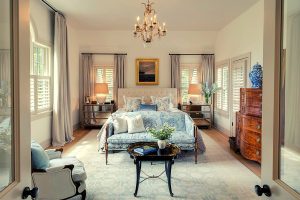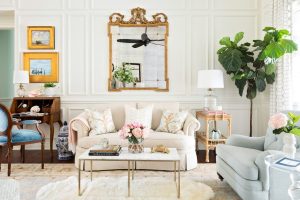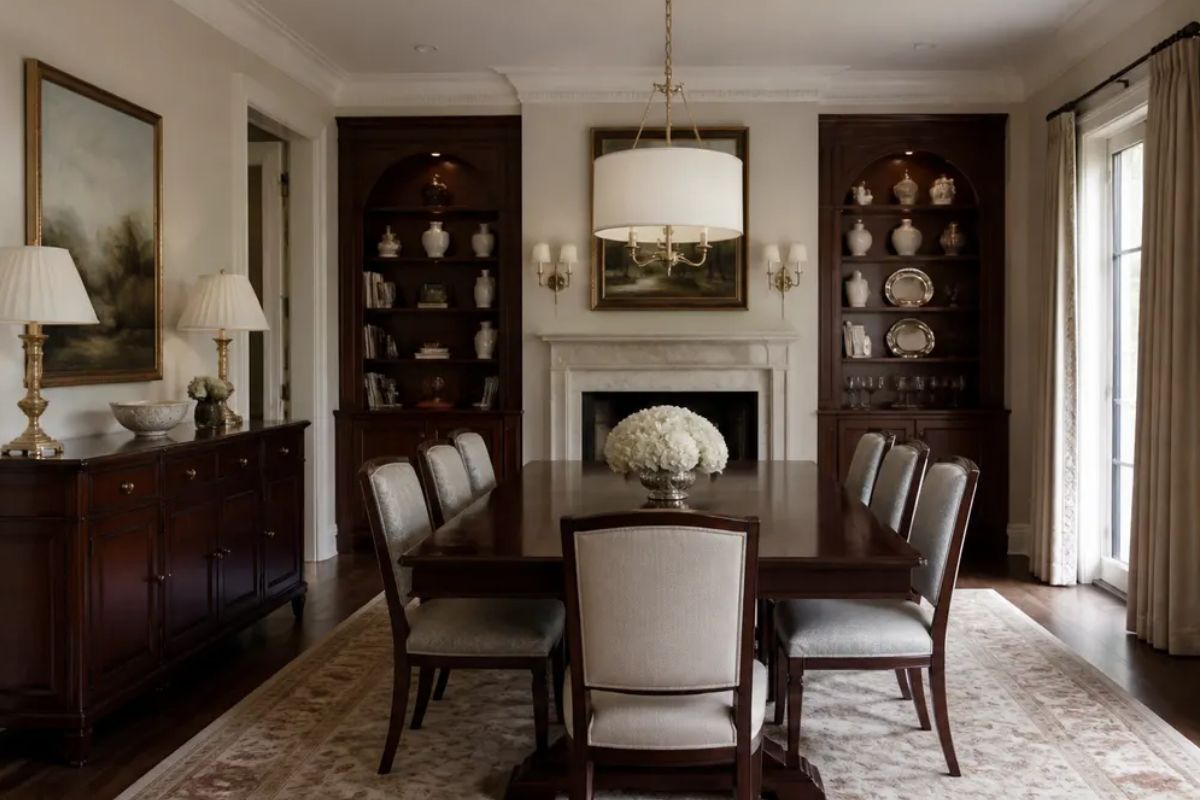
A traditional style dining room feels gracious and welcoming, a place made for long meals and good conversation. A polished mahogany table on a pedestal base sits beneath a brass chandelier, upholstered chairs with carved frames gather around it, and a china cabinet filled with patterned plates stands against a wall painted in deep green. Lined drapes frame the windows, candlesticks glow on the sideboard, and a wool rug softens every step.
Traditional dining rooms draw on English and American homes of the eighteenth and nineteenth centuries, when the dining room was a dedicated space for family gatherings and entertaining. The style values symmetry, rich wood, fine fabrics, and pieces that are meant to last and be passed down. Yet a well-designed traditional dining room is not stiff. Comfortable seating, warm lighting, and personal treasures make it a room people want to sit in, not just admire.
Key Takeaways
- A wood dining table and matching or complementary chairs anchor the room.
- Sideboards, buffets, and china cabinets provide storage and display.
- Crown molding, wainscoting, and chair rails add architectural character.
- Rich colors such as deep green, navy, burgundy, and warm cream suit the style.
- A chandelier centered over the table is the classic lighting focal point.
- Heirlooms and antiques give a traditional dining room its personal warmth.
Why Traditional Dining Rooms Endure
The traditional dining room has outlasted many trends because it serves a timeless purpose: bringing people together around a table.
A Room Built for Gathering
Holidays, birthdays, and Sunday dinners all benefit from a dedicated space with enough seating and storage for serving. Even in homes with open kitchens, many families keep a traditional dining room for occasions that call for a little more ceremony.
Comfort With a Sense of Occasion
The best traditional dining rooms balance formality with comfort. Upholstered seats, soft lighting, and a rug underfoot make it pleasant to linger after dessert, while fine wood, polished silver, and classic proportions give everyday meals a sense of occasion.
Architecture and Wall Treatments
Architectural detail is often what separates a traditional dining room from a simple eating area.
Molding and Paneling
Crown molding, a chair rail about 32 to 36 inches from the floor, and paneled or beadboard wainscoting below it all add depth. A chair rail also protects walls from chair backs, which is one reason it became a fixture of dining rooms in the first place.
Ceilings
A tray ceiling, a coffered ceiling, or a decorative ceiling medallion around the chandelier draws the eye upward. Painting the ceiling a pale tint of the wall color or a soft cream adds warmth without competing with the room’s other details.
Wallpaper and Paint
Damask, chinoiserie, toile, and classic stripes are traditional wallpaper choices for dining rooms, which see little moisture and less wear than other rooms. Above a painted wainscot, a patterned paper adds richness without overwhelming the space.
Choosing the Dining Table and Chairs
The table and chairs are the heart of the room, and their size, shape, and finish set the tone for everything else.
Table Shapes and Woods
Rectangular tables with turned legs and double pedestal tables are classic for larger rooms, while round or oval pedestal tables suit square rooms and smaller spaces. Mahogany, cherry, walnut, and oak are the traditional woods. Look for tables with extension leaves so the room can accommodate more guests when needed.
Sizing and Clearance
Allow about 24 inches of table length per person, and leave at least 36 inches between the table edge and the walls or other furniture. If people will walk behind seated guests to serve, 42 to 48 inches is more comfortable.
Seating Options
Chairs with upholstered seats, shield or ladder backs, and carved details suit the style. Host chairs at each end, often armchairs or fully upholstered parsons-style chairs, frame the table and mark the places of honor. A matching upholstered bench on one side can work in a more relaxed traditional room, especially for families with children.
Storage and Display Furniture
Traditional dining rooms rely on case pieces that both store and showcase tableware.
Sideboards and Buffets
A sideboard or buffet holds linens, flatware, and serving pieces and provides a surface for serving dishes during meals. Center it on a wall, then add a pair of lamps or candlesticks and a mirror or painting above it for a classic symmetrical vignette.
China Cabinets and Hutches
A china cabinet with glass doors displays fine dinnerware, crystal, and family pieces. For a lighter look, a pair of tall bookcases or built-in cabinets flanking a window or doorway provides display space while keeping the room balanced.
Bar Carts and Corner Cabinets
A brass or wood bar cart holds glassware and drinks for entertaining, and a corner cabinet uses space that might otherwise go empty. Both are practical additions in smaller dining rooms.
Color, Wood, and Fabric
Colors and materials give a traditional dining room its warmth and depth.
Classic Color Palettes
Dining rooms are often used in the evening, which makes them ideal for richer colors. Pairings that suit the style include:
- Deep green walls with mahogany furniture and brass lighting
- Navy walls with white trim, cherry wood, and blue and white porcelain
- Burgundy or oxblood with walnut and gold accents
- Warm cream with soft gold drapery and oak furniture for a lighter look
Wood Finishes
Mix wood tones with care. A table and sideboard in similar warm finishes look cohesive, while a contrasting painted piece, such as a black or cream china cabinet, adds interest. Keep wood surfaces protected with placemats, coasters, and a padded table cover for large gatherings.
Upholstery and Window Treatments
Velvet, damask, linen, and performance fabrics that mimic traditional weaves are good choices for chair seats. Full-length lined drapes hung from a rod mounted close to the ceiling, with tiebacks or a simple valance, add softness and help with acoustics in rooms with hard floors.
Lighting and Atmosphere
Lighting shapes how a dining room feels, especially for evening meals.
Chandeliers
A crystal, brass, or wrought iron chandelier centered over the table is the classic choice. As a rule of thumb, choose a fixture roughly one half to two thirds the width of the table, and hang it so the bottom sits about 30 to 36 inches above the tabletop.
Sconces and Lamps
Wall sconces on either side of a mirror or painting add a second layer of light, and a pair of buffet lamps on the sideboard creates a warm glow. Put all fixtures on dimmers so the room can shift from bright for family dinners to soft for entertaining.
Candlelight
Taper candles in silver or brass candlesticks are a traditional table centerpiece. Keep table arrangements low enough that guests can see each other over them.
Styling the Table and Walls
Finishing touches bring personality to the room and tell the story of the family who lives there.
Art and Mirrors
Oil paintings, landscape prints, and framed botanicals suit traditional dining rooms. A large gilt mirror above the sideboard reflects light from the chandelier and makes the room feel larger.
Heirlooms and Antiques
Grandmother’s china, a set of silver serving pieces, or an antique sideboard adds history and meaning. Mixing a few antiques with quality reproductions keeps the room authentic without needing every piece to be old.
Everyday Table Settings
Between gatherings, keep the table dressed simply with a runner, a low centerpiece of flowers or fruit in a silver or porcelain bowl, and a pair of candlesticks. A well-styled table makes the room feel used and loved.
Updating Tradition for Modern Living
A traditional dining room can feel fresh without losing its character.
Lighter Touches
Pair a classic table with slightly simpler chairs, choose a lighter wall color, or swap heavy drapes for linen panels. These small updates keep the room classic while making it feel less formal.
Practical Choices
Choose performance fabrics on chairs, a washable wool or synthetic rug, and a durable finish on the table if you have young children or entertain often. A rug should extend at least 24 inches beyond the table on all sides so chairs stay on it when pulled out.
Smaller Dining Rooms
In a compact room, a round pedestal table seats more people comfortably because there are no corner legs in the way. Choose a slim console instead of a deep sideboard, hang a large mirror to reflect light, and paint the trim and walls in close tones so the room feels larger.
Common Mistakes to Avoid
A few missteps can make a traditional dining room feel heavy or dated.
Matching Everything
Buying a table, chairs, sideboard, and china cabinet as one matching suite can look flat. A collected mix of pieces in related woods and shapes looks richer and more authentic.
Undersized Rugs and Lighting
A rug that stops short of the chairs or a small chandelier over a long table makes the room look unfinished. Size both to the table, not the room’s leftover space.
Overcrowding the Room
Squeezing in a china cabinet, sideboard, and bar cart where there is barely space to pull out a chair defeats the purpose of the room. Choose the storage pieces you need most and leave space for guests to move comfortably.
Conclusion
A traditional style dining room is a showcase of comfort and tradition. A fine wood table, upholstered chairs, a classic chandelier, and storage pieces filled with treasured tableware create a room made for gathering.
Rich colors, architectural details, and family heirlooms add warmth and history. With comfortable seating and thoughtful lighting, the room becomes a welcoming place for everyday meals and special occasions alike.
Frequently Asked Questions
More Traditional Style Decor
- Traditional Style: The Absolute Guide
- Traditional Style Bedroom: Timeless Elegance and Comfort
- Traditional Style Living Room: Creating a Cozy Haven
- Traditional Style Kitchen: Blending Charm with Modern Functionality
- Traditional Style Entryway: Timeless Elegance from the First Glance