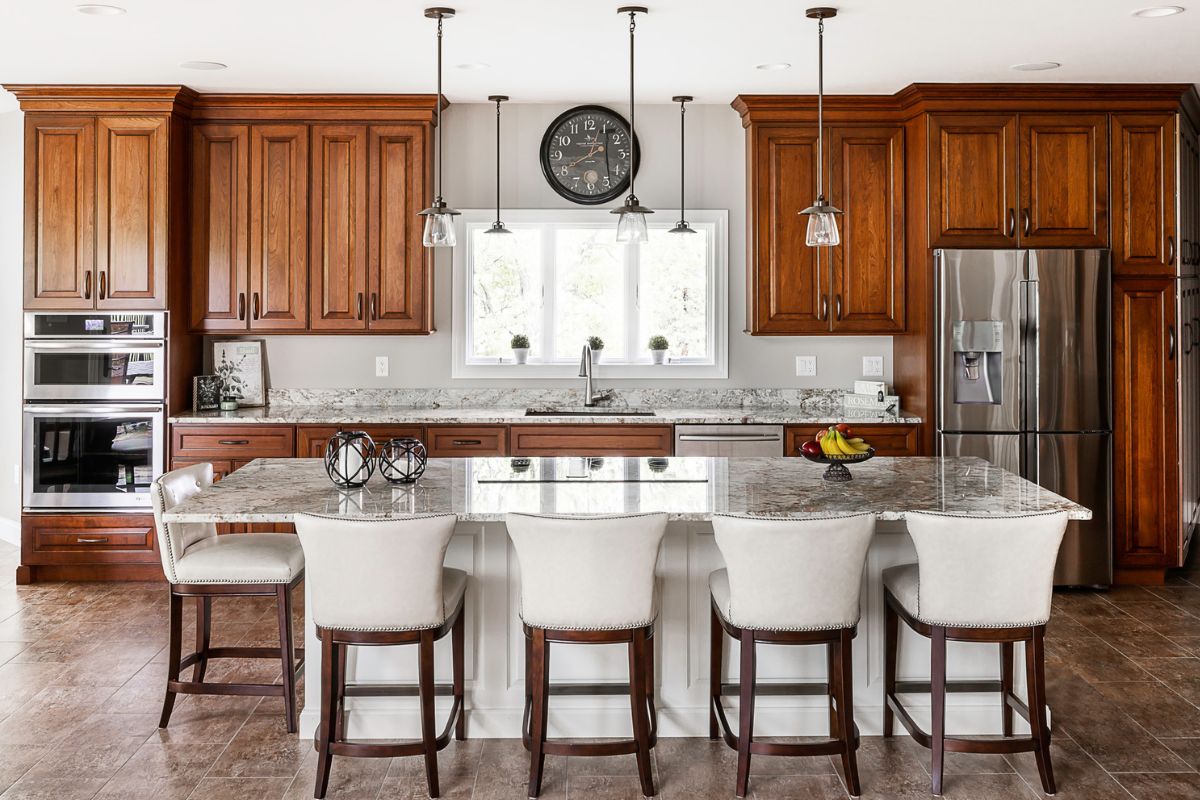
A traditional style kitchen feels solid, welcoming, and quietly grand. Raised-panel cabinets in creamy white run up to crown molding, a marble-topped island holds a bowl of lemons, a hooded range anchors the main wall, and polished nickel bin pulls catch the light from a pair of lantern pendants. It looks like a room that has been loved for generations, yet it handles weeknight dinners and holiday baking with ease.
Traditional design draws on eighteenth and nineteenth century European and American homes, with their symmetry, fine woodwork, and natural materials. In the kitchen, that heritage shows up in furniture-like cabinetry, classic stone, and detailed hardware. The challenge is fitting a modern refrigerator, dishwasher, and microwave into that picture without breaking the spell, and good planning makes it entirely possible.
Key Takeaways
- Raised or recessed panel cabinets with crown molding define the traditional kitchen.
- Marble, granite, soapstone, and wood are the classic surface materials.
- A hooded range often serves as the room’s central focal point.
- Panel-ready appliances and appliance garages keep modern equipment discreet.
- Warm whites, creams, and muted greens or blues suit the style best.
- Symmetry and furniture-like details give the room its timeless character.
What Defines a Traditional Kitchen
Traditional kitchens are recognized by a handful of consistent features, even when the details vary from home to home.
Architectural Detail
Crown molding at the top of the cabinets, decorative corbels under the island, fluted pilasters beside the range, and baseboard-style toe kicks all give cabinetry the look of fine furniture. Beadboard on the back of the island or a coffered ceiling adds another layer of craftsmanship.
Symmetry and Order
Traditional rooms favor balance. The range is often centered on a wall with matching glass-front cabinets on either side, and a pair of pendants hangs evenly over the island. This sense of order makes the kitchen feel calm even when it is busy.
Natural, Long-Lasting Materials
Wood, stone, ceramic tile, and metal are at the heart of the style. These materials wear gracefully, and small signs of age, such as a softly worn marble edge, add to the room’s charm instead of detracting from it.
Cabinetry That Sets the Tone
Cabinets make up most of what you see in a kitchen, so their style matters more than any other choice.
Door Styles
Raised-panel doors are the most formal option, while recessed-panel doors, including simple Shaker profiles, feel slightly more relaxed. Inset cabinetry, where doors sit flush within the frame, is a hallmark of high-quality traditional kitchens and looks especially refined with exposed hinges.
Finishes
Painted cabinets in warm white, cream, or soft gray are the most popular choice. Stained cherry, walnut, or quarter-sawn oak bring a richer, more formal look. A glazed or lightly antiqued finish settles into the recesses of the door profiles and emphasizes the detail.
Hardware
Cup pulls, bin pulls, and round knobs in polished nickel, unlacquered brass, or oil-rubbed bronze suit the style. Mix two shapes, such as knobs on doors and cup pulls on drawers, but keep the finish consistent across the room. Larger appliance pulls on the refrigerator and pantry doors should match the same finish and style family.
Countertops, Backsplashes, and Floors
Surfaces carry much of the traditional kitchen’s texture and pattern.
Classic Countertops
Carrara and Calacatta marble are timeless but etch from acids such as lemon juice and vinegar, so they need sealing and a relaxed attitude toward patina. Granite and soapstone are tougher options, and quartz with a marble look offers the appearance with less maintenance. A butcher block island top adds warmth and contrast.
Backsplash Patterns
White subway tile in a running bond is the simplest choice. Herringbone, basketweave marble mosaics, and handmade tiles with a slightly uneven glaze add more character. Behind the range, a marble slab or a decorative tile panel creates a framed focal point.
Flooring
Wide-plank oak, herringbone wood, terracotta tile, and checkerboard marble all suit traditional kitchens. If you choose wood, a durable matte finish and a washable runner in front of the sink help it stand up to daily spills.
Color and Finish Pairings
Traditional kitchens are rarely loud, but they are not limited to white. These pairings work well:
- Cream cabinets with honed black granite and unlacquered brass hardware
- Sage or olive green cabinets with white marble and aged brass
- Navy island with white perimeter cabinets and polished nickel
- Warm walnut cabinetry with cream walls and soapstone countertops
Choosing Wall Colors
Walls usually take a supporting role. Soft creams, warm grays, and pale greens let the cabinetry and stone stand out. In a kitchen with little cabinetry on the walls, a subtle stripe or small-scale wallpaper on a breakfast nook wall adds charm.
Metal Finishes
Polished nickel feels crisp and classic, unlacquered brass develops a warm patina over time, and oil-rubbed bronze reads as rustic and grounded. Limit the room to two metal finishes so it feels considered rather than mismatched.
The Range and Hood as Centerpiece
In many traditional kitchens, the cooking area is designed like a fireplace in a living room.
Range Cookers
A large range with multiple burners, two ovens, and knobs across the front gives the kitchen a classic presence. Enamel finishes in cream, black, or deep green echo old European cookers while offering modern performance.
Hood Designs
A plaster or wood hood with a curved or tapered shape, often trimmed with molding, frames the range beautifully. Inside, a hidden insert does the actual work of ventilation, so choose one with enough capacity for your cooktop and duct it outdoors where possible.
The Cooking Alcove
Framing the range with tall cabinets or open shelves on either side creates an alcove effect. A pot-filler faucet, a ledge for oils and salt, and a marble backsplash complete the picture.
Hiding Modern Appliances
Modern conveniences belong in a traditional kitchen; they simply need to be handled with care.
Panel-Ready Appliances
Refrigerators and dishwashers that accept custom cabinet panels disappear into the cabinetry. A pair of tall refrigerator panels with the same hardware as the rest of the kitchen looks like a built-in pantry.
Appliance Garages and Pantries
A countertop appliance garage with a lift-up or tambour door hides the toaster, coffee maker, and stand mixer. A walk-in or cabinet pantry with pull-out shelves keeps small appliances and food storage out of sight.
Microwaves and Charging Stations
Place the microwave in a lower drawer unit or inside a tall cabinet rather than over the range. A shallow drawer with built-in outlets can serve as a charging station so phones and tablets stay off the counters.
Islands, Hutches, and Smart Storage
Storage in a traditional kitchen often looks like furniture while working like modern cabinetry.
Furniture-Style Islands
Turned legs, a contrasting paint color, and a thicker countertop make an island look like an antique worktable. Include deep drawers for pots, a trash pull-out, and seating with an overhang of 12 to 15 inches for stools.
Hutches and Glass-Front Cabinets
A built-in hutch with glass upper doors displays ironstone, china, or glassware. It is a natural place for a coffee station or a baking center with pull-out shelves for flour and sugar.
Hidden Organizers
Behind classic doors, add roll-out trays, vertical tray dividers, spice drawers, and corner pull-outs. These inner fittings make a traditional kitchen as efficient as a contemporary one.
Planning a Layout for Modern Life
A traditional look does not require a traditional floor plan. The best of these kitchens pair classic finishes with layouts built around how people cook and gather today.
Work Zones and Clearances
The classic work triangle between sink, range, and refrigerator still works well, with each leg ideally between 4 and 9 feet. In larger kitchens, think in zones instead: a prep zone near the sink, a cooking zone around the range, a baking zone near the pantry, and a beverage zone at the edge of the room. Leave 42 to 48 inches between the island and the perimeter counters so two cooks can pass comfortably.
Room for Gathering
Many traditional kitchens now open onto a family room or breakfast nook. A built-in banquette with a skirted cushion, a round pedestal table, and a pair of upholstered chairs give the kitchen a cozy dining spot. Keep the cabinetry style consistent on any side that faces the living area so the kitchen reads as a finished room.
Practical Choices for Busy Households
Choose a durable painted finish that can be wiped clean, place a second prep sink on the island if space allows, and plan a landing zone near the back door for mail and keys. In homes with young children, a lower drawer for unbreakable plates and cups lets them help set the table.
Lighting a Traditional Kitchen
Layered lighting supports both cooking and the room’s classic mood.
Pendants and Chandeliers
Lantern pendants, schoolhouse globes, or a small chandelier over the island suit the style. Hang them about 30 to 36 inches above the countertop, and space a pair evenly along the island’s length.
Task and Accent Light
Under-cabinet lights illuminate the counters, while swing-arm sconces over open shelves or the sink add period charm. Lights inside glass-front cabinets highlight displayed dishes in the evening. Put everything on dimmers with warm white bulbs so the room can shift from bright work light to a soft evening glow.
Conclusion
A traditional style kitchen blends charm with modern functionality through furniture-like cabinets, classic stone, and detailed hardware. A hooded range, symmetrical layout, and soft palette give the room its timeless character.
Panel-ready appliances, appliance garages, and smart inner storage keep today’s conveniences close but discreet. The result is a kitchen that feels rooted in history and works beautifully for everyday life.
Frequently Asked Questions
More Traditional Style Decor
- Traditional Style: The Absolute Guide
- Traditional Style Bedroom: Timeless Elegance and Comfort
- Traditional Style Living Room: Creating a Cozy Haven
- Traditional Style Entryway: Timeless Elegance from the First Glance