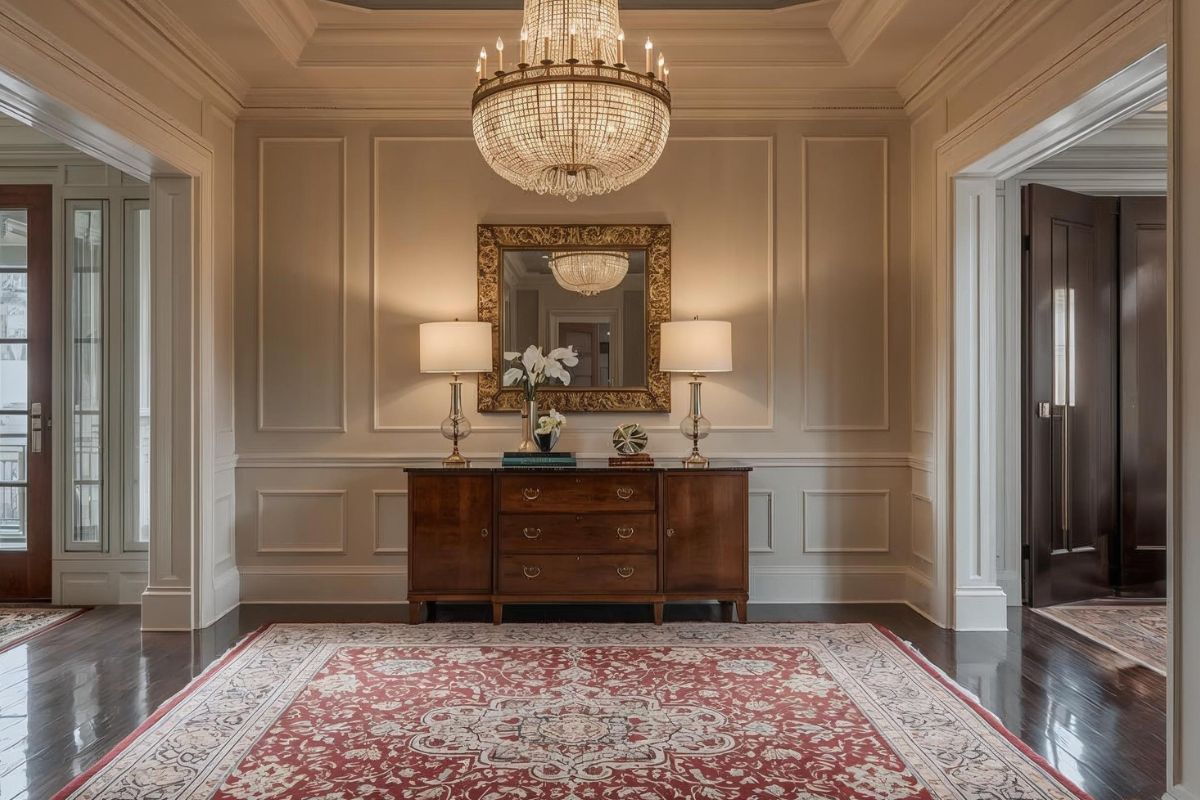
A traditional style entryway creates timeless elegance from the first glance. A polished wooden console, a pair of matching lamps, a gilded or carved mirror, a classic patterned runner, and a crystal or brass chandelier welcome guests with warmth, order, and a sense of history that never goes out of style.
Traditional design draws on eighteenth- and nineteenth-century European interiors, with an emphasis on symmetry, rich materials, fine craftsmanship, and comfortable formality. In the entryway, these qualities make a graceful first impression while still meeting everyday needs. This guide explains the principles of the style, how to plan the layout, and the furniture, finishes, lighting, and decor that create a classic traditional entry.
Key Takeaways
- Traditional entryways emphasize symmetry, rich materials, and classic details.
- Polished wood consoles, chests, and upholstered benches anchor the space.
- Wainscoting, molding, and patterned wallpaper add architectural character.
- Warm neutrals with navy, burgundy, or forest green create depth.
- Chandeliers, matching lamps, and ornate mirrors provide elegant light.
- Classic rugs, artwork, and fresh flowers complete the welcome.
What Defines a Traditional Entryway
Traditional style is about balance, quality, and comfort. A few principles shape every element of a traditional entry.
Symmetry and Order
Symmetry is the backbone of traditional design. A console centered on the wall, flanked by matching lamps, sconces, or chairs, creates a calm and orderly composition. This balanced arrangement feels formal yet welcoming, and it gives the entry an immediate sense of polish.
Quality and Craftsmanship
Traditional furniture is built to last, with solid wood, carved details, and fine finishes. Mahogany, cherry, walnut, and oak are common choices. Antique or reproduction pieces with turned legs, inlays, or brass hardware add authenticity.
Comfortable Formality
Although traditional style is refined, it should never feel stiff. Upholstered seating, soft rugs, warm lighting, and fresh flowers keep the entry inviting and lived in.
Planning the Layout
A well-proportioned layout is key to the balanced look of a traditional entry.
Measure and Center
Keep a walkway of at least 36 inches and make sure the door opens fully. Choose a console about 10 to 16 inches deep for most entries and center it on the main wall. In a larger foyer, a round center table with a floral arrangement creates a classic focal point, with at least 36 inches of clearance around it.
Balance Scale
Match the size of your pieces to the space. A mirror about two-thirds to three-quarters of the console’s width looks balanced, and lamps should be tall enough to light the space without overwhelming it. In a two-story foyer, a larger chandelier and taller art help fill the vertical space.
Plan Discreet Storage
Traditional entries hide everyday clutter. A console with drawers, a chest, or a nearby coat closet keeps keys, gloves, and coats out of sight. A decorative box or a small bowl on the console catches keys and mail.
Furniture and Storage
Traditional entry furniture combines beauty with function.
Consoles and Chests
A polished wood console with turned or cabriole legs, a demilune table, or a chest of drawers makes an elegant centerpiece. Drawers provide hidden storage, and the top displays lamps, flowers, and a tray for keys. Brass or bronze hardware adds a classic touch.
Seating
An upholstered bench with nailhead trim, a pair of side chairs, or a small settee offers a place to sit. Choose fabrics such as velvet, linen, damask, or a classic stripe. A pair of upholstered stools tucked under the console keeps the arrangement symmetrical.
Hall Trees and Umbrella Stands
In entries without a closet, a carved wooden hall tree combines hooks, a mirror, and a bench in one classic piece. A ceramic or brass umbrella stand by the door adds a practical traditional detail.
Walls, Floors, and Colors
Architectural details and rich colors give a traditional entry its character.
Wall Treatments
Wainscoting, raised panels, chair rails, and crown molding add depth and protect walls from wear. Classic wallpapers, such as damask, toile, stripes, or chinoiserie, bring pattern and elegance. Painting trim in a crisp white or a contrasting color highlights the architecture.
Floors
Polished hardwood, marble, or checkerboard tile suits traditional entries. A Persian, Oriental, or classic floral runner adds color, softness, and warmth. Choose a rug pad to keep it in place.
Color Palette
Warm neutrals such as cream, taupe, and soft gold form the base. Deeper shades like navy, burgundy, forest green, and rich brown add depth and sophistication. Use them on walls, upholstery, or the rug.
Mirrors and Lighting
Elegant lighting and ornate mirrors are essential to the traditional look.
Mirrors
A gilded, carved wood, or antique mirror above the console reflects light and adds grandeur. Rectangular and oval shapes are classic. Hang it with its center near eye level, or a little higher if lamps sit on the console.
Lighting
A crystal or brass chandelier, a lantern pendant, or a pair of matching sconces creates an elegant glow. Keep about 7 feet of clearance under hanging fixtures, and more in tall foyers. A pair of table lamps on the console adds warmth and reinforces symmetry. Choose warm bulbs for a flattering light.
Decor and Finishing Touches
Classic decor gives a traditional entry its personality.
Art and Accessories
Landscape or portrait paintings in gilded frames, botanical prints, or a family collection add character. Accessories such as a ginger jar, a decorative box, or a pair of candlesticks suit the style. Arrange them symmetrically for a polished look.
Flowers
A fresh floral arrangement in a classic vase brings life and fragrance. Roses, hydrangeas, and tulips are timeless choices. A pair of potted topiaries on either side of the door adds a formal touch.
Common Mistakes to Avoid
One mistake is making the entry too formal and dark. Balance rich colors with lighter walls, good lighting, and comfortable seating. Another is cluttering the console with too many accessories. Choose a few classic pieces and arrange them with care. Finally, avoid furniture that is out of scale with the space, which can make the entry feel cramped.
Traditional Ideas for Small Entryways
In a small entry, a slim demilune table, a classic mirror, a single lamp or a pair of sconces, and a narrow Oriental runner create an elegant welcome. Wainscoting on the lower wall adds character without taking up space.
If there is no room for a table, a wall-mounted shelf with brass hooks below it and a framed mirror above can still capture the look. Light wall colors keep the space feeling open.
Budget-Friendly Traditional Entryway Ideas
Antique shops, estate sales, and online marketplaces are excellent sources for traditional entry furniture. Solid wood consoles, chests, and mirrors from past decades are often less expensive than new reproductions and better made. A little furniture polish or new brass hardware can bring them back to life.
Adding simple molding, such as a chair rail or picture-frame panels, gives walls architectural character for a modest cost. A pair of matching lamps, a classic patterned runner, and fresh flowers complete the look affordably.
Seasonal Styling
Traditional entries lend themselves to seasonal touches. In spring, fill a classic vase with tulips or hydrangeas. In summer, add a pair of potted topiaries by the door. In autumn, layer a plaid throw on the bench and add a bowl of small pumpkins or apples. In winter, drape garland over the mirror, place candles in brass holders, and hang a wreath on the front door. Keep each change symmetrical and restrained to maintain the polished traditional look.
Blending Traditional With Modern Pieces
A purely traditional entry can feel like a museum if every piece comes from the same era. Introducing one or two modern elements keeps the space classic but lived-in.
Contrast One Element at a Time
Pair an antique mahogany chest with a large abstract painting, or hang a simple globe pendant above a traditional Oriental runner. The contrast works best when the modern piece is clearly intentional and the rest of the arrangement stays balanced and symmetrical.
Update Fabrics and Finishes
Reupholster a classic bench in a solid performance velvet or a bold stripe instead of a busy damask. Swapping shiny brass for an aged or unlacquered finish, or painting the wainscoting a deep green or blue, gives familiar shapes a fresher feel without losing their elegance.
Caring for Antiques and Rugs
Traditional entries often hold the oldest and most valuable pieces in the house, yet they sit in the busiest spot. A few habits protect them from daily wear.
Wood Furniture
Dust consoles and chests with a soft cloth and apply paste wax once or twice a year rather than using spray polish, which can build up and cloud the finish. Place a tray or felt-backed coasters under lamps, bowls, and vases, and never set wet umbrellas or damp gloves directly on the wood.
Runners and Oriental Rugs
Rotate your runner every few months so traffic and sunlight wear it evenly. Vacuum without a beater bar on hand-knotted wool to avoid pulling fibers, and have it professionally cleaned when it looks dull. A sturdy coir mat outside the door keeps grit from grinding into the pile.
- Keep fresh flowers on a tray to catch drips.
- Clean brass hardware with a soft cloth and a gentle polish only when needed.
- Check rug pads yearly and replace any that have flattened or slipped.
Conclusion
A traditional style entryway creates timeless elegance from the first glance. Symmetrical arrangements, polished wood furniture, architectural details, rich colors, and elegant lighting combine for a refined and welcoming entry.
By balancing formality with comfort, planning discreet storage, and adding classic art and fresh flowers, your traditional entry will make a gracious first impression for years to come.
Frequently Asked Questions
More Traditional Style Decor
- Traditional Style: The Absolute Guide
- Traditional Style Bedroom: Timeless Elegance and Comfort
- Traditional Style Living Room: Creating a Cozy Haven