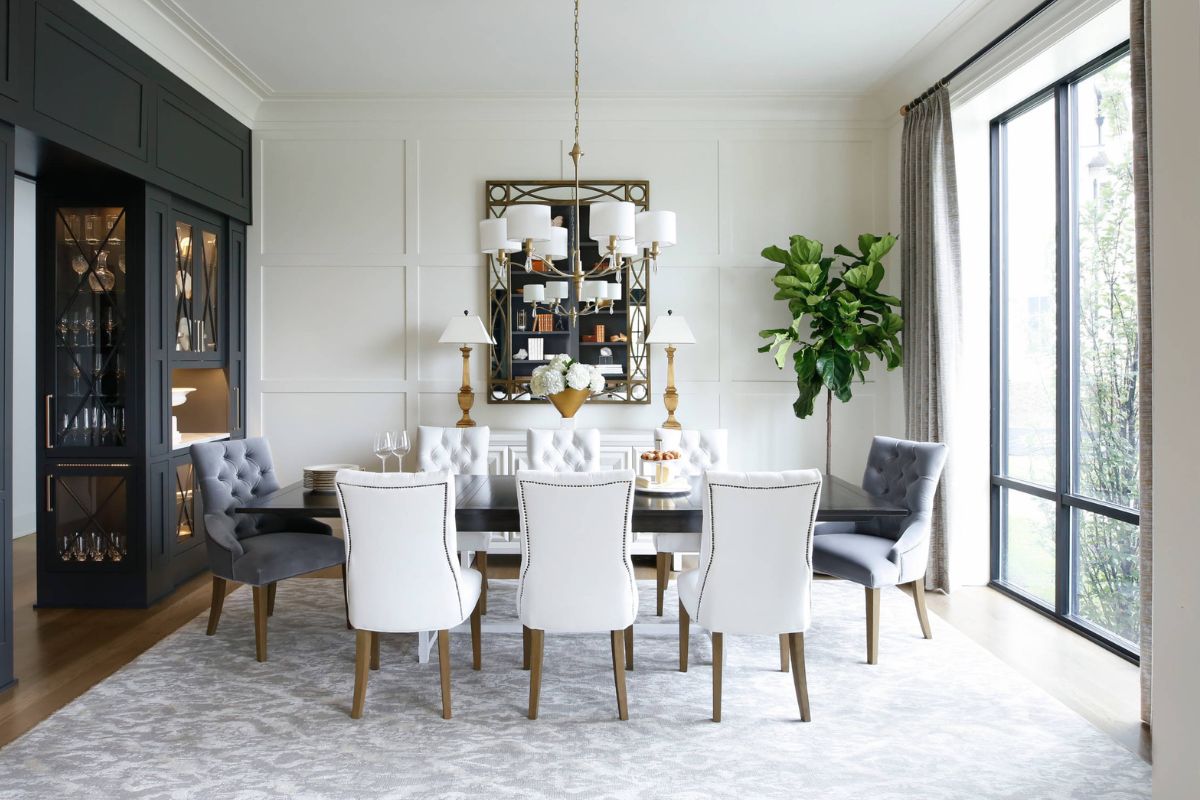
A transitional style dining room feels welcoming from the moment guests sit down. A walnut table with a simple pedestal base is surrounded by upholstered parsons chairs in oatmeal linen, a drum chandelier with a fabric shade glows overhead, and a low sideboard holds a pair of ceramic lamps and a stack of white serving platters. Soft greige walls, a wool rug, and a single large abstract painting complete a room that feels both classic and fresh.
Transitional design unites traditional and modern dining by keeping what people love about each. It takes the comfort, symmetry, and craftsmanship of classic dining rooms and pairs them with the clean lines, restraint, and open feel of contemporary spaces. The result is a dining room that suits formal holidays and casual weeknight meals equally well.
Key Takeaways
- Transitional dining rooms pair classic silhouettes with simplified, modern details.
- A neutral palette of greige, taupe, cream, and soft gray creates a calm backdrop for wood and texture.
- Upholstered chairs, a solid wood or stone-topped table, and a streamlined sideboard form the core furniture.
- A statement light fixture with a simple shape becomes the room’s focal point.
- Texture, not pattern, adds interest through linen, wool, wood grain, and metal finishes.
- Negative space and restrained accessories keep the room calm and uncluttered.
Understanding Transitional Dining Style
Transitional style is easiest to achieve once its balance of old and new is clear.
Where Transitional Design Comes From
Transitional design grew popular as homeowners looked for an alternative to heavy, formal traditional rooms and stark modern interiors. It kept the familiar forms of classic furniture, such as turned legs, wingbacks, and paneled walls, but stripped away excess ornament. In the dining room, this means a recognizable table and chairs with cleaner, simpler profiles.
Hallmarks of a Transitional Dining Room
Expect gently curved or straight lines, a neutral palette, natural materials, and a careful mix of finishes. Symmetry often anchors the room, with chairs evenly spaced and a pair of lamps or sconces flanking a sideboard. Accessories are few and carefully chosen.
Why It Suits Modern Living
A transitional dining room adapts to changing needs. It feels formal enough for holiday dinners yet relaxed enough for homework or board games, and its timeless look lasts through changing trends. It also blends easily with adjoining rooms in open-plan homes, whatever their style.
Choosing the Right Furniture
Furniture sets the balance between traditional and contemporary, so each piece should lean slightly toward one side while staying in conversation with the other.
Dining Tables
A rectangular table with a simple trestle or tapered legs, a round pedestal table, or a table with a stone or wood top on a metal base all work well. Walnut, white oak, and darker stained woods add warmth, while a marble or quartz top brings a modern edge. Allow about 24 inches of table length per person and at least 36 inches between the table and walls for comfortable movement.
Seating
Upholstered parsons chairs, slim wingback host chairs, and wooden chairs with simple curved backs are classic transitional choices. Neutral performance fabrics in linen-look weaves, leather, or wool blends offer comfort and are easier to clean. Mixing upholstered host chairs at the ends with wooden side chairs adds interest while keeping a cohesive look.
Sideboards and Storage
A long, low sideboard with clean lines and recessed or slim hardware provides storage for linens, serving dishes, and table settings. Choose wood, lacquer, or a painted finish that complements the table without matching it exactly. A glass-front cabinet can display china or glassware for a hint of traditional elegance.
Color, Texture, and Finishes
A transitional dining room relies on a calm palette layered with rich texture.
Neutral Palettes With Accents
Greige, taupe, cream, warm white, and soft gray create a sophisticated base. Add depth with muted accents such as navy, charcoal, sage, or deep green in upholstery, a rug, or artwork. Keep accents to one or two colors so the room stays serene.
Mixing Textures and Materials
Texture keeps a neutral room from feeling flat. Pair a smooth stone tabletop with linen chairs, a wool rug, and a woven or fabric light shade. Combine warm wood with brushed brass, polished nickel, or matte black metal for a layered look.
Tried-and-True Combinations
Some pairings that work well in transitional dining rooms:
- Greige walls, walnut table, oatmeal linen chairs, and brushed brass lighting
- Soft white walls, white oak table, navy velvet host chairs, and polished nickel accents
- Warm gray walls, marble-top table, charcoal leather chairs, and a wool rug in ivory
- Cream paneled walls, dark stained table, sage upholstered chairs, and black iron chandelier
Walls, Floors, and Architecture
Architectural details give a transitional dining room its traditional backbone without adding fuss.
Wall Treatments
Simple box molding, picture-frame paneling, or board-and-batten wainscoting adds classic character. Paint trim and walls the same color for a modern, enveloping look, or use a slightly deeper shade on the lower wall for contrast. Grasscloth or textured wallpaper in a soft neutral adds depth without pattern.
Flooring and Rugs
Hardwood floors in medium or light oak suit transitional rooms and work well with both dark and light furniture. A rug in wool or a wool blend with a subtle pattern, such as a tone-on-tone trellis or a soft abstract design, anchors the table. Choose a size that extends at least 24 inches beyond the table on all sides so chairs remain on the rug when pulled out.
Lighting as a Statement
The light fixture is often the main focal point in a transitional dining room.
Choosing the Chandelier
Drum shades in linen, simplified candle-style chandeliers, globe pendants, and linear fixtures over long tables all suit the style. Choose a fixture with a diameter about half to two-thirds the width of the table, and hang it so the bottom sits roughly 30 to 34 inches above the tabletop.
Layering the Light
Wall sconces on either side of a sideboard or artwork add a second layer of light, and a pair of table lamps on the sideboard creates a warm glow during dinner. Put the chandelier on a dimmer and use warm white bulbs around 2700K to 3000K for a flattering atmosphere.
Accessories and Art
Restraint is what keeps transitional accessories looking polished.
Artwork
A single large piece above the sideboard, such as an abstract painting in muted tones or a framed black-and-white photograph, makes a stronger statement than many small pieces. A pair of matching prints hung symmetrically suits more traditional rooms.
Tabletop Styling
Keep the table simple when not in use: a low ceramic bowl, a wooden tray with candles, or a vase of seasonal branches. Set the table with white dinnerware, clear or smoke glassware, and linen napkins in a neutral or accent shade.
Seasonal Updates
Small changes keep the room fresh throughout the year. Swap napkins and table runners, change floral arrangements with the seasons, or add a few warm-toned accessories in winter and lighter, natural pieces in summer.
Planning a Functional Layout
A transitional dining room should look composed and still be easy to use every day.
Open-Plan Dining Areas
In an open layout, a rug and a centered light fixture define the dining zone without walls. Repeat one material or color from the kitchen or living area, such as the wood tone of the floor or the navy of a sofa, so the spaces feel connected. A console or low bookcase between zones can act as a subtle divider while adding storage.
Small Dining Rooms
In a compact room, a round pedestal table seats four comfortably without corner legs in the way, and armless upholstered chairs tuck neatly underneath. A built-in banquette along one wall saves clearance space, while a large mirror opposite the window reflects light and makes the room feel wider. Keep the palette light and consistent so walls seem to recede.
Room to Breathe
Negative space is a defining part of transitional design. Leave clear floor around the table, resist filling every wall, and keep the sideboard top to a few well-chosen pieces. That breathing room lets the furniture and lighting stand out.
Common Mistakes to Avoid
A frequent mistake is buying a fully matched dining set, which can look dated and showroom-like. Pairing a table and chairs from different collections that share a tone or material feels more collected. Another is choosing a chandelier that is too small for the table, which makes the room feel unfinished.
Leaning too far toward one style also undermines the look. Ornate carved chairs or highly decorative wallpaper push the room traditional, while all-glass and chrome pieces feel cold. Aim for pieces that sit comfortably in the middle.
Practical Tips for Any Budget
A transitional dining room does not require all-new furniture. Refinish an existing table in a darker stain or paint its base, add slipcovers or new seat fabric to dated chairs, and replace an ornate light fixture with a simpler drum or globe pendant. These updates shift a room toward transitional style without a full renovation.
When investing, prioritize the table, chairs, and lighting, since they define the room. Secondhand furniture with good bones can be updated with fresh upholstery, and simple molding added to walls is an affordable way to introduce classic character. Leave some walls and surfaces empty; negative space is part of the look, not a sign of an unfinished room.
Conclusion
A transitional style dining room unites traditional and modern dining through classic shapes, clean lines, a neutral palette, and rich texture. A well-chosen table, comfortable upholstered chairs, a statement light fixture, and restrained accessories create a space that feels both elegant and relaxed.
By balancing old and new and allowing room to breathe, the dining room stays timeless and welcoming. It is ready for everyday meals and special occasions alike, year after year.
Frequently Asked Questions
More Transitional Style Decor
- Transitional Style: The Complete Guide
- Transitional Style Bedroom: Where Tradition Meets Modernity
- Transitional Style Living Room: Bridging Classic and Contemporary Design
- Transitional Style Kitchen: Modern Functionality with Timeless Aesthetics
- Transitional Style Bathroom: Harmonizing Classic and Contemporary Elements
- Transitional Style Entryway: Seamlessly Blending Classic and Contemporary Greetings