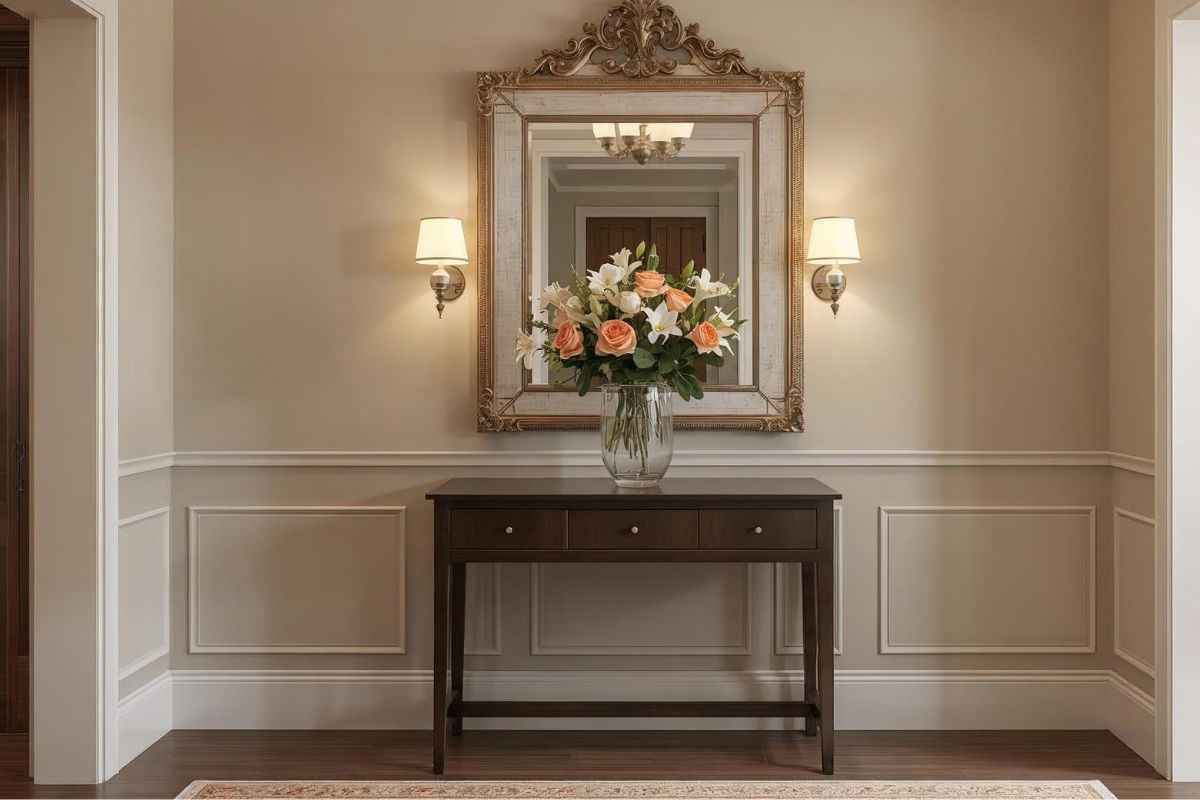
A transitional style entryway seamlessly blends classic and contemporary greetings. A clean-lined console with a hint of traditional detail, a simple framed mirror, a pair of updated lamps, a neutral runner, and a few carefully chosen accessories create a welcome that feels timeless, balanced, and comfortable.
Transitional design sits between traditional and modern. It borrows the warmth and familiarity of classic interiors and pairs it with the simplicity and clean lines of contemporary design. The result works in almost any home and rarely goes out of date. This guide covers what defines a transitional entry, how to plan it, and the furniture, materials, lighting, and decor that achieve the right balance.
Key Takeaways
- Transitional entryways balance traditional warmth with modern simplicity.
- Furniture combines classic shapes with clean, updated finishes.
- Neutral palettes of greige, ivory, and taupe create a calm backdrop.
- Texture from wood, linen, metal, and stone adds depth without clutter.
- Simple framed mirrors and updated classic lighting complete the look.
- Restraint is key: a few quality pieces work better than many.
What Defines a Transitional Entryway
Transitional style is defined by balance. Understanding the mix of old and new helps you choose pieces that feel cohesive.
The Best of Both Worlds
Transitional design keeps the comfort and familiar silhouettes of traditional furniture, such as rolled arms, turned legs, or paneled doors, but simplifies the details. Ornate carving is replaced with clean profiles, and heavy fabrics give way to linen and wool. The look is elegant but relaxed.
Calm and Neutral
A neutral palette is central to transitional style. Color is used sparingly, while texture provides interest. This calm approach makes the entry feel serene and allows it to flow easily into the rest of the home.
Timeless Appeal
Because transitional design avoids extremes, it ages gracefully. Pieces can be updated over time without needing a complete redesign, making it a practical choice for long-term homes.
Planning the Layout
A balanced layout supports the calm, orderly feel of a transitional entry.
Measure and Balance
Keep a walkway of at least 36 inches and ensure the door opens fully. Choose a console 10 to 16 inches deep depending on the space. Centered, symmetrical arrangements suit transitional style, but a slightly asymmetrical layout, such as a lamp on one side and a vase on the other, keeps it from feeling too formal.
Define Clear Zones
Plan a drop zone on the console for keys and mail, a bench or stools for seating, and closed storage for coats and shoes. Hang adult coat hooks around 60 to 66 inches high if you use them. A decorative tray or bowl keeps small items organized.
Connect to Adjacent Rooms
Transitional entries often flow into living or dining spaces. Repeat a color, metal finish, or wood tone from nearby rooms so the entry feels connected to the rest of the home.
Furniture and Storage
Transitional furniture blends classic silhouettes with clean finishes.
Consoles and Cabinets
A console with simple tapered legs, a Parsons-style table, or a cabinet with paneled doors in wood or a painted finish suits the style. Drawers and doors hide everyday clutter, while the top displays a lamp, a tray, and a vase.
Seating
An upholstered bench in linen, wool, or performance fabric, or a pair of simple stools tucked under the console, provides seating. Subtle details such as nailhead trim or a tufted top add a classic touch without feeling heavy.
Coat and Shoe Storage
A closet with organized shelves, a built-in cabinet, or a hall bench with drawers keeps shoes and coats out of sight. Lidded baskets in neutral tones are a practical option for open shelves.
Colors, Materials, and Surfaces
Neutral colors and layered textures define the transitional look.
Neutral Palette
Greige, ivory, taupe, warm gray, and soft white form the base. Accents of navy, charcoal, sage, or muted blue can appear in textiles or artwork. Keep the palette restrained for a calm look.
Layered Textures
Mix wood, linen, wool, leather, metal, and stone for depth. A wood console with a stone lamp, a linen bench, and a wool runner create interest without adding color. Brushed nickel, brass, or matte black hardware suits the style.
Walls and Floors
Simple wainscoting, picture-frame molding, or a subtle grasscloth wallpaper adds character. Hardwood, stone, or porcelain tile floors are durable and timeless. A neutral wool or flat-weave runner with a subtle pattern adds softness.
Mirrors and Lighting
Updated classic lighting and simple mirrors complete the transitional entry.
Mirrors
A rectangular or round mirror with a thin metal or simple wood frame suits the style. Above a console, choose a mirror about two-thirds to three-quarters of its width and hang it with its center near eye level.
Lighting
A lantern pendant with clean lines, a simple drum chandelier, or updated sconces provide elegant light. Keep about 7 feet of clearance below hanging fixtures. A table lamp with a ceramic or glass base and a linen shade adds warmth on the console.
Decor and Finishing Touches
Transitional decor is simple and refined.
Accessories
A ceramic vase with greenery, a decorative tray, and a small stack of books are enough for the console. Abstract art or a landscape in a simple frame adds interest without overpowering the space.
Greenery
Fresh branches, a potted olive tree, or a simple arrangement of white flowers adds life and softness to the neutral palette.
Common Mistakes to Avoid
A common mistake is leaning too far in one direction, ending up with an entry that feels either too traditional or too modern. Mix both influences in roughly equal measure. Another is relying only on beige without texture, which can feel flat. Layer materials for depth. Finally, avoid overcrowding the console; restraint is central to the transitional look.
Transitional Ideas for Small Entryways
In a small entry, a slim console, a simple framed mirror, a pair of sconces, and a neutral runner create a balanced welcome. A narrow bench or two stools under the console provides seating without blocking the path.
Light neutral walls, a single vase of greenery, and closed storage keep the space calm and uncluttered.
Budget-Friendly Transitional Entryway Ideas
Transitional style is ideal for mixing what you already own with a few new pieces. A traditional console from a secondhand shop can be paired with a modern lamp and a simple framed mirror for an instant transitional look. Painting an older piece in a soft neutral and replacing ornate hardware with simple pulls updates it without losing its classic shape.
Inexpensive picture-frame molding adds architectural interest to plain walls, and a neutral flat-weave runner brings texture. Fresh greenery in a simple vase is an affordable finishing touch.
Seasonal Styling
Keep seasonal changes subtle to preserve the calm, balanced look. In spring and summer, use white flowers, light linen textiles, and green branches. In autumn, add a wool throw in a warm neutral and a bowl of natural elements such as pinecones or acorns. In winter, a simple wreath, candles, and a few evergreen stems add warmth without disrupting the neutral palette.
Styling the Console Step by Step
The console is where transitional style either looks effortless or cluttered. A simple sequence keeps it balanced and practical.
Set the Frame
Hang the mirror first, centered over the console with its bottom edge 6 to 10 inches above the top. Then place a lamp on one side, roughly a third of the way in from the end. Its shade should sit just below the mirror frame or overlap it slightly, which ties the two together.
Balance Without Matching
On the opposite side, add a vase of branches or a stack of two or three books topped with a small object, so the visual weight roughly equals the lamp. Place a tray or shallow bowl in the center or near the door for keys. This soft asymmetry is what separates transitional styling from strictly traditional pairs.
- Limit the surface to three or four items.
- Repeat one finish, such as brushed brass, in the lamp and the tray.
- Tuck two stools or a pair of lidded baskets underneath to finish the arrangement.
Choosing a Runner and Doormat
Rugs set the tone underfoot and protect your floors. In a transitional entry, they should add texture and quiet pattern without competing with the rest of the room.
Outside, a plain coir or rubber-backed mat in natural or charcoal scrapes off grit. Inside, choose a wool or wool-blend runner with a subtle stripe, a faded vintage-style pattern, or a tone-on-tone weave. Leave 4 to 6 inches of floor visible on each side, keep the edge closest to the door clear of its swing, and use a non-slip pad underneath.
Making It Kid- and Pet-Friendly
A calm, neutral entry can still handle busy family life. The trick is choosing finishes that look refined but clean easily.
Durable Fabrics and Finishes
Upholster benches in performance linen or a tightly woven fabric in a mid-tone greige, which hides marks better than ivory. Use scrubbable eggshell or satin paint on walls, and consider wainscoting on the lower third, where bags and paws make contact.
Storage at Every Height
Add a lower row of hooks at about 36 to 42 inches for children, and assign each family member one lidded basket. Keep leashes and a towel for muddy paws in a cabinet near the door so they are close at hand but out of sight.
Conclusion
A transitional style entryway seamlessly blends classic and contemporary design. Simple furniture with classic touches, a neutral palette, layered textures, and updated lighting create a timeless and inviting first impression.
By balancing old and new, planning discreet storage, and keeping decor restrained, your transitional entry will feel comfortable, elegant, and adaptable for years to come.
Frequently Asked Questions
More Transitional Style Decor
- Transitional Style: The Complete Guide
- Transitional Style Bedroom: Where Tradition Meets Modernity
- Transitional Style Living Room: Bridging Classic and Contemporary Design
- Transitional Style Kitchen: Modern Functionality with Timeless Aesthetics
- Transitional Style Bathroom: Harmonizing Classic and Contemporary Elements