
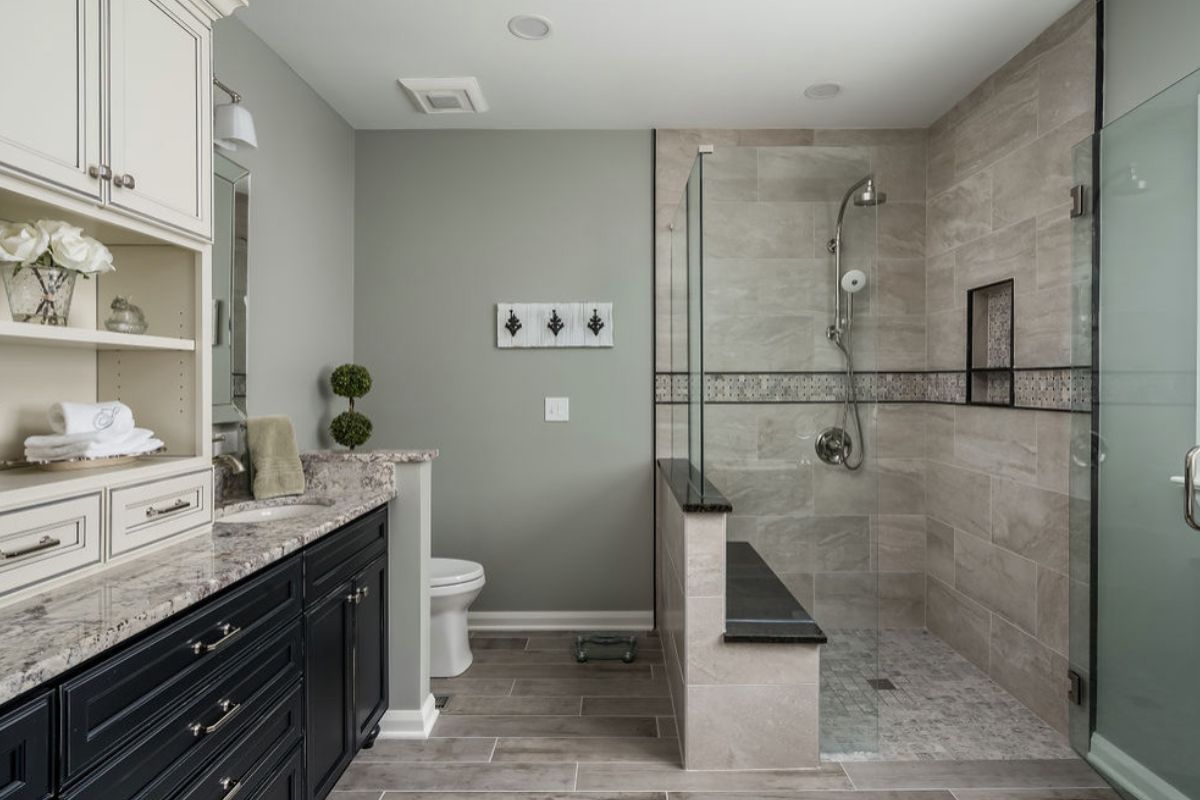
A transitional style bathroom feels polished but never fussy. A Shaker-style vanity in soft greige sits beneath a white quartz counter, a pair of brushed nickel sconces frames a simple rectangular mirror, and marble-look tile wraps a glass-enclosed shower. A freestanding tub with a clean oval shape rests near the window, dressed with nothing more than a folded white towel and a small stool.
Transitional design sits between traditional and contemporary, borrowing the comfort and craftsmanship of classic rooms and the clean lines and restraint of modern ones. In the bathroom, that means familiar shapes simplified, a calm neutral palette, and a careful mix of finishes. The result is a room that feels timeless, works hard every day, and adapts easily as tastes change.
Key Takeaways
- Transitional bathrooms combine classic forms, such as Shaker doors and subway tile, with streamlined modern details.
- A neutral palette of warm whites, greige, taupe, and soft gray creates a calm, flexible backdrop.
- Natural stone or stone-look porcelain, quartz counters, and simple tile patterns bridge the two styles.
- Mixing two metal finishes thoughtfully adds depth without looking busy.
- Layered lighting with sconces at face height makes the room both flattering and functional.
- Restrained decor and hidden storage keep the look clean and serene.
What Defines a Transitional Bathroom
Understanding the balance at the heart of transitional style makes design decisions much easier.
A Bridge Between Two Styles
Transitional design emerged as homeowners looked for a middle ground between ornate traditional rooms and stark modern ones. It keeps the warmth, symmetry, and quality materials of classic design while removing heavy ornament. In a bathroom, a recessed panel door replaces a carved one, and a simple bell-shaped sconce replaces a crystal fixture.
Signature Characteristics
Expect clean but not severe lines, gentle curves, a mostly neutral palette, and texture in place of pattern. Symmetry is common, such as a double vanity flanked by matching sconces. Ornamentation is minimal, appearing in a subtle crown molding on a vanity, a beveled mirror edge, or a classic tile shape.
Why It Works So Well in Bathrooms
Bathrooms are expensive to renovate, so a timeless look protects the investment. Transitional design avoids trends that date quickly, appeals to a wide range of tastes, and suits both older homes and new construction. It also makes resale easier, since buyers can picture their own style layered on top.
A Calm, Neutral Palette
Color in a transitional bathroom is soft and layered, with interest coming from tone and texture rather than bold hues.
Core Neutrals
Warm white, cream, greige, taupe, and soft gray form the foundation. Choose undertones carefully: warm neutrals pair beautifully with brass and wood, while cooler grays suit polished nickel and marble with gray veining. Test paint samples in the bathroom itself, since artificial light changes colors dramatically.
Subtle Accent Colors
Muted navy, slate blue, sage, or charcoal can appear on a vanity, a tiled feature wall, or towels. These deeper shades add character without disrupting the calm, timeless mood. Keep accents to one color family for a cohesive look.
Palettes to Try
Some proven combinations for transitional bathrooms:
- Warm white walls, greige vanity, white quartz, and brushed nickel fixtures
- Soft gray walls, navy vanity, marble-look tile, and polished brass hardware
- Cream walls, white oak vanity, honed limestone-look floor, and matte black accents
- Pale sage walls, white cabinetry, and champagne bronze fixtures
Vanities and Storage
The vanity is often the clearest expression of transitional style, and it carries much of the storage load.
Choosing the Vanity
Shaker or slim recessed-panel doors are the classic transitional choice, simpler than raised-panel traditional cabinetry but warmer than flat slab fronts. Furniture-style vanities with tapered legs bring a classic touch, while a floating vanity in white oak leans more modern. Painted finishes in white, greige, or navy, or a wood stain in natural oak or walnut, all work.
Countertops and Sinks
White or soft-veined quartz is durable, stain-resistant, and needs no sealing. Marble is beautiful but can etch from acidic products, so it suits those who accept a natural patina. Undermount rectangular or oval sinks keep the counter clean-lined and easy to wipe.
Hidden and Built-In Storage
Clean surfaces are central to the look. Use drawers with dividers inside the vanity, a recessed medicine cabinet, or a built-in linen tower to keep toiletries out of sight. A tiled shower niche sized to fit tall bottles eliminates clutter on ledges.
Tile, Stone, and Surfaces
Materials are where classic and contemporary meet most clearly in a transitional bathroom.
Classic Tile in Fresh Layouts
White subway tile stays transitional when laid in a stacked vertical or herringbone pattern instead of the standard running bond. Hexagon and basketweave mosaics in white and gray marble suit floors, and large-format porcelain in a soft stone look keeps grout lines minimal for a modern feel.
Natural Stone and Stone-Look Porcelain
Carrara-style marble, honed limestone, and travertine bring elegance and texture. Natural stone requires periodic sealing, while porcelain versions offer the same look with less maintenance, which makes them a practical choice for busy family bathrooms and shower floors.
Wall Treatments
Wainscoting with simple flat panels, a board-and-batten detail, or a full-height tiled wall behind the vanity adds architectural interest without heavy ornament. Use a moisture-resistant paint in satin or semi-gloss on painted trim.
Fixtures and Finishes
Faucets, showers, and hardware help set the balance between old and new.
Faucets and Shower Systems
Look for gently curved spouts and simple lever or cross handles rather than highly ornate or ultra-angular designs. A thermostatic shower valve with a rain head and a handheld wand adds modern function in a classic shape. Widespread faucets with separate handles feel slightly more traditional, while single-hole models lean contemporary.
Tubs and Showers
A freestanding tub with an oval or slipper silhouette works beautifully in transitional rooms, especially paired with a floor-mounted tub filler. Frameless or minimal-frame glass shower enclosures keep tile visible and the room open. A built-in tub with a stone or tiled surround suits family bathrooms.
Mixing Metals Thoughtfully
Transitional bathrooms often pair two metals, such as brushed nickel plumbing fixtures with soft brass lighting, or matte black hardware with polished nickel faucets. Keep one finish dominant and use the second as an accent, and repeat each finish at least twice so the mix looks intentional.
Lighting a Transitional Bathroom
Good lighting makes the room both beautiful and practical for daily routines.
Vanity Lighting
Sconces mounted on either side of the mirror at roughly eye level, around 60 to 66 inches from the floor, give even, shadow-free light for grooming. Choose simple shapes with glass or fabric shades in a finish that matches the faucet or hardware.
Ceiling and Accent Lighting
A semi-flush fixture or a small, simple chandelier rated for damp locations adds a classic focal point. Recessed lights in the shower and over the tub provide task lighting, and LED strips under a floating vanity create a soft night light. Use warm white bulbs around 2700K to 3000K and put fixtures on dimmers.
Natural Light and Privacy
Where there is a window, keep the treatment simple. A top-down, bottom-up shade in a light linen-look fabric, frosted lower glass, or interior shutters painted to match the trim let daylight in while protecting privacy. Avoid heavy swags or valances, which feel too traditional and trap moisture.
Finishing Touches
Accessories complete a transitional bathroom, but restraint keeps it calm.
Mirrors and Hardware
Simple rectangular or softly arched mirrors with thin metal or wood frames suit the style. Cabinet hardware such as cup pulls, slim bar pulls, or knobs in the chosen accent finish adds polish. Avoid heavily ornate frames or overly industrial pieces.
Textiles and Decor
Plush towels in white, oatmeal, or soft gray with a simple border, a cotton or wool-blend bath mat, and Roman shades in linen-look fabric soften hard surfaces. A single framed print, a small plant, and a tray holding a few matching containers are enough decoration.
Small Bathrooms and Budget Updates
Transitional style suits compact bathrooms and partial updates especially well, since it relies on simple shapes and quality basics.
Making a Small Bathroom Feel Larger
Choose a single light neutral for walls, vanity, and tile so the room reads as one calm envelope. A floating or open-leg vanity shows more floor, and a large mirror that spans the vanity width bounces light around the room. Run the same floor tile into a curbless shower where possible, and use a clear glass panel instead of a curtain to keep sightlines open.
Updating Without a Full Renovation
Painting an existing oak or builder-grade vanity in greige, navy, or soft white and swapping the hardware for slim pulls instantly shifts it toward transitional style. Replace dated light bars with a pair of simple sconces, and change a busy faucet for a gently curved model in brushed nickel or brass. A new framed mirror, fresh white towels, and a linen-look shade complete the update.
Common Transitional Bathroom Mistakes
One frequent mistake is letting the room drift too far in one direction, either adding ornate details that read as traditional or so many sharp edges that it feels cold and modern. Check each choice against the balance of classic shape and simple detail. Another is mixing too many metals; three or more finishes usually look accidental.
All-gray palettes without texture can feel flat and clinical, so include wood, stone, and soft textiles. Finally, skimping on lighting undermines even the best materials. Plan sconces at the mirror before tile goes up, since wiring is hard to move later.
Conclusion
A transitional style bathroom brings classic and contemporary elements together through simplified traditional forms, a calm neutral palette, quality materials, and carefully mixed finishes. The result feels elegant, functional, and timeless.
Focus on a well-chosen vanity, thoughtful tile layouts, layered lighting, and restrained decor. A bathroom designed this way stays comfortable and current for years, adapting gracefully as personal style evolves.
Frequently Asked Questions
More Transitional Style Decor
- Transitional Style: The Complete Guide
- Transitional Style Bedroom: Where Tradition Meets Modernity
- Transitional Style Living Room: Bridging Classic and Contemporary Design
- Transitional Style Kitchen: Modern Functionality with Timeless Aesthetics


