Picture a living room with a tailored track-arm sofa in oatmeal linen, a pair of slimmed-down wingback chairs in soft gray velvet, and a round coffee table with a dark walnut top and a brushed nickel base. Simple crown molding frames walls painted warm greige, a large neutral rug in a subtle tone-on-tone pattern grounds the seating, and a drum chandelier hangs overhead. The room feels familiar and comfortable, yet fresh and uncluttered.
That is transitional style. It takes the comfort, warmth, and classic shapes of traditional design and pairs them with the clean lines, restraint, and lighter palettes of contemporary interiors. The result is relaxed, timeless, and easy to live with. This guide covers what transitional style is, how to build its palette, how to choose and mix furniture, and how to apply it room by room, plus budget strategies and the mistakes that most often throw the balance off.
Key Takeaways
- Transitional style blends traditional comfort and classic forms with contemporary simplicity.
- A neutral palette of greige, taupe, cream, and soft gray forms the base, with muted blues, greens, and wood tones as accents.
- Furniture favors classic silhouettes with pared-back detail, such as a slim wingback or a rolled-arm sofa without skirts or fringe.
- Texture, not bold pattern, adds depth: linen, wool, velvet, leather, wood, and stone in layers.
- Balance is the guiding principle, with no single era dominating the room.
- Investing in a few quality anchor pieces and editing accessories keeps the look calm.
What Is Transitional Style?
Transitional style is the middle ground between traditional and contemporary design. It keeps the warmth, symmetry, and comfort of classic interiors while removing heavy ornament and visual clutter.
Definition and Core Principles
The core principles are balance, restraint, and comfort. Transitional rooms use a calm neutral palette, furniture that blends curved and straight lines, and a mix of materials such as wood, metal, glass, and textiles. Architecture is classic but simplified, and accessories are few and well chosen.
History and Evolution
The term came into wide use in the late 20th century, as homeowners looked for an alternative to both formal traditional rooms and stark modern ones. Designers began pairing classic forms, such as Louis XVI-style chairs, Chesterfield sofas, and turned-leg tables, with cleaner upholstery, lighter colors, and simpler accessories. Over time the style has shifted toward warmer neutrals, more natural texture, and a lighter hand with formality.
Why Transitional Style Remains Popular
Transitional style is flexible and forgiving. It suits older homes with moldings and newer homes with open plans, and it lets people keep inherited or vintage pieces alongside newer furniture. Its neutral foundation also makes rooms easy to update without starting over.
Key Elements of Transitional Style
Transitional design depends on a handful of recurring elements that work together to create balance.
Balance Between Traditional and Contemporary
Each room should mix classic and current pieces in roughly equal measure. Pair a traditional wingback chair with a sleek metal-and-glass side table, or a turned-leg dining table with simple upholstered chairs. Classic architectural details such as crown molding and paneled doors can stay, but painted in a soft neutral rather than stained dark.
Texture Over Pattern
Transitional rooms rely on texture for interest. Linen slipcovers, wool rugs, chunky knit throws, velvet pillows, and natural wood grain add depth without busy prints. When pattern appears, it is usually subtle: a small-scale geometric, a soft stripe, or a tone-on-tone damask.
How to Identify Transitional Spaces
Look for a neutral palette, furniture with classic shapes but little ornament, symmetry around a focal point such as a fireplace, and uncluttered surfaces. Lighting fixtures often reinterpret classic forms, such as a drum chandelier or a lantern pendant in brushed metal.
How to Create a Transitional Style Color Palette
Color is the glue that holds transitional rooms together. A restrained palette allows furniture from different eras to look cohesive.
The base is usually a warm or balanced neutral, such as greige, taupe, cream, or soft gray. These colors flatter both dark and light woods and keep the overall look calm.
Selecting Neutral Base Colors
Choose one main wall color and carry it through connected rooms. Greige works well in rooms with mixed light, warm whites suit trim and ceilings, and soft taupe adds coziness in larger spaces. Test samples at different times of day before committing.
Incorporating Accent Colors
Muted accent colors such as slate blue, sage green, dusty navy, and soft charcoal add depth without breaking the calm. Rich wood tones, such as walnut and cherry, also act as accents. Limit accents to pillows, art, a single upholstered chair, or a painted piece of furniture.
Color Combinations That Work
- Greige, warm white, and walnut for a classic, versatile scheme.
- Soft gray, navy, and brushed nickel for a tailored look.
- Cream, sage, and natural oak for a light, relaxed feel.
- Taupe, charcoal, and antique brass for warmth and depth.
Architectural Details, Walls, and Floors
The shell of the room does a lot of work in transitional design. Classic architecture is kept but simplified, so it supports the furniture rather than competing with it.
Moldings and Millwork
Crown molding, baseboards, and window casings in simple profiles suit the style. Picture-frame wall molding, board-and-batten, or a low wainscot add classic character, especially when painted the same color as the walls for a quiet, tonal effect. Avoid elaborate carved trim or heavy contrast between walls and woodwork.
Paint Finishes and Wall Treatments
Use matte or eggshell finishes on walls and satin or semi-gloss on trim and doors for durability. Grasscloth, linen-texture wallpaper, or a soft limewash on one wall adds depth without pattern. Keep accent walls subtle rather than bold.
Flooring Choices
Wide-plank oak or walnut in a medium, natural tone is the classic transitional floor, and herringbone or chevron layouts add traditional character. Honed marble, limestone, or large-format porcelain suit entries, kitchens, and bathrooms. Finish wood floors in a matte or satin sheen, which looks more current than high gloss.
Choosing Furniture for Transitional Spaces
Furniture is where the blend of old and new is most visible. Choose pieces that combine classic proportions with simplified details.
Ideal Silhouettes and Shapes
Look for sofas with rolled or track arms and tight backs, chairs with gently curved frames, and tables with turned or tapered legs but minimal carving. A Parsons-style dining table, a Chesterfield sofa in a solid neutral fabric, or a slim wingback chair are all classic shapes that work well. Avoid skirts, fringe, and heavy tufting unless balanced by sleeker pieces.
Best Materials and Textures
Solid wood, metal, glass, stone, and quality upholstery are the main materials. Wood finishes range from light oak to dark walnut, and metals tend toward brushed nickel, matte brass, and iron. Upholstery in linen, cotton, velvet, wool, and leather adds comfort and texture.
Techniques for Mixing Traditional and Modern Pieces
Unify mixed pieces with a common thread, such as color, finish, or scale. A traditional armchair and a modern sofa can share the same upholstery color, while a classic dresser can be updated with modern hardware. Repeat each material at least twice in a room so it looks intentional. Keeping silhouettes in conversation also helps: if the sofa has a gentle curve, echo it in a round side table or an arched mirror, and if the coffee table is crisply rectangular, repeat that line in a console or picture frames.
Implementing Transitional Style in Living Rooms
The living room is often the clearest expression of transitional style, combining comfortable seating, symmetry, and layered texture.
Step-by-Step Furniture Arrangement
Start with a neutral sofa facing the room’s focal point, such as a fireplace or large window. Add two matching chairs opposite or at angles to create a conversation area, then place a coffee table about 16 to 18 inches from the sofa. A rug should be large enough for at least the front legs of all seating to rest on it.
Strategic Accessorizing
Use a mix of classic and modern accessories in limited numbers. A pair of ceramic lamps, a stack of books, a simple tray with a candle, and a single large piece of art are usually enough. Symmetrical arrangements on mantels and consoles reinforce the style’s sense of order.
Lighting Selection and Placement
Combine overhead, table, and floor lighting to create a layered effect. Choose fixtures that reinterpret classic shapes in simpler forms.
A drum chandelier, a lantern pendant, or a pair of swing-arm sconces can act as a focal point. Put each lighting layer on a dimmer and use warm white bulbs around 2700K to 3000K for a welcoming glow in the evening.
Textiles, Rugs, and Window Treatments
Soft furnishings tie the classic and contemporary sides of the room together and add much of its comfort.
Rugs
Choose rugs in wool, wool blends, or natural fibers such as jute and sisal. Solid colors, subtle borders, faded traditional motifs, and low-contrast geometric patterns all work. Layering a smaller patterned rug over a large jute one is a simple way to add warmth.
Window Treatments
Floor-length drapery panels in linen, cotton, or light wool are the standard. Hang them close to the ceiling and wide of the window, using simple rods in iron, brushed nickel, or wood. Roman shades in a solid or subtly textured fabric suit kitchens, bathrooms, and smaller windows.
Pillows and Throws
Mix two or three textures, such as velvet, linen, and boucle or knit, in coordinating neutrals and one accent color. A single subtle pattern, like a small check or a soft stripe, keeps the arrangement interesting without feeling busy.
Transitional Style Kitchen and Dining Areas
Kitchens and dining rooms suit transitional style well because they combine practical function with classic architectural detail.
Cabinet and Countertop Selection Guide
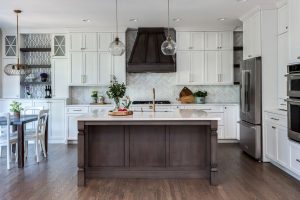
Shaker-style cabinets are the transitional standard, offering a simple recessed panel that feels classic without fuss. Paint them in white, greige, soft gray, or muted navy, and pair them with quartz or honed marble countertops. Simple subway tile or large-format stone backsplashes keep the look clean.
Hardware and Appliance Integration
Choose hardware in brushed nickel, matte brass, or oil-rubbed bronze with simple bar or cup pull shapes. Panel-ready appliances blend into cabinetry, while stainless steel appliances fit easily alongside painted cabinets.
Creating Cohesive Dining Spaces
Pair a traditional wood table with simple upholstered or modern chairs, or set a sleek table with classic Windsor or Louis-style chairs. A linear chandelier or pair of lantern pendants over the table, a large neutral rug, and a simple sideboard complete the room. Hang the fixture about 30 to 36 inches above the tabletop, and choose a rug that extends at least 24 inches beyond the table on every side so chairs stay on it when pulled out.
Designing Transitional Bedrooms and Bathrooms
Private spaces benefit from the calm and comfort transitional style provides.
Bedroom Furniture and Textile Selection
Choose an upholstered headboard in linen or velvet, nightstands with simple drawer fronts, and a dresser with classic proportions but restrained detail. Layer bedding in white, ivory, and soft gray, adding texture with a quilted coverlet, a knit throw, and a few velvet pillows.
Bathroom Fixture and Finish Choices
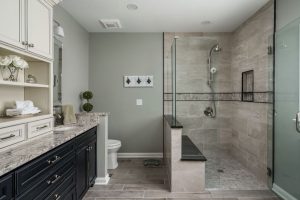
Pair a classic vanity with a simple vessel or undermount sink, and choose faucets in brushed nickel or matte brass. Marble or marble-look tile, a framed mirror, and a pair of sconces create a balanced, spa-like look. A freestanding tub with a simple oval shape, or a glass shower enclosure with slim metal framing, combines classic form with a clean finish.
Storage and Organization Solutions
Built-in cabinetry, a chest of drawers with clean lines, and closed vanity storage keep both rooms uncluttered. Baskets and lidded boxes in natural materials keep small items out of sight. In the bathroom, a recessed medicine cabinet with a framed door or open shelving styled with rolled towels and a few glass jars offers storage that still looks deliberate.
Transitional Entryways and Home Offices
Smaller and work-focused spaces follow the same balance, scaled down to fit their purpose.
Entryways
An entry sets expectations for the whole home. A slim console table with turned or tapered legs, a round or arched mirror in a thin metal frame, and a pair of lamps or a lantern pendant create a classic, symmetrical welcome. A runner in a faded traditional pattern and a covered bench or a basket for shoes keep the space practical.
Home Offices
Pair a simple wood or painted desk with a comfortable upholstered chair rather than a purely technical task chair. Closed cabinets or bookcases with doors hide paperwork, while a brass or nickel desk lamp and a roman shade complete the look. Keep cords managed and surfaces clear so the room feels as calm as the rest of the home.
Budget-Friendly Approaches to Transitional Style
Transitional style is easier to achieve on a budget than many people expect, since it often builds on furniture already in the home.
DIY Transitional Style Projects
Repaint walls and trim in a warm neutral, update dated hardware with simple brushed metal pulls, and replace ornate light fixtures with cleaner designs. Paint a dark, heavy dresser in soft gray or greige to lighten it while keeping its classic form.
Where to Invest Versus Where to Save
Invest in pieces that see daily use and set the tone of the room, such as the sofa, the dining table, and the mattress. Save on accessories, pillows, and smaller decor that can be swapped as tastes change.
Updating Existing Pieces
Reupholster a traditional armchair in a solid linen or velvet, remove skirts from sofas to reveal the legs, or refinish an older wood table in a lighter stain. These updates keep the classic forms while bringing them closer to a transitional look.
Common Mistakes to Avoid When Creating Transitional Style
Because transitional design depends on balance, a few common missteps can easily tip the room too far in one direction.
Overcomplicating the Design
Too many patterns, colors, or accessories quickly make a room feel busy. Keep the palette simple and let texture do most of the work.
Leaning Too Far in One Direction
A room full of dark, ornate furniture reads as traditional, while one full of glass and chrome reads as modern. Aim for an even mix, and review the room as a whole before adding new pieces. A useful check is to look at each wall and make sure it holds at least one classic element and one cleaner, more current one.
Ignoring Scale and Proportion
Oversized sofas can overwhelm small rooms, while undersized rugs and art make large rooms feel disjointed. Measure carefully and choose pieces scaled to the room and to each other.
Overlooking Textural Variety
An all-neutral room without texture can feel flat. Layer linen, wool, velvet, wood, and stone to keep it inviting.
Conclusion
Transitional style brings together the comfort and character of traditional design with the clarity and lightness of contemporary interiors. A calm neutral palette, classic shapes with simplified detail, layered textures, and thoughtful lighting are its foundation.
Start with the palette and a few quality anchor pieces, then build balance with a mix of classic and modern furniture and accessories. The result is a home that feels timeless, relaxed, and easy to adapt over time.
Frequently Asked Questions
More Transitional Style Decor
- Transitional Style Bedroom: Where Tradition Meets Modernity
- Transitional Style Living Room: Bridging Classic and Contemporary Design
- Transitional Style Kitchen: Modern Functionality with Timeless Aesthetics
- Transitional Style Bathroom: Harmonizing Classic and Contemporary Elements