
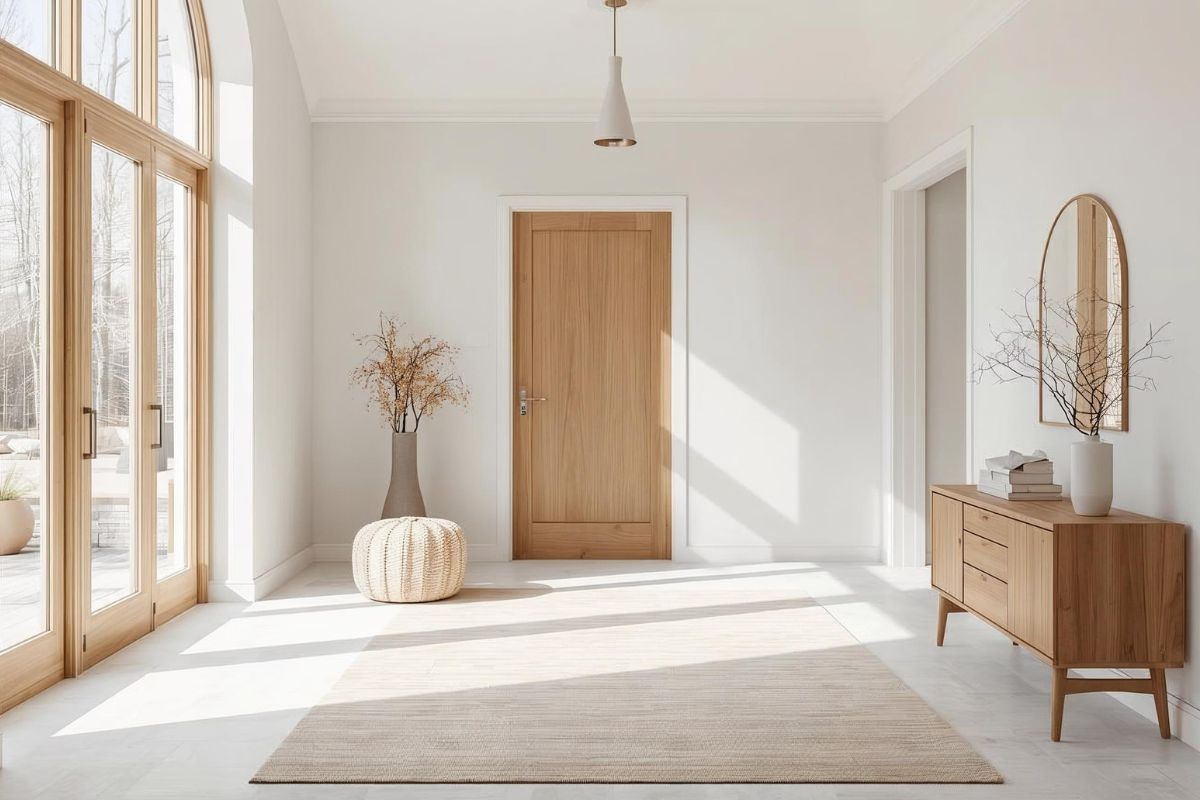
A Scandinavian style entryway is bright and inviting with natural touches. A light oak bench, a simple peg rail, a round mirror, a woolly sheepskin, a few plants, and soft white walls create a welcome that feels fresh, calm, and cozy, the perfect start to a home built around comfort and everyday ease.
Scandinavian design comes from the Nordic countries, where long, dark winters inspired homes that maximize light and warmth. It combines clean lines, natural materials, and practical storage with the cozy feeling Danes call hygge. This guide explains the key principles, how to plan a Scandinavian entry, and the furniture, materials, lighting, and decor that bring it together.
Key Takeaways
- Scandinavian entryways balance simplicity, function, and cozy warmth.
- Light woods, white walls, and natural textures maximize brightness.
- Peg rails, benches, and wall-mounted storage keep the floor clear.
- Wool, sheepskin, and linen add hygge-inspired comfort.
- Layered lighting brightens the space during dark months.
- Plants and simple decor bring life without clutter.
Scandinavian style is simple, functional, and warm. A few key ideas guide every choice in the entry.
Light Above All
In the Nordic countries, daylight is precious for much of the year. Scandinavian interiors use white or pale walls, light wood, and reflective surfaces to make the most of every bit of light. In an entry, this keeps the space bright and welcoming even on grey days.
Practical Simplicity
Scandinavian design values function. Furniture is simple, durable, and often multipurpose. Clutter is kept to a minimum with smart storage, so the entry stays calm and easy to use.
Hygge Warmth
Hygge describes a feeling of coziness and contentment. Soft textiles, warm light, candles, and natural materials keep a Scandinavian entry from feeling cold, even with its clean lines and pale palette.
Planning the Layout
A Scandinavian entry often has to handle wet boots, heavy coats, and winter gear, so planning is important.
Measure and Keep the Floor Clear
Keep a walkway of at least 36 inches and ensure the door opens fully. Wall-mounted storage keeps the floor clear and makes the space feel larger. A bench around 17 to 19 inches high is comfortable for pulling on boots.
Plan for Seasons
Nordic homes are designed for changing weather. Keep only the current season’s coats and shoes in the entry and store the rest elsewhere. A boot tray and a sturdy doormat handle snow and rain.
Organize by Person
Give each family member a hook, a basket, or a shelf. Mount adult hooks around 60 to 66 inches high and a lower row at 36 to 48 inches for children. A small tray or bowl on a shelf keeps keys in one place.
Furniture and Storage
Scandinavian entry furniture is light, simple, and practical.
Benches
A light oak, birch, or ash bench with clean lines is a classic choice. Benches with a lower slatted shelf provide space for shoes. A sheepskin or a wool cushion adds warmth and comfort.
Peg Rails and Hooks
Wooden peg rails are a Scandinavian staple. They hold coats, bags, and scarves while keeping the look tidy. Simple wooden or black metal hooks also work well. A rail with a shelf above provides extra space for hats and gloves.
Shoe Storage and Cabinets
A slim white or wooden shoe cabinet, a wall-mounted cabinet, or simple baskets keep footwear organized. Closed storage hides clutter and maintains the calm look of the space.
Colors, Materials, and Surfaces
A pale palette and natural materials define the Scandinavian look.
Light Palette
White, soft gray, and warm beige form the base. Accents of black, muted blue, sage green, or dusty pink add personality. Keeping colors soft and limited maintains the calm, airy feel.
Natural Materials
Light woods such as oak, birch, and ash, along with wool, linen, leather, and ceramics, bring warmth and texture. Matte finishes suit the understated style.
Floors and Walls
Light wood floors or pale tile are typical. A striped flat-weave runner, a wool rug, or a natural fiber mat adds softness. Walls are usually white or very pale, sometimes with simple wood paneling for texture.
Lighting and Mirrors
Good lighting is essential in Scandinavian design, especially for dark winter mornings and evenings.
Layered Lighting
Combine a simple pendant or ceiling light with a wall sconce or a small table lamp. White, wood, or paper shades diffuse light softly. Keep about 7 feet of clearance under hanging fixtures. Warm bulbs and a few candles or LED candles create a hygge glow.
Mirrors
A round mirror with a thin wooden or leather strap, or a simple frameless mirror, reflects light and makes the entry feel larger. Hang it with its center near eye level, ideally where it can catch daylight.
Decor and Finishing Touches
Scandinavian decor is simple and meaningful.
Textiles
Sheepskins, wool throws, and linen cushions add hygge comfort. A striped or geometric runner adds a touch of pattern without clutter.
Plants and Art
A potted plant, eucalyptus in a ceramic vase, or seasonal branches bring nature indoors. Simple black-and-white prints or minimal line art suit the style. Keep accessories few and well chosen.
Common Mistakes to Avoid
One common mistake is making the space all white with no warmth, which feels cold rather than Scandinavian. Add wood, textiles, and warm light. Another is keeping every season’s coats and shoes in the entry, which leads to clutter. Finally, avoid poor lighting; a single overhead light is rarely enough for a cozy Scandinavian space.
In a small entry, a wooden peg rail with a shelf, a slim bench or stool, a round mirror, and a small plant create a bright Scandinavian welcome. Wall-mounted storage keeps the floor clear.
White walls and a light runner help the space feel larger. A small wall sconce or a table lamp provides warm light for dark evenings.
Scandinavian style is built on simple, functional pieces, so it is easy to achieve affordably. A basic wooden peg rail can be made from a plank and a few dowels, and secondhand pine or oak benches can be sanded and finished with a clear matte oil. White paint on the walls is one of the cheapest and most effective upgrades.
A faux sheepskin, a striped cotton runner, and a simple paper or white pendant shade add Scandinavian warmth at low cost. A potted plant or a few eucalyptus stems in a jar complete the look.
Preparing the Entry for Winter
Nordic entries are designed for snow, rain, and short days. Before winter arrives, place a sturdy doormat outside and a washable mat inside, along with a boot tray to catch melting snow. Add a few extra hooks or a drying rack for wet scarves and gloves. Increase lighting with a warm table lamp or LED candles so the entry feels bright during dark afternoons. These practical steps keep the space tidy and cozy throughout the coldest months.
Scandinavian and Japanese design share a love of natural materials, craftsmanship, and calm, uncluttered rooms. Combining them, often called Japandi, works especially well in an entry, where both traditions place great value on taking off shoes and keeping the threshold orderly.
Shift the Palette Slightly Warmer
Keep the pale Scandinavian walls but introduce deeper accents from Japanese design, such as dark-stained wood, charcoal, and earthy clay tones. A light oak bench paired with a dark wood shoe cabinet creates a pleasing contrast.
Create a Shoe-Off Zone
Borrow the idea of a genkan, the Japanese entry area where shoes are removed. Mark a small zone by the door with a different floor material or a low wooden slatted mat, and keep house slippers in a basket nearby. A paper pendant, a single ceramic vase with one branch, and a linen curtain over open storage complete the look.
Caring for Light Wood and Wool
Pale woods and natural textiles are central to the Scandinavian look, and they show wear more quickly than darker finishes. Simple routines keep them fresh.
Oiled and Soaped Wood
Many Scandinavian benches and peg rails have an oiled or soap-finished surface. Wipe them with a damp cloth and a mild soap solution, and refresh oiled pieces with a thin coat of furniture oil once or twice a year. Light scuffs on oak can often be buffed out with fine sandpaper before re-oiling.
Wool, Sheepskin, and Runners
Shake out wool runners and sheepskins outdoors regularly, and air them on cold, dry days, which is a traditional Nordic way to freshen wool. Spot-clean with cool water and a wool-safe detergent, and avoid placing sheepskins directly where wet boots land.
Many apartments have no real foyer, just a few feet of wall beside the door. Scandinavian design, with its wall-mounted and multipurpose pieces, fits these spaces naturally.
- Mount a peg rail with a shelf above it as an all-in-one coat, hat, and key station.
- Use a small stool that doubles as a seat and a spot for a bag.
- Place a slim mirror on the wall or the back of the door to save space.
- Define the area with a small striped runner in a different tone from the living room rug.
A plug-in wall sconce gives the area its own warm light without rewiring, which is ideal for renters. Removable hooks and a freestanding shoe rack in light wood keep the look intact while leaving walls undamaged when you move.
Conclusion
A Scandinavian style entryway is bright and inviting with natural touches. Light woods, pale colors, simple storage, cozy textiles, and layered lighting create a calm and welcoming first impression.
By planning for the seasons, keeping the floor clear, and adding hygge comforts like sheepskins and warm light, your Scandinavian entry can feel fresh and cozy all year long.
Frequently Asked Questions
- Scandinavian Style: The Absolute Guide
- Scandinavian Style Bedroom: Simplicity and Serenity in Sleep Spaces
- Scandinavian Style Living Room: Cozy Minimalism and Functional Comfort
- Scandinavian Style Dining Room: Functional Charm and Simple Elegance


