
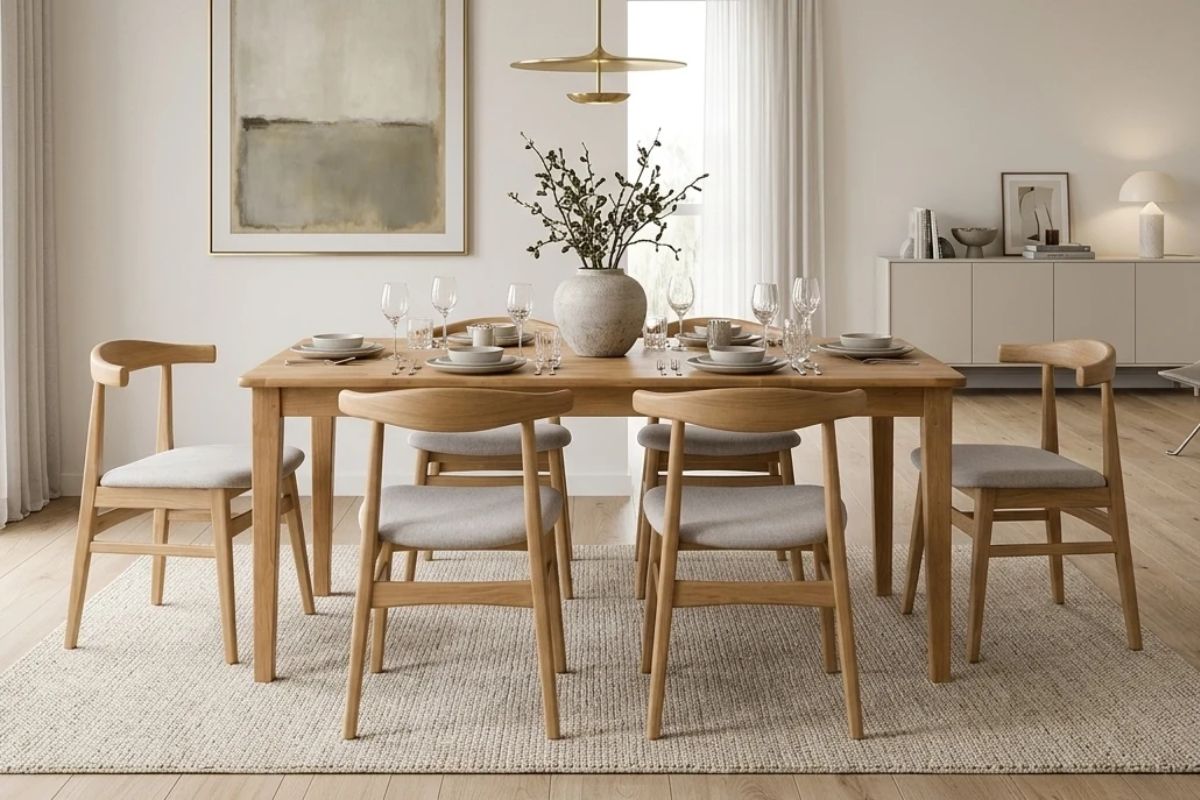
A Scandinavian style dining room feels bright, calm, and easy to linger in. Picture a solid oak table with softly rounded edges, a set of spindle-back chairs in pale ash, a white paper pendant hanging low over the center, sheer linen at the window, and a simple ceramic jug of birch branches. Nothing is fussy, yet the room feels warm the moment you sit down.
The Nordic approach to dining is rooted in long, dark winters and a love of shared meals. Rooms are designed to capture every bit of daylight, then glow with soft lamplight once evening falls. Furniture is honest and sturdy, materials are natural, and decoration is kept to a few well-chosen objects. The result is a dining space that works hard every day and still feels special when friends come over.
Key Takeaways
- Scandinavian dining rooms center on a solid wood table and comfortable, lightweight chairs.
- White and warm neutral walls maximize daylight and keep the room feeling open.
- Low-hung pendants and candles create the cozy glow known as hygge.
- Pale woods such as oak, ash, beech, and birch set the material tone.
- Wool, linen, and sheepskin soften hard surfaces and add comfort.
- A few handmade objects and plants are enough; clutter breaks the calm.
The style is defined less by trends and more by a set of quiet priorities: light, function, natural materials, and comfort.
Hygge and Lagom at the Table
Hygge describes a feeling of warmth and togetherness, and the dining table is where it happens most often in Nordic homes. Lagom means “just the right amount,” which explains why these rooms never feel sparse or overfilled. Together they encourage a space that is relaxed, welcoming, and free of excess.
Function First, Beauty Always
Mid-century Nordic designers believed everyday objects should be both useful and well made. A dining chair should be light enough to pull out easily, strong enough for daily use, and attractive enough to enjoy looking at. Every piece in the room is expected to earn its place.
Designed Around Daylight
Because daylight is scarce for much of the year in northern Europe, Scandinavian rooms are planned to make the most of it. Windows stay as uncovered as privacy allows, surfaces are light and slightly reflective, and the table is often placed near the brightest window.
Choosing the Dining Table
The table is the anchor of the room, so it deserves the most thought and, where possible, the biggest share of the budget.
Materials and Finishes
Solid oak, ash, beech, and birch are the classic choices. Look for a matte oiled, soaped, or white-pigmented finish rather than high-gloss lacquer, which reads as more formal. Oiled wood can be refreshed with a light sanding and a new coat of oil, so minor scratches become part of the table’s character. Wipe spills promptly, use trivets under hot dishes, and re-oil the top once or twice a year to keep the wood from drying out.
Shape and Size
Round and oval tables suit smaller rooms and encourage conversation, while long rectangular tables work well in open-plan spaces. Allow roughly 24 inches of table width per diner, and leave at least 36 inches between the table edge and the wall or nearest furniture so chairs can slide back comfortably.
Extendable Options
Many Scandinavian tables have butterfly leaves or pull-out extensions stored under the top. This fits the Nordic preference for flexible furniture: a compact table for everyday meals that opens up for holidays and dinner parties without needing a second table.
Seating That Is Light and Comfortable
Chairs set much of the room’s personality, and Scandinavian design offers plenty of variety within a simple framework.
Classic Chair Shapes
Spindle-back chairs, wishbone-style chairs with woven paper cord seats, and molded plywood shells on slim legs are all at home here. Their open frames let light pass through, which keeps a full set of chairs from feeling heavy.
Mixing Chairs and Benches
A bench along one side of the table seats more people in less space and suits families with young children. Pairing a bench with matching chairs, or mixing two chair styles in the same wood tone, adds a relaxed, collected look without losing cohesion.
Comfort Details
Add round wool or sheepskin seat pads to wooden chairs, especially in cold months. Felt pads under the legs protect wood floors and quiet the scrape of chairs, which matters in rooms with hard surfaces and few soft furnishings.
A Calm Color Palette
Color in a Scandinavian dining room is restrained but never cold. The goal is a backdrop that feels soft by day and glowing by night.
Warm Whites and Soft Neutrals
Choose warm whites with a hint of cream or gray rather than stark, blue-toned white, which can feel clinical under northern light. Oatmeal, pale greige, and mushroom are good alternatives for walls if pure white feels too bright.
Natural Accent Pairings
When adding color, borrow from the Nordic landscape. Try these pairings:
- Sage green walls with pale oak furniture and cream linen
- Dusty blue accents with white walls and birch chairs
- Warm terracotta ceramics against soft gray walls and black accents
- Charcoal or black chair frames with a light oak table for crisp contrast
Using Black Sparingly
Thin black lines appear often in Scandinavian rooms: a pendant cord, a picture frame, slim chair legs, or a metal candleholder. A few of these graphic touches give a pale room definition and keep it from looking washed out.
Lighting for Long Evenings
Lighting is where Scandinavian dining rooms truly shine, because so many meals happen after dark for much of the year.
The Central Pendant
Hang a pendant or a cluster of pendants over the table, with the bottom about 30 to 36 inches above the tabletop. Paper, opal glass, pale wood veneer, and layered metal shades all diffuse light softly and prevent glare in diners’ eyes. For long tables, use two matching pendants or one linear fixture.
Layered Light Sources
Add a wall sconce or a small table lamp on a sideboard so the room is not lit by the pendant alone. Put the overhead light on a dimmer and use warm white bulbs around 2700K for an inviting glow at dinner time.
Candles and Daylight
Candles are part of everyday Nordic dining, not just special occasions. Group a few plain taper or pillar candles in simple holders on the table. During the day, keep window treatments light: sheer linen panels or simple roller blinds that roll up fully.
Storage Without Clutter
Clear surfaces are central to the style, so good storage keeps everyday dining items close at hand but out of sight.
Sideboards and Low Cabinets
A low sideboard in oak, walnut, or white with simple sliding doors holds table linens, serving dishes, and candles. Its top becomes a display surface for a lamp, a ceramic bowl, and one piece of art leaned against the wall.
Open Shelving With Restraint
Wall-mounted shelves can display everyday tableware, but keep them edited. Stack white plates and glassware neatly, leave some empty space between groupings, and avoid filling every inch.
Small-Space Solutions
In a compact apartment, a drop-leaf table and folding chairs hung on a wall rail keep the floor clear. A narrow wall-mounted cabinet or a slim console can replace a full sideboard while still providing a home for napkins and placemats.
Textiles, Plants, and Finishing Touches
Soft and natural elements make a Scandinavian dining room feel lived in rather than bare.
Rugs and Table Linens
A flatweave wool or jute rug under the table adds warmth and helps with acoustics. Choose one large enough that chairs stay on it when pulled out, usually about 24 inches beyond the table on each side. Linen runners and napkins in natural, gray, or soft stripes are easy to wash and age beautifully.
Art and Objects
One large print or a pair of framed botanical or abstract prints is usually enough. Handmade stoneware, a wooden bowl, and simple glass carafes on the table or sideboard add texture without crowding the room.
Plants and Branches
A potted olive tree, fiddle leaf fig, or trailing pothos on a shelf brings life to the space. Seasonal branches, such as birch, eucalyptus, or spring blossoms, in a tall vase make an easy and inexpensive centerpiece.
Common Mistakes to Avoid
The style looks simple, which makes small missteps easy to spot.
Going Too Cold
All-white walls, white furniture, and gray textiles with no wood or texture can feel sterile. Balance pale surfaces with warm wood, wool, and soft lighting.
Too Many Statement Pieces
A sculptural pendant, a bold rug, and a gallery wall all in one room compete for attention. Pick one focal point and let the rest of the room stay quiet.
Ignoring Scale
Bulky chairs around a slim table, or a tiny pendant over a long table, throw off the room’s calm proportions. Measure carefully and choose pieces that suit the size of the space.
Heavy Window Treatments
Thick, dark drapes with valances block the daylight the style depends on. If you need privacy or warmth in winter, layer a sheer linen panel with a simple lined curtain in a pale neutral that can be pulled fully to the side during the day.
Conclusion
A Scandinavian style dining room combines functional charm with simple elegance. A solid wood table, light and comfortable chairs, warm white walls, and a soft pendant create a space that feels bright by day and cozy by night.
Keep surfaces clear, choose natural materials, and add a few handmade objects, candles, and plants. The result is a dining room built for everyday meals and long, relaxed evenings with the people you love.
Frequently Asked Questions
- Scandinavian Style: The Absolute Guide
- Scandinavian Style Bedroom: Simplicity and Serenity in Sleep Spaces
- Scandinavian Style Living Room: Cozy Minimalism and Functional Comfort


