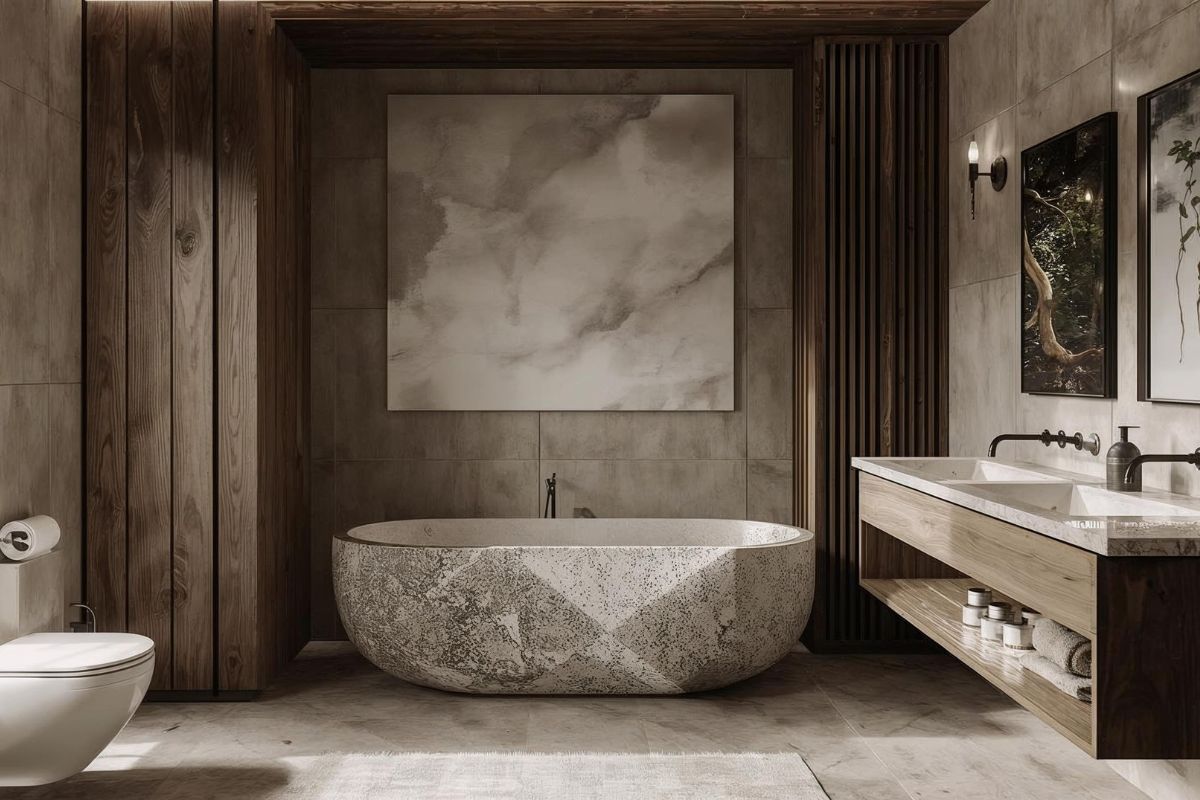
A wabi sabi style bathroom is a place of silence and solitude. A carved stone basin, softly polished plaster walls, a simple wooden stool, and a stack of linen towels create a room that feels less like a utility space and more like a quiet sanctuary.
Inspired by Japanese bathing culture and the wabi sabi appreciation for natural imperfection, this style turns daily routines into calming rituals. Its materials are honest, its colors are earthy, and its atmosphere invites you to pause and breathe.
Key Takeaways
- Wabi sabi bathrooms are quiet, simple spaces designed for calm and reflection.
- Stone, plaster, tadelakt, and water-resistant woods create a natural, spa-like feel.
- Stone basins, soaking tubs, and simple fixtures emphasize the ritual of bathing.
- Muted earthy colors and soft light keep the atmosphere serene.
- Linen towels, wooden accessories, and handmade ceramics add warmth.
- Hidden storage and clear surfaces protect the sense of stillness.
The Spirit of the Wabi Sabi Bathroom
Bathing has long been a meditative ritual in Japan, which makes the bathroom a natural home for wabi sabi design.
Silence and Solitude
The bathroom is often the only room where we are truly alone. A wabi sabi bathroom honors this by removing visual noise and creating a peaceful space where you can slow down and reset.
Inspired by Japanese Bathing
Traditional Japanese bathhouses and onsen use natural materials such as cedar, cypress, and stone. Deep soaking tubs, wooden stools, and simple buckets reflect a culture that values bathing as relaxation rather than a quick routine.
Materials and Surfaces
Natural, water-friendly materials form the foundation of the style.
Stone
Honed limestone, travertine, slate, and river stone suit floors, walls, and vanity tops. A carved stone basin becomes a sculptural focal point. Natural variations in color and veining add quiet character.
Tadelakt and Plaster
Tadelakt, a waterproof lime plaster traditionally used in Moroccan bathhouses, creates seamless, softly polished walls and even shower enclosures. Microcement and lime plaster offer similar organic texture. These surfaces must be applied by skilled craftspeople and properly maintained.
Water-Resistant Woods
Teak, cedar, and hinoki cypress are naturally resistant to moisture and bring warmth and a gentle scent. Use them for vanities, bath mats, stools, and shelves.
Handmade Tiles
Zellige, handmade ceramic tiles, and matte terracotta add irregular texture and soft color variation. Their imperfections catch the light beautifully.
Fixtures and Bathing Elements
Fixtures should be simple and allow natural materials to shine.
Soaking Tubs
A deep Japanese-style soaking tub in wood, stone, or matte composite invites long, restful baths. A freestanding tub with simple organic lines is another beautiful option.
Basins and Vanities
A stone or ceramic vessel basin on a simple wooden vanity creates a calm focal point. Floating vanities keep the floor visible and make the room feel larger.
Faucets and Showers
Choose simple wall-mounted faucets and rainfall showers in brushed brass, unlacquered brass, or matte black. Unlacquered brass develops a patina over time that suits the wabi sabi spirit. A walk-in shower with a single glass panel or no enclosure keeps the space open.
Colors and Lighting
Color and light set the restful mood.
Earthy, Muted Colors
Sand, clay, stone gray, warm white, and soft taupe create a calm envelope. Deeper tones such as charcoal or moss green can appear in tiles, towels, or a single wall.
Soft, Gentle Light
Frosted or reeded glass windows and linen blinds filter daylight while protecting privacy. Wall sconces with paper, ceramic, or frosted glass shades and warm bulbs provide soft evening light. Make sure all fixtures are rated for damp or wet locations, and consider candles for a relaxing bath.
Storage and Accessories
Keeping surfaces clear is key to a serene bathroom.
Hidden Storage
Use vanity drawers, recessed niches, and simple wooden cabinets to keep toiletries out of sight. Decant everyday products into ceramic or glass bottles to reduce visual clutter.
Linen and Natural Textiles
Linen or waffle cotton towels in natural tones, a teak or hinoki bath mat, and a cotton robe on a wooden peg add softness and warmth.
Natural Accents
A handmade ceramic soap dish, a wooden stool, a small branch in a vase, or a humidity-loving plant such as a fern or pothos brings life to the room without clutter.
Wabi Sabi Ideas for Small Bathrooms
Even a compact bathroom can feel like a retreat. Use a floating wooden vanity with a vessel basin, continuous plaster or microcement walls to reduce visual breaks, and a walk-in shower with a single glass panel. Keep accessories to a minimum and add a wooden stool and linen towels for warmth. If renovation is not possible, swapping towels, accessories, and light fixtures can still bring a wabi sabi feel.
Planning the Wabi Sabi Bathroom Layout
Planning ensures a wabi sabi bathroom feels peaceful and works well, even in a compact space.
Clearances and Fixtures
Leave at least 21 inches, and ideally 30 inches, of clear space in front of the vanity, toilet, and shower or tub. Vanities between 32 and 36 inches high are comfortable for most people. Wall sconces on either side of the mirror, mounted around 60 to 66 inches high, provide soft, even light. Use fixtures rated for damp or wet locations.
Create a Bathing Ritual Zone
If space allows, plan a small area for slowing down: a wooden stool beside the tub, a hook for a linen robe, and a shelf for a candle or a small vase. These simple elements turn everyday routines into calming rituals.
Budget-Friendly Wabi Sabi Bathroom Ideas
Replace bright towels with linen or waffle cotton in natural tones, and swap plastic accessories for a ceramic soap dish, a wooden tray, and glass bottles. A teak or hinoki bath mat adds warmth and a subtle scent.
Moisture-resistant limewash or mineral paint in a warm neutral can give walls a soft, plaster-like texture without a full renovation. A fern or pothos and a single branch in a handmade vase complete the natural look affordably.
Common Mistakes to Avoid
One common mistake is choosing materials that cannot cope with moisture, such as untreated wood or unsealed plaster in wet areas. Use water-resistant woods and proper finishes such as tadelakt or microcement. Another is keeping too many products on display, which quickly undermines the calm.
Finally, avoid harsh overhead lighting as the only option. Warm sconces and candlelight create the quiet atmosphere that makes a wabi sabi bathroom feel like a sanctuary.
Styling the Wabi Sabi Vanity Area
The vanity is the busiest surface in most bathrooms, so it needs a clear system to stay calm.
Limit What Stays Out
Keep only the items you reach for twice a day: hand soap, a toothbrush cup, and perhaps one face product. Decant soap and lotion into plain glass or ceramic bottles so packaging does not compete with the natural materials around it. Everything else belongs in a drawer or cabinet.
Group Objects on a Tray
A small wooden, stone, or ceramic tray gathers the essentials and makes the counter easy to wipe. Add one natural accent beside it, such as a stem of eucalyptus in a bud vase or a smooth stone, and leave the rest of the counter bare.
Choose a Simple Mirror
A round or softly rectangular mirror with a thin wooden frame, or a frameless mirror with an aged edge, suits the style. Hang it so the center sits roughly at eye level, and let it reflect daylight or a candle to multiply the soft glow.
Caring for Natural Bathroom Materials
Bathrooms are hard on natural materials, so a light, regular routine helps them age gracefully rather than deteriorate.
Wood
Teak, cedar, and hinoki resist moisture well, but they still benefit from drying out. Hang wooden bath mats and stools up or tilt them against a wall after use so air can circulate underneath. Wipe teak with a damp cloth and apply teak oil once or twice a year if it starts to look gray and dry, or let it silver naturally if you prefer.
Tadelakt, Plaster, and Stone
Clean tadelakt with a mild, natural soap rather than abrasive or acidic cleaners, which can damage the polished surface. Natural stone basins and floors also need pH-neutral products and periodic resealing. Squeegee shower walls after use to reduce water marks and mineral buildup.
Linen and Cotton
Linen towels dry faster than thick terry cloth, which helps prevent musty smells. Hang them spread out rather than folded, and wash them often. They will soften and develop a gentle, rumpled texture that suits the room.
Ventilation
Good airflow protects every natural surface. Run the exhaust fan during and after bathing, crack a window when possible, and leave the shower door or curtain open to dry.
Rental-Friendly Wabi Sabi Bathroom Ideas
If you cannot renovate, focus on the elements you can easily change and take with you.
- Replace a synthetic shower curtain with a heavy linen or waffle-weave cotton one, paired with a water-resistant liner.
- Add a freestanding wooden ladder for towels and a teak stool beside the tub or shower.
- Cover a dated vanity top with a wooden tray and keep products in stoneware or glass containers.
- Swap a plain mirror for a wood-framed one hung on the existing hook.
- Use a jute or cotton rug outside the wet zone and a slatted wooden mat inside it.
Together these changes shift the room’s mood toward calm, natural, and lived-in.
Conclusion
A wabi sabi style bathroom embraces silence and solitude through natural stone, plaster, warm wood, earthy colors, and soft light. It turns everyday routines into peaceful rituals.
By keeping surfaces clear, choosing materials that age gracefully, and adding a few handmade and natural touches, you can create a bathroom that feels like a quiet retreat every day.
Frequently Asked Questions
More Wabi Sabi Style Decor
- Wabi Sabi Style: The Definitive Guide
- Wabi Sabi Style Bedroom: Finding Peace in Unfinished Details
- Wabi Sabi Style Living Room: Designing a Space That Celebrates Impermanence
- Wabi Sabi Style Kitchen: Creating a Humble, Honest Cooking Space
- Wabi Sabi Style Dining Room: Finding Balance in Form and Function
- Wabi Sabi Style Entryway: Welcoming Guests with Quiet Elegance