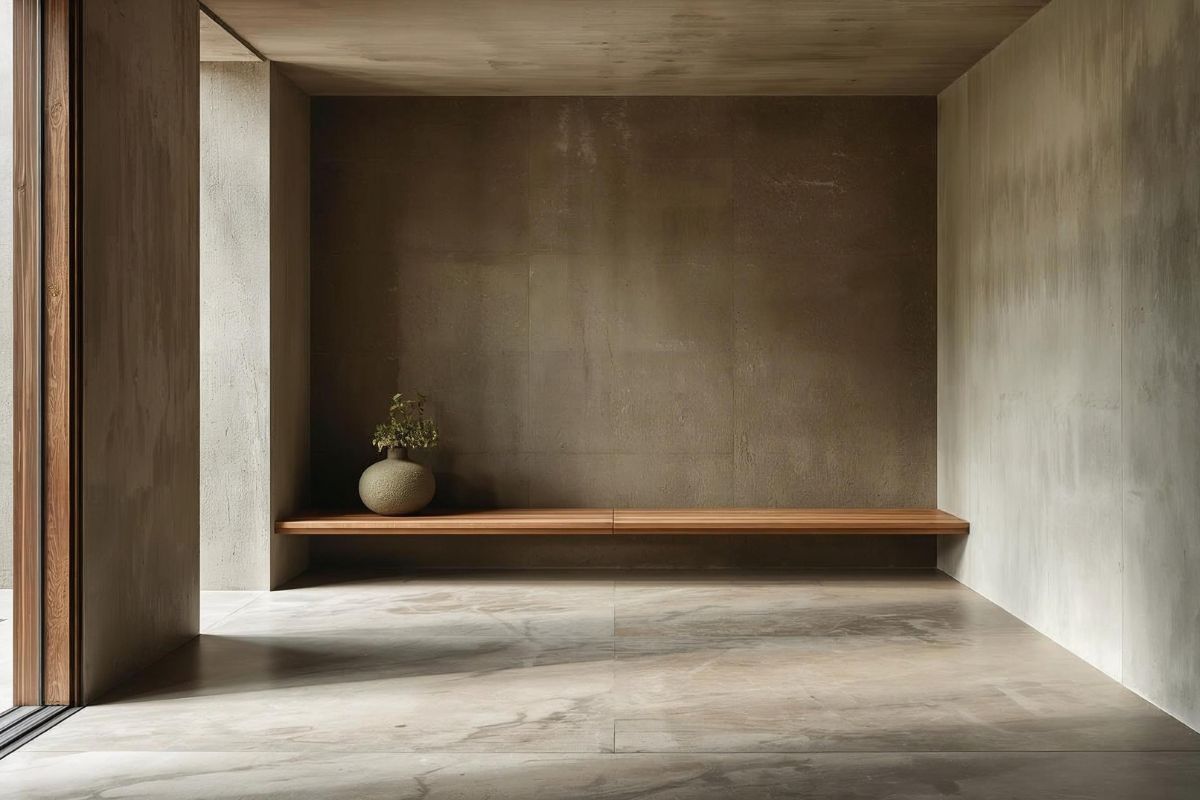
A wabi sabi style entryway welcomes guests with quiet elegance. A simple wooden bench softened by years of use, a softly textured plaster wall, a hand-thrown vase holding a single branch, and a natural fiber mat create a calm first impression that invites everyone to slow down as they step inside.
Inspired by the Japanese genkan, the traditional entry space where shoes are removed, a wabi sabi entryway marks the transition from the busy outside world to the peace of home. It relies on natural materials, thoughtful simplicity, and a few meaningful, imperfect objects. This guide explains the ideas behind the style and shows how to plan, furnish, and decorate an entry that feels honest, grounded, and serene.
Key Takeaways
- Wabi sabi entryways create a calm transition from outside to inside.
- The Japanese genkan inspires a dedicated space for removing and storing shoes.
- Simple, aged wooden furniture and hidden storage keep the space uncluttered.
- Plaster walls, stone or wood floors, and earthy colors add quiet texture.
- Soft, low lighting and a single natural arrangement provide a gentle welcome.
- Fewer, meaningful objects and empty space create quiet elegance.
The Wabi Sabi Entryway Approach
Wabi sabi is a Japanese philosophy that finds beauty in imperfection, impermanence, and simplicity. In the entryway, those ideas shape how the space looks and how it feels to pass through it.
A Moment of Transition
In Japanese homes, the genkan is where you leave the outside world behind. Shoes come off, bags are set down, and there is a natural pause before stepping into the living space. A wabi sabi entry encourages that same pause, helping you arrive mentally as well as physically.
Beauty in Imperfection
A worn wooden step, an uneven ceramic bowl, or a bench with visible knots is valued rather than replaced. These marks of age and use give the entry warmth and honesty. Instead of aiming for a perfect, showroom look, the goal is a space that feels lived in and grows more beautiful over time.
Simplicity as Welcome
An uncluttered entry feels calm and gracious. Instead of filling the space with decor, wabi sabi relies on texture, natural light, and a few carefully chosen objects. Empty space, known in Japanese aesthetics as ma, is treated as an important part of the design.
Planning the Space
A calm entry depends on good planning. When everything has a place, the space stays peaceful without constant tidying.
Create a Shoe Area
Define the area just inside the door as the place where shoes come off. A slightly lowered floor or a change of material, such as stone followed by wood, echoes the traditional genkan step. If that is not possible, a natural fiber mat or a low slatted wooden platform marks the zone clearly.
Keep the Path Open
Leave a walkway of at least 36 inches and keep furniture low and slim. A bench around 16 to 18 inches high suits the grounded feel of the style. Slim cabinets between 10 and 14 inches deep fit narrow halls, and wall-mounted storage keeps the floor clear, which makes the entry feel more spacious.
Plan Hidden Storage First
Decide where shoes, coats, umbrellas, and bags will go before adding anything decorative. Closed storage is key to the wabi sabi look, because it lets the few objects on display stand out. A built-in cupboard with plain doors or a simple wooden cabinet is often the most important piece in the entry.
Furniture and Storage
Wabi sabi furniture is simple, honest, and made from natural materials that age gracefully.
Simple Benches
A low wooden bench in oiled oak, ash, or reclaimed timber provides a place to sit while removing shoes. Visible grain, soft edges, and gentle wear add character. A simple stool or a stone block works well in tighter spaces. A linen cushion in a natural tone adds comfort without breaking the calm look.
Shoe Storage
A slatted wooden shoe rack, a low cabinet with plain doors, or a built-in cupboard keeps shoes organized and out of sight. Woven baskets under the bench offer an easy alternative. Leave just one or two everyday pairs visible to keep the area uncluttered.
Hooks and Consoles
Wooden pegs or a simple peg rail hold coats and bags, mounted around 60 to 66 inches from the floor. A slim console in natural wood or stone provides a surface for keys and a single decorative piece. A small handmade dish or wooden tray keeps keys and small items in one place.
Walls, Floors, and Colors
Natural textures give the entry its quiet character and do much of the decorating on their own.
Textured Walls
Lime plaster, clay plaster, or limewash paint creates soft, organic walls that change with the light throughout the day. Wood paneling or a stone accent wall adds warmth. These finishes hide small marks better than flat paint, which is useful in a busy entry.
Durable Natural Floors
Stone, slate, terracotta, and oiled wood handle daily foot traffic beautifully and develop a gentle patina. Add a jute, coir, or wool mat for comfort and to catch dirt. Choose mats in natural, undyed tones to keep the look calm.
Earthy Palette
Warm white, sand, clay, mushroom, and stone gray keep the space light and calm, while charcoal or umber accents add depth in ceramics or textiles. Avoid bright, saturated colors, which disturb the quiet atmosphere.
Lighting and Decor
Soft light and a few natural objects create a gentle, welcoming atmosphere.
Gentle Lighting
A paper pendant lantern, a ceramic wall sconce, or a small table lamp with a linen shade provides a warm glow. Keep around 7 feet of clearance under hanging fixtures and choose warm bulbs to make arriving home in the evening feel comforting. Soft shadows are part of the wabi sabi mood.
A Single Natural Arrangement
A hand-thrown vase holding a seasonal branch, dried grasses, or a few stems in the spirit of ikebana makes a quiet focal point. Change it with the seasons to honor impermanence. A smooth river stone or a piece of driftwood on the console adds another natural note.
Mirrors and Art
A round mirror with a simple wooden frame reflects light and opens up the space. A single piece of calligraphy, abstract art in earthy tones, or a textile hanging adds personality without clutter. Hang art with its center close to eye level and leave plenty of wall space around it.
Common Mistakes to Avoid
A frequent mistake is confusing wabi sabi with mess. Imperfect objects are welcome, but clutter is not, so keep surfaces mostly clear. Another is buying artificially distressed decor. Authentic wear from handmade or vintage pieces looks far more natural. Finally, avoid harsh overhead lighting, which flattens textures and works against the calm atmosphere.
Wabi Sabi Ideas for Small Entryways
Even a narrow hallway can feel like a peaceful genkan. Mount a wooden peg rail and a slim floating shelf, place a small stool or low bench by the door, and use a natural fiber mat to define the shoe area.
Keep walls light and textured, add a single paper lantern or sconce, and limit decor to one handmade vase. With so few elements, every material matters, so choose pieces with beautiful grain, glaze, or weave.
Budget-Friendly Wabi Sabi Entryway Ideas
Wabi sabi is naturally affordable because it values simple, aged, and natural objects. An old wooden stool or bench with a worn surface is ideal, and secondhand stores often have handmade pottery and woven baskets. Limewash paint gives walls a soft plaster-like texture at a fraction of the cost of real plaster.
For decor, look to nature. A branch, dried grasses, or a smooth stone found on a walk costs nothing and suits the style perfectly. A coir or jute mat and a simple paper lantern complete the calm welcome.
Changing the Entry With the Seasons
Honoring impermanence is central to wabi sabi, and the entryway is a perfect place to mark the passing seasons. In spring, place a flowering branch in a clay vase. In summer, use fresh green leaves or grasses. In autumn, choose a branch with colored leaves or dried seed pods. In winter, a bare twig or a few evergreen sprigs reflect the quiet of the season. Changing this single arrangement is a small ritual that keeps the entry feeling alive and connected to nature.
Conclusion
A wabi sabi style entryway welcomes guests with quiet elegance. Simple wooden furniture, hidden shoe storage, textured walls, natural floors, soft light, and a single natural arrangement create a calm transition into your home.
By planning a clear shoe area, keeping the space uncluttered, and choosing a few meaningful, imperfect objects, your entryway can offer a peaceful pause every time you come home.
Frequently Asked Questions
More Wabi Sabi Style Decor
- Wabi Sabi Style: The Definitive Guide
- Wabi Sabi Style Bedroom: Finding Peace in Unfinished Details
- Wabi Sabi Style Living Room: Designing a Space That Celebrates Impermanence
- Wabi Sabi Style Kitchen: Creating a Humble, Honest Cooking Space
- Wabi Sabi Style Bathroom: Embracing Silence and Solitude in Design
- Wabi Sabi Style Dining Room: Finding Balance in Form and Function