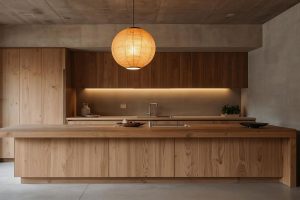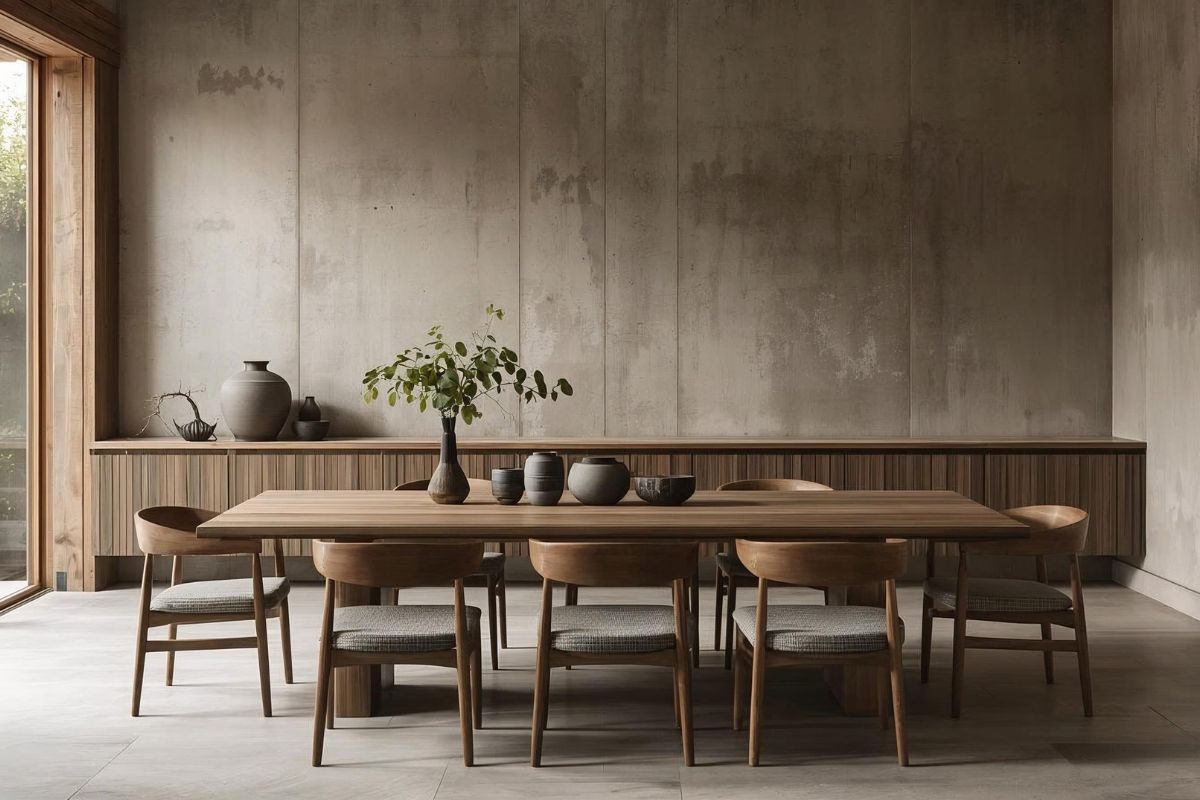
A wabi sabi style dining room is a place where form and function meet in quiet balance. A solid wooden table with visible grain, simple chairs softened by use, handmade stoneware, and a paper lantern glowing overhead create a space that feels warm, grounded, and made for lingering over meals.
Wabi sabi design celebrates simplicity, natural materials, and the beauty of age. In the dining room, these ideas turn everyday meals into mindful rituals and make gatherings with family and friends feel relaxed and sincere.
Key Takeaways
- Wabi sabi dining rooms balance simple beauty with everyday function.
- A solid wood table with natural character is the heart of the room.
- Simple wooden, rush, or linen-covered chairs add comfort without fuss.
- Plaster walls, natural floors, and earthy tones create a calm backdrop.
- Paper lanterns and candles provide soft, intimate light.
- Handmade tableware and seasonal branches serve as meaningful decor.
Balancing Form and Function
In a wabi sabi dining room, beauty comes from usefulness and simplicity.
Useful and Beautiful
Every piece should serve a purpose while bringing quiet pleasure. A sturdy table, comfortable chairs, and well-made tableware are more important than decorative extras.
The Ritual of Sharing Meals
Inspired by the Japanese tea ceremony, wabi sabi encourages us to slow down and pay attention. A calm dining room makes it easier to enjoy food, conversation, and company.
The Dining Table and Chairs
Furniture should be simple, solid, and crafted to last.
A Natural Wood Table
A solid oak, ash, elm, or reclaimed wood table with an oiled finish is ideal. Live-edge slabs, visible knots, and small cracks add character. Choose a rectangular table for larger rooms or a round one for intimate spaces. Over time, marks from daily use will only enhance its beauty.
Simple Seating
Wooden chairs with clean lines, rush or paper cord seats, or linen slipcovered chairs suit the style. A long wooden bench offers a relaxed, communal feel. Mismatched vintage chairs can add a collected, lived-in quality.
Low Dining Options
For an authentic Japanese touch, consider a low table with floor cushions. This arrangement encourages a relaxed posture and a strong connection to the ground.
Walls, Floors, and Colors
The room’s surfaces create a calm, textured backdrop for gathering.
Textured Walls
Lime plaster, clay plaster, or limewash paint gives walls soft depth. Exposed beams, wood paneling, or a stone wall add natural warmth.
Natural Flooring
Oiled wood, stone, or concrete floors are honest and durable. A jute or flat-woven wool rug under the table softens sound and adds texture; choose one that extends well beyond the table so chairs stay on it.
Earthy Palette
Warm white, sand, clay, mushroom, and stone gray create a calm base. Deeper tones such as charcoal, umber, or moss can appear in ceramics, linens, or a single accent wall.
Lighting the Dining Room
Soft light makes meals feel intimate and relaxed.
Paper Lanterns and Pendants
A large rice paper lantern, a woven pendant, or a ceramic shade above the table casts a gentle, diffused glow. Hang it about 30 to 36 inches above the tabletop.
Candles and Daylight
Candles in ceramic or iron holders add warmth during evening meals. During the day, sheer linen curtains let natural light fill the room. Use warm, dimmable bulbs for flexibility.
Tableware, Storage, and Decor
The items used for meals are central to the wabi sabi dining experience.
Handmade Tableware
Hand-thrown plates, stoneware bowls, wooden serving boards, and linen napkins bring texture and warmth to the table. Mismatched pieces and subtle irregularities make each setting unique.
Simple Storage
A low wooden sideboard or a vintage cabinet stores tableware and linens. Display a few favorite ceramics on top or on an open shelf, keeping the rest out of sight.
Seasonal Centerpieces
A single branch, a few dried grasses, or seasonal fruit in a wooden bowl makes a quiet centerpiece. Keep arrangements low so guests can see each other easily.
Wabi Sabi Ideas for Small Dining Areas
In a small dining nook or open-plan space, choose a round wooden table on a pedestal, a bench along the wall, and a single paper lantern to define the area. Keep walls light and textured, use a wall-mounted shelf for display, and limit decor to one seasonal arrangement.
Budget-Friendly Wabi Sabi Dining Room Ideas
A wabi sabi dining room does not require expensive furniture. Secondhand solid wood tables, especially those with scratches, knots, and a worn finish, suit the style perfectly. Light sanding and a coat of natural oil can refresh a tired surface while keeping its character.
Mismatched vintage chairs work well if they share a similar wood tone or simple shape. Linen napkins, handmade stoneware collected over time, and a branch from the garden in a clay vessel create a beautiful table for very little money. A paper pendant or a few candles provide soft, flattering light.
Creating Mindful Mealtime Rituals
Wabi sabi is as much about how a space is used as how it looks. In the dining room, small rituals help bring the philosophy to life. Set the table simply but with care, using your favorite handmade pieces rather than saving them for special occasions. Change the centerpiece with the seasons, choosing whatever is growing outside.
Keep phones and screens away from the table, dim the lights, and allow meals to unfold slowly. Over time, these habits make the dining room feel like the calm heart of the home, where everyday food and conversation are given the attention they deserve.
Common Mistakes to Avoid
One common mistake is overfilling the room with furniture, such as a large table, a sideboard, a hutch, and extra chairs, which leaves no space to breathe. Choose only what you need. Another is using bright, cool overhead lighting, which flattens textures and makes meals feel less intimate.
Finally, avoid tall or elaborate centerpieces. A low, simple arrangement keeps sightlines open and suits the quiet elegance of the style.
Planning the Wabi Sabi Dining Room Layout
Open space matters as much as furniture in a wabi sabi dining room, so plan the room around comfortable movement before choosing decor.
Clearances Around the Table
Allow at least 36 inches between the table edge and the nearest wall or piece of furniture so chairs can be pulled out easily, and about 42 to 48 inches where people need to walk behind seated diners. Give each person roughly 24 inches of table width so meals feel relaxed rather than crowded.
Choosing Table Shape and Size
A rectangular table with a live or softly rounded edge suits long, narrow rooms, while a round or oval table encourages conversation in a square room. Choose the smallest table that seats your household comfortably, and keep a bench or a pair of stools nearby for guests instead of a permanently oversized table.
Hanging the Light
Center a paper or ceramic pendant over the table and hang it about 30 to 36 inches above the tabletop. A pendant roughly half to two-thirds the width of the table looks balanced and casts a warm pool of light without glare.
Setting a Wabi Sabi Table
A wabi sabi table setting looks gathered rather than matched. The goal is a harmonious mix of textures and tones that feels relaxed and personal.
Everyday Meals
Skip the tablecloth and let the wood show. Use stoneware plates in one or two glazes, a linen napkin folded loosely beside each plate, and simple wooden or matte metal cutlery. A single low vessel with a sprig of herbs or a small branch is enough for the center.
Gatherings
For guests, add a full-length linen runner or a washed linen tablecloth in oatmeal, sand, or charcoal. Mix plates from different makers that share a similar color family, and add a few low candles at varied heights. Place serving dishes directly on the table, family style, so the meal itself becomes part of the decor.
Mixing Pieces With Confidence
When combining mismatched tableware, repeat one element across the table, such as the same napkin color or the same glaze on every bowl. This thread of consistency keeps the setting looking intentional rather than random.
Styling the Wabi Sabi Sideboard
A low sideboard keeps table linens, candles, and serving pieces close at hand while giving you one calm surface to style. Arrange it asymmetrically: a tall clay jar holding a branch at one end, a stack of two or three stoneware serving bowls near the middle, and a short candle or small dish at the other end. Leave generous gaps between objects. Use the sideboard as a serving station during gatherings, then return it to its simple arrangement afterward.
Caring for a Wooden Dining Table
A solid wood table is the heart of a wabi sabi dining room, and its marks of use become part of its story.
- Wipe spills promptly with a damp cloth and dry the surface, especially around oiled or waxed finishes.
- Use linen placemats or wooden trivets under hot dishes to avoid white heat marks.
- Re-oil the top whenever water stops beading or the wood looks dry, usually a few times a year with daily use.
- Rotate centerpieces and runners so sunlight fades the surface evenly.
- Accept small dents and scratches as patina rather than rushing to refinish the whole table.
With this gentle care, the table will grow richer in color and character with every meal shared around it.
Conclusion
A wabi sabi style dining room finds balance in form and function. A natural wood table, simple seating, textured walls, soft lighting, and handmade tableware create a calm and welcoming space for shared meals.
By choosing pieces that are useful, honest, and meaningful, your dining room will become a place where everyday meals feel special and memories grow richer with time.
Frequently Asked Questions
More Wabi Sabi Style Decor
- Wabi Sabi Style: The Definitive Guide
- Wabi Sabi Style Bedroom: Finding Peace in Unfinished Details
- Wabi Sabi Style Living Room: Designing a Space That Celebrates Impermanence
- Wabi Sabi Style Kitchen: Creating a Humble, Honest Cooking Space
- Wabi Sabi Style Bathroom: Embracing Silence and Solitude in Design
- Wabi Sabi Style Entryway: Welcoming Guests with Quiet Elegance