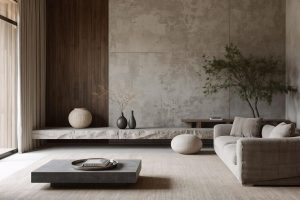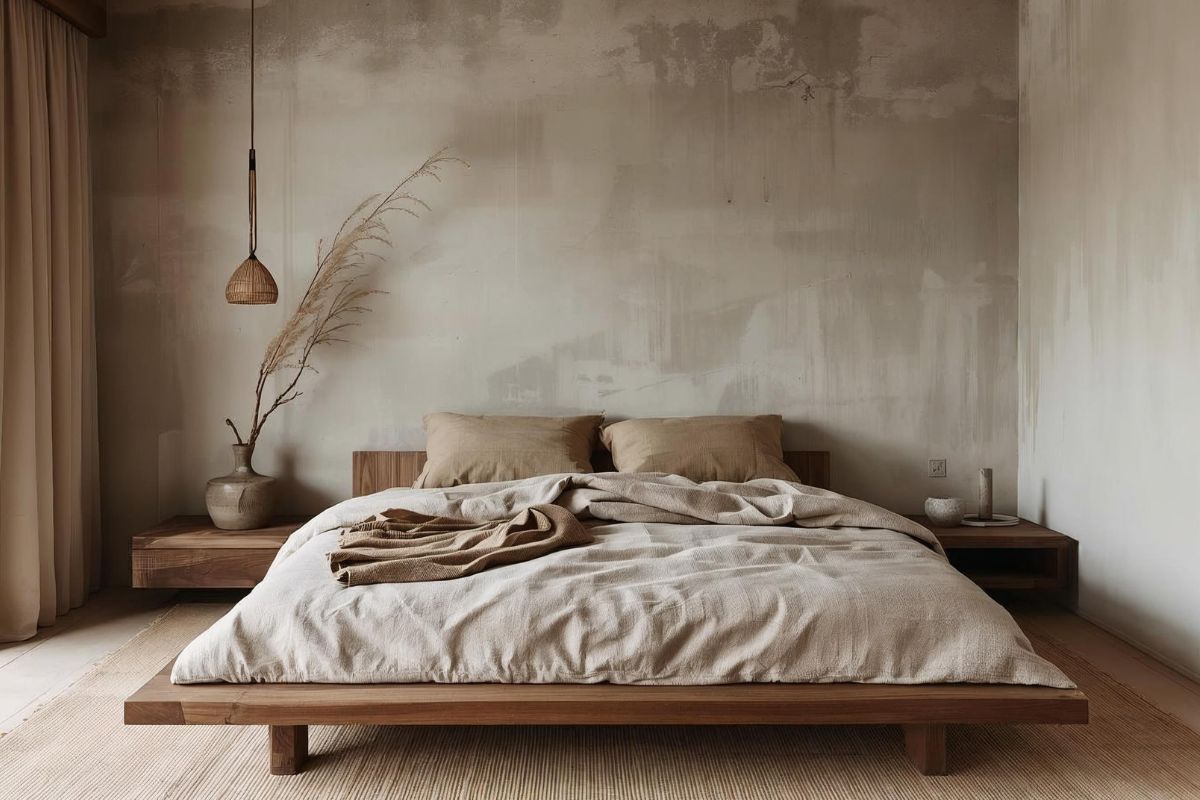
A wabi sabi style bedroom is a place to rest without pretense. Rumpled linen bedding, a low wooden bed with visible grain, softly textured plaster walls, and a single handmade vase on a simple nightstand create a room that feels calm, honest, and deeply restful.
Rather than aiming for a perfectly styled showroom, a wabi sabi bedroom welcomes small irregularities and the gentle marks of daily life. It is a space designed for slowing down, letting go of perfection, and finding peace in unfinished details.
Key Takeaways
- Wabi sabi bedrooms value calm, simplicity, and natural imperfection over polish.
- A low wooden bed or floor-level platform grounds the room.
- Washed linen, raw cotton, and wool bedding add relaxed, tactile comfort.
- Plaster or limewash walls in earthy neutrals create soft, changing texture.
- Paper lanterns, ceramic lamps, and candles provide warm, gentle light.
- Minimal, meaningful decor and hidden storage keep the space restful.
The Spirit of a Wabi Sabi Bedroom
The bedroom is perhaps the most natural place to practice wabi sabi, because rest itself depends on letting go.
Rest Over Perfection
An unmade bed with soft linen is not a flaw in a wabi sabi bedroom; it is part of its charm. The aim is a space that feels lived in and comforting, not one that must be maintained like a hotel room.
A Room That Evolves
Wood softens, linen grows more supple, and ceramics gain small marks over time. A wabi sabi bedroom welcomes these changes, becoming more personal and comfortable with every year.
The Bed and Bedding
The bed is the heart of the room and sets its mood.
Low Wooden Beds
A low platform bed in solid oak, ash, or walnut with a simple, natural finish creates a grounded feeling. Visible grain, knots, and soft edges are welcome. A futon or mattress on a wooden base inspired by traditional Japanese sleeping arrangements is another authentic option.
Linen and Natural Fabrics
Stonewashed linen sheets and duvet covers are the signature of a wabi sabi bed. Their natural wrinkles and breathable texture feel relaxed and comfortable in every season. Layer with a raw cotton or wool throw and a few cushions in muted, earthy tones.
Headboards
Many wabi sabi bedrooms skip a headboard entirely, letting a textured plaster wall act as the backdrop. If you prefer one, choose a simple slab of reclaimed wood, a woven rattan panel, or an upholstered linen headboard.
Walls, Floors, and Colors
The shell of the room provides the quiet texture that defines the style.
Plaster and Limewash Walls
Lime plaster, clay plaster, or limewash paint gives walls a soft, cloudy finish that shifts with daylight. These surfaces feel organic and calming, and their slight variations are part of the appeal.
Earthy, Muted Palette
Warm white, oatmeal, sand, mushroom, and stone gray form a restful base. Add depth with clay, moss green, charcoal, or soft rust in textiles and ceramics. Avoid bright, saturated colors that disturb the calm.
Natural Floors and Rugs
Wide-plank wood floors with an oiled finish suit the style beautifully. Layer with a jute, wool, or hand-loomed rug in natural tones. Tatami-inspired mats can add an authentic Japanese touch.
Furniture and Storage
Keep furniture simple, functional, and few in number.
Nightstands
A small wooden stool, a stone side table, or a simple vintage nightstand provides space for a lamp, a book, and a cup of tea. Mismatched nightstands can add a relaxed, collected feel.
Calm, Hidden Storage
Clutter disrupts the peaceful atmosphere, so store clothing in a simple wooden wardrobe, a built-in closet with plain doors, or woven baskets. An open clothing rail with a few linen garments can look beautiful when kept edited.
A Quiet Corner
If space allows, add a floor cushion, a low bench, or a simple chair by the window for reading, meditation, or morning tea.
Lighting the Wabi Sabi Bedroom
Soft, warm light supports rest and highlights natural textures.
Natural Light
Sheer linen curtains or paper blinds filter morning light gently. For better sleep, add a lined linen layer or blackout blind in a natural tone.
Lamps and Lanterns
Rice paper pendant lanterns, ceramic table lamps with linen shades, and candles create a low, intimate glow. Choose warm bulbs around 2700K and place light sources low for a relaxing evening mood.
Decor With Meaning
Wabi sabi decor is sparse and personal.
Handmade Ceramics
A hand-thrown vase, a small stoneware dish for jewelry, or a textured bowl adds earthy character. Choose a few pieces and give them space.
Branches and Dried Botanicals
A single branch, pampas grass, or dried flowers in a clay vessel bring nature indoors and reflect the changing seasons.
Art and Personal Objects
Abstract art in earthy tones, a piece of calligraphy, or a textile hanging adds quiet interest. Personal treasures, such as a stone from a meaningful place, carry more weight than store-bought decor.
Wabi Sabi Ideas for Small Bedrooms
Wabi sabi suits small bedrooms naturally, since it relies on fewer belongings. Choose a low bed, a wall-mounted shelf instead of a bulky nightstand, and a single pendant lantern. Keep walls light and textured, use under-bed baskets for storage, and limit decor to one or two meaningful pieces.
Planning the Wabi Sabi Bedroom Layout
A wabi sabi bedroom depends on open space and calm proportions, so a little planning goes a long way.
Place the Bed With Care
Position the low bed against a solid wall, ideally facing a window so you wake to natural light. Leave at least 24 to 36 inches of space on both sides and at the foot. Because wabi sabi beds sit low, choose a stool or a small side table that is roughly level with the mattress.
Embrace Emptiness
Keep at least one wall mostly bare and the floor around the bed clear. This empty space, known as ma in Japanese aesthetics, is what gives the room its restful quality. A rug under the bed should extend about 18 to 24 inches beyond each side for comfort underfoot.
Budget-Friendly Wabi Sabi Bedroom Ideas
Wabi sabi is one of the most affordable styles because it values fewer, simpler things. Start by decluttering the room and storing most possessions out of sight. Linen bedding, even secondhand or a single duvet cover, brings the relaxed texture that defines the look.
A wooden crate or an old stool can serve as a nightstand. Limewash paint is inexpensive and gives walls soft, cloudy depth. A branch or dried grasses in a handmade vase, a paper lantern, and a smooth stone on the windowsill complete the look for very little money.
Common Mistakes to Avoid
The most common mistake is confusing imperfection with mess. Rumpled linen and aged wood are welcome, but piles of clothes and cluttered surfaces are not. Another is buying new decor that has been artificially distressed. Authentic, naturally aged or handmade pieces always look more convincing.
Finally, avoid bright, cool lighting and synthetic fabrics, which work against the calm, natural atmosphere. Warm, low light and breathable natural textiles are essential for a restful wabi sabi bedroom.
Layering Wabi Sabi Bedding Through the Year
Natural fibers make it easy to adjust the bed as the seasons change, which also reflects the wabi sabi idea of living in tune with time passing.
Warm Months
Strip the bed back to washed linen sheets and a single lightweight linen or cotton gauze blanket. Linen breathes, wicks moisture, and stays cool against the skin. Fold a thin cotton throw at the foot of the bed for cooler nights, and swap heavier rugs for a flat-weave jute or cotton one.
Cool Months
Layer a wool blanket or a quilted cotton coverlet over linen sheets, then add a chunky knit or boiled wool throw. Stick to the same muted palette so the bed looks richer, not busier. Oatmeal linen with a charcoal wool blanket and a rust throw is a simple, warm combination.
Styling the Wabi Sabi Bedroom Step by Step
If you are starting from an ordinary bedroom, work in this order so each decision builds on the last:
- Empty the room of everything except the bed, then bring back only what you use daily.
- Address the walls first with limewash or a warm, chalky paint, since this sets the overall mood.
- Dress the bed in linen in one or two earthy tones.
- Add one rug in a natural fiber, sized so your feet land on it when you get up.
- Place a single lamp or lantern on each side, or one low pendant if space is tight.
- Finish with no more than three decorative objects, such as a vase with a branch, a small stack of books, and a handmade dish for jewelry.
Live with the room for a few weeks before adding anything else. Often you will find it needs less than you expected.
Rental-Friendly Wabi Sabi Bedroom Ideas
Renters can create a convincing wabi sabi bedroom without painting or drilling.
Soften the Walls Without Paint
Lean a large unframed canvas painted in an earthy wash against the wall behind the bed, or hang a linen panel from a slim wooden rod using removable hooks. Either adds texture and color in place of a plaster finish.
Use Freestanding Pieces
A low platform bed, a wooden ladder for draping throws, and a simple clothing rail made of wood or blackened metal replace built-in storage. Paper floor lanterns and plug-in wall lights avoid the need for new wiring.
Cover What You Cannot Change
A large wool or jute rug hides dated carpet or cold tile, and sheer linen curtains on a tension rod soften harsh blinds. When you move, all of these pieces come with you.
Conclusion
A wabi sabi style bedroom finds peace in unfinished details. Low wooden furniture, rumpled linen, textured plaster walls, earthy colors, and soft light create a retreat that feels honest and restful.
By keeping only what is meaningful and allowing natural materials to age gracefully, you can create a bedroom that grows more comforting with time and invites you to truly rest.
Frequently Asked Questions
More Wabi Sabi Style Decor
- Wabi Sabi Style: The Definitive Guide
- Wabi Sabi Style Living Room: Designing a Space That Celebrates Impermanence