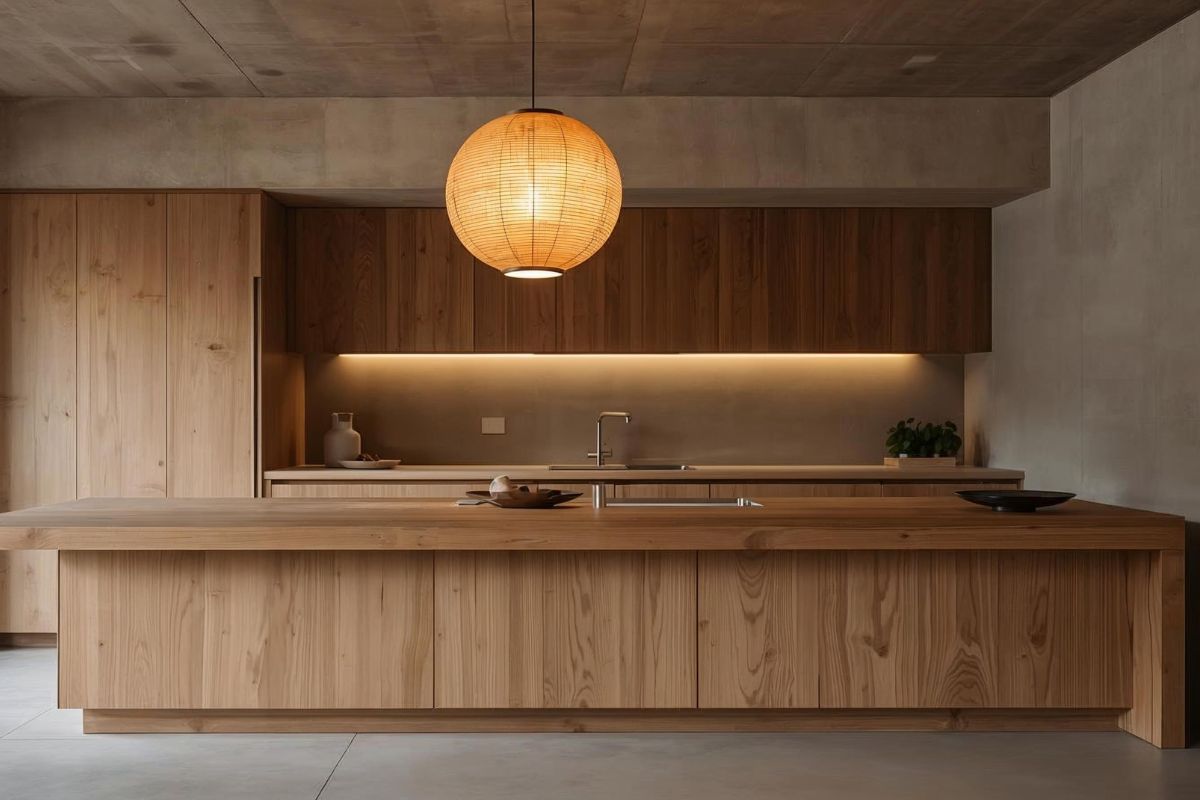
A wabi sabi style kitchen is a humble, honest space built around the simple rituals of cooking and sharing food. Worn wooden counters, a stone sink, open shelves stacked with handmade stoneware, and plaster walls softened by time create a kitchen that feels calm, grounded, and welcoming.
Rather than a showroom of glossy surfaces and gadgets, a wabi sabi kitchen celebrates natural materials, useful tools, and the marks of daily life. Every scratch on a cutting board and every chip in a well-used bowl becomes part of the room’s story.
Key Takeaways
- Wabi sabi kitchens favor natural, honest materials that age gracefully.
- Wood, stone, concrete, clay, and plaster create a calm, earthy foundation.
- Simple cabinetry and open shelves display handmade tableware.
- Muted, natural colors keep the space restful and grounded.
- Useful tools and everyday objects double as decor.
- Uncluttered counters and soft light support mindful cooking.
The Philosophy of a Wabi Sabi Kitchen
Wabi sabi brings a mindful approach to the busiest room in the home.
Humility and Honesty
A wabi sabi kitchen does not try to impress. Materials are left close to their natural state, and objects are chosen for their usefulness and quiet beauty. The result is a kitchen that feels sincere and approachable.
Beauty in Everyday Use
The kitchen is a place of constant use, which makes it naturally suited to wabi sabi. Butcher block develops knife marks, stone counters gain patina, and handmade pottery wears gently. These signs of life are valued, not hidden.
Materials and Surfaces
Natural, tactile materials define a wabi sabi kitchen.
Wood
Oiled oak, ash, or reclaimed timber suits cabinetry, open shelves, and countertops. Visible grain and knots add warmth, and an oiled finish can be refreshed easily as the wood ages.
Stone and Concrete
Honed limestone, soapstone, travertine, and concrete make beautiful countertops with a matte, natural look. They develop a soft patina over time. Seal porous stone and concrete to protect against stains while preserving their character.
Plaster and Clay
Lime plaster or tadelakt walls bring soft, cloudy texture. Handmade zellige or terracotta tiles create an artisanal backsplash with natural variations in color and glaze.
Cabinetry and Storage
Storage should be simple, functional, and calm.
Simple Cabinet Fronts
Flat-panel or simple slatted cabinet doors in natural wood or painted in muted earthy tones suit the style. Choose minimal hardware such as wooden knobs, leather pulls, or aged brass.
Open Shelving
Thick wooden shelves display stoneware plates, bowls, glass jars, and cutting boards. Keep them edited, showing only items used regularly so they stay clean and meaningful.
Pantry and Hidden Storage
A pantry cupboard or tall cabinet keeps groceries and appliances out of sight. Store dry goods in glass or ceramic jars and use woven baskets for produce such as onions and potatoes.
Sinks, Counters, and Appliances
Functional elements should blend into the natural palette.
Stone and Ceramic Sinks
A carved stone sink, a fireclay farmhouse sink, or a concrete basin suits the style. Pair it with a simple faucet in brushed brass, unlacquered brass, or matte black.
Clear Counters
Keep counters mostly clear, leaving out only a few useful objects such as a wooden cutting board, a stoneware crock of utensils, and a bowl of seasonal fruit.
Discreet Appliances
Panel-ready refrigerators and dishwashers disappear behind cabinet fronts. Choose a simple range or cooktop and hide a range hood behind plaster or wood cladding.
Colors and Light
A muted palette and gentle light keep the kitchen calm.
Earthy Palette
Warm white, sand, clay, stone gray, and soft olive pair beautifully with natural wood. Deeper tones such as charcoal or umber can be used on lower cabinets or an island.
Layered Lighting
Maximize daylight with simple window treatments. Add paper or ceramic pendants over the island or table, under-shelf lighting for tasks, and warm bulbs to create an inviting evening atmosphere.
Tableware and Decor
In a wabi sabi kitchen, the most beautiful decor is often what you use every day.
Handmade Tableware
Stoneware plates, hand-thrown mugs, wooden bowls, and linen napkins bring texture and warmth. Mismatched pieces collected over time add character.
Herbs and Seasonal Touches
Pots of herbs on the windowsill, a branch in a clay jug, or seasonal produce in a wooden bowl connect the kitchen to nature and the changing seasons.
Wabi Sabi Ideas for Small Kitchens
Small kitchens can easily embrace wabi sabi. Use a single open shelf instead of upper cabinets, choose a compact wooden cart for extra prep space, and keep counters clear. Light plaster walls and a few handmade pieces make the space feel open and calm without a major renovation.
Planning the Wabi Sabi Kitchen Layout
A wabi sabi kitchen should feel calm, but it must also support daily cooking. Thoughtful planning makes both possible.
Practical Clearances
Leave at least 42 inches of walkway between counters or around an island, and about 48 inches if two people often cook together. Hang pendants 30 to 36 inches above an island or table. Keep the area between the sink, stove, and refrigerator free of obstacles so movement feels natural.
Decide What Stays Visible
Before arranging shelves, decide which objects deserve to be seen. Handmade bowls, a wooden cutting board, and a few glass jars of staples can stay out; everything else, from appliances to plastic containers, belongs behind cabinet doors. This decision does more to create a wabi sabi atmosphere than any purchase.
Budget-Friendly Wabi Sabi Kitchen Ideas
Replace plastic utensils and containers gradually with wood, ceramic, and glass. Secondhand stoneware and wooden boards are easy to find and already carry gentle signs of use. A linen tea towel, a clay pot of herbs, and a simple paper pendant are inexpensive ways to soften the room.
If cabinets feel too modern, consider painting them in a muted earthy tone and swapping handles for simple wooden knobs or leather pulls. Clearing the counters costs nothing and instantly brings the kitchen closer to the style.
Common Mistakes to Avoid
A common mistake is using untreated wood or unsealed stone near water and heat, which can lead to damage rather than graceful aging. Seal surfaces appropriately and oil wood regularly. Another is displaying too much on open shelves, which turns calm into clutter.
Finally, avoid harsh, cool lighting. Warm under-cabinet lights and a soft pendant make the kitchen feel welcoming while still providing enough light for cooking.
Creating a Wabi Sabi Tea and Coffee Corner
Wabi sabi grew out of the tea ceremony, so a small station for making tea or coffee is a natural focal point in the kitchen. It turns a daily habit into a quiet ritual.
Choosing the Spot
Pick a short run of counter near a window or at the end of the kitchen, away from the main prep zone. A simple wooden tray marks out the area and keeps everything contained, so the rest of the counter stays clear.
What to Include
Keep only what you use each morning: a kettle, a handmade teapot or pour-over dripper, two or three hand-thrown cups, and a ceramic or wooden canister for tea leaves or beans. A small linen cloth for drips and a single stem in a bud vase complete the setup.
Keep It Edited
Resist the urge to add every mug you own. Store extras in a cabinet and rotate them occasionally. A sparse, carefully chosen arrangement feels calmer and makes each object more noticeable.
Everyday Care for Wabi Sabi Kitchen Materials
Natural kitchen materials ask for a little attention, but the routine is simple and becomes part of living with them.
Wooden Counters and Boards
Wipe wood with warm water and mild soap, dry it right away, and never leave it soaking. Once a month, or whenever it looks pale and dry, rub in food-safe mineral oil or a board butter and let it absorb overnight. Light knife marks can be sanded out with fine-grit paper if they bother you, though many people prefer to let them accumulate.
Stone, Concrete, and Tadelakt
Use pH-neutral cleaners on limestone, travertine, concrete, and tadelakt, since acidic or harsh products can etch the surface. Wipe up lemon juice, wine, and vinegar promptly. Reseal porous stone and concrete as the manufacturer recommends, usually when water stops beading on the surface.
Brass and Handmade Ceramics
Unlacquered brass taps and handles will darken with use. Leave them to develop a soft patina, or polish only the most-touched areas if you prefer a brighter glow. Check whether handmade stoneware is dishwasher safe; hand-washing helps glazes last longer and prevents chips on uneven rims.
Rental-Friendly Wabi Sabi Kitchen Ideas
You can bring wabi sabi warmth into a rental kitchen without changing cabinets or counters.
- Lay a thick wooden cutting board or butcher block slab over part of a laminate counter to create a natural prep surface.
- Replace cabinet knobs with simple wooden or leather pulls and keep the originals to reinstall when you move.
- Add a freestanding wooden shelf or a wall rail with removable hooks for linen towels and wooden utensils.
- Swap a bright overhead shade for a paper or woven pendant using the existing fixture.
- Decant dry goods into glass and ceramic jars and keep plastic packaging out of sight.
These changes are easy to reverse, yet together they shift the room from generic to grounded.
Conclusion
A wabi sabi style kitchen creates a humble, honest cooking space through natural materials, simple storage, muted colors, and handmade tableware. It values function and character over polish.
By choosing materials that age gracefully and keeping only what you truly use, you can create a kitchen that feels calm, welcoming, and more beautiful with every meal you prepare.
Frequently Asked Questions
More Wabi Sabi Style Decor
- Wabi Sabi Style: The Definitive Guide
- Wabi Sabi Style Bedroom: Finding Peace in Unfinished Details
- Wabi Sabi Style Living Room: Designing a Space That Celebrates Impermanence