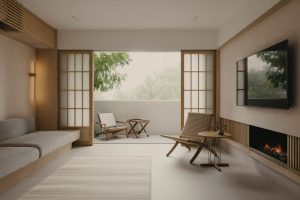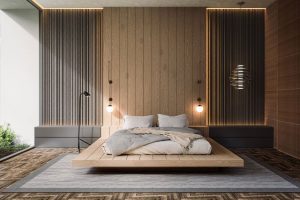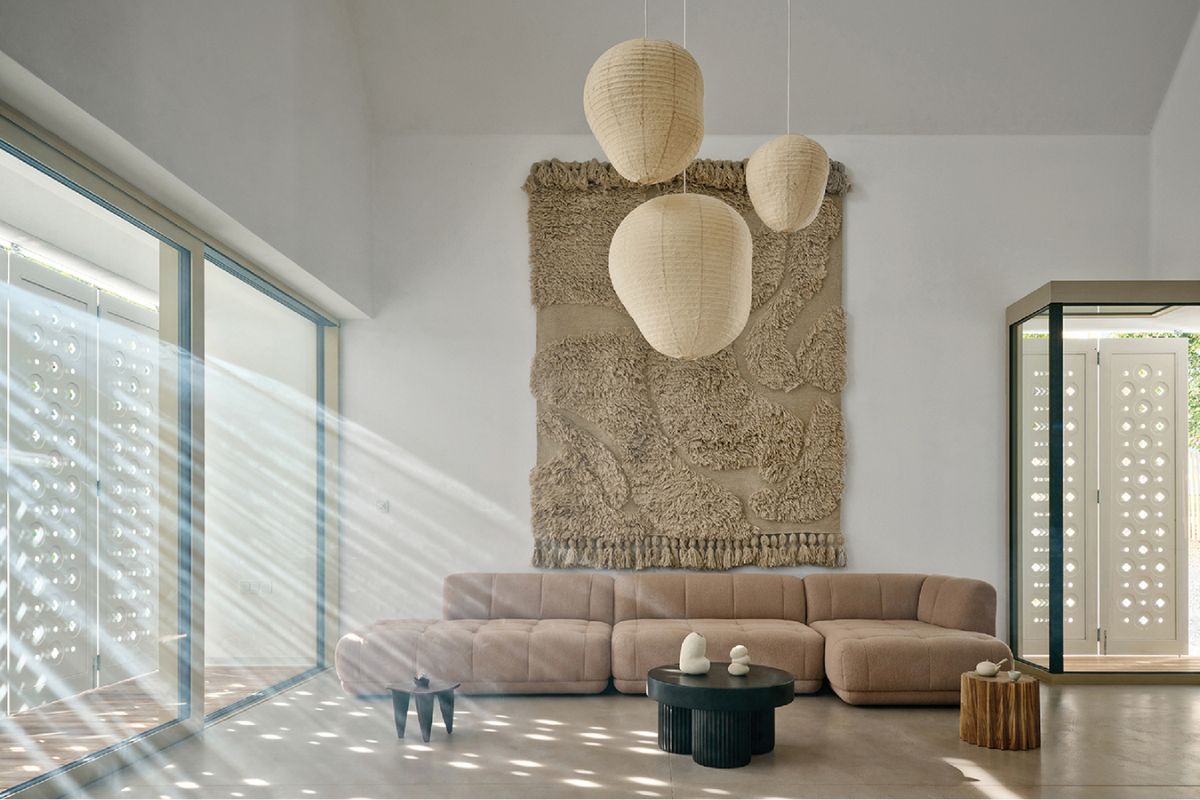
A Japandi style living room is a place to slow down. A low, comfortable sofa, a solid wood coffee table, soft textured rugs, and a few handmade objects create a space that feels open, calm, and quietly beautiful. It is a room designed for conversation, reading, and rest rather than for showing off.
Japandi combines the clean minimalism of Japanese interiors with the warmth and practicality of Scandinavian design. In the living room, that means functional furniture, natural materials, and plenty of breathing space, balanced with cozy textiles and warm light.
Key Takeaways
- Japandi living rooms balance minimalism with warmth and comfort.
- Low-profile sofas and solid wood furniture form the foundation.
- A palette of warm neutrals, earthy tones, and black accents keeps the room calm.
- Negative space and hidden storage are as important as the furniture itself.
- Natural textures in rugs, cushions, and throws add coziness.
- Paper lanterns, ceramics, and sculptural plants complete the look.
The Essence of a Japandi Living Room
A Japandi living room is defined by restraint, quality, and a connection to nature.
Tranquil Simplicity
Every object in the room has a purpose or meaning. Surfaces are kept clear, and furniture is arranged with space around it. This simplicity creates a sense of calm that makes the living room a true retreat.
Functional Beauty
Japandi furniture is designed to be used, not just admired. Beautiful joinery, comfortable proportions, and durable materials mean each piece is both practical and attractive.
Furniture for a Japandi Living Room
Furniture choices set the tone for the entire room.
The Sofa
Choose a low-profile sofa with clean lines, a slim wooden or metal base, and upholstery in linen, cotton, wool, or boucle. Neutral shades such as oatmeal, sand, warm gray, or muted olive work best. Comfort matters, so look for supportive cushions that still keep a tailored shape.
Coffee Tables and Side Tables
A low solid wood coffee table, a round table with a pedestal base, or a stone-topped table makes a natural centerpiece. Side tables in dark wood or black metal add contrast.
Accent Chairs and Floor Seating
A wooden lounge chair with a woven or upholstered seat, or a pair of floor cushions, offers additional seating. Floor cushions and poufs reflect the Japanese tradition of sitting closer to the ground.
Layout and Negative Space
How furniture is arranged is just as important as what it is.
Embracing Empty Space
The Japanese concept of ma values the space between objects. Leave room around the sofa and coffee table, avoid filling every corner, and allow walls to remain partly bare. This empty space makes the room feel calm and lets each piece stand out.
Creating a Conversation Area
Arrange seating to face each other around a central coffee table rather than lining everything up against the walls. Leave around 16 to 18 inches between the sofa and coffee table for comfortable reach and movement.
Color and Materials
Natural colors and textures give a Japandi living room its warmth.
A Soft, Earthy Palette
Warm white, cream, sand, and greige make a calm backdrop. Add depth with muted sage, olive, terracotta, or clay, and define the room with a few black or charcoal accents.
Mixing Light and Dark Wood
Pair light oak or ash floors and shelving with darker walnut or stained wood accents. This contrast between Scandinavian lightness and Japanese depth is a hallmark of the style.
Natural Textures
Combine smooth and rough textures: linen upholstery, a wool or jute rug, rattan or cane details, stone, and clay. Texture adds richness without the need for bold pattern.
Storage That Preserves Calm
Hidden storage keeps the living room serene.
Low Sideboards and Media Units
A low wooden sideboard or media console with sliding doors, cane fronts, or push-to-open drawers hides electronics, games, and everyday clutter while providing a surface for a lamp or ceramics.
Open Shelving with Restraint
If you use open shelves, style them sparingly: a few books, one or two ceramics, and a small plant, with plenty of space in between. Baskets can hold items you prefer to keep out of sight.
Lighting the Japandi Living Room
Layered, warm lighting creates a peaceful atmosphere throughout the day and evening.
Natural Light
Keep windows clear and use sheer linen curtains or simple shades to soften daylight. Shoji-inspired screens or paper blinds filter light beautifully.
Lamps and Pendants
A large paper lantern pendant, a floor lamp with a linen or paper shade, and a ceramic table lamp create layers of soft light. Choose warm bulbs around 2700K and use dimmers for evening relaxation.
Decor and Finishing Touches
A few carefully chosen accessories give the room personality.
Ceramics and Art
Handmade stoneware vases, textured bowls, and a single large artwork in muted tones are enough. Display objects in small groups of two or three with space around them.
Plants
A tall olive tree, a fiddle leaf fig, or a sculptural branch arrangement brings nature indoors. Choose stone, clay, or woven planters that match the natural palette.
Cozy Textiles
Linen and wool cushions, a chunky knit or waffle throw, and a natural fiber rug make the room feel warm and inviting without adding clutter.
Planning the Japandi Living Room Layout
A Japandi living room relies on balance and breathing room. A thoughtful layout makes the space both calm and practical for everyday life.
Create a Clear Conversation Area
Arrange the sofa and chairs so people can talk comfortably without shouting across the room. Leave about 14 to 18 inches between the sofa and the coffee table, and choose a coffee table roughly two-thirds the length of the sofa. A low table suits the grounded Japandi look and keeps sightlines open.
Protect the Walkways
Main walkways should be around 30 to 36 inches wide. Avoid pushing every piece against the walls; floating the sofa slightly away from the wall with a slim console behind it can make the room feel more intentional. Choose a rug large enough for at least the front legs of the sofa and chairs to rest on it, which visually connects the seating group.
Leave Space Empty on Purpose
Resist filling every corner. An empty wall or a clear area of floor gives the eye a place to rest and lets your best pieces stand out. This intentional emptiness is a core part of the Japandi atmosphere.
Budget-Friendly Japandi Living Room Ideas
Begin by editing what you already have. Remove extra decor, clear the coffee table, and hide media clutter in a closed cabinet. Slipcovers or throws in linen, oatmeal, or warm gray can update an existing sofa, and a jute or wool rug brings in natural texture at a modest cost.
Look for secondhand wooden side tables, stools, and sideboards, which are often well made and inexpensive. A paper floor lamp, a few handmade ceramics, and a large branch in a floor vase add character without a big investment.
Common Mistakes to Avoid
A frequent mistake is choosing a sofa or coffee table that is too large for the room, which crowds the space and undermines the calm look. Measure carefully and favor low, slim pieces. Another is relying on gray and white alone, which can feel flat. Add warm wood, earthy accents, and textured fabrics.
Too many small decorative objects are another trap. Group a few meaningful pieces instead of scattering many across shelves. Finally, do not forget practical storage. Without it, remote controls, chargers, and magazines quickly undo the serene effect.
Making Peace With the TV
Screens are part of most living rooms, and a large black rectangle can easily dominate a calm Japandi space. A few strategies help it blend in.
Hide or Soften It
A low media cabinet with sliding wood or cane doors can conceal consoles and cables, and some designs hide the screen itself behind panels. If the TV stays visible, mount it low and center it over a long, slim sideboard so the two read as one composition.
Balance the Wall
Hang the TV on a wall painted in a warm mid-tone such as greige or clay rather than bright white, which makes the dark screen stand out less. Keep the area around it simple, with one ceramic piece or plant on the cabinet instead of a gallery of objects.
Styling the Coffee Table and Sideboard
Surfaces are where Japandi restraint is easiest to see, so style them with care.
The Rule of Few
On the coffee table, use a wooden tray or a stone dish to corral two or three items, such as a stoneware vase, a stack of two books, and a candle. Leave at least half the surface clear so the table can actually be used for tea or a book.
Vary Height and Texture
On a sideboard, group objects in odd numbers and mix heights: a tall branch arrangement, a medium lamp, and a low bowl. Pair a rough ceramic with smooth wood or a matte black piece with pale linen so each object has a clear contrast.
A Japandi Living Room for Kids and Pets
Calm design and family life can coexist when you choose materials wisely:
- Pick performance or washable linen-look upholstery, or a sofa with removable covers.
- Choose wool or flat-woven rugs, which hide dirt and clean more easily than high-pile shag.
- Favor rounded coffee table edges and stable, heavy ceramics that are hard to tip.
- Use lidded baskets so toys and pet supplies disappear in seconds at the end of the day.
- Opt for oiled wood finishes, which can be spot repaired when scratched, over high-gloss lacquer.
Conclusion
A Japandi style living room combines tranquil simplicity with functional beauty. Low, well-crafted furniture, a soft earthy palette, natural textures, and plenty of open space create a room that feels calm yet welcoming.
By keeping clutter hidden, layering warm light, and adding a few handmade and natural details, you can create a living room that supports relaxation and connection every day.