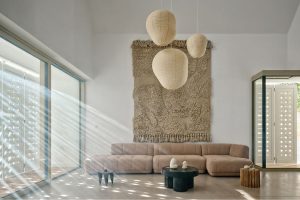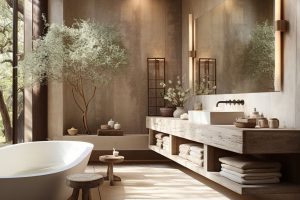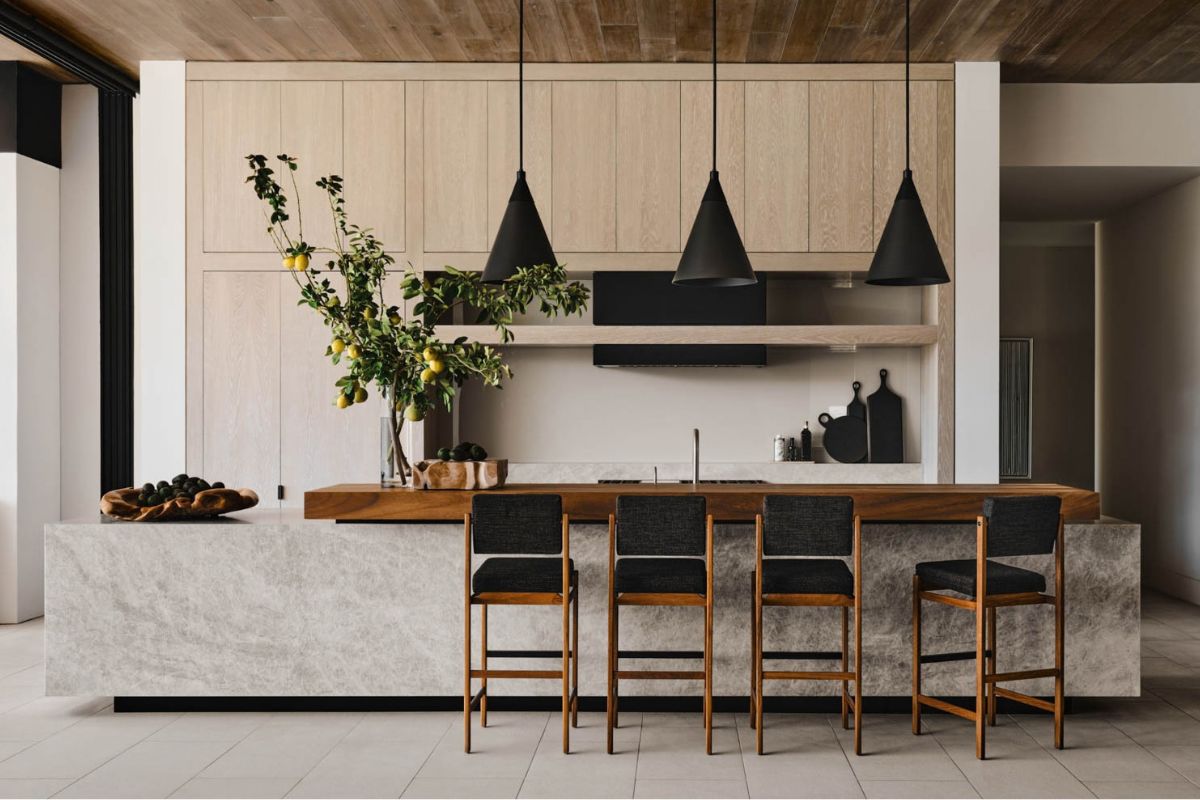
A Japandi style kitchen is calm, uncluttered, and deeply practical. Flat-panel wood cabinets, matte stone countertops, handmade ceramics, and soft natural light create a space where cooking feels like a mindful ritual rather than a chore.
By blending the refined minimalism of Japanese design with the warmth and functionality of Scandinavian kitchens, Japandi delivers streamlined elegance in natural tones. It is a look that feels timeless and is easy to live with every day.
Key Takeaways
- Japandi kitchens combine minimalist lines with warm, natural materials.
- Flat-panel wood cabinets with handleless or slim hardware create a streamlined look.
- Stone, concrete-look, or matte quartz counters suit the natural palette.
- Hidden storage keeps counters clear and the space calm.
- Warm neutrals, muted earth tones, and black accents define the colors.
- Handmade ceramics, wooden utensils, and plants add warmth and character.
What Makes a Kitchen Japandi?
A Japandi kitchen is defined by simplicity, natural materials, and thoughtful function.
Streamlined Elegance
Clean lines, flush cabinet fronts, and clear countertops give the kitchen a calm, orderly look. Decoration is minimal, so the quality of materials and craftsmanship stands out.
Natural Tones
Wood, stone, clay, and linen bring warmth and texture. The palette stays soft and earthy, with occasional dark accents for definition.
Mindful Function
Everything has a place, and tools are chosen for quality and usefulness. This approach reflects both the Japanese value of simplicity and the Scandinavian focus on practical design.
Cabinetry and Storage
Cabinetry is the largest visual element in any kitchen and sets the tone for a Japandi design.
Flat-Panel Wood Cabinets
Slab or flat-panel doors in oak, ash, or walnut veneer are ideal. Light wood brings Scandinavian brightness, while darker or stained wood adds Japanese depth. Many Japandi kitchens combine light upper cabinets or shelves with darker lower cabinets or a dark island.
Handleless and Minimal Hardware
Push-to-open doors, integrated finger pulls, or slim wooden or matte black handles keep fronts uninterrupted. The goal is a quiet, seamless surface.
Hidden and Organized Storage
Tall pantry cabinets, appliance garages, deep drawers with dividers, and integrated recycling bins keep clutter out of sight. A tidy interior makes it easier to keep countertops clear.
Selective Open Shelving
One or two wooden shelves can display everyday ceramics, glass jars, and a small plant. Keep displays sparse and use only items you use regularly.
Countertops, Backsplashes, and Floors
Natural, matte surfaces suit the calm character of a Japandi kitchen.
Countertops
Honed stone, soapstone, matte quartz, concrete, or terrazzo with a subtle aggregate all work well. A wooden countertop or a butcher block section on the island adds warmth. Avoid high-gloss finishes, which can feel too slick for the style.
Backsplashes
Handmade-look tiles with soft glaze variation, vertical stacked tiles in a muted color, or a continuous slab of the countertop material create a calm backdrop. Plaster or microcement finishes also suit the look.
Flooring
Light wood floors, large-format stone-look porcelain, or polished concrete provide a simple, durable base. Keep the floor consistent with adjoining rooms for a seamless flow.
The Japandi Kitchen Color Palette
Color in a Japandi kitchen is soft, natural, and balanced.
Neutral Foundations
Warm white, cream, sand, and greige walls make the space bright and welcoming. These shades complement wood and stone beautifully.
Earthy and Dark Accents
Muted sage or olive cabinetry, clay-toned tiles, and black faucets or light fixtures add depth and contrast. Limit accents to a few elements to maintain calm.
Layout and Functionality
A Japandi kitchen should feel open and work efficiently.
Open and Uncluttered Layouts
Galley, L-shaped, and single-wall layouts with an island all suit the style. Keep walkways generous, ideally around 42 inches, so the kitchen feels open and easy to move through.
Integrated Appliances
Panel-ready refrigerators and dishwashers blend into the cabinetry, while a slim induction cooktop and a minimal hood keep lines clean. Choose appliances in matte black, stainless, or neutral finishes.
The Island
A simple wooden or stone island with clean edges offers prep space and casual seating. Pair it with low-profile wooden stools with woven or upholstered seats.
Lighting the Japandi Kitchen
Lighting should be both practical and soft.
Pendants and Natural Fixtures
Paper, rattan, ceramic, or wooden pendants over the island add warmth. Hang them about 30 to 36 inches above the counter for good task light and clear sightlines.
Task and Ambient Light
Under-cabinet LED strips light work surfaces evenly, while recessed lights provide general illumination. Warm white bulbs keep the space inviting in the evening.
Styling and Finishing Touches
Small, functional objects double as decor in a Japandi kitchen.
Ceramics and Tableware
Handmade stoneware plates, bowls, and mugs in earthy glazes look beautiful on open shelves and at the table. A cast iron teapot or a ceramic tea set adds a Japanese touch.
Wooden Tools and Natural Textiles
Wooden cutting boards, utensils, and a linen tea towel add warmth. Keep only a few items on display and store the rest neatly.
Plants and Herbs
A pot of herbs on the windowsill or a single branch in a ceramic vase brings nature into the kitchen without clutter.
Planning the Japandi Kitchen Layout
A Japandi kitchen should feel calm, but it also needs to work hard. Good planning keeps the room efficient and uncluttered.
Work Zones and Clearances
Organize the kitchen into clear zones for preparation, cooking, cleaning, and storage. Leave at least 42 inches of walkway between counters or around an island, and around 48 inches if two people cook together. Standard countertops sit about 36 inches high, while pendant lights over an island are usually hung 30 to 36 inches above the surface.
Plan Storage Before Style
Count your cookware, appliances, and pantry items before choosing cabinets. Deep drawers for pots, a tall pantry cabinet, and an appliance garage help keep counters clear. Only once everyday items have a hidden home should you decide what to display on open shelves.
Budget-Friendly Japandi Kitchen Ideas
A full renovation is not required. Painting existing cabinets in a warm white, greige, or muted sage and replacing handles with simple wooden knobs or slim black pulls can transform the look. Swap a busy backsplash for plain tiles, or use a wipeable limewash-style paint behind the counter.
Replace plastic containers with glass or ceramic jars, add a wooden cutting board and a stoneware crock for utensils, and hang a paper or rattan pendant. Clearing the counters of small appliances you rarely use is free and makes the biggest difference of all.
Common Mistakes to Avoid
The most common mistake is too much open shelving. It looks beautiful in photos but quickly gathers dust and clutter in a working kitchen. Combine one or two edited open shelves with plenty of closed storage. Another is choosing finishes that are hard to maintain, such as untreated wood near the sink. Seal wood surfaces and choose durable countertops.
Finally, avoid harsh, cool lighting. Under-cabinet task lights with warm bulbs and a soft pendant over the table or island keep the kitchen practical and welcoming at the same time.
Creating a Tea or Coffee Station
A dedicated spot for a morning ritual suits the mindful spirit of Japandi and keeps small appliances from spreading across the counters.
Choose a Defined Spot
Set aside one section of counter, the end of an island, or a shallow cabinet with a pull-out shelf. A tambour or lift-up door lets you close the station when it is not in use, so the kettle and grinder disappear from view.
Keep the Display Simple
Arrange a kettle, a ceramic tea set or pour-over dripper, and two or three mugs on a wooden tray. Store tea and beans in matching ceramic or glass canisters, and keep spare cups behind closed doors rather than on hooks.
Choosing the Sink and Faucet
The sink area is used constantly, so it should be both durable and quiet in appearance.
Sink Materials
Undermount sinks in stainless steel, composite stone, or matte fireclay keep the counter line clean and make wiping crumbs straight into the basin easy. A single deep bowl handles large pots better than a divided sink and looks less busy.
Faucet Finishes
Brushed nickel, matte black, or brushed brass in a simple gooseneck or straight-spout shape suits the style. Pick one finish and repeat it on handles and light fixtures so the kitchen reads as one calm composition.
Caring for Wood and Stone Surfaces
Natural materials are central to a Japandi kitchen, and they last for decades with the right care.
Wood Counters and Cutting Boards
Wipe wood with a damp cloth and mild soap, then dry it right away. Never soak wooden boards or put them in the dishwasher. Rub butcher block and boards with food-safe mineral oil whenever the surface looks dry or pale, usually every few weeks in heavy use.
Stone and Concrete
Seal natural stone and concrete counters as recommended for the material, and wipe acidic spills such as lemon juice, vinegar, and wine promptly to avoid etching. Use a pH-neutral cleaner rather than harsh sprays. Honed surfaces develop a soft patina over time, which fits the wabi-sabi appreciation for gentle wear.
Japandi Touches for Rental Kitchens
If you cannot change cabinets or counters, focus on what you can swap and take with you:
- Replace cabinet knobs with simple wooden or matte black ones, and store the originals.
- Cover a busy backsplash with removable peel-and-stick tiles in a soft, matte neutral.
- Hang a plug-in paper lantern pendant from a swag hook instead of rewiring.
- Bring in a freestanding wooden cart or open shelf for daily essentials.
- Lay a flat-woven runner in front of the sink to add warmth underfoot.
Conclusion
A Japandi style kitchen offers streamlined elegance in natural tones. With flat-panel wood cabinetry, matte stone surfaces, hidden storage, and soft lighting, it creates a calm and highly functional space.
By keeping counters clear and adding a few handmade ceramics, wooden tools, and plants, you can enjoy a kitchen that feels peaceful, warm, and ready for everyday cooking.
Frequently Asked Questions
More Japandi Style Decor
- Japandi Style: The Exclusive Guide
- Japandi Style Bedroom: Harmony of Minimalism and Coziness
- Japandi Style Living Room: Tranquil Simplicity and Functional Beauty
- Japandi Style Bathroom: Organic Elegance in a Serene Retreat