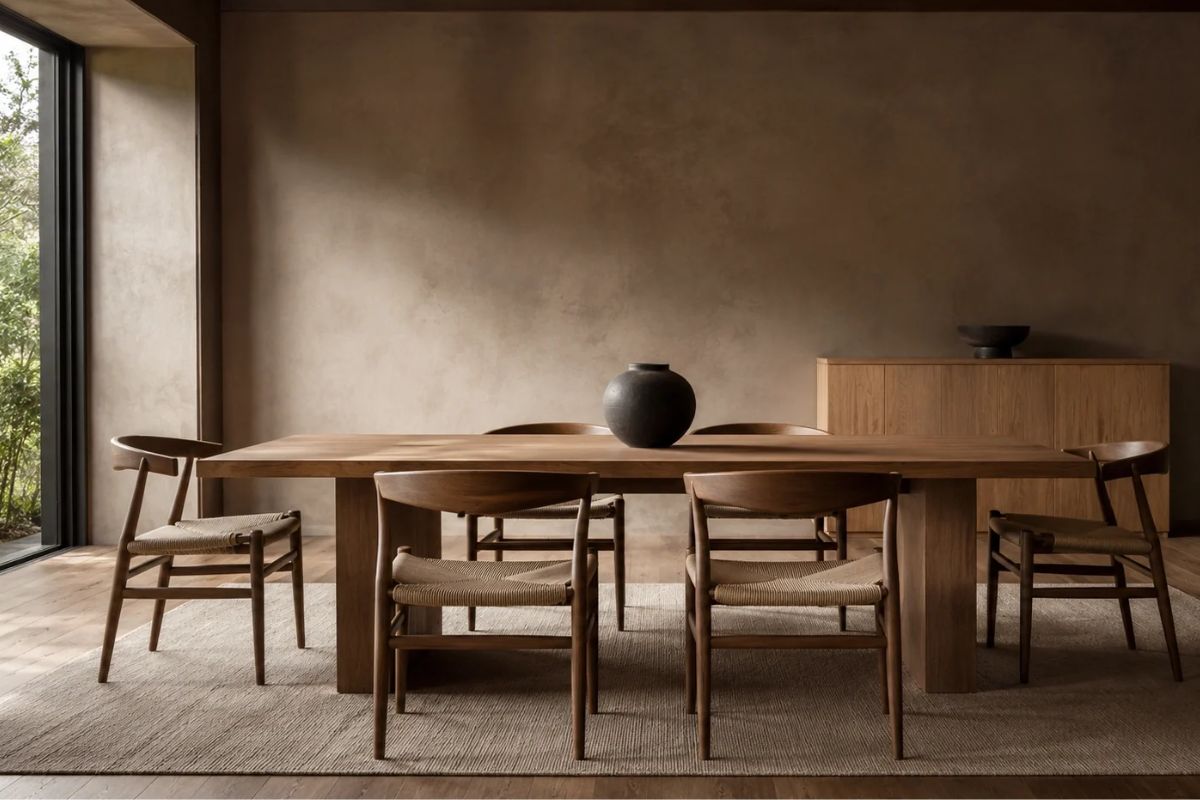
A Japandi style dining room invites people to slow down and enjoy each other’s company. A solid wood table, simple chairs, a glowing paper pendant, and handmade ceramics create a space that feels peaceful, warm, and focused on what matters most: sharing a meal.
Japandi brings together the mindful simplicity of Japanese dining culture and the Scandinavian love of gathering around the table. The result is a Zen dining space that is minimal yet welcoming, perfect for everyday meals and relaxed gatherings with friends.
Key Takeaways
- Japandi dining rooms combine Zen calm with Scandinavian warmth and hospitality.
- A solid wood table with clean lines is the heart of the room.
- Simple wooden, woven, or upholstered chairs add comfort and texture.
- Paper or wooden pendants create soft, warm light over the table.
- Warm neutrals, earthy accents, and black details define the palette.
- Handmade tableware and simple centerpieces complete the mindful look.
The Philosophy of Japandi Dining
Japandi dining rooms are shaped by an appreciation for simplicity, quality, and togetherness.
Mindful Meals
Japanese food culture values presentation, seasonality, and attention to each moment. A calm, uncluttered dining room supports this mindful approach to eating.
Warm Gatherings
The Scandinavian side brings coziness and hospitality. Candles, soft textiles, and comfortable seating make the dining room a place where guests want to linger.
Choosing the Dining Table
The table sets the tone for the whole room.
Solid Wood Tables
A solid wood table in oak, ash, or walnut with clean lines and visible grain is the classic Japandi choice. Look for thoughtful details such as rounded edges, tapered legs, or exposed joinery.
Shape and Size
Rectangular tables suit long rooms and larger gatherings, while round or oval tables encourage conversation and work well in smaller spaces. Allow about 24 inches of table length per person and at least 36 inches of clearance around the table.
Low Dining Options
For a more traditional Japanese feel, a low table with floor cushions creates an intimate, grounded dining experience. This works especially well as a secondary dining area or tea corner.
Dining Chairs and Seating
Chairs bring both comfort and texture to the room.
Wooden and Woven Chairs
Simple wooden chairs with curved backs, chairs with paper cord or rush seats, and cane-backed designs are perfect for Japandi dining rooms. Their natural materials pair beautifully with a wood table.
Upholstered Seating
Chairs upholstered in linen, wool, or boucle in neutral tones add softness and comfort for long dinners.
Benches
A simple wooden bench on one side of the table creates a relaxed, communal feel and can tuck underneath to save space.
Color and Materials
Natural colors and textures create a calm, warm atmosphere.
A Calm Palette
Warm white, cream, sand, and greige walls provide a soft backdrop. Add depth with muted sage, olive, or clay, and contrast with black or charcoal accents in chairs, lighting, or frames.
Mixing Wood Tones
Combine a light oak table with dark-stained chairs, or a walnut table with lighter seating. This contrast between light and dark wood is a signature Japandi detail.
Natural Textures
Linen table runners, a jute or wool rug, woven chair seats, and stoneware add tactile interest without busy patterns.
Lighting for Zen Dining
Lighting sets the mood for every meal.
Pendant Lights
A large paper lantern, a wooden slat pendant, or a ceramic or rattan fixture above the table creates a soft focal point. Hang it with the bottom about 30 to 36 inches above the tabletop. Over long tables, two or three smaller pendants can provide balanced light.
Warm, Layered Light
Add a dimmer, warm bulbs around 2700K, and a few candles on the table. A table lamp on a sideboard provides gentle background light.
Storage and Display
Keeping the dining room clutter-free helps maintain its calm.
Low Sideboards
A low wooden sideboard with sliding doors or cane fronts stores dishes and linens while providing a surface for serving or displaying a few ceramics.
Minimal Display
Display only a few meaningful objects, such as a handmade vase, a stack of bowls, or a single artwork, with plenty of space around them.
Table Styling and Decor
Simple, natural styling makes the table feel special.
Handmade Tableware
Stoneware plates and bowls with earthy glazes, wooden serving boards, linen napkins, and simple glassware create a beautiful, relaxed setting. Mixing slightly different handmade pieces adds wabi-sabi charm.
Centerpieces
A single branch in a ceramic vase, a low bowl of seasonal fruit, or a few candles is enough. Keep centerpieces low so guests can see each other.
Art and Plants
One large piece of abstract or ink-style art and a sculptural plant, such as an olive tree, bring character to the room without crowding it.
Japandi Dining in Small and Open-Plan Spaces
In open-plan homes, a rug and a statement pendant define the dining zone without walls. In small spaces, choose a round table, slim chairs or a bench that tucks under, and wall-mounted shelving instead of a large sideboard. A consistent wood tone and light palette help the dining area flow naturally into the rest of the home.
Planning the Japandi Dining Room Layout
A Japandi dining room should feel spacious and relaxed, so the right proportions matter.
Table Size and Clearance
Allow about 24 inches of table width per person and at least 36 inches, ideally 42 inches, between the table edge and the nearest wall or furniture so chairs can be pulled out comfortably. In smaller rooms, a round table seats more people in less space and softens the clean lines of the style.
Lighting and Rug Proportions
Hang a pendant about 30 to 36 inches above the tabletop. A fixture roughly half to two-thirds the width of the table looks balanced. If you use a rug, choose one that extends at least 24 inches beyond the table on all sides so chair legs stay on it when pulled out.
Budget-Friendly Japandi Dining Room Ideas
Secondhand solid wood tables and chairs are often available at a fraction of the cost of new ones, and their worn surfaces suit the Japandi appreciation for natural character. A coat of oil or a light sanding can refresh tired wood. Mixing chairs from different sources is fine as long as they share a similar tone or shape.
Linen napkins, a simple table runner, handmade stoneware, and a paper pendant are inexpensive updates with a big impact. A single seasonal branch in a ceramic vase makes an elegant, nearly free centerpiece.
Common Mistakes to Avoid
A common mistake is choosing a table that is too large for the room, leaving no space to move around it. Measure carefully before buying. Another is overdecorating the table with tall centerpieces, candles, and runners. Keep arrangements low and simple so guests can see each other.
Finally, avoid uncomfortable seating. Japandi dining chairs should look simple, but they also need to support long meals. Choose chairs with a slight curve in the back or add linen seat cushions for comfort.
Setting the Table Through the Day
A Japandi dining table should look calm when it is bare and feel special when it is set. Adjusting it to the time of day keeps it useful without adding clutter.
Everyday Meals
For breakfast and weeknight dinners, keep it simple: a linen placemat or bare wood, one plate and bowl per person, and a single small vase in the center. Store napkins, trivets, and serving pieces in the sideboard so the table can be cleared in a minute.
Dinners With Guests
For gatherings, layer a linen runner down the middle, add stoneware in two related glazes, and use low candles or a few small bud vases instead of one tall arrangement so guests can see each other. Serve family style from wooden boards and ceramic bowls, which feels relaxed and suits the communal spirit of the style.
Between Meals
When the table is not in use, return it to its quiet state with only the centerpiece. A clear tabletop shows off the wood grain and keeps the room feeling open.
Color Combinations That Work
Concrete pairings make it easier to pull a dining room together. These combinations all suit Japandi:
- Light oak table, warm white walls, and black chairs or pendant for crisp contrast.
- Walnut table, oatmeal linen, and clay or terracotta ceramics for a warmer, deeper mood.
- Ash or birch table, greige walls, and muted sage textiles for a soft, fresh look.
- Dark stained wood, sand-colored walls, and stone gray stoneware for a moodier evening space.
Choose one combination and repeat its colors in the chair seats, napkins, and tableware so the room feels intentional.
Caring for a Solid Wood Dining Table
A good table can last for generations, and a little routine care keeps it looking its best.
Daily Habits
Wipe the surface with a soft, slightly damp cloth and dry it straight away. Use trivets for hot dishes and coasters or placemats under glasses, since heat and moisture leave white rings on many finishes.
Long-Term Maintenance
Refresh oiled tables with a thin coat of furniture oil once or twice a year, wiping away any excess. Light scratches on an oiled finish can be sanded gently with fine paper and re-oiled, while lacquered tables are best repaired by a professional. Keep the table out of strong direct sun, which can fade or darken wood unevenly.
Conclusion
A Japandi style dining room creates a Zen space for gatherings. A solid wood table, simple natural seating, soft paper or wooden lighting, and a calm earthy palette combine to make every meal feel relaxed and meaningful.
With handmade tableware, minimal decor, and plenty of open space, your dining room can become a peaceful place to share food, conversation, and time with the people you care about.
Frequently Asked Questions
More Japandi Style Decor
- Japandi Style: The Exclusive Guide
- Japandi Style Bedroom: Harmony of Minimalism and Coziness
- Japandi Style Living Room: Tranquil Simplicity and Functional Beauty
- Japandi Style Kitchen: Streamlined Elegance and Natural Tones
- Japandi Style Bathroom: Organic Elegance in a Serene Retreat
- Japandi Style Entryway: Harmonious Balance of Calm and Clean Design