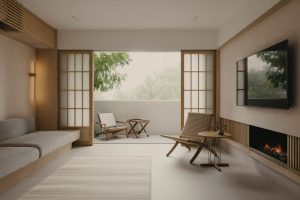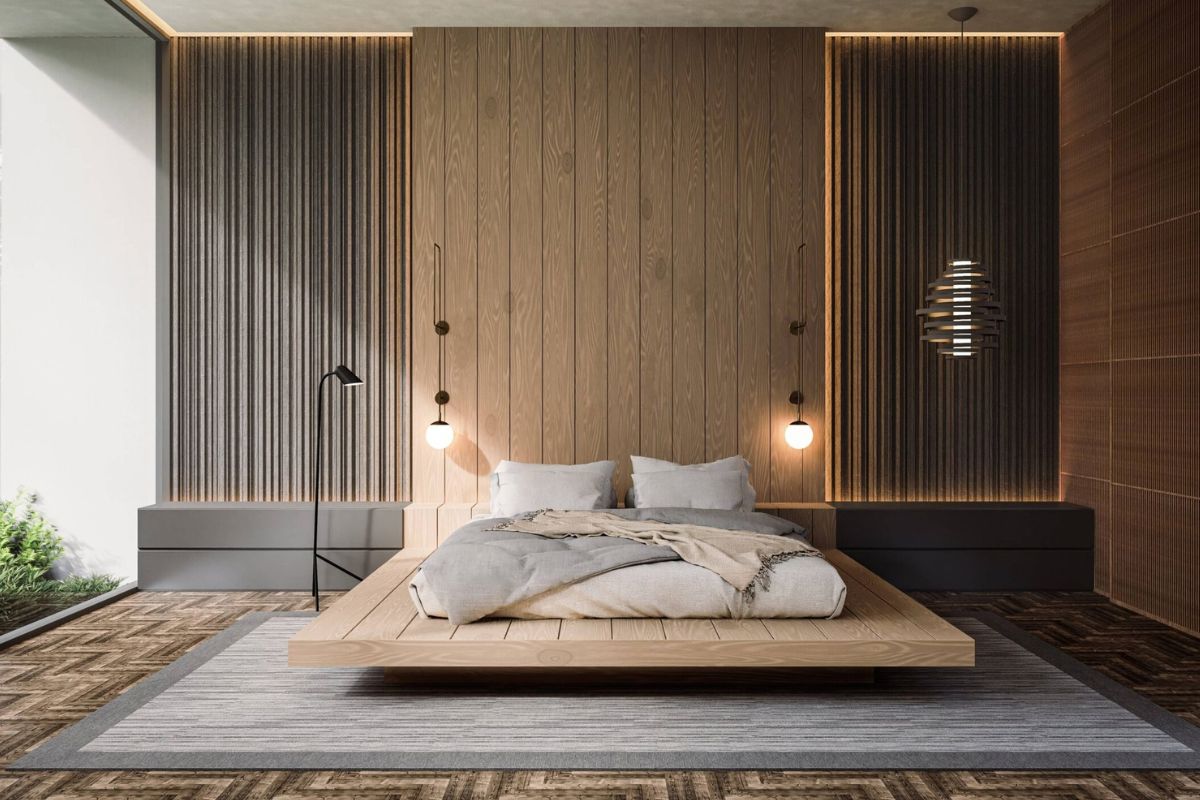
A Japandi style bedroom is designed for rest. Low wooden furniture, soft linen bedding, warm neutral walls, and the gentle glow of a paper lantern create a space that feels calm the moment you walk in. Nothing is there without a reason, yet the room never feels cold or empty.
Japandi combines Japanese minimalism with Scandinavian coziness, and the bedroom is where this balance matters most. By pairing clean lines and open space with natural textures and comfortable layers, you can create a sleep sanctuary that is both serene and inviting.
Key Takeaways
- Japandi bedrooms balance minimalist calm with cozy, natural textures.
- A low platform bed in solid wood is the natural centerpiece.
- Warm neutrals, muted earth tones, and subtle black accents create a restful palette.
- Linen, cotton, and wool bedding add softness and texture.
- Hidden storage and clear surfaces protect the sense of space.
- Paper lanterns, warm bulbs, and a few plants complete the serene mood.
Why Japandi Works So Well in the Bedroom
The bedroom should be the calmest room in the house, and Japandi design is built around calm.
A Space for Rest
Visual clutter can make it harder to relax. Japandi’s focus on fewer possessions, clear surfaces, and open space helps the bedroom feel quiet and restful, supporting better wind-down routines.
Minimalism Without Coldness
Unlike stark minimalist bedrooms, Japandi adds warmth through wood, soft textiles, and warm lighting. The Scandinavian love of coziness ensures the room feels welcoming, not sterile.
Choosing the Japandi Bed
The bed is the focal point of the room, and in Japandi design it is usually low, simple, and beautifully made.
Low Platform Beds
Low platform beds reflect the Japanese tradition of sleeping close to the ground. Look for solid wood frames in oak, ash, or walnut with clean lines and subtle details such as rounded corners or exposed joinery. A low bed also makes the ceiling feel higher and the room more spacious.
Headboards
Choose a simple wooden slat headboard, an upholstered headboard in linen or boucle, or skip the headboard altogether and let a textured wall or a piece of art take its place.
Futon-Inspired Options
For a more traditional Japanese feel, a futon-style mattress on a low wooden base or tatami-inspired platform creates a grounded, minimalist look. Make sure the mattress still provides the support you need for comfortable sleep.
A Calming Color Palette
Color sets the mood of the bedroom, and Japandi palettes are soft and grounding.
Warm Neutral Walls
Warm white, cream, greige, sand, and soft taupe create a gentle backdrop. Limewash or clay-based paints add subtle texture that suits the natural look.
Earthy and Dark Accents
Muted sage, olive, clay, and rust work well in bedding and throws. A few black or charcoal accents, such as a lamp base, picture frame, or bedside table, add definition and depth.
Bedding and Textiles
Textiles bring the cozy side of Japandi into the bedroom.
Natural Fiber Bedding
Linen sheets and duvet covers are ideal. They are breathable, soften with each wash, and their natural wrinkles fit the relaxed, imperfect spirit of the style. Cotton percale and sateen in neutral shades are good alternatives.
Layering for Comfort
Add a waffle-weave or wool throw at the foot of the bed and two or three cushions in complementary textures. Keep layering restrained so the bed looks inviting rather than busy.
Rugs and Curtains
A jute, wool, or flat-woven rug under the bed adds warmth underfoot. Sheer linen curtains soften daylight, while blackout liners in a neutral tone can be added for better sleep.
Furniture and Storage
Every piece of furniture in a Japandi bedroom should be useful and well made.
Nightstands
Simple wooden nightstands, floating shelves, or small stools work well. Keep only the essentials on top: a lamp, a book, and perhaps a small ceramic dish or vase.
Dressers and Wardrobes
Low wooden dressers with flush or recessed handles and wardrobes with sliding doors keep clothing out of sight. Built-in storage in a matching wood tone creates a seamless, calm look.
Small Storage Solutions
Woven baskets, lidded boxes, and a storage bench at the foot of the bed hide everyday items. Under-bed drawers are useful in smaller rooms.
Lighting the Japandi Bedroom
Soft, warm light is essential for a relaxing bedroom.
Paper and Natural Fixtures
A paper lantern pendant, a rattan shade, or a simple ceramic table lamp creates diffused, gentle light. Wall-mounted reading lights with wood or black metal details free up nightstand space.
Warm, Dimmable Light
Use warm bulbs around 2700K and install dimmers where possible. Low, warm light in the evening helps signal that it is time to wind down.
Decor and Natural Touches
Decor should be minimal, personal, and natural.
Art and Ceramics
One large piece of abstract or ink-style art above the bed, or a single shelf with a few handmade ceramics, is often enough. Leave plenty of empty wall space around them.
Plants
Low-maintenance plants such as snake plants, pothos, or a small olive tree bring life to the bedroom. A vase with a single branch is a simple, ikebana-inspired alternative.
Japandi Bedroom Ideas for Small Spaces
Japandi is ideal for small bedrooms because it relies on fewer, well-chosen pieces. Use a low platform bed with built-in drawers, wall-mounted lights instead of table lamps, and floating shelves instead of bulky nightstands. Keep the palette light and consistent, and use a large mirror or light curtains to make the room feel bigger. Clearing the floor as much as possible creates a sense of calm and openness.
Planning the Japandi Bedroom Layout
A calm bedroom starts with a layout that feels open and easy to move through. Japandi’s emphasis on negative space makes planning especially important.
Position the Bed First
Place the bed against the longest solid wall, ideally where you can see the door without being directly in line with it. Leave at least 24 inches, and ideally 30 to 36 inches, of clear space on both sides and at the foot of the bed. Because Japandi beds sit low, choose nightstands whose tops are roughly level with the mattress so lamps and books stay within easy reach.
Keep Pathways and Windows Clear
Avoid placing tall furniture in front of windows, which blocks daylight and makes the room feel smaller. A rug under the bed should extend about 18 to 24 inches beyond each side so your feet land on something soft in the morning. Keep the floor around the bed free of baskets and stacks so the room keeps its open, uncluttered feeling.
Budget-Friendly Japandi Bedroom Ideas
You do not need to buy a new bed or furniture to bring Japandi style into the bedroom. Start with textiles: switching to linen or cotton bedding in oatmeal, sand, or soft gray instantly changes the mood. Replace a busy patterned rug with a plain jute or wool one, and swap bright lampshades for paper or linen shades.
Next, declutter surfaces and hide small items in lidded baskets or boxes. A secondhand wooden stool can serve as a stylish nightstand, and a single branch in a ceramic vase costs almost nothing. Painting the walls in a warm white or greige is often the single most effective change for the money.
Common Mistakes to Avoid
The most common mistake in a Japandi bedroom is making it too bare. Without soft textiles, warm wood, and gentle light, a minimal bedroom can feel cold rather than restful. Another is choosing furniture in too many different wood tones; stick to two or three that complement each other.
It is also easy to let clutter creep back in on nightstands and dressers. Give every item a closed storage spot so tidying stays quick. Finally, avoid bright, cool overhead lighting as the only light source. Layer warm lamps and dimmable fixtures so the room supports winding down in the evening.
Creating a Quiet Corner for Reading or Meditation
If your bedroom has a spare corner, a small zone for reading or stretching reinforces its role as a place to slow down.
Keep It Low and Simple
A floor cushion or a low lounge chair in wood and linen, a small side table, and a plug-in wall light are all you need. Add a flat-woven mat or a small wool rug to define the area without adding clutter.
Limit What Lives There
Keep one book, a candle, or a small plant on the side table and nothing more. A corner that stays empty and inviting is more restful than one that becomes a second storage spot.
Rental-Friendly Japandi Bedroom Ideas
You can create a Japandi bedroom without painting or drilling. These changes are easy to reverse when you move:
- Lean a large framed piece of art or a mirror against the wall instead of hanging it.
- Use tension rods or freestanding rails for linen curtains.
- Swap the landlord’s light fixture for a paper shade that clips over the existing bulb holder, and store the original.
- Cover a dated headboard with a fitted linen slipcover.
- Hide mismatched furniture behind a folding screen in wood or paper.
Caring for Japandi Bedroom Materials
Natural materials look best when they are maintained gently and regularly.
Linen and Wool
Wash linen bedding in cool or warm water on a gentle cycle and line dry or tumble on low heat. Skip ironing; the soft creases are part of the look. Air wool throws by the window or outdoors, and spot clean small marks rather than washing the whole piece.
Wooden Bed Frames and Nightstands
Dust wood weekly and use coasters under water glasses, since rings are common on bedside tables. Oiled wood can be refreshed with a thin coat of furniture oil once or twice a year, which keeps the grain rich and protects against dry indoor air in winter.
Conclusion
A Japandi style bedroom achieves a beautiful harmony of minimalism and coziness. With a low wooden bed, linen bedding, warm neutral colors, hidden storage, and soft lighting, it becomes a peaceful retreat designed for rest.
By choosing natural materials, editing clutter, and adding a few meaningful handmade details, you can create a bedroom that feels calm, grounded, and welcoming every night.
Frequently Asked Questions
More Japandi Style Decor
- Japandi Style: The Exclusive Guide
- Japandi Style Living Room: Tranquil Simplicity and Functional Beauty