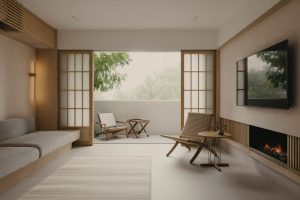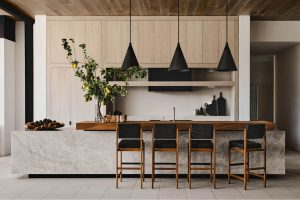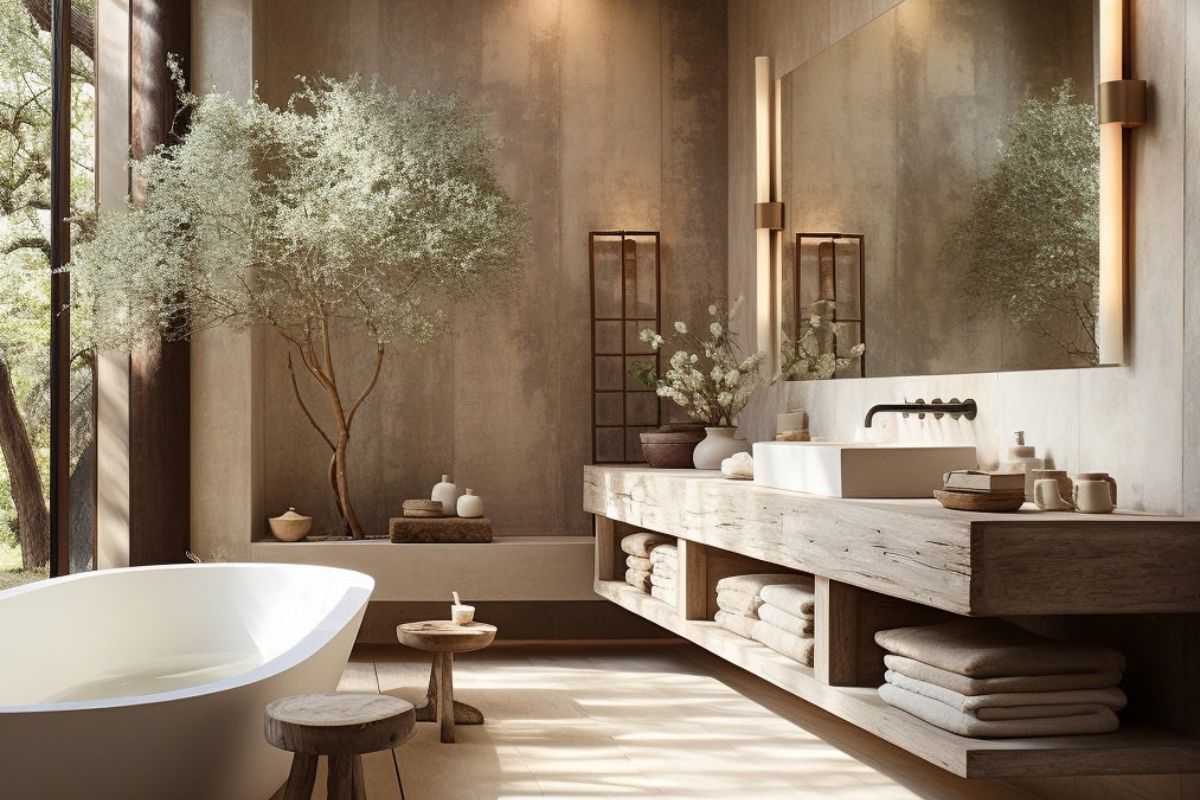
A Japandi style bathroom feels like a private spa. Natural stone, warm wood, soft daylight, and a deep soaking tub come together in a room designed for quiet moments and slow rituals. It is clean and minimal, yet warm and inviting.
Japandi blends the Japanese tradition of bathing as a restorative ritual with the Scandinavian love of simple, functional comfort. The result is organic elegance: a serene retreat built on natural materials, calm colors, and thoughtful design.
Key Takeaways
- Japandi bathrooms combine spa-like calm with natural, organic materials.
- Stone, wood, clay, and linen create warmth and texture.
- Deep soaking tubs and walk-in showers reflect Japanese bathing traditions.
- Floating wood vanities and hidden storage keep the room uncluttered.
- Soft neutrals, muted earth tones, and black fixtures define the palette.
- Warm, diffused lighting and a few plants complete the serene mood.
The Spirit of a Japandi Bathroom
A Japandi bathroom is about more than looks. It is designed to support relaxation and mindful routines.
Bathing as a Ritual
In Japan, bathing is traditionally a time to relax and restore rather than simply to get clean. Japandi bathrooms borrow this idea, creating spaces where you can slow down and unwind.
Organic Elegance
Natural textures, soft curves, and imperfect, handmade details give the room an organic feel. Elegance comes from restraint and quality materials rather than decoration.
Natural Materials
Materials are the foundation of the Japandi bathroom and must also handle moisture well.
Stone
Honed limestone, travertine, slate, and other natural stones bring a calm, grounded feel. Large-format stone-look porcelain tiles are a practical, low-maintenance alternative with fewer grout lines.
Wood
Teak, cedar, and hinoki are naturally moisture resistant and traditional in bathing spaces. Use wood for vanities, shelves, bath mats, stools, or slatted wall panels away from direct water spray, and seal it properly.
Plaster, Microcement, and Clay
Seamless microcement or tadelakt-style plaster walls create soft, continuous surfaces. Handmade clay tiles and ceramic vessel sinks add an artisanal touch.
Tubs and Showers
Bathing fixtures are central to the Japandi bathroom experience.
Japanese Soaking Tubs
Deep soaking tubs, known as ofuro, allow you to sit immersed up to the shoulders. They take up less floor space than a standard tub, making them ideal for smaller bathrooms. Options range from wooden tubs to modern stone resin or acrylic versions.
Freestanding Tubs
A freestanding tub with soft, organic curves in matte white or stone finish makes a serene focal point. Pair it with a simple floor-mounted faucet in matte black or brushed brass.
Walk-In Showers
An open walk-in shower with a single glass panel, a rainfall showerhead, and a linear drain keeps the room open and calm. A built-in stone bench or niche adds function without clutter.
Vanities and Storage
Clear surfaces are essential to the calm of a Japandi bathroom.
Floating Wood Vanities
A wall-mounted vanity in oak, walnut, or teak with flat or slatted fronts creates a light, uncluttered look. Pair it with a stone, ceramic, or concrete sink, either integrated or as a vessel.
Hidden Storage
Recessed mirrored cabinets, drawers with organizers, and built-in niches keep toiletries out of sight. Woven baskets or wooden boxes can hold towels and spare supplies.
Minimal Open Shelving
A single wooden shelf with rolled towels, a ceramic vase, and a candle adds warmth without clutter.
Color Palette
A soft, natural palette creates a spa-like feeling.
Soft Neutrals
Warm white, cream, stone gray, sand, and greige keep the bathroom light and calm. They pair naturally with wood and stone.
Earthy and Dark Accents
Muted sage, moss, and clay add depth, while matte black faucets, mirror frames, and light fixtures provide contrast.
Lighting a Serene Bathroom
Good lighting makes a Japandi bathroom both functional and relaxing.
Natural Light
Frosted or reeded glass windows and simple linen or paper-style blinds let daylight in while maintaining privacy.
Soft, Layered Light
Wall sconces on either side of the mirror provide even light for grooming. Indirect LED strips under a floating vanity or in a niche create a soft evening glow. Choose fixtures rated for damp locations and warm bulbs on a dimmer.
Decor and Natural Touches
A few natural elements complete the serene look.
Textiles
Linen or waffle-weave cotton towels in neutral shades, a wooden or cotton bath mat, and a simple robe on a wooden peg add softness.
Plants
Humidity-loving plants such as ferns, pothos, and bamboo thrive in bathrooms with some natural light. A small bonsai or a single branch in a ceramic vase adds a calm, sculptural note.
Handmade Accessories
Stoneware soap dishes, ceramic dispensers, a wooden stool, and a candle in a clay holder bring warmth and craftsmanship.
Practical Tips for a Japandi Bathroom
Install an exhaust fan sized for the room and run it during and after bathing to protect wood and stone. Seal natural stone and grout regularly, and refresh the finish on wooden surfaces when water no longer beads on them. In small bathrooms, a wall-mounted vanity, a single glass shower panel, and a large mirror help maintain an open, airy feel.
Planning the Japandi Bathroom Layout
Bathrooms are often small, so careful planning is the key to a calm, spa-like Japandi space.
Clearances and Heights
Leave at least 21 inches, and ideally 30 inches, of clear floor space in front of the vanity, toilet, and shower. Vanities usually sit between 32 and 36 inches high. A mirror should be no wider than the vanity, and wall sconces on either side are typically mounted around 60 to 66 inches from the floor for even, flattering light. Always choose fixtures rated for damp or wet locations.
Hide Toiletries Thoughtfully
Plan where every bottle and tube will go before decorating. Vanity drawers with dividers, a recessed medicine cabinet, and shower niches keep surfaces clear. Decanting soaps and lotions into matching ceramic or glass bottles further reduces visual clutter.
Budget-Friendly Japandi Bathroom Ideas
Many Japandi touches cost very little. Replace colorful towels with a set in natural tones such as oatmeal, stone, or charcoal, and add a wooden or teak bath mat. Swap plastic accessories for ceramic, bamboo, or wood alternatives, and hang a simple round mirror with a thin wooden frame.
A humidity-loving plant, such as a fern or pothos, and a small wooden stool used as a side table bring in nature and warmth. If renting, removable vinyl tiles in a stone look or a fresh coat of moisture-resistant paint in a warm neutral can refresh the room without major work.
Common Mistakes to Avoid
One common mistake is using untreated wood in wet areas, where it can warp or stain. Choose water-resistant species such as teak or cedar, or seal wood properly. Another is leaving too many products on display, which quickly ruins the serene effect. Store everyday items out of sight.
Finally, avoid cold, bright lighting and glossy white surfaces only. Warm bulbs, matte finishes, and natural textures are what make a Japandi bathroom feel like a retreat rather than a clinical space.
Choosing Tile and Grout
Tile covers a large share of most bathrooms, so its shape, finish, and grout color have a big effect on how calm the room feels.
Shapes and Layouts
Long rectangular tiles stacked vertically draw the eye upward and make a small bathroom feel taller. Large-format tiles on the floor mean fewer grout lines and a quieter surface, while small matte mosaics in the shower provide better grip underfoot. Avoid busy patterns and high-contrast layouts.
Finishes and Grout
Choose matte, honed, or softly glazed finishes rather than high gloss, which reflects harsh light and shows water spots. Match the grout closely to the tile color so the wall reads as one surface. A warm gray or sand grout hides discoloration better than bright white. If you choose natural stone tile, seal it before grouting so the grout pigment cannot stain the porous surface.
Bringing Japandi to a Powder Room
A small guest bathroom is an easy place to try the style, since it needs only a few elements and has no humidity from bathing.
Make One Bold Choice
With little floor area, you can afford one special material, such as a carved stone basin, a limewashed wall in clay or moss, or a wooden slatted wall behind the sink. Keep everything else simple so that single feature stands out.
Keep It Minimal for Guests
A wall-mounted faucet, a round mirror with a thin wood or black frame, and a single wall sconce are enough. Add a linen hand towel on a wooden peg, a ceramic soap dish, and one small plant or branch.
Setting Up an Evening Bath Ritual
Japandi bathrooms are designed to support slow, restorative routines. A few thoughtful details make that easier to practice every day.
Prepare the Space
Keep a wooden bath tray or small stool within reach of the tub for a book, a cup of tea, or a candle. Store bath salts and oils in ceramic jars on a single shelf so you can reach them without opening several cabinets.
Adjust Light and Sound
Put the main lights on a dimmer, or rely only on a low sconce or candlelight while you bathe. A small wooden diffuser with a woody or citrus scent, and a closed door against household noise, help turn an ordinary bath into a few minutes of genuine rest.
Conclusion
A Japandi style bathroom offers organic elegance in a serene retreat. Natural stone and wood, a soaking tub or open shower, floating vanities, and soft, warm light create a space designed for calm and restoration.
By keeping surfaces clear, choosing water-friendly natural materials, and adding a few handmade details and plants, you can enjoy a spa-like bathroom that turns daily routines into peaceful rituals.
Frequently Asked Questions
More Japandi Style Decor
- Japandi Style: The Exclusive Guide
- Japandi Style Bedroom: Harmony of Minimalism and Coziness
- Japandi Style Living Room: Tranquil Simplicity and Functional Beauty
- Japandi Style Kitchen: Streamlined Elegance and Natural Tones