The industrial style kitchen borrows its look from the factories, warehouses, and workshops that were converted into lofts in cities like New York and London. Exposed brick, raw steel, poured concrete, and bare bulbs once signaled a building’s working past. Today they define one of the most practical and character-rich looks you can bring into a cooking space.
What makes this style such a good fit for the kitchen is that it was born from function. Industrial spaces were built to be durable, easy to clean, and efficient, which is exactly what a hard-working kitchen needs. With the right balance of hard and warm materials, an industrial kitchen feels edgy and urban without ever feeling cold.
Key Takeaways
- Industrial kitchens are rooted in converted factories and lofts, so durability and function come first.
- Stainless steel, concrete, reclaimed wood, brick, and blackened metal form the core material palette.
- Open shelving, exposed pipes, and visible hardware celebrate the “working” nature of the room.
- Cage pendants, Edison bulbs, and enamel factory shades provide both task light and character.
- Warm wood, leather, and greenery keep the hard surfaces from feeling cold.
- You can achieve the look in any home, from a city apartment to a suburban house, with a few well-chosen pieces.
What Defines an Industrial Style Kitchen
An industrial kitchen is defined less by a single color or furniture style and more by honesty of materials. Nothing is hidden for the sake of looking polished. Pipes, ducts, beams, and fasteners are left visible, and surfaces are allowed to show their natural texture and wear.
The Loft Origins of the Look
In the second half of the twentieth century, artists and young professionals began moving into abandoned manufacturing buildings. These spaces had soaring ceilings, huge steel-framed windows, brick walls, and concrete floors. Rather than covering these features, residents embraced them, and the industrial interior style was born. The kitchen in these lofts was often a simple run of commercial-grade equipment against a brick wall, and that utilitarian spirit still shapes the style today.
Key Characteristics at a Glance
Most industrial kitchens share a handful of recognizable traits. You will usually see a neutral palette of gray, black, white, and brown; a mix of metal and wood; open storage instead of rows of closed upper cabinets; and lighting that looks like it came from a workshop. Large windows, high ceilings, and an open layout are common, though none of them is strictly required.
Why the Style Works So Well in Kitchens
Many industrial materials were chosen for factories because they stand up to heat, moisture, and heavy use. Stainless steel is hygienic and heat resistant, sealed concrete is tough, and metal shelving can carry heavy cookware. That makes the industrial look one of the few design styles where the aesthetic and the practical needs of a kitchen point in exactly the same direction.
The Industrial Kitchen Material Palette
Materials do most of the work in an industrial kitchen. Choosing two or three hard materials and pairing them with one warm one is the simplest formula for success.
Stainless Steel
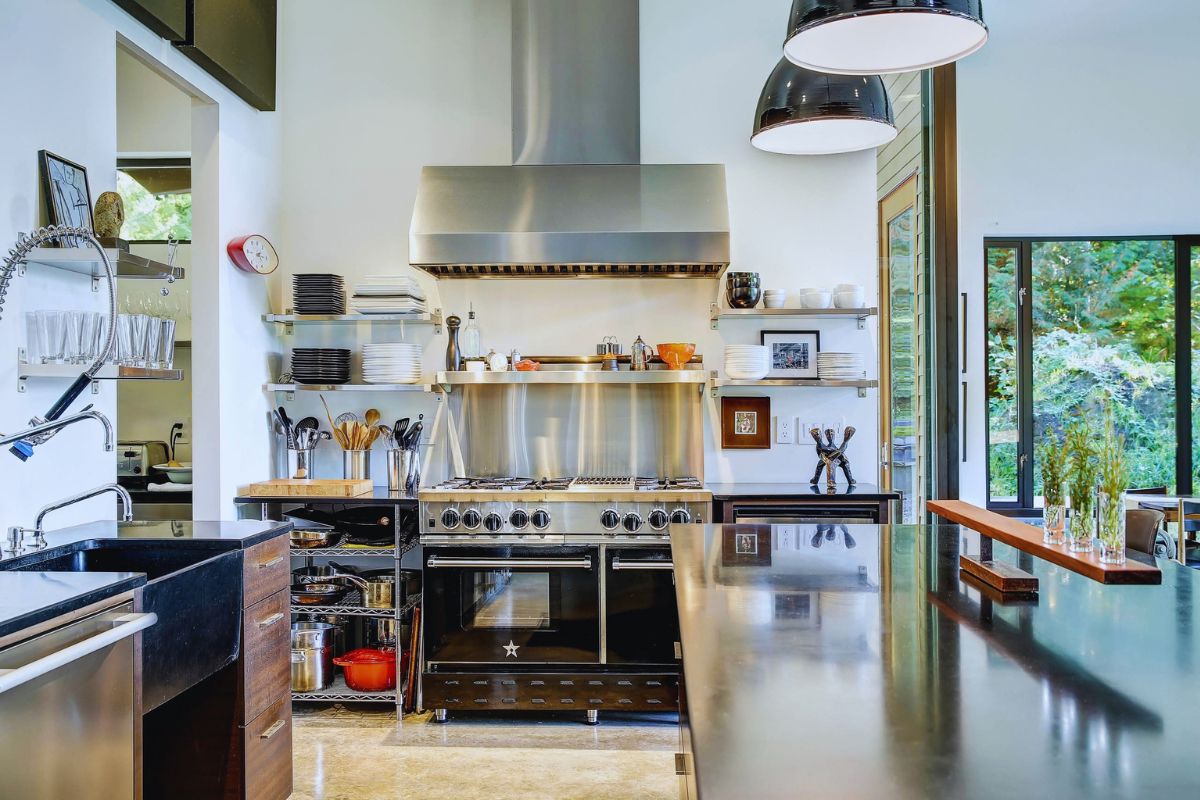
Stainless steel is the backbone of the style. It shows up in appliances, sinks, countertops, backsplashes, and even freestanding prep tables. A brushed finish hides fingerprints and small scratches better than a mirror polish. If a full stainless countertop feels too much like a restaurant, limit it to the range wall or a single prep station.
Concrete
Concrete brings a raw, monolithic feel to countertops, islands, and floors. Poured or precast concrete counters can be tinted in shades of gray or charcoal and finished smooth or slightly textured. Keep in mind that concrete is porous, so it needs a quality sealer and periodic resealing to resist stains from oil, wine, and acidic foods.
Reclaimed and Butcher Block Wood
Wood is what keeps an industrial kitchen from feeling sterile. Reclaimed timber used for open shelves, a butcher block island top, or a rough-sawn ceiling beam adds warmth and history. Darker stains such as walnut or espresso suit the moodier side of the style, while natural oak gives a lighter, more modern loft feel.
Brick, Metal, and Glass
An exposed brick wall is the signature backdrop of a loft kitchen. If you do not have original brick, thin brick veneer is a convincing alternative that adds only a fraction of an inch to the wall. Blackened or powder-coated steel appears in shelving brackets, cabinet frames, and window-style glass partitions, while glass and metal together echo the large factory windows of old warehouses.
Cabinets, Shelving, and Storage
Storage in an industrial kitchen should look sturdy and purposeful. The goal is to mix closed cabinets for the clutter you want to hide with open storage for the pieces you want to show.
Flat-Panel and Metal Cabinetry
Simple flat-panel or slab doors suit the style best. Matte black, charcoal, deep green, and gray are popular finishes, as is natural or stained wood. Metal-faced cabinets or units with a blackened steel frame and wood inserts create a strong workshop look. Avoid ornate raised panels and decorative moldings, which pull the room toward a traditional style.
Open Shelving and Pipe Shelves
Open shelving is almost a requirement in an industrial kitchen. Thick wood planks on black iron pipe brackets or steel brackets are a classic choice. Use them for everyday dishes, glassware, jars, and a few cookbooks. Because open shelves collect dust and grease, place them away from the range hood where possible and keep only frequently used items on display.
Hardware That Looks the Part
Hardware is an easy way to reinforce the style. Look for bar pulls in matte black, gunmetal, or aged brass; cup pulls reminiscent of old file cabinets; or simple leather tab pulls for a softer touch. Keeping all hardware in one or two finishes helps the room feel intentional rather than random.
Countertops, Backsplashes, and Flooring
The surfaces you touch and walk on every day set the tone of the room, so it pays to choose materials that are both durable and true to the style.
Countertop Options
Concrete, stainless steel, and butcher block are the most authentic industrial counters. Quartz in concrete-look or soapstone-look finishes is a lower-maintenance alternative that still reads as industrial. Dark soapstone is another good option, since it develops a natural patina over time and is resistant to heat.
Backsplash Ideas
White or black subway tile laid in a straight stack or classic running bond is a timeless choice. For a bolder look, consider dark gray tile with dark grout, a full sheet of stainless steel behind the range, or extending exposed brick down to the countertop. Brick used as a backsplash should be sealed so it can be wiped clean.
Flooring That Can Take a Beating
Polished or sealed concrete is the most iconic industrial floor, and it pairs well with radiant heating. If concrete is not practical, large-format porcelain tile in a concrete look, dark slate, or wide-plank wood floors with a weathered finish all suit the style. A washable runner in front of the sink adds comfort underfoot.
Lighting for an Industrial Kitchen
Lighting is one of the easiest and most affordable ways to bring industrial character into a kitchen.
Pendant Lights Over the Island
Metal dome pendants, enamel factory shades, and wire cage pendants are classic choices. Hang two or three in a row over an island or peninsula, leaving roughly 30 to 36 inches between the bottom of the fixture and the countertop so they light the work surface without blocking sightlines.
Edison Bulbs and Exposed Fixtures
Vintage-style filament bulbs give off a warm glow that softens metal and concrete. Choose LED versions for efficiency and keep the color temperature around 2700K for a cozy feel. Exposed track lighting or adjustable wall sconces with swing arms also fit the workshop look.
Layering Task and Ambient Light
Decorative pendants alone are rarely enough for safe food prep. Add under-cabinet LED strips or task lights under open shelves, and use recessed or track lighting for general illumination. Dimmers let you shift the mood from a bright workspace to a relaxed dinner setting.
Layout and Functionality
An industrial kitchen should work as hard as it looks. Thoughtful planning makes the difference between a stylish room and a truly usable one.
Open-Plan Layouts
Many industrial kitchens are open to the living and dining areas, just as they were in original lofts. If your kitchen is enclosed, consider removing a non-structural wall or replacing it with a black steel-framed glass partition to borrow light while keeping some separation.
The Island as a Workstation
A large island modeled on a factory workbench or a commercial prep table is a natural focal point. Stainless or butcher block tops, open lower shelves, and metal legs all suit the style. Plan for at least 42 inches of walkway around the island, or about 48 inches if two people often cook at the same time.
Commercial-Style Appliances
A professional-style range with a stainless hood is a strong statement piece. Pot racks, wall-mounted rails with S-hooks, and magnetic knife strips keep tools within reach and add to the working-kitchen look. Choose appliances in a consistent stainless or matte black finish for a cohesive result.
Warming Up the Industrial Kitchen
The most inviting industrial kitchens balance hard, cool materials with warmer elements that make the space feel lived in.
Wood, Leather, and Textiles
Leather or wood bar stools, a vintage wool runner, and linen tea towels instantly soften the room. A reclaimed wood dining table or a butcher block island can serve as the warm anchor among steel and concrete.
Plants and Greenery
Herbs on the windowsill, a trailing pothos on an open shelf, or a potted olive tree in a corner bring life and color to the neutral palette. Terracotta or galvanized metal planters are a perfect match for the style.
Vintage and Salvaged Finds
Old factory carts, school lockers, enamel signs, and salvaged lighting add authentic character. Mixing one or two vintage pieces with new elements helps the kitchen feel collected over time rather than bought all at once.
Bringing Industrial Style to Any Home
You do not need a converted warehouse to enjoy an industrial kitchen. In a small apartment, focus on a few strong elements such as matte black hardware, a pair of cage pendants, and one open shelf. In a suburban home, faux brick, concrete-look quartz, and a steel-framed glass door can bring loft character to a standard layout. For a softer take, blend industrial elements with farmhouse or Scandinavian touches like white walls and light wood.
Conclusion
An industrial style kitchen proves that a hard-working room can also be full of personality. By pairing durable materials such as stainless steel and concrete with warm wood, choosing purposeful open storage, and layering factory-inspired lighting, you can create a kitchen that feels both edgy and welcoming.
Start with the elements that matter most to you, whether that is a statement island, a brick backsplash, or a row of vintage pendants, and build the look gradually. The result is a kitchen with a sense of history that is ready for everyday cooking.
Frequently Asked Questions
More Industrial Style Decor
- Industrial Style: The Exclusive Guide
- Industrial Style Bedroom: Raw Aesthetics and Cozy Comfort
- Industrial Style Living Room: Urban Vibes and Relaxed Appeal
- Industrial Style Bathroom: Utilitarian Elegance and Modern Flair
- Industrial Style Dining Room: Harmonizing Urban Edge and Rustic Flair
- Industrial Style Entryway: Raw Charm with Urban Functionality