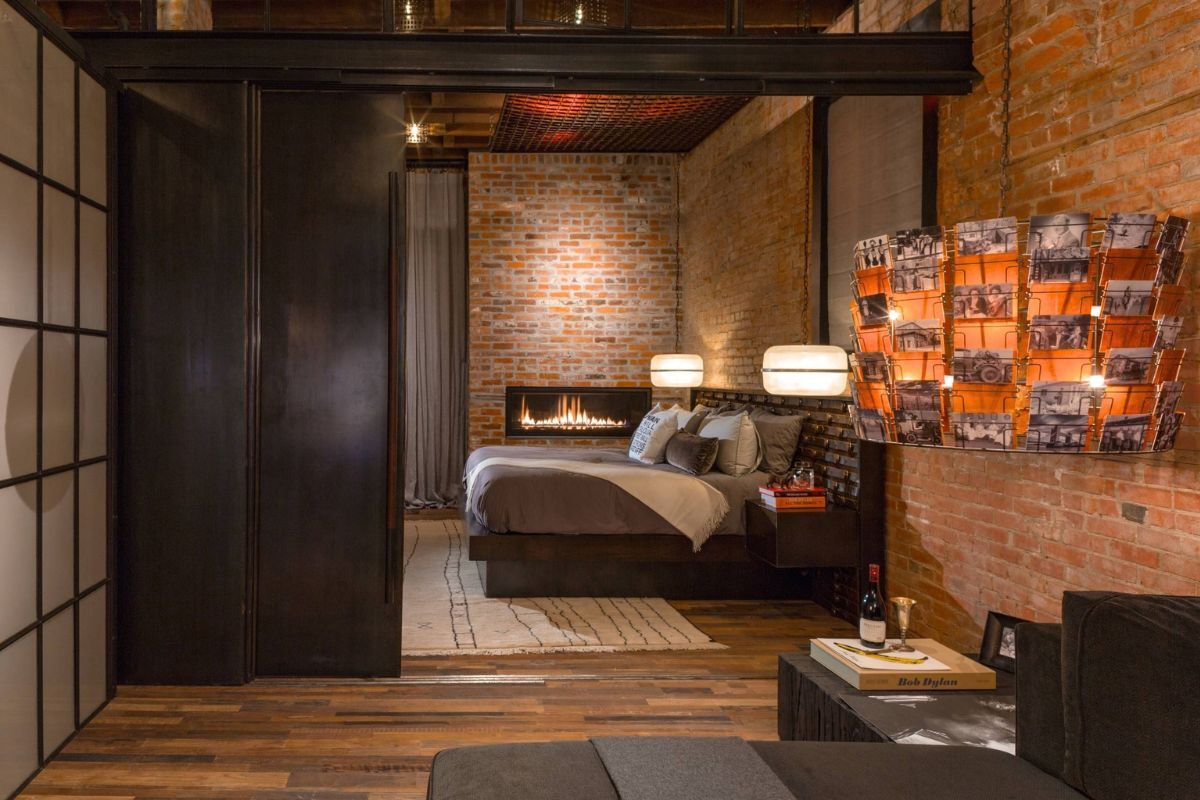
An industrial bedroom feels like a quiet corner of an old warehouse. A low bed with a blackened steel frame sits against an exposed brick wall, dressed in rumpled charcoal linen and a thick wool blanket. A swing-arm wall lamp hangs above a nightstand made from a small metal cabinet, a vintage wool rug softens the concrete floor, and tall windows with slim black frames let in the morning light.
Industrial style comes from converted factories and lofts, where brick, steel, concrete, and timber were left on display instead of covered up. In a bedroom, that raw character needs balancing with comfort, because this is a room for rest. The best industrial bedrooms keep the honest materials and utilitarian shapes but layer them with soft bedding, warm light, and plenty of texture so the space feels calm rather than cold.
Key Takeaways
- Industrial bedrooms combine raw materials like brick, steel, and reclaimed wood with soft, comfortable layers.
- A metal or reclaimed wood bed frame usually anchors the room.
- Charcoal, warm gray, rust, and natural wood tones create a grounded, restful palette.
- Swing-arm wall lamps, warm filament bulbs, and dimmers keep lighting soft.
- Rugs, heavy curtains, and layered bedding stop hard surfaces from feeling cold.
- Walls without real brick can still get industrial character from finishes, hardware, and furniture.
What Makes a Bedroom Industrial
Industrial design grew out of loft conversions in cities such as New York and London, where empty factories and warehouses became homes. Residents left the structure on view, so brick walls, steel beams, ductwork, and concrete floors became part of the decor.
Honest Materials and Visible Structure
The core of the style is showing how things are made. Exposed brick, timber beams, visible bolts and welds, and metal hardware are celebrated rather than hidden. Furniture is sturdy and practical, often with simple lines and little ornament.
Raw Meets Restful
A living room can handle plenty of hard surfaces, but a bedroom needs to feel soft and quiet. The aim is to let one or two raw features stand out, such as a brick wall or a steel bed frame, and surround them with warm textiles and gentle light.
Walls, Floors, and Ceilings
The architecture of the room sets the tone. Few bedrooms come with original factory features, but there are good ways to add them.
Brick and Concrete Walls
A real brick wall behind the bed is the classic industrial backdrop. Clean it gently and seal it with a breathable matte sealer to control dust. Where there is no brick, thin brick veneer, a limewashed brick-effect finish, or a concrete-effect plaster on one wall gives similar texture. Keep the other walls plain, in warm white, soft gray, or charcoal.
Floors That Feel Good Underfoot
Polished concrete looks striking but feels cold in a bedroom. If you have it, cover most of the floor with a large rug. Wide plank wood floors, especially in reclaimed or distressed finishes, are warmer and suit the style just as well.
Exposed Beams and Ductwork
If the ceiling has beams, pipes, or ducts, leave them visible and paint them black or keep their natural finish so they read as an intentional feature. In a standard room, faux wood beams or a single run of black conduit for a pendant can add a similar effect without major work.
Colors and Materials
Industrial bedrooms draw their color mostly from materials, so the palette stays restrained and calming.
A Restful Industrial Palette
Charcoal, warm gray, soft white, and the natural browns of wood and leather form the base. Accents work best in muted, earthy shades. Good pairings include:
- Charcoal walls, oak wood, and rust or cognac leather.
- Soft white walls, exposed brick, and deep navy bedding.
- Warm gray, blackened steel, and olive or moss green textiles.
Mixing Metal and Wood
Pair darker metals, such as black steel or aged iron, with warm reclaimed wood so the room does not feel cold. Small amounts of brass or copper on a lamp, hook, or drawer pull add warmth. Repeat each finish two or three times so the mix looks deliberate.
Choosing the Bed and Furniture
Furniture in an industrial bedroom should be sturdy, functional, and simple, with a few pieces that show their workshop roots.
The Bed
A metal bed frame with a simple grid or pipe-style headboard, a solid reclaimed wood platform bed, or a combination of steel legs and a timber headboard all suit the style. Low platform beds feel modern and calm, while taller metal frames with visible bolts have a more vintage factory character. An upholstered headboard in leather or canvas adds softness without losing the look.
Nightstands and Dressers
Small metal lockers, vintage filing cabinets, stacked crates, or a wood and steel side table make interesting nightstands. For clothes, a reclaimed wood dresser with metal pulls, a vintage apothecary chest, or a steel-framed wardrobe with wood panels works well.
Storage That Keeps the Room Calm
Open shelving and clothing rails suit the industrial look, but too much on display makes a bedroom feel busy. Combine an open steel pipe rail for a few favorite garments with closed storage for everything else. Under-bed drawers, a lidded trunk at the foot of the bed, and wall hooks keep surfaces clear.
Planning the Layout
Industrial bedrooms look best with space around each piece, echoing the open feel of a loft.
Position the Bed as the Focal Point
Place the bed against the strongest feature, usually the brick wall or the wall opposite the door. Leave at least 24 to 30 inches of walking space on each side and at the foot of the bed so the room feels open. In loft-style spaces without full walls, a steel-framed glass partition, a tall open bookcase, or heavy curtains on a ceiling track can screen the sleeping area while still sharing light.
Add a Small Seating or Dressing Zone
If space allows, a leather lounge chair with a floor lamp, or a bench with a wall mirror and hooks, creates a second zone for reading or getting dressed. Keep it simple so the room stays uncluttered.
Industrial Bedroom Lighting
Lighting is where industrial style meets bedroom comfort most directly. Choose fixtures with character, but keep the light itself warm and soft.
Reading and Bedside Lights
Swing-arm wall lamps or adjustable task lamps beside the bed free up nightstand space and give focused light for reading. Metal shades in black, brass, or aged steel suit the style, and plug-in versions avoid rewiring.
Ceiling and Ambient Light
A metal dome pendant, a cage fixture, or a cluster of small pendants can replace a plain ceiling light. Use warm filament LED bulbs around 2200K to 2700K and add a dimmer, since bare bulbs can feel harsh at full brightness. A floor lamp in a corner and a small table lamp add layers for evening.
Softening the Space With Texture
Textiles are what turn an industrial room into a bedroom you want to sleep in. They also absorb sound in rooms with hard brick and concrete surfaces.
Bedding and Throws
Choose washed linen or soft cotton bedding in charcoal, stone, white, or rust. Add a chunky knit or wool blanket, a quilted throw, and a few cushions in canvas, velvet, or leather. Layering several textures makes the bed the softest point in the room.
Rugs and Curtains
A large vintage wool or flatweave rug should extend well beyond the sides of the bed so bare feet land on something warm. Heavy linen or cotton curtains in charcoal or natural tones soften steel-framed windows and block early light. Hang them high and wide to make windows look taller.
Plants and Natural Elements
A snake plant, rubber plant, or trailing pothos in a terracotta or galvanized pot adds life to a room full of metal and brick. Branches in a stoneware vase or a small wooden bowl on the dresser bring in more natural texture.
Art and Personal Touches
Decor in an industrial bedroom works best when it is sparse and meaningful. Black-and-white city photography, architectural prints, or a single large abstract canvas suit brick and concrete walls. Lean art on a picture ledge above the bed for a relaxed feel.
A vintage wall clock, a framed blueprint, or an old metal sign can add character, but limit factory-style objects to one or two so the room does not feel themed. Books, a leather bench, and a few personal objects are often enough.
Making It Work in a Small Bedroom
Industrial style can feel heavy in a compact room, so lighten it carefully. Choose a slim metal bed frame with open legs, wall-mounted lamps, and floating shelves to keep the floor clear. Paint walls a soft white or warm light gray and use dark metal and brick only as accents. A mirror with a thin black frame opposite the window bounces light around and adds a crisp line.
Common Mistakes to Avoid
The most common mistake is too much hard material and too little softness: concrete, metal, and dark walls with thin bedding and no rug create a cold, echoing room. Another is overusing factory-themed decor, which makes the bedroom look like a set rather than a home.
Lighting is a frequent problem too. Relying on one bare-bulb pendant creates glare at night, so add bedside lamps and a dimmer. Finally, avoid clutter on open shelves and rails, since visible mess undermines the clean, utilitarian look.
Conclusion
An industrial bedroom works when raw character and comfort are kept in balance. A brick or concrete feature wall, a steel or reclaimed wood bed, and factory-style lighting provide the edge, while a restrained palette of charcoal, warm gray, and natural wood keeps the room calm.
Layer linen bedding, wool throws, a large rug, heavy curtains, and warm, dimmable light, and the result is a bedroom that feels honest, characterful, and genuinely restful.
Frequently Asked Questions
More Industrial Style Decor
- Industrial Style: The Exclusive Guide
- Industrial Style Living Room: Urban Vibes and Relaxed Appeal
- Industrial Style Kitchen: Functional Design with Urban Edge
- Industrial Style Bathroom: Utilitarian Elegance and Modern Flair
- Industrial Style Dining Room: Harmonizing Urban Edge and Rustic Flair
- Industrial Style Entryway: Raw Charm with Urban Functionality