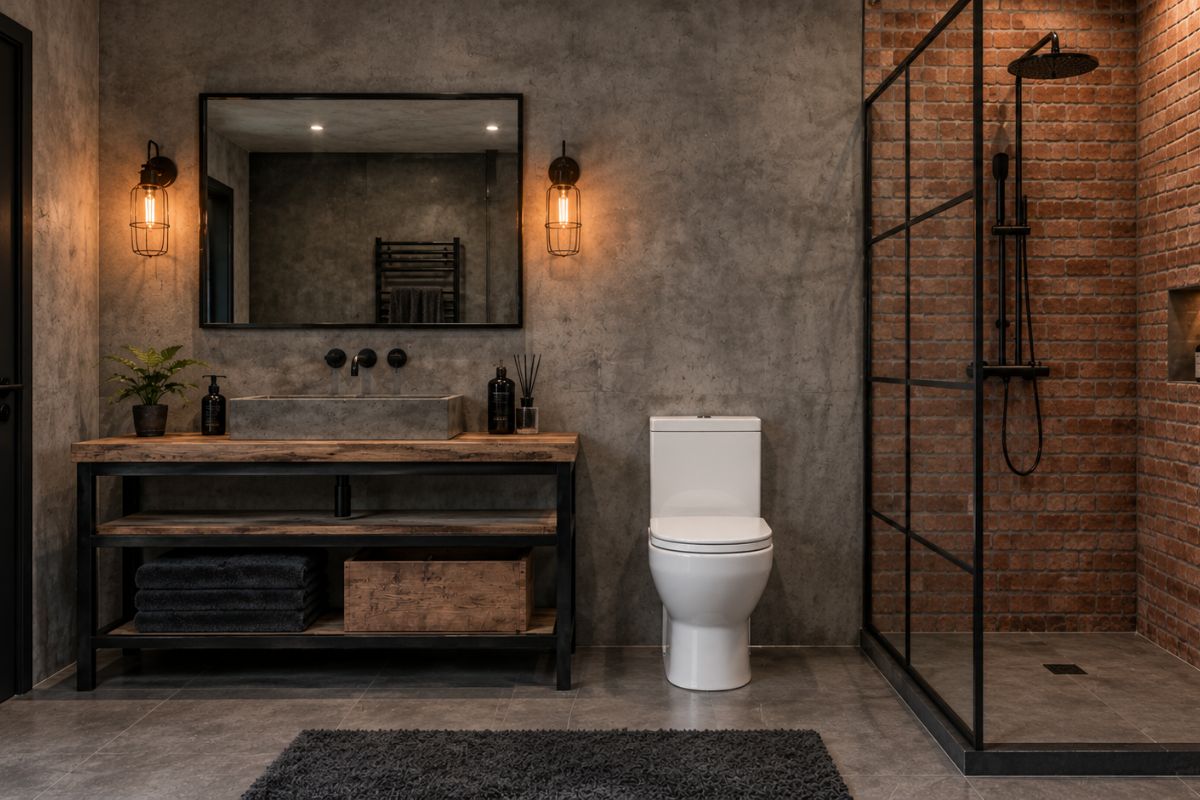
An industrial style bathroom takes the raw, honest materials of old factories and warehouses and turns them into a space for everyday rituals. Exposed pipes, matte black fixtures, concrete surfaces, and subway tile come together to create a bathroom that feels rugged, practical, and surprisingly calm.
Because bathrooms deal with water, steam, and constant use, the durable materials at the heart of industrial design make perfect sense here. The challenge is to balance the hard, utilitarian look with enough warmth and softness that the room still feels like a place to relax. Done well, an industrial bathroom delivers both utilitarian elegance and modern flair.
Key Takeaways
- Industrial bathrooms rely on durable, water-friendly materials such as concrete, tile, metal, and glass.
- Matte black, gunmetal, and brushed brass fixtures with exposed plumbing define the look.
- Steel-framed glass shower screens echo the large factory windows of converted lofts.
- Vanities made from metal frames and reclaimed wood bring a workshop feel with real storage.
- Cage sconces, enamel shades, and warm LED bulbs add character and soften hard surfaces.
- Towels, wood accents, and plants keep the bathroom inviting rather than cold.
Understanding Industrial Bathroom Design
Industrial bathroom design is about celebrating structure and materials rather than hiding them. Instead of concealing plumbing behind walls and covering every surface in polished finishes, it lets pipes, metal, and textures show.
Where the Style Comes From
The industrial look grew out of the loft conversions of the late twentieth century, when former factories and warehouses became homes. Bathrooms in these buildings often had exposed brick, concrete floors, and visible plumbing because there was little budget or desire to hide them. Over time, that make-do aesthetic became a deliberate design choice.
The Core Characteristics
An industrial bathroom typically features a muted palette of gray, black, white, and brown; hard surfaces such as concrete, tile, and stone; metal fixtures in dark or aged finishes; and simple, functional lighting. Shapes are clean and geometric, and decoration comes mostly from texture rather than ornament.
Why It Suits the Bathroom
Many of the materials associated with industrial design are naturally resistant to moisture and easy to clean. Porcelain tile, sealed concrete, glass, and powder-coated metal all handle humidity well. This makes the industrial bathroom both stylish and practical for daily use.
Materials and Surfaces
Choosing the right materials is the foundation of an industrial bathroom. A mix of two or three hard surfaces, plus one warm material, usually gives the most balanced result.
Concrete and Microcement
Concrete brings the raw, monolithic feel that defines the style. It can be used for vanity tops, integrated sinks, floors, and even shower walls. Microcement, a thin cement-based coating, offers a similar look with fewer seams and can be applied over existing surfaces. Both must be properly sealed to resist water, soap, and staining.
Tile Choices
Subway tile is a classic industrial choice, especially in white with dark grout or in black with light grout. Large-format porcelain tiles that imitate concrete or slate create a seamless, modern loft look with fewer grout lines to clean. Hexagon and penny tiles in black, white, or gray add a vintage workshop touch on floors.
Brick and Metal Accents
An exposed brick wall instantly signals loft style. In a bathroom, keep brick away from direct water spray and seal it well, or use brick-look porcelain tile in wet zones. Metal accents in blackened steel, iron, or aged brass appear in mirror frames, shelving, towel rails, and shower screens.
Wood for Warmth
Wood softens the industrial palette and prevents the room from feeling too clinical. Teak and other naturally water-resistant woods work well for vanity tops, bath mats, and shelves. Reclaimed timber with a sealed finish adds history and character.
Fixtures and Plumbing
Fixtures are where industrial style really shines in the bathroom. Visible plumbing and bold finishes turn functional elements into design features.
Exposed Pipe Shower Systems
An exposed shower system with visible pipes and a large rainfall head is one of the most recognizable industrial bathroom features. Matte black and brushed brass are the most popular finishes, while chrome and nickel give a cleaner, more modern take.
Faucets and Hardware
Look for faucets with simple, geometric forms, cross handles, or lever handles that recall old factory valves. Wall-mounted faucets keep the vanity top clear and emphasize the exposed-plumbing look. Coordinate towel bars, hooks, and toilet paper holders in the same finish for a cohesive effect.
Sinks and Tubs
Concrete vessel sinks, trough sinks, and simple rectangular undermount basins all suit the style. A freestanding tub in white, black, or a raw metal finish can be a dramatic focal point if space allows. Clawfoot tubs painted matte black are another option that blends vintage and industrial character.
Vanities and Storage
Storage in an industrial bathroom should look sturdy and purposeful while keeping daily essentials organized.
Metal-Frame Vanities
A vanity built from a black steel frame with a wood or concrete top is a hallmark of the style. Open lower shelves can hold baskets and rolled towels, while drawers keep smaller items out of sight. Wall-mounted vanities create a sense of space and make floor cleaning easier.
Open Shelving and Pipe Shelves
Pipe shelving with wood planks offers practical storage for towels, toiletries, and decor. Place shelves away from the shower spray, and use lidded containers or glass jars to keep items tidy and protected from moisture.
Mirrors and Medicine Cabinets
Round or rectangular mirrors with thin metal frames suit the style, as do vintage factory-window mirrors with grid patterns. A recessed medicine cabinet with a mirrored door adds hidden storage without breaking the clean lines.
The Steel-Framed Shower
Few elements say industrial as clearly as a shower enclosed by glass set in thin black steel frames. This detail references the large divided-light windows of old factories.
Choosing a Shower Screen
Fixed panels, hinged doors, and sliding doors are all available with grid-style frames. A walk-in shower with a single fixed panel is easy to clean and feels open. Clear glass keeps the bathroom bright, while reeded or frosted glass adds privacy.
Walk-In and Curbless Showers
Curbless showers with a linear drain create a seamless floor from the bathroom into the shower, which suits the open, loft-like feel. Make sure the floor is properly sloped and waterproofed, which is a job best left to experienced installers.
Color Palette
Industrial bathrooms favor a restrained palette that lets materials take center stage.
Neutral Foundations
Charcoal, graphite, concrete gray, black, and crisp white form the base of most industrial bathrooms. These colors highlight texture and give the room a calm, grounded feeling.
Accent Colors
Deep green, navy, rust, and ochre work well as accents on a vanity, a feature wall, or in towels and accessories. Warm metal finishes such as copper and brass also act as accents against a cool gray palette.
Lighting the Industrial Bathroom
Good lighting is essential for both function and atmosphere in the bathroom.
Vanity Lighting
Wall sconces on either side of the mirror provide even, shadow-free light for grooming. Cage sconces, glass globe sconces, and simple metal shades all suit the industrial look. Make sure any fixture used near water is rated for damp or wet locations.
Ambient and Accent Lighting
A pendant light or a small industrial chandelier can serve as a statement piece in a larger bathroom, as long as it is installed according to local electrical codes for wet areas. LED strips under a floating vanity or recessed lights in the ceiling add soft background light. Warm bulbs around 2700K to 3000K help balance cool concrete and tile.
Making It Warm and Relaxing
An industrial bathroom should still feel like a retreat at the end of a long day.
Textiles and Towels
Plush towels in cream, charcoal, or rust instantly soften the space. A Turkish cotton towel, a waffle robe on a metal hook, and a cotton or teak bath mat all add comfort and texture.
Plants
Humidity-loving plants such as ferns, pothos, and snake plants thrive in bathrooms with some natural light. Hang them from the ceiling in a metal planter or place them on an open shelf.
Personal Touches
Vintage apothecary bottles, a framed black-and-white photograph, or a salvaged metal stool used as a side table add personality. Keep accessories minimal so the materials remain the stars of the room.
Industrial Bathroom Ideas for Small Spaces
Even a compact bathroom can carry the industrial look. A wall-mounted metal-frame vanity, a single black steel-framed shower panel, and dark grout with white subway tile go a long way. Large-format tiles reduce visual clutter, and a round mirror with a thin metal frame keeps the room feeling open. If a full renovation is not possible, swapping out faucets, lights, and towel bars for matte black or aged brass versions can transform the space on a modest budget.
Conclusion
An industrial style bathroom combines rugged, honest materials with smart, functional design. Concrete, tile, metal, and glass handle daily moisture with ease, while exposed fixtures and steel-framed details give the room a distinctive urban character.
The key is balance. Pair cool, hard surfaces with warm wood, soft textiles, greenery, and warm lighting, and your bathroom will feel both utilitarian and elegant, a space that is as relaxing as it is practical.
Frequently Asked Questions
More Industrial Style Decor
- Industrial Style: The Exclusive Guide
- Industrial Style Bedroom: Raw Aesthetics and Cozy Comfort
- Industrial Style Living Room: Urban Vibes and Relaxed Appeal
- Industrial Style Kitchen: Functional Design with Urban Edge
- Industrial Style Dining Room: Harmonizing Urban Edge and Rustic Flair
- Industrial Style Entryway: Raw Charm with Urban Functionality