An industrial style dining room brings together two very different moods: the hard-edged character of a converted warehouse and the warmth of a table where people gather to share food. Steel, concrete, and brick meet reclaimed wood, leather, and candlelight, creating a space that feels both urban and inviting.
This balance between urban edge and rustic flair is what makes the industrial dining room so appealing. It is relaxed enough for everyday family meals, yet distinctive enough to make dinner with friends feel like an evening at a favorite neighborhood restaurant.
Key Takeaways
- Industrial dining rooms pair raw materials like metal, concrete, and brick with warm reclaimed wood.
- A solid wood or wood-and-steel dining table is the natural centerpiece of the room.
- Mixing chair styles, such as metal café chairs with leather or wood seats, adds authentic character.
- Oversized pendants, linear chandeliers, and Edison bulbs set the mood.
- A neutral palette of charcoal, black, gray, and warm browns keeps the look cohesive.
- Textiles, plants, and candlelight soften the hard edges and make the room welcoming.
What Makes a Dining Room Industrial
An industrial dining room is defined by its honest materials and its sense of history. Rather than polished perfection, it celebrates texture, patina, and the visible structure of a building.
Inspired by Lofts and Workshops
The style traces its roots to the factories and warehouses that were converted into homes, studios, and restaurants. These spaces had high ceilings, large windows, brick walls, and concrete floors. Dining areas were often set within open-plan lofts, defined by a long table and a few dramatic light fixtures rather than walls.
Urban Edge Meets Rustic Warmth
A purely industrial room can feel cold, which is why the most successful industrial dining rooms borrow from rustic design. Reclaimed timber, wrought iron, and natural fibers bring warmth to steel and concrete. The result is a space that feels lived in and welcoming while keeping its urban attitude.
The Signature Elements
Most industrial dining rooms share a few common features: a substantial wood table, metal accents in black or aged finishes, factory-style lighting, exposed architectural details, and a restrained color palette. Decoration is kept simple, with character coming from materials and a few well-chosen vintage pieces.
Choosing the Dining Table
The dining table is the heart of the room and sets the tone for everything else.
Reclaimed Wood Tables
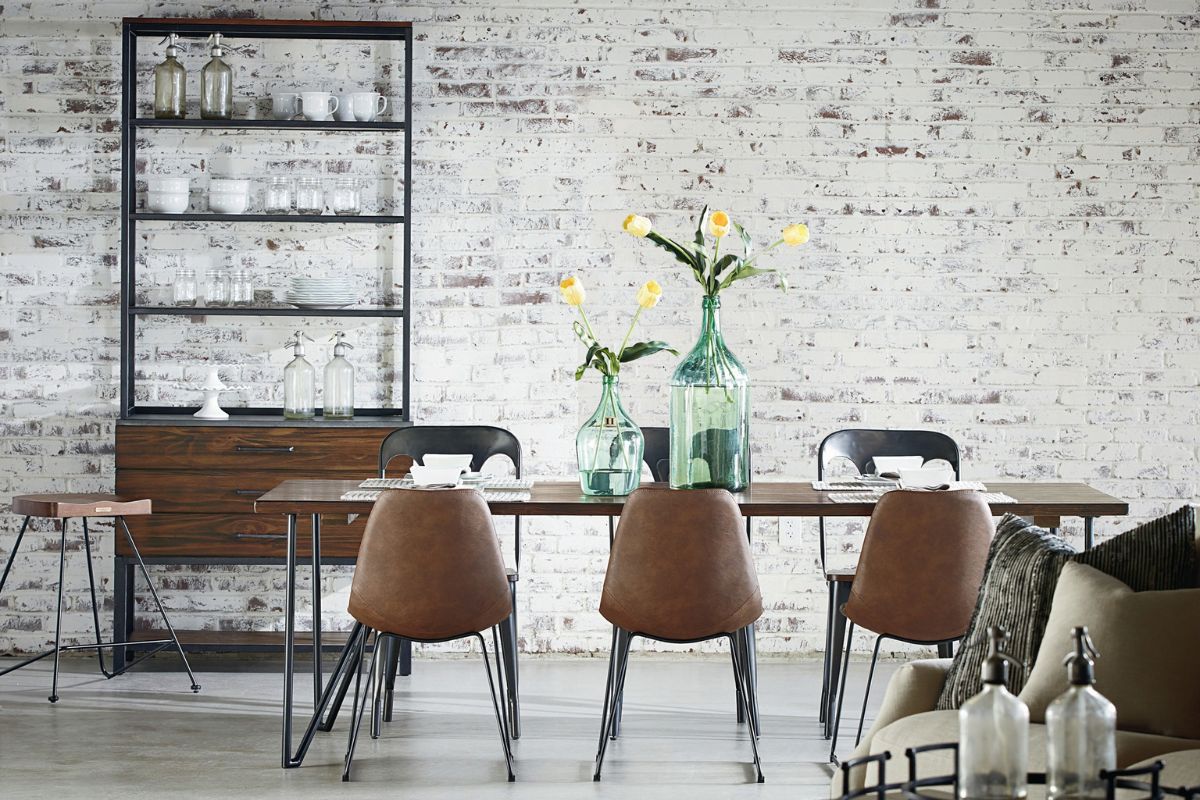
A thick reclaimed wood tabletop shows knots, nail holes, and saw marks that tell the story of its past life. Paired with black steel legs, trestle bases, or hairpin legs, it becomes the defining piece of an industrial dining room. A matte or oiled finish highlights the grain without looking glossy.
Metal, Concrete, and Mixed-Material Tables
For a more modern industrial look, consider a concrete or concrete-look top on a steel base, or a table with a zinc or galvanized metal top. These materials are durable and develop an attractive patina over time. Glass tops on metal frames can help a smaller room feel more open.
Size and Shape
Rectangular farmhouse-style tables suit long, open-plan spaces and make it easy to seat large groups. Round tables on a pedestal base work well in square rooms or smaller dining nooks. As a general guide, allow about 24 inches of table width per person and at least 36 inches between the table edge and the wall or nearest furniture so chairs can be pulled out comfortably.
Dining Chairs and Seating
Seating is one of the best opportunities to add personality to an industrial dining room.
Metal Café Chairs
Stackable metal chairs inspired by classic French café designs are an industrial icon. They come in raw steel, matte black, and a range of colors, and their slim profile keeps the room feeling light. Add seat cushions for longer dinners.
Leather and Wood Seating
Leather dining chairs in cognac, tan, or dark brown bring warmth and comfort. Wood chairs with metal frames, or bentwood designs, also complement a reclaimed table. Aged leather in particular develops a patina that suits the lived-in look of the style.
Benches and Mixed Seating
A long wood bench on one side of the table is a practical, casual choice that seats more people in less space. Mixing chair styles, such as a bench on one side, metal chairs on the other, and upholstered host chairs at each end, creates a collected, relaxed feel that works especially well with industrial design.
Lighting the Industrial Dining Room
Lighting does more than illuminate the table. In an industrial dining room, it is often the main decorative feature.
Statement Pendants
Large metal dome pendants, enamel factory shades, and clusters of glass globe pendants make a dramatic statement above the table. Hang the bottom of the fixture about 30 to 36 inches above the tabletop so it lights the table without blocking views across it.
Linear Chandeliers
A linear chandelier with several exposed bulbs or a pipe-style fixture works well over long rectangular tables. Choose a fixture roughly half to two-thirds the length of the table so the light is balanced.
Edison Bulbs and Dimmers
Vintage-style LED filament bulbs give off a warm, amber glow that is flattering for dining. Install a dimmer so you can switch from bright everyday light to a softer, more intimate atmosphere in the evening. Candles on the table complete the effect.
Walls, Floors, and Architectural Details
The shell of the room plays a big role in establishing industrial character.
Exposed Brick and Concrete Walls
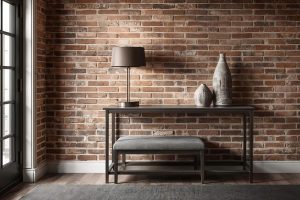
An original brick wall is the ultimate industrial backdrop. If you do not have one, brick veneer or brick-look wallpaper can create a similar effect. Concrete-look plaster or limewash paint adds subtle texture with a softer, more modern feel.
Beams, Ducts, and Pipes
Exposed ceiling beams, ductwork, and pipes are prized features in industrial interiors. If yours are hidden, faux wood beams or painted exposed conduit can bring a similar look. Painting ducts and ceilings black or dark gray helps them recede while keeping the raw character.
Flooring
Polished concrete, wide-plank distressed wood, and dark tile all suit the style. A large rug under the table, such as a vintage-style wool rug or a flat-weave in muted tones, adds softness and helps absorb sound in rooms with hard surfaces. Choose a rug that extends at least 24 inches beyond the table on all sides so chairs stay on it when pulled out.
Windows
Large windows with black frames echo the steel windows of old factories. Keep window treatments minimal with simple linen panels, roller shades, or no treatments at all if privacy allows, so plenty of light reaches the table.
Color Palette and Materials
A restrained color scheme lets the textures of an industrial dining room take center stage.
Neutral Base
Charcoal, black, warm gray, and white form the backdrop, while browns from wood, leather, and brick add warmth. This combination feels grounded and timeless.
Accent Colors
Deep green, navy, burnt orange, and mustard are effective accent colors in industrial spaces. Use them on an accent wall, upholstered chairs, or in artwork and table linens.
Metal Finishes
Black iron and steel are the backbone of the style, but aged brass, copper, and bronze add warmth and a touch of sophistication. Sticking to two metal finishes keeps the room cohesive.
Storage and Display
Industrial dining rooms need practical storage for dishes, linens, and serveware.
Sideboards and Buffets
A sideboard in reclaimed wood with metal hardware, or a metal cabinet with glass doors, provides storage and a surface for serving. Vintage pieces such as old shop counters, apothecary cabinets, or factory carts make memorable alternatives.
Open Shelving and Display Cabinets
Open metal and wood shelving units can display glassware, ceramics, books, and plants. A metal-framed glass cabinet shows off a collection while protecting it from dust.
Decor and Finishing Touches
The right accessories turn an industrial dining room from a showroom into a home.
Art and Wall Decor
Large-scale black-and-white photography, vintage maps, salvaged signs, or abstract art in muted tones suit the industrial look. An oversized mirror with a metal frame reflects light and adds depth.
Table Styling
Keep tabletop decor simple. A runner in linen or jute, a few candles in metal holders, and a low arrangement of greenery or dried branches are enough. Choose stoneware plates and simple glassware for everyday use.
Plants
Large potted plants such as fiddle leaf figs, olive trees, or rubber plants bring life to a room full of hard materials. Galvanized metal, concrete, and terracotta planters fit the style perfectly.
Industrial Dining in Open-Plan and Small Spaces
In open-plan homes, a large rug and a statement light fixture help define the dining zone without walls. A black steel-framed glass partition can separate the dining area from the kitchen while keeping sightlines open. In smaller spaces, choose a round table on a pedestal base, slim metal chairs, and wall-mounted shelving instead of a bulky sideboard. Built-in banquette seating along a wall can also save space and add a cozy, restaurant-style feel.
Conclusion
An industrial style dining room proves that raw materials and warm hospitality can live side by side. By pairing a solid wood table with metal accents, choosing a mix of seating, and layering dramatic lighting, you can create a dining space with plenty of character.
Keep the palette restrained, let materials like brick, steel, and reclaimed wood tell their story, and soften the room with textiles, plants, and candlelight. The result is a dining room that harmonizes urban edge with rustic flair, ready for both everyday meals and memorable gatherings.
Frequently Asked Questions
More Industrial Style Decor
- Industrial Style: The Exclusive Guide
- Industrial Style Bedroom: Raw Aesthetics and Cozy Comfort
- Industrial Style Living Room: Urban Vibes and Relaxed Appeal
- Industrial Style Kitchen: Functional Design with Urban Edge
- Industrial Style Bathroom: Utilitarian Elegance and Modern Flair
- Industrial Style Entryway: Raw Charm with Urban Functionality