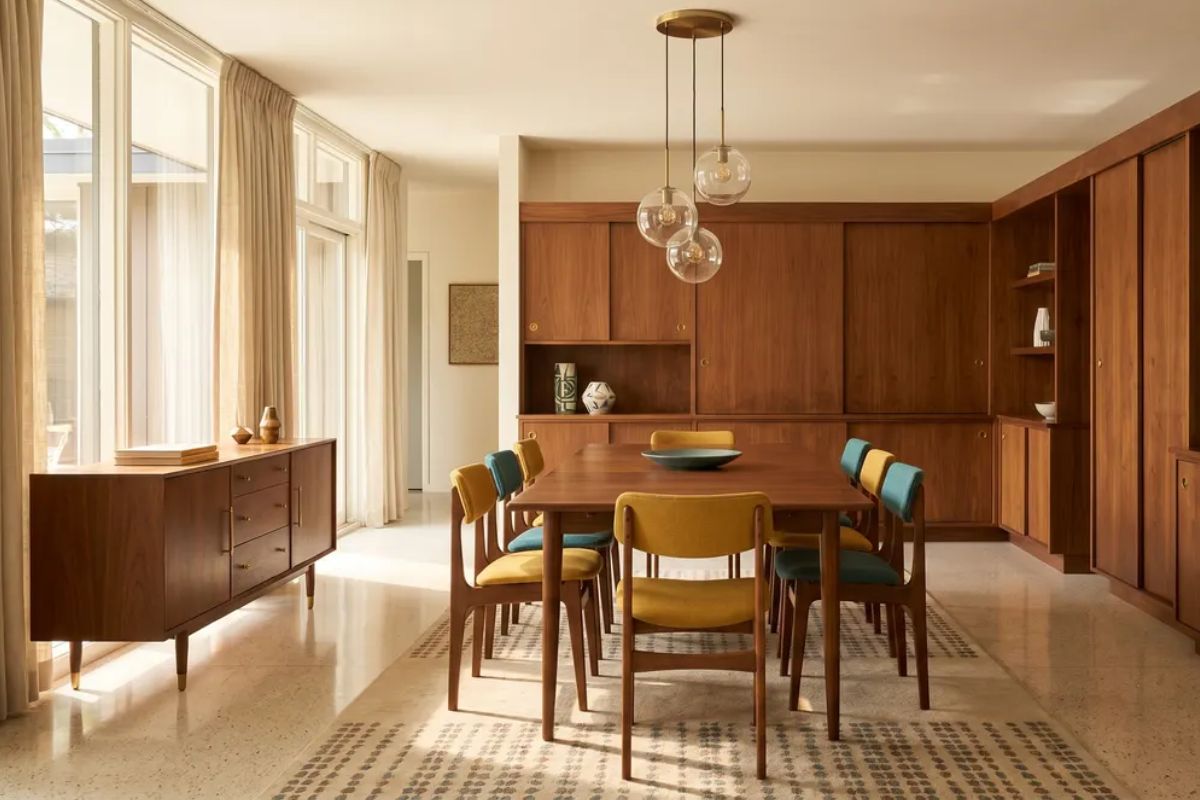
A mid-century modern dining room is warm, low-slung, and full of graceful shapes. Picture an oval walnut table on tapered legs, molded shell chairs in mustard and olive, a long teak sideboard under a large abstract print, and a brass globe pendant glowing over the table. Light pours in from a wide window, and nothing in the room feels fussy or overdone.
The style grew out of the decades after the Second World War, when designers embraced new materials, open floor plans, and furniture that was meant to be used every day. In the dining room, that means honest wood, sculptural seating, a clear focal point over the table, and enough open space for the furniture shapes to stand out. It is retro in spirit but easy to live with, which is why it still suits modern homes so well.
Key Takeaways
- Mid-century modern dining rooms pair warm wood with clean lines and organic, curved shapes.
- A walnut or teak table, sculptural chairs, and a long credenza form the core of the room.
- Earthy accent colors such as mustard, olive, burnt orange, and teal sit against warm neutrals.
- A statement pendant hung low over the table is the room’s main focal point.
- Mixing a few vintage finds with quality new pieces keeps the look authentic but practical.
- Leaving open space around the furniture lets the silhouettes do the decorating.
What Defines the Mid-Century Dining Look
Before buying anything, it helps to know which details make a dining room read as mid-century rather than simply modern.
Clean Lines With Soft Curves
Mid-century furniture is simple in outline but rarely boxy. Look for rounded table corners, splayed and tapered legs, gently curved chair backs, and oval or round tops. These soft curves keep the clean lines from feeling stark.
Furniture That Sits Low and Light
Pieces from this era tend to be lower and lighter in visual weight than traditional dining sets. Credenzas sit close to the floor, chairs often have open frames, and tables rest on slim legs or a single pedestal. The result is a room that feels airy even when it is fully furnished.
A Link to the Outdoors
Many mid-century homes were designed with large windows and sliding doors that opened the dining area to the garden. Even in an ordinary apartment, keeping windows uncovered, using natural wood, and adding a large leafy plant echo that indoor-outdoor feeling.
Choosing the Dining Table
The table sets the tone for everything else in the room, so it deserves the most thought.
Shapes and Bases
Rectangular tables with rounded corners suit long rooms and larger families. Round and oval tables, especially on a single tulip-style pedestal base, are ideal for smaller spaces because they remove leg clutter and make it easy to squeeze in an extra chair. Extendable tables with butterfly leaves were common in the era and are still practical for hosting.
Wood and Surface Options
Walnut and teak are the classic choices, with rich grain and a warm brown tone. Oak and ash give a lighter, more Scandinavian-leaning version of the style. White laminate or marble tops on a pedestal base offer a sleek alternative and pair well with wood chairs.
Sizing It Right
Allow about 24 inches of table edge per diner and at least 36 inches between the table and the nearest wall or sideboard so chairs can slide back comfortably. A table that is too large for the room undermines the light, open feel the style depends on.
Chairs With Sculptural Character
Dining chairs are where mid-century design really shows its personality.
Classic Chair Types
Molded plastic or fiberglass shell chairs on wood dowel or metal legs are among the most recognizable silhouettes. Wishbone-style chairs with woven paper cord seats, bentwood chairs, and upholstered chairs with tapered legs all fit the style as well. Choose one shape and repeat it for a calm look, or use two coordinating designs.
Mixing Seating Thoughtfully
A popular approach is to place matching side chairs along the length of the table and two different armchairs at the ends. Another is a built-in or freestanding bench on one side, which works well with children. Keep at least one element consistent, such as leg finish or seat color, so the mix looks intentional.
Upholstery and Comfort
Wool, bouclé, tweed, and leather are all at home in this style. For families, choose performance fabrics or removable seat pads in a tight weave that can be wiped or cleaned. Seat heights of 17 to 19 inches work with standard 29 to 30 inch tables.
Sideboards, Credenzas, and Storage
A long, low storage piece is almost essential in a mid-century dining room. It holds serving dishes, linens, and glassware while giving the wall a strong horizontal line.
Picking the Right Piece
Look for sliding doors, recessed or carved finger pulls, and tapered legs. A credenza about 16 to 20 inches deep fits most rooms without crowding the walkway. Teak and walnut veneers on a solid frame are typical of the era.
Styling the Top
Keep the surface edited. A table lamp with a ceramic base, a stack of design books, a sculptural vase, and a single piece of art or a sunburst mirror above is plenty. Group items in odd numbers and vary their heights.
Extra Storage Ideas
- A wall-mounted shelving system with wood shelves and slim metal rails for cookbooks and ceramics.
- A bar cart in brass or walnut for glassware and drinks.
- A glass-front hutch with low legs to show off colorful dishware.
A Retro Color Palette That Still Feels Fresh
Color is one of the easiest ways to signal the era without overdoing it.
Warm Neutrals as a Base
Off-white, warm greige, and soft putty walls let wood tones glow. A darker wall in charcoal, deep green, or navy behind the sideboard adds drama and makes walnut look richer.
Earthy Accent Pairings
Classic combinations include mustard and teal, olive and burnt orange, and rust and cream. Use these colors on chair seats, a rug, artwork, or pottery rather than on every wall. A good rule is one main accent color and one supporting color.
Pattern in Small Doses
Geometric rugs, atomic or starburst motifs, and abstract art add personality. Pick one patterned element as the hero and keep the rest solid.
Lighting, Windows, and Rugs
Lighting is one of the strongest style signals in a mid-century dining room.
Statement Pendants
Globe pendants in opal glass, multi-arm brass fixtures, bubble lamps, and wide dome shades in enamel or wood veneer all suit the style. Hang the fixture so its bottom sits about 30 to 36 inches above the tabletop, and choose a width roughly half to two-thirds the width of the table.
Supporting Light
A table lamp on the credenza, a slim arc or tripod floor lamp in a corner, or a pair of wall sconces adds a second layer for evening meals. Put the main pendant on a dimmer and use warm white bulbs around 2700K for a soft glow.
Windows and Natural Light
Keep window treatments simple so daylight reaches the table. Linen or cotton panels in an off-white or soft mustard, hung high and wide on a slim rod, frame the view without blocking it. Woven wood shades or plain roller blinds add privacy in a street-facing room while keeping the clean, horizontal lines of the era.
Rugs Under the Table
A rug grounds the dining set and softens echo on hard floors. Choose a low-pile wool or flatweave in a simple geometric pattern, and size it so chairs stay on the rug when pulled out, usually about 24 inches beyond the table edge on every side.
Mixing Vintage and New Pieces
Very few mid-century dining rooms are fully original, and they do not need to be.
Where Vintage Shines
Credenzas, sideboards, and solid wood tables are often worth buying secondhand because they were built to last. Check for stable joints, smooth drawer runners, and veneer that is not lifting. Minor surface wear can often be improved with cleaning and a quality furniture oil.
Where New Makes Sense
Chairs take the most daily stress, so new or well-restored seating is often the more practical choice. Lighting is another area where new fixtures make sense, since old wiring may need replacing before use.
Updating Without Losing Character
Reupholster tired seats in a period-appropriate fabric, swap broken pulls for matching replacements, and add felt pads under legs to protect floors. Avoid painting good walnut or teak, as the natural wood is central to the look.
Making It Work in Smaller Spaces
Mid-century design suits compact dining areas because of its light, leggy furniture. A round pedestal table with three or four shell chairs fits neatly into a corner or kitchen nook. A wall-mounted shelf can stand in for a full credenza, and a single pendant defines the dining zone in an open plan.
In rentals, use a plug-in pendant or a swag hook instead of rewiring, lean a large framed print rather than drilling, and bring in color through chair cushions and a rug that can move with you.
Common Mistakes to Avoid
- Buying a matching set from one collection, which can make the room feel like a showroom instead of a collected space.
- Using too many retro colors at once, which pushes the look toward costume rather than classic.
- Choosing a heavy, oversized table that hides the slim legs and open space the style relies on.
- Hanging the pendant too high, which weakens the focal point and casts glare.
Conclusion
A mid-century modern dining room comes together with a few strong pieces: a warm wood table, sculptural chairs, a long low credenza, and a statement light hung over the table. Earthy accent colors and a little geometric pattern add personality.
Keep the room edited, mix vintage and new where each makes sense, and let the shapes breathe. The result is a dining space that feels retro, relaxed, and ready for everyday meals and long dinners alike.
Frequently Asked Questions
More Mid-Century Modern Style Decor
- Mid-Century Modern Style: The Complete Guide
- Mid-Century Modern Style Bedroom: Iconic Sleep Sanctuary
- Mid-Century Modern Style Living Room: Timeless Elegance
- Mid-Century Modern Kitchen: Stylish Culinary Spaces
- Mid-Century Modern Style Bathroom: Retro Charm in the Bath