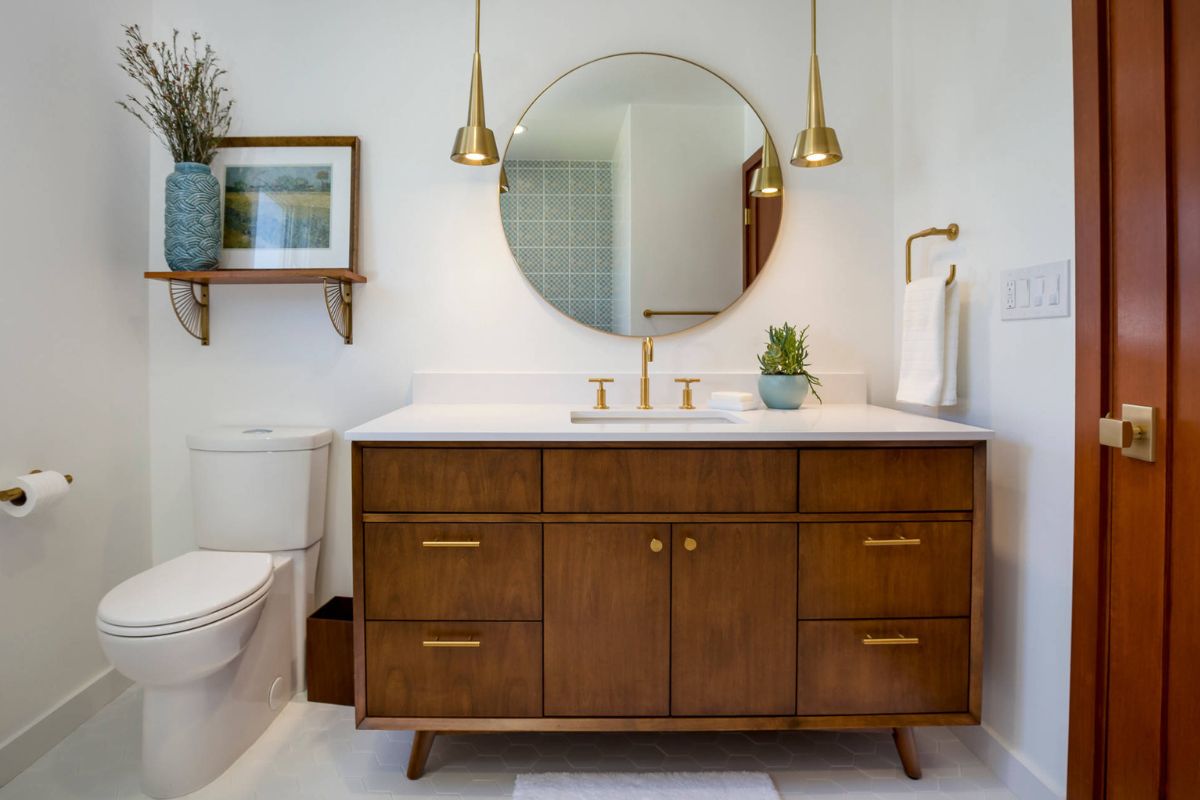
A mid-century modern bathroom feels bright, cheerful, and neatly ordered. A floating walnut vanity hovers above a terrazzo floor, a wall of glossy aqua tile wraps the tub, a round mirror hangs over a simple white sink, and a pair of opal glass sconces casts a warm glow. Everything has a clear place, and a few retro colors give the room its personality.
In the decades after the Second World War, bathrooms became more colorful and more practical at the same time. Manufacturers offered fixtures in pastel shades, tile came in playful patterns, and built-in storage replaced fussy freestanding pieces. A mid-century bathroom today borrows that optimism and those clean shapes while using modern plumbing, ventilation, and waterproofing.
Key Takeaways
- Mid-century bathrooms combine warm wood, clean lines, and cheerful retro color.
- A floating or leggy wood vanity is the signature piece of furniture.
- Small mosaic, square, and geometric tiles in colors like aqua, pink, mint, and mustard set the era.
- Round or pill-shaped mirrors and globe or cone lighting add a period silhouette.
- Terrazzo, penny tile, and warm brass or chrome finishes ground the look.
- Modern plumbing and moisture-resistant materials keep the retro style easy to live with.
The Look in a Few Words
Before choosing tile or fixtures, it helps to picture what makes a bathroom read as mid-century.
Simple Shapes, Friendly Curves
Mid-century bathrooms use straight horizontal lines on vanities and tile, softened by rounded mirrors, curved light shades, and radiused countertop corners. The balance between crisp and soft is what keeps the style from feeling cold.
Color Used With Confidence
This was the era of pink, mint, and turquoise bathrooms. Color often appeared on tile, fixtures, and sometimes even the tub. Today a single strong color, used on tile or a vanity, captures the spirit without overwhelming the room.
Built-In Practicality
Recessed medicine cabinets, tiled niches, wall-hung vanities, and integrated shelves kept bathrooms tidy. That focus on built-in storage still makes small bathrooms work well.
The Vanity as Centerpiece
In most mid-century bathrooms, the vanity is the piece that carries the style.
Floating Wood Vanities
A wall-mounted vanity in walnut, teak, or a warm oak veneer is the most recognizable choice. Slab doors, horizontal grain, and recessed finger pulls or slim bar handles keep the front clean. Leaving the floor visible underneath makes a small bathroom feel larger and simplifies cleaning.
Leggy and Repurposed Options
A vanity on tapered legs gives a furniture-like look closer to a sideboard. Some people convert a vintage dresser or credenza into a vanity, which works if the wood is sealed with a water-resistant finish and the drawers are adjusted around the plumbing.
Countertops and Sinks
White quartz, terrazzo, and solid surface countertops suit the style. Undermount rectangular sinks keep lines crisp, while a simple round or oval vessel sink adds a softer note. In very small rooms, a wall-hung sink with a slim shelf below is enough.
Tile, Floors, and Walls
Tile does more to signal the era than almost anything else in the bathroom.
Wall Tile Choices
Glossy 4 by 4 inch square tiles, vertical stacked rectangles, and small mosaic sheets all look authentic. Aqua, mint, blush pink, butter yellow, and soft gray are period colors, while white with a colored band near the top is a subtler option. Matching grout to the tile color keeps the surface calm.
Floors With Pattern
Penny round tile, small hexagons, terrazzo, and two-color mosaic patterns are classic floor choices. Large terrazzo-look porcelain tiles offer the speckled look with fewer grout lines and easier cleaning. Choose a slip-resistant finish for wet areas.
Paint and Wallpaper
Above the tile line, painted walls in warm white or a pale version of the tile color keep the room fresh. Moisture-resistant wallpaper with a starburst, atomic, or abstract leaf print works well on a single wall away from the shower, provided the room has good ventilation.
Color Pairings for a Retro Bath
Picking a color scheme early makes every later decision easier.
Classic Pairings
- Aqua tile with walnut, white, and chrome for a cool, breezy look.
- Blush pink with charcoal, white, and brass for a warmer, more playful room.
- Mint green with cream, oak, and black accents for a soft, garden-like feel.
- Mustard yellow with gray, white, and walnut for an earthy, grounded scheme.
Modern Takes
For a calmer version, keep tile white or soft gray and introduce color through the vanity, a painted door, towels, or a bath mat. Deep green or navy painted walls with walnut and brass give a moody, contemporary interpretation that still reads as mid-century.
Mirrors and Lighting
The right mirror and lights instantly suggest the era.
Mirror Shapes
Round, oval, and pill-shaped mirrors with thin metal or wood frames are typical. A frameless round mirror over a walnut vanity is simple and striking. For storage, a recessed medicine cabinet with a mirrored door keeps toiletries close without cluttering the counter.
Light Fixtures
Opal glass globes, cone-shaped metal shades, and linear bars with frosted glass all suit the style. Mount sconces on either side of the mirror at roughly eye level for even, shadow-free light. Use damp-rated or wet-rated fixtures according to their location and choose warm white bulbs.
Ceiling and Ventilation
A simple flush-mount globe or a few recessed lights provide general lighting. A quiet exhaust fan sized to the room protects wood vanities, wallpaper, and grout from moisture.
Fixtures and Hardware
Faucets, tubs, and toilets complete the look and need to perform every day.
Faucets and Finishes
Polished chrome is the most authentic finish, while brushed brass and matte black give a more current twist. Look for single-lever or cross-handle faucets with simple, rounded shapes. Keep all exposed metal in one or two finishes for a cohesive look.
Tubs and Showers
A built-in alcove tub with colored or white tile surround is classic. For showers, a frameless or thin-framed glass panel keeps the view open to the tile. A tiled niche provides storage without a bulky caddy.
Toilets
Wall-hung toilets echo the floating vanity and make floors easy to clean. If budget or plumbing rules that out, a simple close-coupled model with clean lines works well. Original colored fixtures can be charming, but check them carefully for cracks and water efficiency before keeping them.
Storage and Styling
A mid-century bathroom looks best when counters stay mostly clear and only a few well-chosen objects are on show.
Hidden and Open Storage
Use vanity drawers with dividers for everyday toiletries, and a recessed cabinet or tall wall cabinet in matching wood for spares. A single floating walnut shelf above the toilet or a slim open shelf beside the vanity can hold rolled towels and a couple of ceramic pieces. Keep open storage to one or two spots so the room does not look busy.
Towels and Textiles
Solid towels in a color pulled from the tile, such as mustard against aqua or charcoal against pink, look intentional. A flat-woven cotton bath mat with a simple geometric pattern adds softness, and a shower curtain in a bold abstract print can carry the color if the tile is white.
Finishing Details
A sculptural ceramic soap dish, a small glazed planter with a trailing pothos or snake plant, and a framed retro botanical or abstract print are enough. Choose plants that tolerate humidity and lower light, and keep decor away from direct splashing.
Budget-Friendly Ideas
Retiling is often the largest cost, so consider keeping sound existing tile and changing what surrounds it. Painting a plain flat-front vanity in a deep green or mustard, adding walnut-toned pulls, and swapping the mirror and light fixtures can shift the room toward the era for much less. Regrouting in a fresh color also makes old tile look new.
If the bathroom already has original colored tile in good condition, work with it rather than against it. Pair pink or mint tile with crisp white walls, modern chrome fittings, and simple towels, and it suddenly reads as charming rather than dated.
Small Bathrooms and Rentals
Mid-century design suits small bathrooms because so much of it is wall-mounted and compact.
Making a Small Room Work
Choose a floating vanity, a round mirror, and one main tile color. Run the same floor tile into the shower area where possible to make the room feel larger. Vertical stacked tile can make a low ceiling feel taller.
Renter-Friendly Updates
Swap the mirror for a round framed one, add a slim globe sconce that plugs in, and bring in color through towels, a shower curtain with a geometric print, and a small bath mat. Peel-and-stick vinyl in a terrazzo or penny tile pattern can cover a dated floor temporarily if the lease allows it.
Common Mistakes to Avoid
The most common mistake is going all in on theme, with colored fixtures, patterned tile, and retro accessories all competing at once. Choose one hero element and keep the rest quiet. Mixing three or four metal finishes on faucets, lights, and hardware has a similar cluttering effect, so settle on one main finish and one accent.
Another mistake is ignoring moisture. Wood vanities, vintage furniture, and wallpaper need sealing, a good fan, and prompt cleanup of splashes. Finally, avoid oversized, chunky vanities and ornate mirrors, which pull the room away from the slim, simple lines that define the era.
Conclusion
A mid-century modern bathroom blends warm wood, clean lines, and cheerful color. A floating vanity, period tile, a round mirror, and globe lighting create a room with plenty of retro charm.
Pair those details with modern plumbing, sensible ventilation, and a restrained palette, and the bathroom will feel fresh and practical for years while still nodding to its roots.
Frequently Asked Questions
More Mid-Century Modern Style Decor
- Mid-Century Modern Style: The Complete Guide
- Mid-Century Modern Style Bedroom: Iconic Sleep Sanctuary
- Mid-Century Modern Style Living Room: Timeless Elegance
- Mid-Century Modern Kitchen: Stylish Culinary Spaces