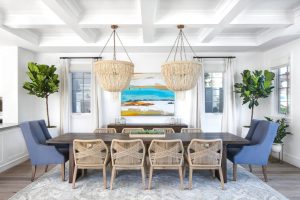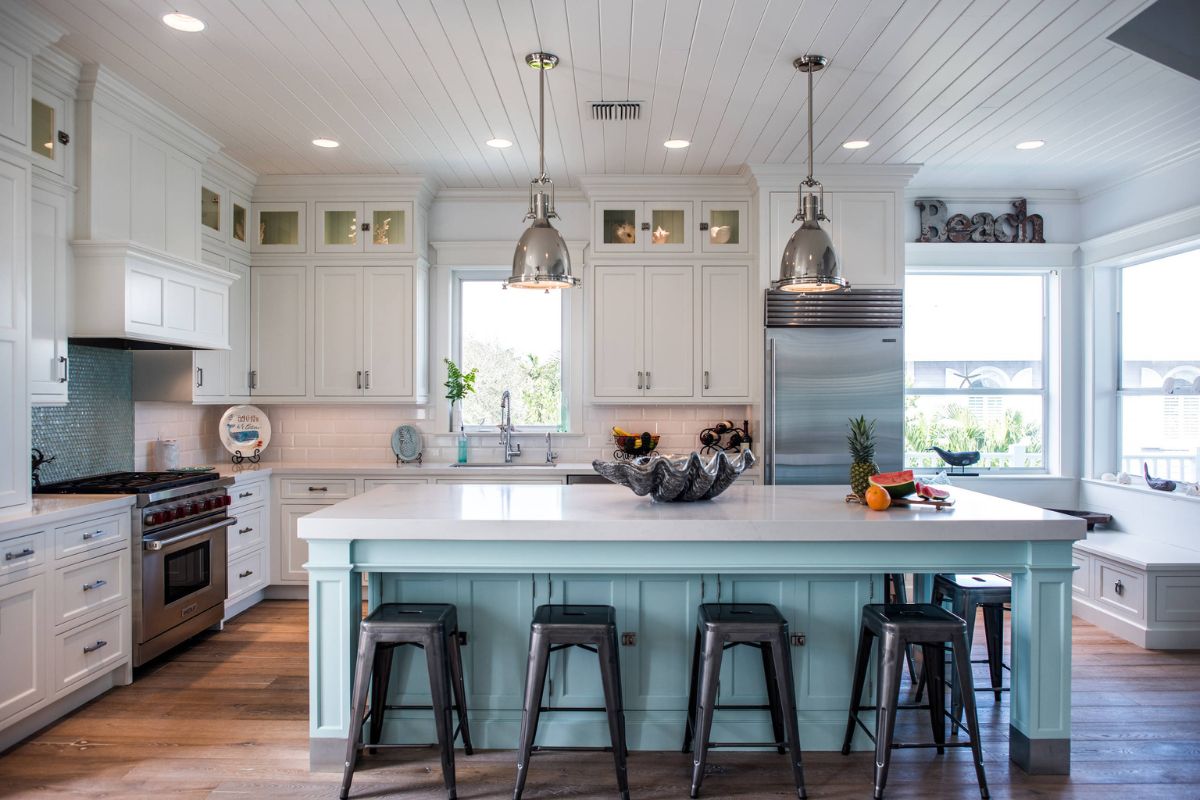
A coastal style kitchen feels like the first bright morning of a summer vacation. White shaker cabinets catch the light, a pale wood island holds a bowl of lemons, glass pendants hang over a row of woven counter stools, and a soft blue backsplash hints at the water without spelling it out. The windows are bare or lightly dressed, and the whole room smells of coffee and sea air, even miles from the shore.
Coastal design in the kitchen is about freshness rather than theme. It borrows the colors of sand, surf, and sky, the textures of weathered wood and rope, and the easy mood of a beach house where people gather barefoot. The best coastal kitchens stay practical and hardworking while feeling light, open, and relaxed enough to linger in.
Key Takeaways
- Light cabinetry, pale wood, and a soft blue or green accent form the backbone of a coastal kitchen.
- Natural textures such as rattan, jute, rope, and weathered oak add warmth and keep white from feeling sterile.
- Durable, light-reflecting surfaces like quartz, honed marble, and glazed tile suit the bright, breezy look.
- Glass, rattan, and seeded-glass lighting layered with under-cabinet strips keeps the room airy day and night.
- Nautical decor works best in small doses; let color and texture carry the style.
- Regional takes, from New England classic to relaxed California modern, help a coastal kitchen feel intentional.
What Makes a Kitchen Feel Coastal
A coastal kitchen is defined less by seashells and more by light, color, and texture working together.
Light, Air, and Open Sightlines
The style depends on brightness. Pale walls and cabinets bounce daylight around, open shelving or glass-front uppers break up heavy runs of doors, and clear counters let the room breathe. Even a small galley can feel coastal when the surfaces are light and the clutter is put away.
Natural, Sun-Worn Textures
Materials should look as if salt air and sunshine have softened them. Whitewashed or wire-brushed oak, rattan stool seats, jute runners, linen tea towels, and matte ceramic dishes add a relaxed, tactile layer that keeps a white kitchen from feeling clinical.
East Coast Classic Versus West Coast Relaxed
The New England take leans traditional: white inset cabinets, beadboard or shiplap, navy accents, polished nickel hardware, and a farmhouse sink. The West Coast version is looser and more modern, with flat or slim shaker doors, light oak, terracotta or sand tones, plaster-look walls, and plenty of plants. Choosing one direction gives the kitchen a clear point of view.
Building a Coastal Kitchen Color Palette
Color sets the mood faster than any accessory, so a planned palette makes the rest of the design easier.
Foundation Whites and Sandy Neutrals
Start with a warm white rather than a stark one, since warm whites read softer next to wood and natural light. Layer in sand, oatmeal, and pale greige on walls, a backsplash, or an island. These neutrals keep the room calm and let blue accents look fresh rather than heavy.
Blues and Greens From the Shoreline
Blue is the classic coastal accent, but the shade matters. Pale sky blue and misty blue-gray feel airy on walls or upper cabinets, while navy or deep teal grounds an island or lower cabinets. Seafoam, soft sage, and sea-glass green offer a gentler alternative that pairs beautifully with white oak.
Tested Color Pairings
A few pairings that work reliably in coastal kitchens:
- Warm white uppers with a navy island and brushed brass hardware
- Pale sea-glass green lowers, white quartz counters, and natural oak shelves
- Sandy greige cabinets with a soft blue zellige-look backsplash and nickel fixtures
- All-white cabinetry with a driftwood-tone floor and coral or terracotta accents in textiles
Cabinets, Counters, and Backsplashes
The hardworking surfaces of the kitchen carry most of the coastal look, so choose them for both beauty and durability.
Cabinet Styles and Finishes
Shaker doors are the most versatile choice, sitting comfortably in both classic and modern coastal kitchens. Beadboard-panel doors push the look toward cottage, while slim flat-panel doors in light oak suit a contemporary beach house. A two-tone scheme, with light uppers and a colored or wood island, adds depth without darkening the room.
Countertops That Stay Bright
White or light quartz with soft veining offers a marble look with less maintenance and no sealing. Honed marble and soapstone develop a gentle patina that suits the lived-in coastal mood but will etch and mark, so they work best for cooks who enjoy that character. A butcher block island top in light maple or oak adds warmth; oil it regularly and keep it away from the sink if possible.
Backsplash Ideas With a Seaside Feel
Handmade-look glazed tile in white, sea glass, or pale blue catches light with its uneven surface. Classic white subway tile laid in a stacked or vertical pattern feels updated, and a fish scale or scallop tile behind the range adds a subtle ocean reference. Glass tile reflects light well but shows water spots, so it suits areas away from heavy splashing.
Layout, Island, and Seating
A coastal kitchen should feel easy to move through and welcoming to guests, with room for people to sit and chat while someone cooks.
Planning an Open, Breezy Flow
Keep main walkways around 42 inches wide, or 48 inches in a kitchen used by two cooks at once. Where walls allow, open the kitchen to the dining or living area so sightlines run toward windows. In a closed kitchen, glass-front or open upper shelving and light cabinets do much of the same work.
An Island That Anchors the Room
The island is a natural place for color or wood. Paint the base navy, sage, or sea-glass blue, or clad it in whitewashed shiplap or vertical beadboard. Allow around 24 inches of counter width per stool and a 12 to 15 inch overhang so knees fit comfortably underneath.
Stools and Banquettes
Rattan, woven seagrass, or light wood counter stools add texture and keep the look casual. Choose wipeable seats or outdoor-grade cushions for kitchens with children or wet swimsuits. A built-in banquette in a corner, with striped or performance-linen cushions and baskets underneath, creates a cozy breakfast nook that feels straight out of a beach cottage.
Lighting the Coastal Kitchen
Layered light keeps the kitchen bright and practical while preserving its relaxed character after dark.
Making the Most of Daylight
Keep windows as clear as possible. Woven wood shades, light linen Roman shades, or simple café curtains filter sun without blocking it. A glossy or glazed backsplash and light counters near the windows help bounce daylight deeper into the room.
Pendants Over the Island
Clear or seeded glass pendants keep sightlines open, while rattan or woven pendants add warmth and texture. As a guide, hang pendants so the bottom sits about 30 to 36 inches above the counter, spacing two or three evenly along the island. Polished nickel suits classic coastal kitchens, and aged brass or matte black works for a modern take.
Task and Accent Layers
Under-cabinet LED strips light prep zones and make a tiled backsplash glow. Warm white bulbs around 2700K to 3000K feel inviting without yellowing white cabinets. Put pendants and recessed lights on dimmers so the kitchen can shift from bright cooking light to a soft evening glow.
Styling With a Light Hand
Decor should hint at the coast rather than announce it. A few well-chosen pieces feel more like a real beach house than a wall of anchors.
Open Shelves and Display
Style open shelves with white or sand-colored stoneware, clear glass jars of pasta and beans, a stack of blue-and-white plates, and one or two wood or rattan pieces. Leave gaps between groups so the shelves look calm. Rotate items you use daily so the display stays practical.
Natural Accents and Greenery
A bowl of lemons, a ceramic pitcher of hydrangeas or eucalyptus, and a small herb garden on the windowsill add life. A large piece of driftwood, a single coral print, or a framed vintage beach photograph gives personality without leaning too hard on theme.
Textiles That Tie It Together
Striped or ticking-stripe linen tea towels, a washable jute or flatweave runner, and simple cotton seat cushions repeat the palette. Choose textiles that can go straight into the washing machine, since kitchens and beach sand are hard on fabric.
Coastal Kitchen Mistakes to Avoid
The most common mistake is overdoing the theme. Rope-wrapped everything, anchor drawer pulls, and painted signs quickly look kitschy; let color and natural texture do the talking. Another pitfall is an all-white kitchen without contrast, which can feel flat and cold. Add a wood island top, a colored lower cabinet run, or warm brass hardware.
Ignoring durability causes problems too. Kitchens near the ocean face salt air and humidity, so choose stainless steel or solid brass hardware, moisture-resistant cabinet boxes, and quality exterior-grade finishes on any outdoor-adjacent doors. Finally, avoid too many competing blues; two shades, one light and one deep, usually look cleaner than five.
Budget-Friendly Coastal Kitchen Updates
Painting existing cabinets is the most affordable way to shift a kitchen toward coastal style. A warm white on the uppers and a soft blue or sage on the lowers can change the whole room in a weekend, especially with new nickel or brass knobs.
Peel-and-stick or inexpensive ceramic subway tile can refresh a backsplash, and swapping one dated pendant for a rattan or glass fixture adds instant character. Add a jute runner, a few striped tea towels, and a bowl of fresh fruit, and the room feels lighter without any renovation.
Conclusion
A coastal style kitchen brings seaside freshness to everyday cooking through light cabinetry, sandy neutrals, shoreline blues and greens, and the texture of weathered wood and natural fibers. Practical surfaces, layered lighting, and comfortable seating keep it as functional as it is relaxed.
Keep the decor restrained, choose materials that can handle daily use, and let daylight do as much of the work as possible. The result is a kitchen that feels breezy and welcoming in any season, by the shore or far inland.
Frequently Asked Questions
More Coastal Style Decor
- Coastal Style: The Exclusive Guide
- Coastal Style Bedroom: A Haven of Relaxation
- Coastal Style Living Room: Nautical Charm at Home
- Coastal Style Bathroom: Tranquil Ocean-Inspired Retreat
- Coastal Style Dining Room: Embracing Seafaring Vibes for Exquisite Dining