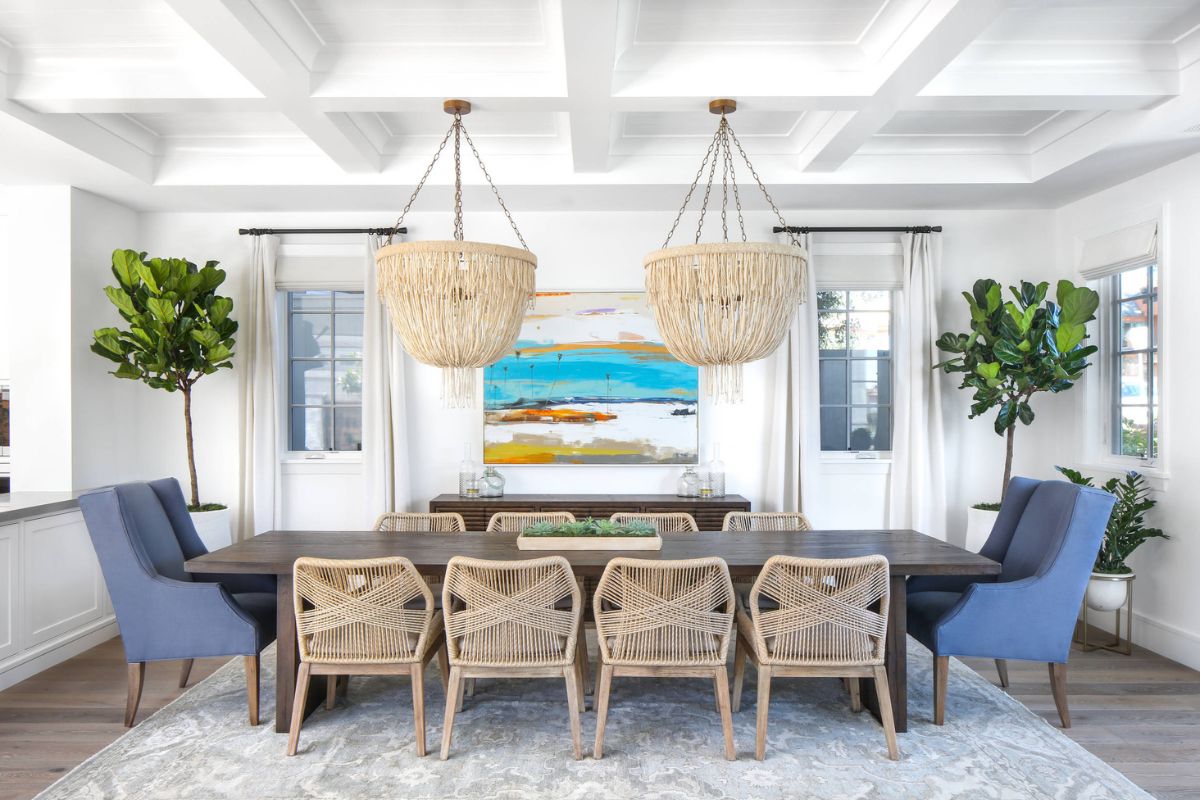
A coastal style dining room feels like a long summer supper at a beach house. A weathered oak trestle table stretches beneath a pair of woven pendants, slipcovered linen chairs sit beside a bench piled with striped cushions, and tall windows let the evening light pour across white walls. A low row of hurricane lanterns and a jug of hydrangeas complete a table that invites everyone to stay for one more glass.
The coastal dining room draws on the relaxed rhythm of seaside living, where meals are unhurried and guests drift in from the porch. The style mixes sun-bleached wood, soft sea colors, and natural fibers with a hint of maritime history, from navy stripes to brass lanterns. Done well, it balances casual comfort with enough polish for a special dinner.
Key Takeaways
- Weathered or light wood tables, slipcovered chairs, and benches set an easy, welcoming tone.
- Whites and sand tones form the base, with navy, sea blue, or seafoam used as accents.
- Woven pendants, glass lanterns, and dimmable sconces create a warm glow for evening meals.
- Indoor-outdoor rugs, washable linens, and performance fabrics keep the room practical.
- Restrained maritime details, such as rope, brass, and vintage charts, add character without kitsch.
- A thoughtful table setting turns everyday coastal style into an elegant dinner party.
Choosing a Coastal Direction
Coastal style has several regional flavors, and choosing one gives the dining room a clear identity.
New England Classic
The East Coast look is crisp and traditional. Picture white wainscoting or shiplap, a dark-stained or painted farmhouse table, Windsor chairs, navy and white stripes, and polished brass ship lanterns. It suits formal dining rooms and older homes with molding and wood floors.
Relaxed Modern Coastal
The West Coast interpretation feels lighter and more organic. Rounded oak tables, woven rush or rattan chairs, plaster-look walls in warm white, and accents of terracotta, olive, or soft blue create an airy, sun-filled mood. It works well in open-plan homes where the dining area flows into the kitchen and living room.
Breezy Cottage Coastal
Somewhere between the two, the cottage approach adds painted furniture in seafoam or pale aqua, mismatched vintage chairs, ticking stripe cushions, and collections of white ironstone. It feels personal and lived-in, ideal for family dining rooms.
Furniture for Coastal Dining
The table and chairs carry most of the coastal mood, so choose them for texture, comfort, and durability.
The Dining Table
Reclaimed pine, whitewashed oak, and wire-brushed ash all have the softened look of wood exposed to sun and salt. A trestle or farmhouse table suits rectangular rooms, while a round pedestal table makes conversation easy in a square room or breakfast nook. Allow about 24 inches of table length per diner and at least 36 inches of clearance between the table edge and walls or furniture.
Chairs and Benches
Slipcovered upholstered chairs in white or oatmeal linen look relaxed and can be washed after spills. Woven rattan, rush-seat, or spindle-back wood chairs add texture, and a bench on one side seats extra children and slides under the table when not in use. Mixing a pair of upholstered host chairs at the ends with simpler side chairs gives the table a collected look.
Sideboards and Storage
A whitewashed sideboard, a painted hutch with glass doors, or a cane-front buffet stores linens and serving pieces. Use the top for a lamp, a stack of serving platters, and a large bowl of lemons or limes. Open shelving on one wall can display blue-and-white dishes and glass hurricanes between meals.
Colors and Walls
A coastal dining room palette should feel fresh in daylight and warm by candlelight.
Building the Palette
Start with warm white or soft sand on walls, which glows rather than glares under evening light. Add blue through upholstery, a painted sideboard, or a striped rug: navy for a classic look, misty blue-gray for calm, or seafoam and aqua for a playful cottage feel. Natural wood tones tie the palette together.
Wall Treatments
Horizontal shiplap, board and batten, or beadboard wainscoting brings beach-house architecture into the room. Grasscloth wallpaper in sand or pale blue adds subtle texture, and a soft limewash finish gives walls a sun-faded depth. Keep treatments light so the room still feels open.
Floors
Wide-plank floors in white oak, whitewashed pine, or a driftwood-tone stain suit the style and hide sand and crumbs better than very dark wood. Painted floors in white or soft gray are a classic beach cottage choice for older pine boards; finish them with a durable floor-grade topcoat.
Lighting for Seaside Dinners
Good lighting makes the difference between a pretty dining room and one where people linger.
Pendants and Chandeliers
A woven rattan or seagrass pendant, a cluster of seeded glass globes, or a brass lantern with clear glass panels suits the style. Hang the fixture so the bottom sits about 30 to 34 inches above the tabletop, and choose a diameter roughly half to two-thirds the width of the table. Over a long table, two or three smaller pendants spread light more evenly.
Sconces and Candlelight
Wall sconces with fabric or glass shades add a second layer of light, and putting every fixture on a dimmer lets the room shift from homework to dinner party. Glass hurricanes with pillar candles, or flameless candles for families with small children, bring a lantern-lit, harbor feeling to the table.
Making the Most of Daylight
Simple linen panels, woven wood shades, or bare windows let daylight flood in. A large mirror opposite the window reflects light and views across the room, which is especially helpful in dining areas without direct sun.
Rugs, Linens, and Soft Furnishings
Textiles add comfort and absorb sound, while giving the coastal palette a soft, layered finish.
Rugs That Handle Spills
Flatweave cotton, jute-look indoor-outdoor rugs, and washable rugs are the most practical choices under a dining table. Choose a size that extends at least 24 inches beyond the table on every side so chairs stay on the rug when pulled out. Natural jute adds texture but stains easily, so it suits adult-only dining rooms best.
Table Linens
Washed linen tablecloths and runners in white, oatmeal, or chambray soften a wooden table. Striped or ticking-stripe napkins add color, and woven placemats in seagrass or water hyacinth give everyday meals a casual beach-house feel.
Seat Cushions and Slipcovers
Tie-on seat cushions in performance fabric make wooden chairs more comfortable for long dinners. Slipcovers that can be removed and washed are worth the investment in homes with children or frequent guests.
Setting an Elegant Coastal Table
Exquisite coastal dining comes to life in the table setting, where coastal style can be relaxed and refined at once.
Dinnerware and Glassware
White stoneware or porcelain is the most versatile base and pairs with any accent color. Add blue-and-white patterned salad plates, hand-blown glassware with a faint green or blue tint, and wood or horn-handled flatware for texture. Mixing a few handmade pieces with simpler sets looks collected rather than matched.
Centerpieces
Keep centerpieces low so guests can see one another across the table. A row of small bud vases with sea holly, eucalyptus, or white hydrangeas, a wooden dough bowl of lemons, or a cluster of hurricane lanterns all suit the style. A piece of driftwood with tea lights tucked along its length makes an easy, natural centerpiece.
Seasonal Touches
Coastal tables can follow the seasons:
- Summer: white linens, citrus, and wildflowers in clear glass
- Autumn: oatmeal linen, small pumpkins, and dried grasses
- Winter: navy napkins, pine sprigs, and plenty of candlelight
- Spring: seafoam accents, tulips, and fresh herbs at each place
Small and Open-Plan Coastal Dining Areas
Not every home has a separate dining room, but the coastal look adapts easily to compact corners and open layouts.
Dining Nooks and Banquettes
A built-in banquette along a wall or under a window saves floor space because it needs no chair clearance behind it. Pair it with a round pedestal table, which avoids knocking knees on corner legs, and a couple of light rattan or spindle chairs on the open side. Lift-up bench seats or baskets underneath store table linens and placemats.
Defining the Dining Zone
In an open-plan room, a rug and a statement pendant mark the dining area without walls. Repeat one color from the living space, such as the navy of a sofa pillow or the sand of a jute rug, in the dining chairs or runner so the zones feel connected. Keep the table and chair frames light in color and visual weight so sightlines stay open toward windows.
Flexible Seating for Guests
Folding wooden chairs in a whitewashed finish or stackable rattan-look stools can live in a closet until a crowd arrives. An extendable table with a hidden leaf lets a small coastal dining area grow from a cozy table for four to a holiday table for eight.
Finishing Touches Without the Kitsch
Maritime details work best when they feel collected over time. A vintage nautical chart in a simple frame, a set of black-and-white beach photographs, or a large abstract painting in sea blues makes a strong focal point. A single rope-wrapped mirror or a brass ship’s lantern adds history without overwhelming the room.
Natural objects such as shells, sea glass, and driftwood belong in small groupings rather than on every surface. Choose ceramic, resin, or ethically sourced alternatives to real coral, since harvesting coral damages reefs. Skip signs with beach slogans and anchor-print everything; let materials and color carry the coastal story.
Conclusion
A coastal style dining room brings seafaring character to everyday meals through weathered wood, sea-inspired colors, natural fibers, and soft, layered lighting. Practical choices such as washable slipcovers, indoor-outdoor rugs, and dimmable fixtures keep it ready for family dinners and celebrations alike.
Finish with a thoughtful table setting and a few meaningful maritime touches. The result is a dining room that feels breezy by day, glowing by night, and always welcoming to one more guest.
Frequently Asked Questions
More Coastal Style Decor
- Coastal Style: The Exclusive Guide
- Coastal Style Bedroom: A Haven of Relaxation
- Coastal Style Living Room: Nautical Charm at Home
- Coastal Style Bathroom: Tranquil Ocean-Inspired Retreat