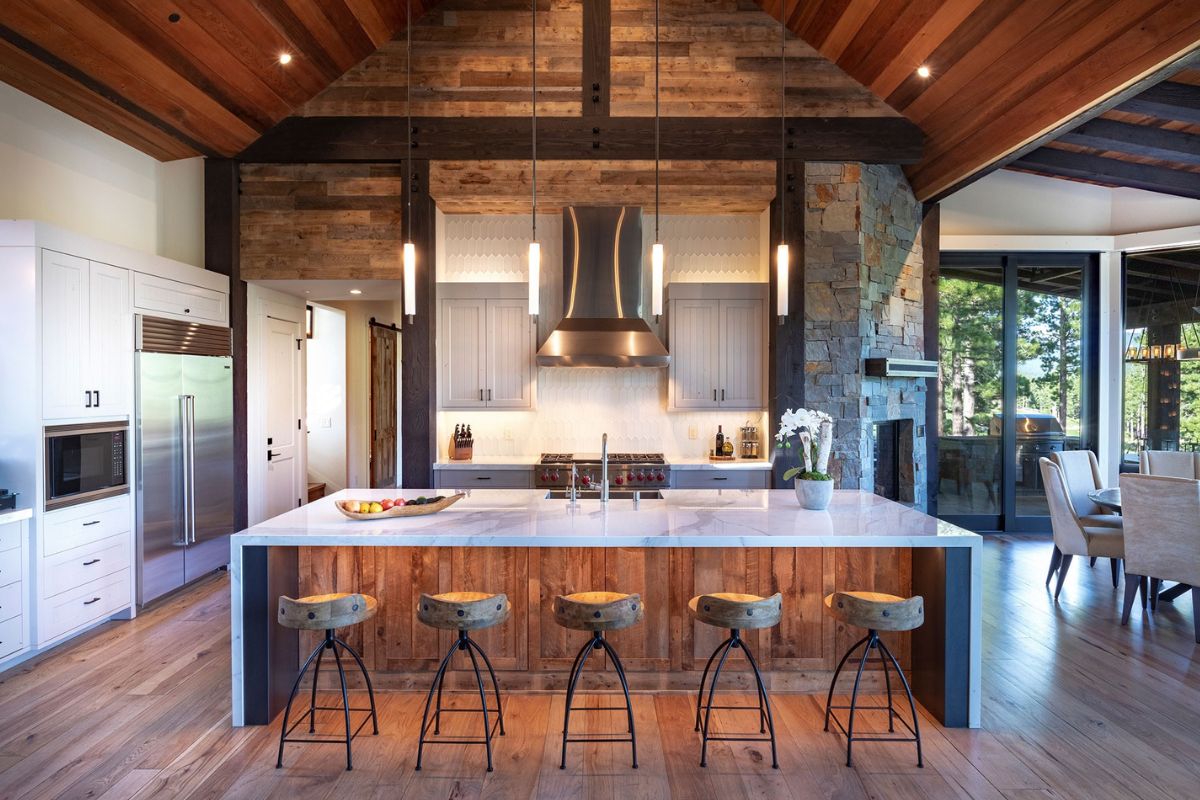
A rustic style kitchen feels like the heart of a country home. Timber beams overhead, stone underfoot, a big wooden table, and open shelves lined with well-used crockery create a space that is warm, welcoming, and built for real cooking.
Rustic design draws on farmhouses, mountain cabins, and old country cottages, where kitchens were practical rooms made from local, natural materials. Today, the style blends that country comfort with modern appliances and conveniences, so you can enjoy a kitchen full of character that also works beautifully for everyday life.
Key Takeaways
- Rustic kitchens celebrate natural materials such as wood, stone, iron, and clay.
- Exposed beams, distressed cabinetry, and handmade finishes give the room its character.
- Warm, earthy colors like cream, sage, terracotta, and deep brown create a cozy atmosphere.
- Farmhouse sinks, butcher block counters, and open shelving combine charm with function.
- Modern appliances can be blended in with panel-ready fronts or vintage-inspired finishes.
- Textiles, pottery, and fresh herbs complete the country look.
What Defines a Rustic Kitchen
A rustic kitchen is defined by natural materials, visible craftsmanship, and a sense that the room has been used and loved for many years. Imperfection is part of the charm.
Roots in Country Living
Rustic style grew out of rural homes where people built with whatever materials were close at hand: timber from the forest, stone from the fields, and iron from the local blacksmith. Kitchens were the busiest rooms in the house, so everything had to be sturdy, practical, and easy to repair.
Character Over Perfection
Unlike sleek modern kitchens, rustic kitchens embrace knots in the wood, variation in stone, and patina on metal. Hand-hewn beams, plastered walls, and visible joinery tell the story of how the room was made. These irregularities give the space warmth and personality.
Rustic Versus Farmhouse
Rustic and farmhouse kitchens share many features, but rustic design tends to be heavier and more natural, with darker woods, raw stone, and rougher textures. Farmhouse style is often lighter and cleaner, with painted cabinetry and more white. Many kitchens blend the two successfully.
Natural Materials at the Heart of the Style
Materials set the tone of a rustic kitchen. The goal is to use authentic, tactile surfaces that look better with age.
Wood
Wood is the foundation of rustic design. It appears in ceiling beams, cabinetry, open shelves, flooring, and the kitchen table. Reclaimed barn wood, knotty pine, oak, hickory, and walnut are popular choices. Hand-scraped or wire-brushed finishes emphasize texture and hide everyday wear.
Stone
Natural stone brings an earthy, grounded feel. Fieldstone or stacked stone can frame a range alcove or cover an accent wall, while slate, limestone, or travertine work well on floors. Stone countertops such as soapstone and honed granite suit the style with their matte, natural finishes.
Metal
Wrought iron, hammered copper, and aged brass add warmth and craftsmanship. Look for iron cabinet hardware, a copper range hood, or hanging pot racks. Over time these metals develop a patina that fits perfectly with rustic design.
Clay and Ceramics
Terracotta floor tiles, handmade ceramic backsplash tiles, and stoneware pottery bring color and an artisanal feel. Their slight irregularities in shape and glaze add to the handcrafted look.
Cabinetry and Storage
Rustic cabinetry should feel solid and hand-built rather than mass-produced.
Cabinet Styles and Finishes
Raised-panel, Shaker, or simple plank-style doors in stained or distressed wood are classic rustic choices. Painted cabinets in muted colors such as sage, cream, or barn red can be lightly distressed to reveal wood at the edges. Mixing a painted island with stained perimeter cabinets adds interest.
Open Shelving and Plate Racks
Open shelves made from thick reclaimed boards are ideal for displaying stoneware, glass jars, and cutting boards. Wall-mounted plate racks and hooks for mugs reinforce the country look and keep everyday items within easy reach.
Pantry and Hutch Storage
A freestanding hutch or dresser offers generous storage and display space and can be moved if you relocate. A walk-in or cabinet pantry with wooden crates, baskets, and labeled jars keeps dry goods organized while maintaining the rustic theme.
Countertops, Sinks, and Backsplashes
Work surfaces in a rustic kitchen should be durable and age gracefully.
Countertop Options
Butcher block is warm and practical, and it can be sanded and re-oiled when it shows wear. Soapstone develops a soft patina and is resistant to heat. Honed granite, limestone, and quartz with a natural stone look offer lower-maintenance alternatives. Many rustic kitchens combine materials, such as stone on the perimeter and butcher block on the island.
Farmhouse and Stone Sinks
An apron-front farmhouse sink in fireclay, cast iron, or natural stone is a signature rustic element. Hammered copper sinks add warmth and develop a rich patina over time. Pair the sink with a bridge faucet or a gooseneck faucet in oil-rubbed bronze or aged brass.
Backsplash Ideas
Handmade zellige-style tiles, terracotta tiles, stacked stone, brick, or simple white tile with a slightly uneven glaze all suit the style. For a softer look, consider beadboard or wood planks sealed for easy cleaning.
Colors for a Rustic Kitchen
Rustic color palettes are drawn from nature and the materials themselves.
Warm Neutrals
Cream, oatmeal, warm white, and soft beige create a calm backdrop that lets wood and stone stand out. These shades keep a rustic kitchen feeling bright even with darker beams and floors.
Earthy Accents
Sage green, olive, terracotta, rust, mustard, and deep barn red add personality. Use them on an island, a pantry door, or in textiles and pottery. Charcoal and deep brown work well for a moodier, cabin-inspired look.
Lighting with Rustic Charm
Lighting should feel warm, natural, and crafted.
Pendants and Chandeliers
Wrought iron chandeliers, lantern-style pendants, and fixtures made from wood beams or metal cages suit the style. Hang a row of lanterns or simple metal pendants over the island, roughly 30 to 36 inches above the counter.
Task and Ambient Lighting
Under-cabinet lights make food preparation safer and highlight textured backsplashes. Recessed lights can provide general illumination without distracting from beams and decorative fixtures. Warm bulbs around 2700K create a cozy, firelit feel.
Natural Light
Large windows, simple café curtains or linen shades, and glass-fronted cabinets help maximize daylight. Natural light brings out the depth of wood grain and stone texture.
Blending Modern Function with Rustic Style
A rustic kitchen should still be easy to cook in and keep clean.
Integrating Appliances
Panel-ready refrigerators and dishwashers can be fitted with cabinet fronts so they disappear into the cabinetry. Range cookers with enameled finishes or classic knobs bring vintage character, while stainless steel can be softened by surrounding it with wood and stone.
Practical Layouts
Rustic kitchens work in L-shaped, U-shaped, and galley layouts, and a central island or freestanding farm table can serve as both prep space and gathering spot. Leave at least 42 inches of walkway around an island so the kitchen stays comfortable for cooking.
Easy-Care Finishes
Seal wood and stone surfaces to protect them from moisture and stains. Choose washable paint finishes, and consider porcelain tile that imitates terracotta or stone in high-traffic areas for easier maintenance.
Decor and Finishing Touches
The finishing touches are what make a rustic kitchen feel truly lived in.
Textiles
Linen tea towels, checked or striped café curtains, and a woven runner soften the space. Natural fibers such as cotton, linen, and jute fit the style best.
Pottery and Kitchenware
Display stoneware crocks filled with wooden spoons, cast iron pans on hooks, and enamelware on open shelves. These everyday items double as decor.
Plants and Herbs
Pots of rosemary, thyme, and basil on the windowsill bring fragrance and color. Dried flowers or bundles of lavender hung from a beam add a cottage touch.
Vintage Finds
Antique scales, old bread boards, vintage signs, and baskets give the kitchen a collected-over-time feel. Choose a few meaningful pieces rather than filling every surface.
Caring for Rustic Kitchen Materials
Rustic surfaces are meant to age, but a little routine care keeps that aging graceful instead of grimy.
Butcher Block and Wood Surfaces
Oil butcher block counters with food-safe mineral oil every few weeks at first, then whenever water stops beading on the surface. Wipe spills promptly, especially around the sink, and sand out deep stains or knife marks with fine-grit paper before re-oiling.
Stone and Cast Iron
Seal natural stone counters and floors on a regular schedule, and clean them with a pH-neutral cleaner rather than vinegar or citrus, which can etch the surface. Dry cast iron pans and pot racks thoroughly and rub them with a thin coat of oil to prevent rust.
Creating Rustic Kitchen Zones
Dividing the kitchen into small, purposeful zones makes a rustic room feel lived in and keeps everyday tasks easy.
A Breakfast Nook
Tuck a small trestle table or a built-in bench into a corner or bay window. Add a few cushions in ticking stripe or plaid, a wrought-iron pendant overhead, and a stoneware pitcher of wildflowers for a spot that invites slow mornings.
A Coffee and Tea Station
Set aside a stretch of counter or an old dresser for coffee and tea. Keep beans in stoneware crocks, hang mugs from iron hooks, and store everything else in woven baskets so the area stays tidy.
A Baking Corner
If you bake often, dedicate a section of counter, ideally stone or butcher block, to the task. Keep flour and sugar in glass jars, prop rolling pins and wooden boards against the backsplash, and hang a few vintage tins above for storage that doubles as decor.
- Keep the most-used tools within arm’s reach of each zone.
- Use a consistent wood tone or metal finish so the zones feel connected.
- Add a small lamp or pendant to each zone for focused light.
Conclusion
A rustic style kitchen brings together country comfort and functional beauty. With natural materials like wood, stone, and iron, handcrafted details, and warm earthy colors, it creates a welcoming space where cooking and gathering feel natural.
By blending these timeless elements with modern appliances and practical storage, you can enjoy a kitchen that feels rooted in tradition yet perfectly suited to the way you live today.
Frequently Asked Questions
More Rustic Style Decor
- Rustic Style: The Definitive Guide
- Rustic Style Bedroom: Cozy Retreats with Natural Charm
- Rustic Style Living Room: Warmth and Character in Every Corner
- Rustic Style Bathroom: Natural Tranquility and Vintage Flair
- Rustic Style Dining Room: Embracing Natural Warmth and Timeless Appeal
- Rustic Style Entryway: Natural Textures and Timeless Warmth at the Door