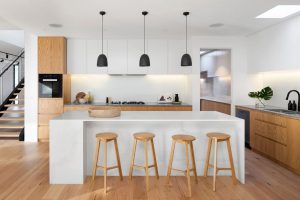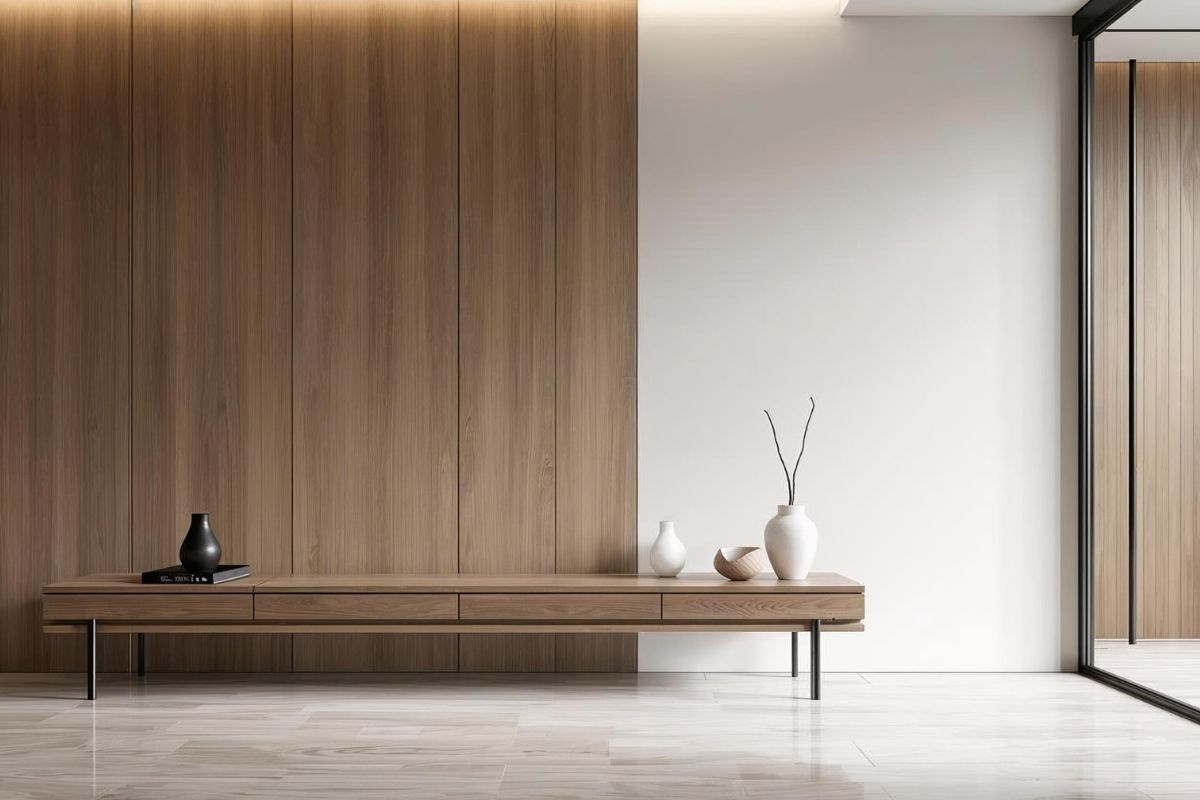
A minimalist style entryway offers a clean and clutter-free welcome. A slim floating shelf, a single hook rail, a simple bench, a frameless mirror, and closed storage that hides everyday items create a calm first impression where nothing competes for attention. Walking through the door feels like taking a deep breath.
Minimalism is built on the idea that less is more. Every item should be useful or meaningful, and open space is valued as much as furniture. Because the entryway is where clutter naturally collects, it is one of the best places in the home to put minimalist principles into practice. This guide explains how to plan, furnish, and maintain a minimalist entry that stays calm and functional every day.
Key Takeaways
- Minimalist entryways keep only essential items and value open space.
- Closed, wall-mounted storage hides clutter and keeps floors clear.
- A limited palette of white, gray, black, and natural wood feels calm.
- Simple, high-quality pieces work better than many cheaper ones.
- Good lighting and a large mirror make the space feel open and bright.
- Daily habits are as important as design in keeping the entry clear.
The Principles of a Minimalist Entryway
Minimalism is more than having fewer things. It is about intention, function, and calm.
Only What You Need
Start by deciding what truly belongs in the entry: keys, everyday shoes, the coats you wear this season, and perhaps a bag. Everything else, such as off-season clothing or rarely used items, should be stored elsewhere. This simple step makes a huge difference in how the space looks and feels.
Function Over Decoration
In a minimalist entry, furniture earns its place through function. A bench is for sitting, a shelf is for keys, and a cabinet is for shoes. Decoration is limited to one or two objects that add beauty without clutter.
The Value of Empty Space
Clear floors and bare walls are not unfinished; they are part of the design. Empty space gives the eye a place to rest and makes the entry feel larger and more peaceful.
Planning the Layout
Careful planning is what makes a minimalist entry work in real life.
Measure and Keep It Clear
Leave a walkway of at least 36 inches and make sure the door opens fully. Wall-mounted shelves and cabinets 10 to 12 inches deep keep the floor clear. A bench around 17 to 19 inches high is comfortable for putting on shoes.
Give Everything a Home
Assign a specific place for each item: a small tray for keys, a drawer for sunglasses and gloves, one hook per person, and a cabinet for shoes. When everything has a home, tidying takes seconds rather than minutes.
Use Vertical Space Wisely
Tall, slim cabinets and wall-mounted hooks make use of vertical space without crowding the floor. Mount adult hooks around 60 to 66 inches from the floor, and keep them to a single, simple row.
Furniture and Storage
Minimalist furniture is simple, well made, and often built in or wall-mounted.
Closed Storage
Handleless cabinets, a closet with clean flat doors, or a wall-mounted shoe cabinet keep everyday items hidden. Push-to-open doors maintain smooth, uninterrupted surfaces. Closed storage is the single most important element in a minimalist entry.
Benches
A simple wooden or metal bench with clean lines provides a place to sit. Benches with a drawer or a hidden compartment add storage without adding visual clutter. A floating bench mounted to the wall keeps the floor clear.
Shelves and Hooks
A slim floating shelf holds keys and a single decorative object. A simple rail with a few minimal hooks in wood, black, or white holds the coats you use every day. Choose pieces that blend into the wall rather than stand out.
Colors, Materials, and Surfaces
A restrained palette and natural materials support the calm, open feel.
Limited Palette
White, soft gray, warm beige, and black form the base, with natural wood adding warmth. Using only two or three colors creates a cohesive look. Avoid strong patterns, which add visual noise.
Natural Materials
Light oak, ash, stone, concrete, and linen bring warmth and texture without clutter. Matte finishes feel softer and calmer than glossy ones.
Walls and Floors
Smooth, plain walls in a light color keep the space open. Large-format tiles, polished concrete, or light wood floors are durable and easy to clean. A simple solid runner or a natural fiber mat adds softness by the door.
Mirrors and Lighting
Light and reflection make a minimalist entry feel open and welcoming.
Mirrors
A large frameless or thin-framed mirror reflects light and visually expands the space. A full-length mirror on the wall or the back of a closet door is practical and keeps surfaces clear.
Lighting
Recessed lights, a simple flush-mount fixture, or a single sculptural pendant provide clean, even light. Keep about 7 feet of clearance under hanging fixtures. LED strips under a floating shelf add a soft glow. Warm bulbs prevent the space from feeling cold.
Decor With Purpose
Minimalist decor is sparse and intentional. Choose one meaningful object, such as a ceramic vase with a single branch, a small sculpture, or a piece of art, and give it plenty of space. A simple plant in a plain pot adds life without clutter. Resist the urge to fill every surface; the empty space is part of the beauty.
Habits That Keep It Clear
A minimalist entry stays calm only if daily habits support it. Put keys in their tray as soon as you come in, hang coats immediately, and put shoes away rather than leaving them by the door. Sort mail right away and recycle what you do not need. A quick weekly reset, returning stray items to other rooms, keeps clutter from building up.
Common Mistakes to Avoid
One mistake is choosing open storage only, which quickly shows clutter. Prioritize closed cabinets. Another is making the space feel cold and sterile with no warm materials. Add wood, textiles, and warm light. Finally, avoid buying many cheap organizers; a few well-made pieces are more effective and last longer.
Minimalist Ideas for Small Entryways
In a small entry, a slim floating shelf, a few minimal hooks, a wall-mounted shoe cabinet, and a large mirror are often all you need. Keeping the floor clear makes the space feel larger.
A single light fixture and one decorative object complete the look. If space allows, a fold-down wall bench gives you seating without taking up floor space.
Budget-Friendly Minimalist Entryway Ideas
Minimalism is one of the most affordable styles because it is based on owning less. Start by removing everything that does not need to be in the entry; this step is free and makes the biggest difference. Then invest in one or two quality pieces, such as a wall-mounted shoe cabinet or a solid wood bench, rather than many cheap organizers.
Simple wall hooks, a floating shelf, and a large mirror are inexpensive and highly functional. Painting the walls a soft white or warm gray can make even a dated entry feel fresh and open.
Seasonal Rotation
A minimalist entry stays clear when only current-season items are kept there. At the start of each season, move off-season coats, boots, hats, and gloves to a closet or storage boxes elsewhere in the home. This rotation keeps hooks and cabinets from overflowing and makes the entry easier to use every day. A single seasonal branch or a small plant is all the decor a minimalist entry needs.
Minimalist Entries Without a Foyer
In many apartments, the front door opens directly into the living area or a narrow hallway. Minimalism is well suited to these spaces, because a few carefully placed pieces can create a functional entry without adding bulk.
Use the Wall Behind the Door
The wall the door swings toward is often wasted. An over-the-door rack or a set of slim hooks mounted behind the door holds bags and a jacket without being seen when the door is open. On the adjacent wall, a shoe cabinet only 7 to 9 inches deep fits where a standard console would not.
Borrow Existing Furniture
If the door opens beside a sofa or a shelving unit, give one shelf or the end of the sofa table a single tray for keys. Mark the entry with a small solid mat rather than a large rug, and keep everything else in a nearby closet or cabinet. One dedicated spot is enough to stop clutter from spreading through the room.
Minimalism With Kids and Pets
A family entry has more to hold, but the same principles apply: fewer items, clear homes, and closed storage. Planning for each person keeps the look calm even on busy mornings.
- Give each child one low hook at about 36 to 42 inches and one drawer or bin, and nothing more.
- Limit shoes in the entry to one or two pairs per person and store the rest in bedrooms.
- Keep a leash, waste bags, and a paw towel together in a single lidded box.
- Choose a mid-tone wood or gray mat that hides dirt better than white.
Matte, washable wall paint and a cabinet with smooth flat fronts make wiping away fingerprints and mud quick. Teaching everyone the same simple routine, keys in the tray and shoes in the cabinet, is what keeps the system working.
Conclusion
A minimalist style entryway offers a clean and clutter-free welcome. Closed storage, simple furniture, a limited palette, natural materials, and good lighting create a calm first impression.
By keeping only what you need, giving every item a home, and building simple daily habits, your minimalist entry will stay peaceful and functional every day.
Frequently Asked Questions
More Minimalist Style Decor
- Minimalist Style: Ultimate Guide
- Minimalist Style Bedroom: Restful Spaces for Serenity
- Minimalist Style Living Room: Embracing Simplicity and Functionality
- Minimalist Style Kitchen: Streamlined Design for Efficient Culinary Spaces
- Minimalist Style Bathroom: Tranquil Retreat with Clean Elegance