Picture a living room with pale oak floors, warm white plaster walls, and a long, low sofa in oatmeal linen facing a single large canvas. A round travertine coffee table holds two books and a stem of eucalyptus, and sheer curtains let daylight fall across the floor. There is very little in the room, yet it feels warm, quiet, and complete.
Minimalist style is not about owning nothing or living in an empty white box. It is a way of furnishing that keeps only what is useful or truly loved, then lets light, proportion, and good materials do the decorating. This guide covers the principles behind the style, how to build its palette and textures, and how to apply it room by room, from the living room and bedroom to the kitchen, bath, and bookshelves.
Key Takeaways
- Minimalism starts with editing: keep what serves the room and remove visual noise.
- A neutral base with one repeated accent color creates calm continuity from room to room.
- Clean-lined furniture with open bases and slim arms keeps rooms light.
- Texture from wood, stone, linen, wool, and plaster replaces clutter as the main source of interest.
- One focal point per room, and one styled surface, keeps spaces composed.
- Warm minimalism adds tactile richness and earthy tones so rooms feel lived in, not sterile.
What Is Minimalist Style? The Core Principles
Minimalist interior design is a disciplined approach in which form, function, and light shape each room. Everything nonessential is removed so that the remaining pieces can be seen and used clearly.
Less Is More: Editing to the Essentials
The phrase “less is more,” closely associated with the architect Ludwig Mies van der Rohe, sums up the idea. Minimalism is first a process of editing. Clear surfaces, fewer objects, and furniture with honest, simple forms let each piece do its job well. In practice, that means consolidating decor, donating items that no longer serve a room, and choosing furniture for how it supports daily life rather than how much it displays.
Roots in Modernism and Japanese Design
The style draws on several traditions. The Bauhaus school in Germany prized function, clean geometry, and honest materials. Traditional Japanese interiors contributed a respect for empty space, natural textures, and restraint. The industrial designer Dieter Rams later summed up a similar philosophy as “less, but better,” which remains a useful test for any minimalist purchase.
From Stark to Warm Minimalism
Early minimalist interiors could feel cool and gallery-like, with glossy surfaces and very little softness. Contemporary minimalism balances that clarity with comfort. Linen, mohair, wool, plaster, and wood add depth, and tonal palettes replace stark contrasts, so a room feels serene rather than empty.
The Signature Elements of Minimalist Decor
A minimalist room rests on restraint: soft tones, clear sightlines, and honest materials. A few recurring elements make the look recognizable.
Calm Palettes and Clean Lines
Start with a restrained palette that relies on tonal variation, with perhaps one accent color to keep the room lively. White and warm white walls amplify light and help adjoining living and dining areas read as one space. Flat-panel furniture and streamlined storage lower visual weight, and Scandinavian and midcentury pieces offer the clean silhouettes the style depends on.
Open Space and Thoughtful Accents
Negative space is a design element in its own right. Open shelving can replace some upper cabinetry to clear the wall plane, and rugs define zones in open plans. A single large artwork or a low console anchors the room. Limit accessories to one vignette, a rug, and the furniture you truly need, and use pillows and throws for variation in texture rather than in color.
Set the Tone With a Cohesive Color Scheme
A thoughtful palette guides how a space feels and how the pieces relate to one another. The simplest approach is a neutral foundation with a single accent carried through the home.
Neutral Foundations With One Accent
Use ivory, warm white, warm gray, greige, or taupe on large surfaces like walls, sofas, and rugs. Then pick one accent, such as sage, rust, ink blue, or charcoal, and repeat it sparingly in a throw, a lamp, or a single chair. Repeating the same accent in each room creates continuity from the entry to the living area.
Black and White, Done Warm
A black-and-white scheme can feel harsh when every surface is smooth and flat. Soften it with nubby fabrics, matte paint, and wood. A textured wool rug, an oak console, or black window frames against warm white walls keep monochrome approachable.
Tonal Layering for Depth
Layering shades of one color, from ivory through sand to taupe, adds depth across walls, upholstery, and rugs without adding objects. Save richer tones for small accessories, and test paint samples on several walls, since minimalist rooms make every shift in daylight visible.
Let in Natural Light
Daylight is one of the minimalist’s best tools. It clarifies surfaces, simplifies the palette, and makes rooms feel larger.
Window Treatments That Maximize Light
Choose sheer or unlined linen drapery and hang it high and wide so the curtains frame the glass instead of covering it. Simple roller shades or light-filtering shades provide privacy without heavy fabric. Use the same treatment throughout an open plan so the walls read as calm and continuous.
Reflective Surfaces and Smart Placement
Warm white walls and a light ceiling bounce daylight deeper into a room. A large, simply framed mirror opposite a window doubles the light. Keep tall furniture away from windows, and arrange seating so the best spots enjoy daylight without blocking views. For evenings, recessed or low-profile fixtures keep the ceiling visually quiet.
Clean Lines and Simple Silhouettes
Straightforward forms set the visual pace of a minimalist room. Each piece should read as purposeful rather than decorative.
Scandinavian and midcentury furniture suits minimalism for its uncluttered proportions, natural wood, and tapered legs. Designs in the spirit of Hans Wegner and Arne Jacobsen show how a simple frame can be both comfortable and sculptural.
Balancing Curves and Straight Edges
Pair a gently curved sofa with a rectangular coffee table, or a round dining table with straight-backed chairs. The contrast balances softness and structure without adding visual weight. Slim arms, open bases, and leggy frames keep the floor visible, which makes any room feel larger.
Minimal Ornament
Skip heavy moldings, ornate carving, and fussy hardware. Flat-panel doors, integrated or slim bar pulls, and honest materials keep the look consistent.
Texture Over Trinkets
Big material choices give a minimalist room personality. Instead of many small objects, a few strong surfaces shape the feel of the space.
Wood, Stone, Linen, Wool, and Plaster
Warm wood casegoods, stone tabletops, and linen drapery carry the look from room to room. Limewash or plaster walls add a soft, cloudy depth, and nubby wool or bouclé adds comfort. One strong stone or timber element can anchor the eye and remove the need for extra accessories.
Mixing Textures Without Clutter
Contrast smooth with rough: matte plaster beside a satin pillow, polished stone beside a chunky wool throw. Keep the list of finishes short and repeat them for cohesion. Matte sheens on walls and natural oiled finishes on wood cut glare and age gracefully.
Minimalist Living Room Ideas
In the living room, one major piece should set the scale and circulation so the rest of the space can breathe.
Anchor With a Substantial Sofa
A generous L-shaped sofa or a long three-seater can organize the room on its own. When a single sofa defines the conversation area, fewer side chairs and small tables are needed.
One Clear Focal Point
Choose one focal point: a fireplace, an oversized artwork, a textured accent wall, or a view. Orient the seating toward it and avoid competing features on other walls.
Rugs and Surfaces
Use a large rug under the seating group with at least the front legs of each piece resting on it. Keep media units low and storage concealed, and limit styling to one surface, usually the coffee table.
Design a Serene Minimalist Bedroom
A minimalist bedroom is a quiet retreat where every piece earns its place. Center the composition on one strong bed and keep the surrounding surfaces pared back.
Statement Bed, Restrained Decor
Let the bed be the focal point, whether that is a low platform frame in oak, an upholstered headboard, or a simple canopy. Layer linen or cotton bedding in tonal shades and limit pillows to two or three. A bench at the foot of the bed or a single pendant can add a calm, intentional moment.
Symmetry and Hidden Storage
Matching nightstands and lamps create instant balance. Closed storage, such as a built-in wardrobe or a dresser with flat fronts, keeps clothing and everyday items out of view so the room feels restful.
Kitchen Minimalism: Storage, Surfaces, and Light
In the kitchen, minimalism is about clear counters and storage that does the hard work out of sight.
Fewer Uppers, Some Open Shelves
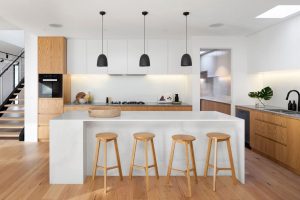
Replacing a few upper cabinets with floating shelves brightens the wall and keeps everyday items within reach. Style them with daily plates, glasses, a small plant, and one meaningful object, and keep everything else behind doors.
Flat-Panel Cabinetry and Cohesive Finishes
Flat-panel cabinets with integrated pulls or slim bar handles create clean lines. Match the faucet, hardware, and light fixtures to a single finish. Running the same stone or quartz from countertop to backsplash creates a continuous, calm surface. Keep the material list short: wood floors, stone tops, and simple ceramics.
Quiet Bathrooms: Small Spaces, Big Impact
Even a small bathroom can feel like a calm retreat when it is built around one well-chosen element.
A Statement Tub or Shower
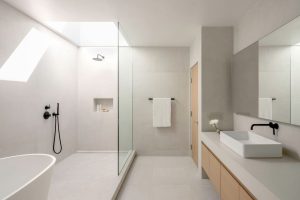
A freestanding soaking tub with smooth, rounded lines makes an ideal focal point. In smaller bathrooms, a frameless glass shower with large-format tile achieves a similar uncluttered effect.
Textured Walls and Simple Sconces
Microcement, fine plaster, or large porcelain tiles add depth without pattern noise. Warm-toned sconces that wash the walls with soft light create a restful mood. Recessed niches and concealed cabinets keep toiletries out of sight, and a small flat-weave or cotton mat adds softness underfoot.
Artwork and Walls: Room to Breathe
In a minimalist home, art makes a strong statement with a single confident gesture rather than a crowded gallery.
One Large Piece or a Precise Row
Choose one large artwork as the focal point, or align a row of smaller works along a single horizontal line. Both approaches leave breathing room around the art and guide the eye calmly across the wall.
Uniform Frames and Painted Built-Ins
Matching frames and consistent mats reduce visual noise. Painting built-in shelves the same color as the surrounding walls lets them recede so the objects and art take focus.
Wood Slat Walls
A wood slat feature wall adds rhythm and warmth without clutter, and it can conceal speakers or cables behind a media area.
Make the Coffee Table Count
The coffee table anchors the seating area and signals the room’s tone at a glance. Treat it as the single styled surface in the living room.
The Rule of Odds
Group three items: a stack of one or two large books, a minimal floral such as a single branch or orchid in an artisan vase, and one meaningful object like a stone bowl or small sculpture. Leave space between each piece so it reads clearly, and rotate books or stems with the seasons.
Choosing the Table
Choose a table with a clean profile in wood, stone, or metal, and in proportion to the sofa. A low rectangular table suits a long sofa, while a round or oval one softens an L-shaped arrangement and eases movement around it.
Shelves and Bookcases: Curate, Don’t Crowd
Good shelving starts with editing and a clear purpose for every item. Donate books you will not reread and remove duplicates so the shelves can breathe.
Edit and Arrange in a Zigzag
Arrange books both upright and in horizontal stacks for rhythm. Place groupings in a zigzag pattern across the shelves rather than lining everything up, and leave some sections nearly empty so the eye can rest. Concealed cabinets at the base hold items that do not belong on display.
Mix Books With Sculptural Objects
Balance books with a few ceramics, a small sculpture, or a framed photograph, grouped in odd numbers. Refresh shelves by swapping one or two items instead of adding more.
Warm Minimalism With Natural Materials
Warm minimalism combines pared-back forms with tactile richness, so rooms feel calm and lived in at the same time.
Earthy Palettes and Natural Finishes
Choose warm taupes, sand, ochre, terracotta, and muted greens, layered tonally. Jute or wool rugs underfoot, visible wood grain on casegoods, and softly plastered walls create quiet backdrops.
Layered Textiles and Soft Metals
Linen drapery, wool throws, and mohair cushions create contrast that does the work of accessories. Keep metals soft and brushed, such as brushed brass or bronze, and repeat the same woods and woven materials from room to room so the whole home feels connected.
Balance and Symmetry
Proportion and alignment give a minimalist interior its quiet, organized presence. When the main pieces line up, the room feels composed without extra objects.
Paired lamps, twin chairs, or matching nightstands quiet a room instantly. Center the sofa on the artwork or mirror above it, and the bed on the window or headboard wall, so the major pieces share a clear centerline.
Gentle Asymmetry
Perfect symmetry everywhere can feel rigid. Offset it with one element, such as a single sculptural chair, a floor lamp in one corner, or a tall plant balancing a low console on the opposite side.
Common Minimalist Mistakes
A few missteps can make a minimalist home feel cold or unfinished rather than calm:
- Removing every soft surface, which leaves rooms echoey and uncomfortable. Rugs, curtains, and upholstery absorb sound and add warmth.
- Choosing furniture that is too small for the room, so the space feels sparse instead of serene.
- Relying on open storage alone. Without closed cabinets, everyday clutter quickly fills the shelves.
- Using only cool whites and grays with no wood or texture, which makes rooms feel clinical.
- Buying many inexpensive pieces instead of fewer, well-made ones that last.
Conclusion
Minimalist style is about editing with intention: keeping what is useful and loved, choosing quality materials, and letting light, texture, and proportion guide each decision. A unified palette, clean-lined furniture, and one focused vignette per room create spaces that feel calm and purposeful.
Start with a single zone. Remove three items, refine what remains, and live with it for a few days. Small, steady edits add up to a home that is easier to keep, more pleasant to be in, and entirely your own.
Frequently Asked Questions
More Minimalist Style Decor
- Minimalist Style Bedroom: Restful Spaces for Serenity
- Minimalist Style Living Room: Embracing Simplicity and Functionality
- Minimalist Style Kitchen: Streamlined Design for Efficient Culinary Spaces
- Minimalist Style Bathroom: Tranquil Retreat with Clean Elegance