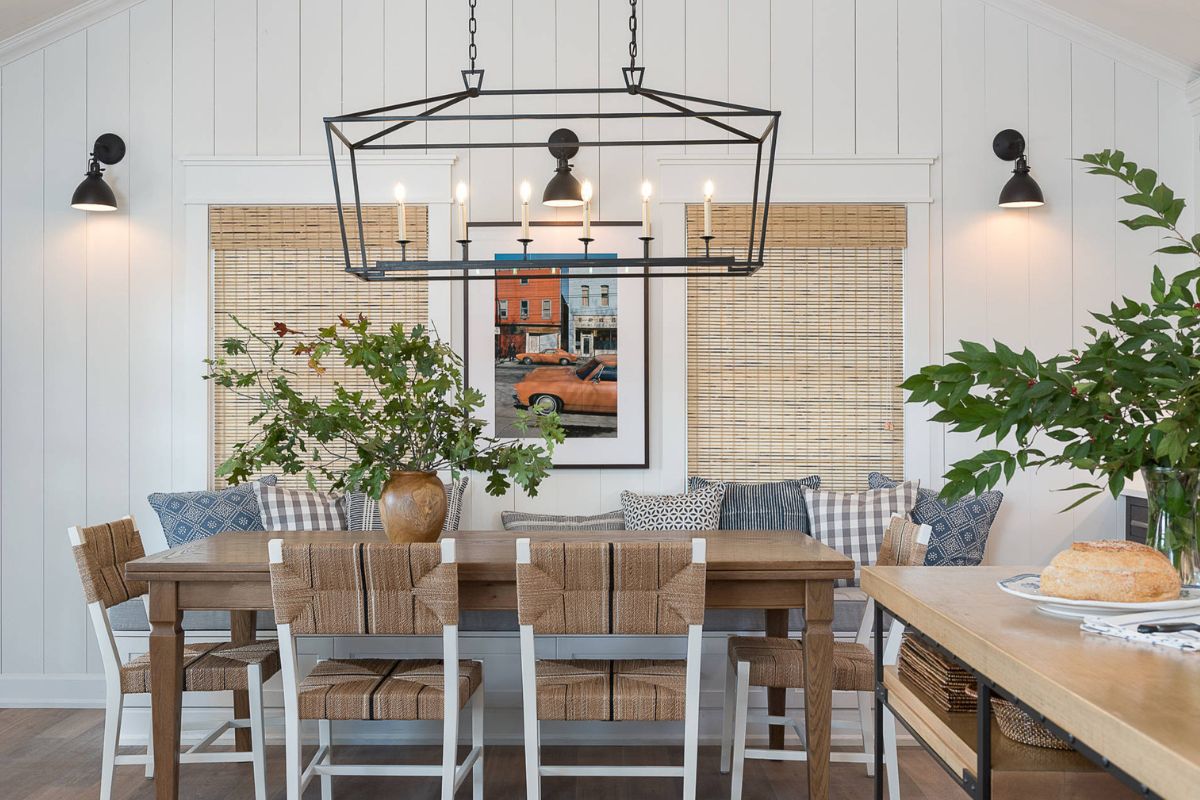
A farmhouse dining room feels like a place where long meals and good conversation come naturally. A broad plank table with a trestle base sits under a black iron chandelier, Windsor chairs line one side and a simple bench the other, and a painted hutch holds stacks of white ironstone. Shiplap or beadboard walls, a jute rug, and a pitcher of garden flowers complete the scene.
Farmhouse style comes from rural homes where the table was the center of daily life, used for meals, homework, canning, and card games. In the dining room, that heritage shows up as sturdy, honest furniture, natural materials, and soft colors that make the space feel relaxed rather than formal. Modern farmhouse versions keep the warmth but add cleaner lines, crisp contrast, and fewer accessories.
Key Takeaways
- A solid wood farmhouse table, often with a trestle or turned legs, is the heart of the room.
- Windsor, ladder-back, and cross-back chairs mix well with benches for relaxed seating.
- A hutch, buffet, or open plate rack displays ironstone, stoneware, and baskets.
- Warm whites, creams, and soft greige walls pair with wood, black iron, and muted accent colors.
- Shiplap, beadboard, board and batten, and exposed beams add architectural character.
- A statement chandelier hung at the right height ties the dining area together.
Traditional Versus Modern Farmhouse
Knowing which direction you prefer makes every later choice simpler.
Traditional Farmhouse
The traditional version leans into age and patina: chippy painted furniture, distressed wood, vintage textiles, and collections of crocks or ironstone. Colors are soft and warm, and pieces often look inherited rather than bought new.
Modern Farmhouse
Modern farmhouse dining rooms use the same materials with a cleaner edit. Think a smooth oak table, black metal chairs or crisp white Windsors, a simple linear chandelier, and white walls with black window frames. Fewer accessories and more contrast give a fresher feel.
Finding Your Mix
Most rooms land somewhere in between. A weathered reclaimed table with sleek black chairs, or a modern white room with a vintage hutch, gives you the best of both while keeping the style personal.
The Farmhouse Dining Table
The table is the most important purchase and deserves careful attention.
Wood and Finish
Reclaimed pine, oak, and elm are classic for their knots and visible grain. A natural or lightly whitewashed finish feels casual, while a darker walnut or espresso stain looks more traditional. A painted base, in white, black, or sage, with a natural wood top is another typical farmhouse treatment.
Base Styles
Trestle bases are open and allow benches to slide underneath easily. Turned or chunky square legs give a classic kitchen-table look. Pedestal bases work well on round tables, which suit square rooms and smaller families.
Size and Clearance
Allow about 24 inches of table length per person and at least 36 inches between the table edge and walls or furniture, ideally 42 to 48 inches in a walkway. A long rectangular table seating six to eight is the classic farmhouse proportion, while a round table of 48 inches seats four comfortably.
Chairs and Benches
Seating is where much of the farmhouse personality comes through.
Classic Chair Styles
Windsor chairs with spindle backs, ladder-back chairs with rush or woven seats, and cross-back chairs are all farmhouse favorites. Upholstered parsons chairs in linen or ticking stripe at the head of the table add comfort and a softer note.
Benches for Flexibility
A bench on one side fits more people than chairs, and children love them. Choose one slightly shorter than the table so it tucks underneath. Add a long cushion or a few sheepskins for comfort.
Mixing Seating
Mismatched chairs painted the same color, or matching chairs in two finishes, create a collected look. Keep one element consistent, such as color, wood tone, or shape, so the mix feels deliberate.
Hutches, Buffets, and Display
Farmhouse dining rooms usually include a generous storage piece that also shows off favorite dishes.
Hutches and Cupboards
A tall hutch with glass or open upper shelves and closed lower doors holds serving pieces, table linens, and seasonal items. Painted finishes in white, cream, sage, or a muted blue suit the style, and a lightly distressed edge adds age.
Buffets and Sideboards
A long, low buffet gives a surface for serving during gatherings and a place for a pair of lamps or a large mirror above. Reclaimed wood sideboards with plank doors or sliding barn-style doors fit the modern farmhouse look.
Styling Display Shelves
- Stack white ironstone plates, platters, and pitchers for a classic, calm display.
- Add warmth with wooden cutting boards, woven baskets, and a few pieces of stoneware.
- Leave some empty space on each shelf so the arrangement does not look cluttered.
Walls, Floors, and Architectural Details
Architecture gives a farmhouse dining room its sense of history.
Wall Treatments
Shiplap, beadboard wainscoting, and board and batten are classic choices. Painted in warm white, soft greige, or a muted sage, they add texture without heavy pattern. A single wall of reclaimed wood behind the hutch can act as a focal point.
Flooring and Rugs
Wide-plank wood floors in a medium or slightly weathered finish are ideal. Ground the table with a jute, sisal, or flat-woven wool rug large enough that chairs stay on it when pulled out, usually 24 inches past the table edge on all sides. Natural fiber rugs are durable but can be harder to clean after spills, so a washable flatweave is wise in family homes.
Beams and Trim
Exposed wood beams, real or faux, add rustic character to taller ceilings. Simple wide trim, a painted plate rail, or a window seat with storage can add charm in a room without original details.
Color, Textiles, and Seasonal Styling
The farmhouse palette is warm, light, and grounded in nature.
Base Colors
Warm white, cream, and soft greige make the most of daylight and let wood furniture stand out. Choose whites with a slightly warm undertone, which feel softer next to pine and oak.
Accent Colors
Sage green, dusty blue, muted navy, and barn red appear on painted furniture, chair cushions, or a hutch interior. Black iron accents on lighting, curtain rods, and hardware add crisp definition.
Textiles and Tabletop
Linen napkins, a grain-sack or ticking stripe runner, and simple white or cream dinnerware keep the table relaxed. Buffalo check, gingham, and small florals work in limited doses on cushions or curtains. Choose washable cotton and linen so the room stays practical for everyday meals.
Seasonal Styling
A farmhouse dining room changes easily with the seasons. In spring, a stoneware pitcher of tulips or branches and a linen runner keep the table fresh. Summer suits herbs in small terracotta pots and a bowl of fruit.
Autumn brings pumpkins, dried wheat, and a plaid throw over the bench, while winter calls for evergreen garlands, pinecones, and plenty of candles. Keep the base of the room neutral so seasonal details can rotate without clashing.
Lighting the Dining Table
Lighting is the finishing piece that pulls the farmhouse room together.
Chandeliers and Pendants
Wrought iron candle-style chandeliers, wood bead fixtures, metal lantern pendants, and linear chandeliers with several shades over a long table are all farmhouse favorites. Hang the bottom of the fixture about 30 to 36 inches above the tabletop, and choose a width roughly half to two-thirds that of the table.
Layered Light
Add wall sconces near the hutch or a pair of lamps on the buffet for softer evening light. Put the chandelier on a dimmer and use warm bulbs. Candles in iron or wood holders on the table add a cozy glow for gatherings.
Budget and DIY Ideas
Farmhouse style rewards patience and a little effort more than a big budget.
Where to Spend
Put most of the budget into the table and the chandelier. A solid wood table will last decades and can be refinished, and the light fixture sets the tone for the whole room. Chairs, benches, and accessories can be gathered slowly over time.
Where to Save
Secondhand chairs, hutches, and benches are easy to find and simple to unify with paint. Board and batten or beadboard panels can be installed with basic tools and painted in a weekend. Thrifted ironstone, baskets, and old bread boards make a display look collected without costing much.
Easy Weekend Projects
Paint a tired hutch in sage or cream and swap its hardware for black iron pulls. Sew simple linen chair cushions with ties, or build a plank bench from reclaimed boards. Even repainting the walls a warm white can shift a dated room toward farmhouse.
Small Dining Rooms and Open Plans
In a small dining room, a round pedestal table with four chairs saves space and makes conversation easier. A bench pushed against the wall, sometimes built in as a corner banquette with storage below, seats more people in less room. A narrow wall-mounted plate rack can replace a bulky hutch.
In an open-plan home, a rug and a chandelier define the dining zone. Repeat one wood tone or accent color from the kitchen or living room so the spaces flow together.
Common Mistakes to Avoid
The biggest mistake is overloading the room with signs, galvanized buckets, and faux-rustic accessories, which can look dated quickly. Choose a few genuine or well-made pieces instead. Another is buying a table too large for the room, leaving no space to pull out chairs. Finally, avoid hanging a large chandelier too high or too low, which throws off the proportions of the whole space.
Conclusion
A farmhouse dining room is warm, practical, and made for gathering. A sturdy wood table, mixed chairs and benches, a well-styled hutch, soft colors, and a statement chandelier create the classic look.
Choose a traditional or modern direction, add architectural texture where the room allows, and let seasonal details keep the table feeling fresh. The result is a dining room that welcomes family and friends every day of the year.
Frequently Asked Questions
More Farmhouse Style Decor
- Farmhouse Style: The Ultimate Guide
- Farmhouse Style Bedroom: Rustic Charm and Cozy Elegance
- Farmhouse Style Living Room: Inviting Warmth and Serenity
- Farmhouse Style Kitchen: Mixing Nostalgia with Modern Convenience
- Farmhouse Style Entryway: Rustic Charm at the Doorstep