The postwar era gave rise to a clean, unfussy aesthetic that still feels fresh. Known as mid-century modern, this design movement spans roughly 1945–1970 and mixes clear geometry with honest materials. You will find open plans, glass walls, and furniture built for comfort and function.
This guide helps you spot the core characteristics, trace the movement from its roots, and apply the look to your home with confidence. Expect practical tips, historical anchors like Eames and Neutra, and a focus on how the style balances form and function.
Whether you’re curating a room or an entire house, the appeal lies in its calm simplicity. Learn to recognize authentic pieces and smart reissues, and use those cues to create a cohesive, livable space that still resonates today
Key Takeaways
- Mid-century modern is a postwar design movement (circa 1945–1970) known for clean lines and honest materials.
- Core characteristics include open plans, glass walls, and ergonomic furniture.
- The style crosses architecture, interiors, and product design for a cohesive look.
- Simplicity and “less but better” choices make the aesthetic easy to live with.
- This guide offers practical ways to identify, source, and apply the style in your home.
What Makes Mid-century Modern Endure Today
Simple forms that solve everyday needs are why this aesthetic still fits many homes. Clarity of design and honest materials make rooms feel calm and easy to live in.
Durable construction and timeless furniture deliver real value for busy households and renters. Pieces built for family life stand up to wear and can be refreshed with textiles or art without losing their purpose.
Open plans and ample daylight improve interior comfort and help families connect. Many designers favor these elements because they support relaxed, social living and reduce visual clutter.
The look layers well with other decor — from minimalist to more traditional items — so you can evolve your home without a full redo. Iconic pieces like reissued chairs prove that good design lasts and still speaks to designers and buyers today.
Put function first. This style rewards thoughtful choices that solve real needs while keeping a warm, human touch.
From Post-World War II Roots to a Design Movement
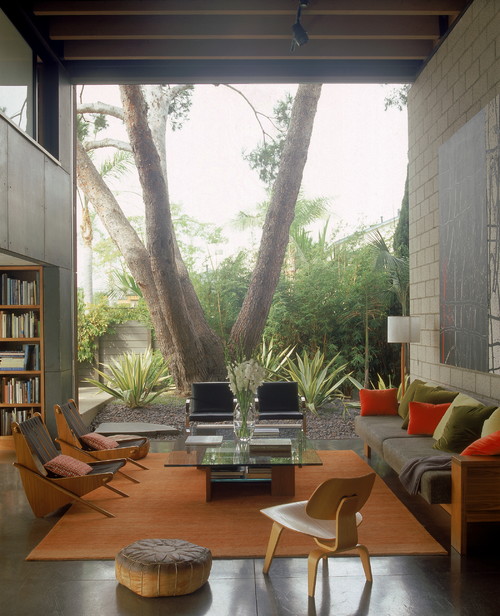
After World War II, a surge of optimism and new building methods reshaped how Americans lived at home. Rising prosperity and mass production made efficient, bright houses possible. Families wanted open plans, indoor–outdoor flow, and furniture that worked for daily life.
How post-World War II optimism shaped living
Practical living drove choices: affordable materials, simpler plans, and a focus on comfort. Suburban growth and new construction methods sped adoption of these ideas across the country.
International Style and Bauhaus influence
European figures from the 1930s—teachers and architects trained in Bauhaus and the International Style—brought structural clarity to U.S. practice. Their emphasis on rational planning and minimal decoration mixed with warmer American and Scandinavian approaches.
Case Study Houses and construction innovations
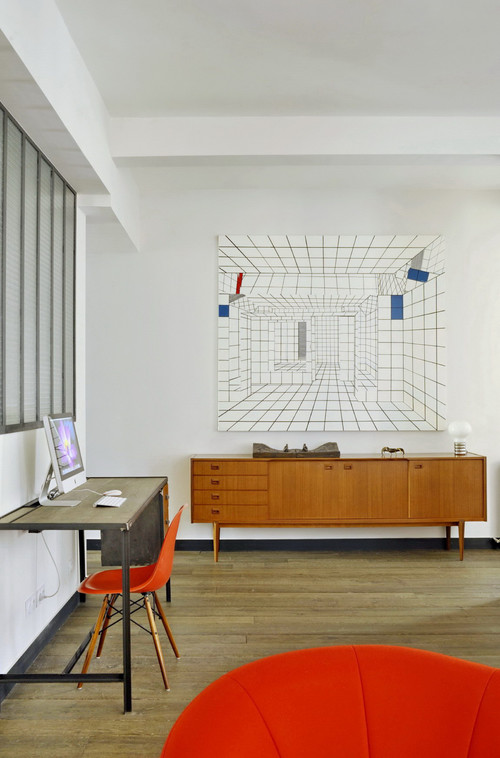
The Case Study Houses (1945–1966) tested lightweight, post-and-beam systems and extensive glass walls. Designers like the Eameses, Neutra, Saarinen, and Koenig used prototypes to show how modern architecture could be family-friendly and connected to landscape.
Why the late-1990s revival stuck
The style revived in the late 1990s because it felt adaptable, light, and livable. Today, those lessons from the mid-20th century still guide smart home planning and influence designers and buyers who value clarity and everyday beauty.
Signature Characteristics and Architecture of the Period
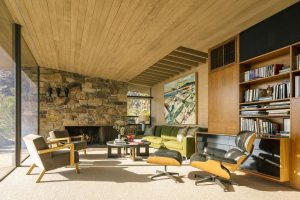
Clean geometry and honest materials give this era’s architecture a quiet, enduring clarity. Recognize it by simple shapes, crisp clean lines, and truthful use of wood, stone, and glass.
Clean lines, simple forms, and honesty of materials
Look for geometric shapes and restrained ornament. Builders favored exposed beams and natural finishes so structure reads as part of the design.
Glass walls, open floor plans, and bringing the outdoors in
Floor-to-ceiling glass and open plans blur interior‑exterior boundaries. Rooms feel larger, brighter, and more social while still meeting daily needs.
Post-and-beam construction, low-pitched roofs, and flat rooflines
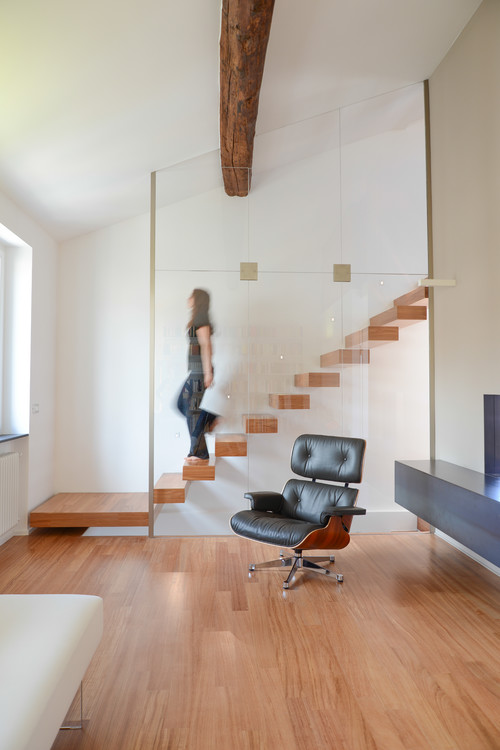
Post-and-beam frames removed heavy interior walls, allowing uninterrupted space and long sightlines. Typical exteriors are wide and low, with flat or low-pitched rooflines and deep eaves for shade.
Functionality first: designing for everyday needs
Design focused on human scale: efficient circulation, built-in storage, and furniture that serves real life. Function drives the form so rooms work well day to day.
Iconic examples that define the look
Canonical houses – like the Farnsworth House, Stahl House, Kaufmann Desert House, and Eichler tract homes -show how glazing, post-and-beam structure, and warm natural materials create a cohesive architectural language.
Furniture, Materials, and the Modern Interior
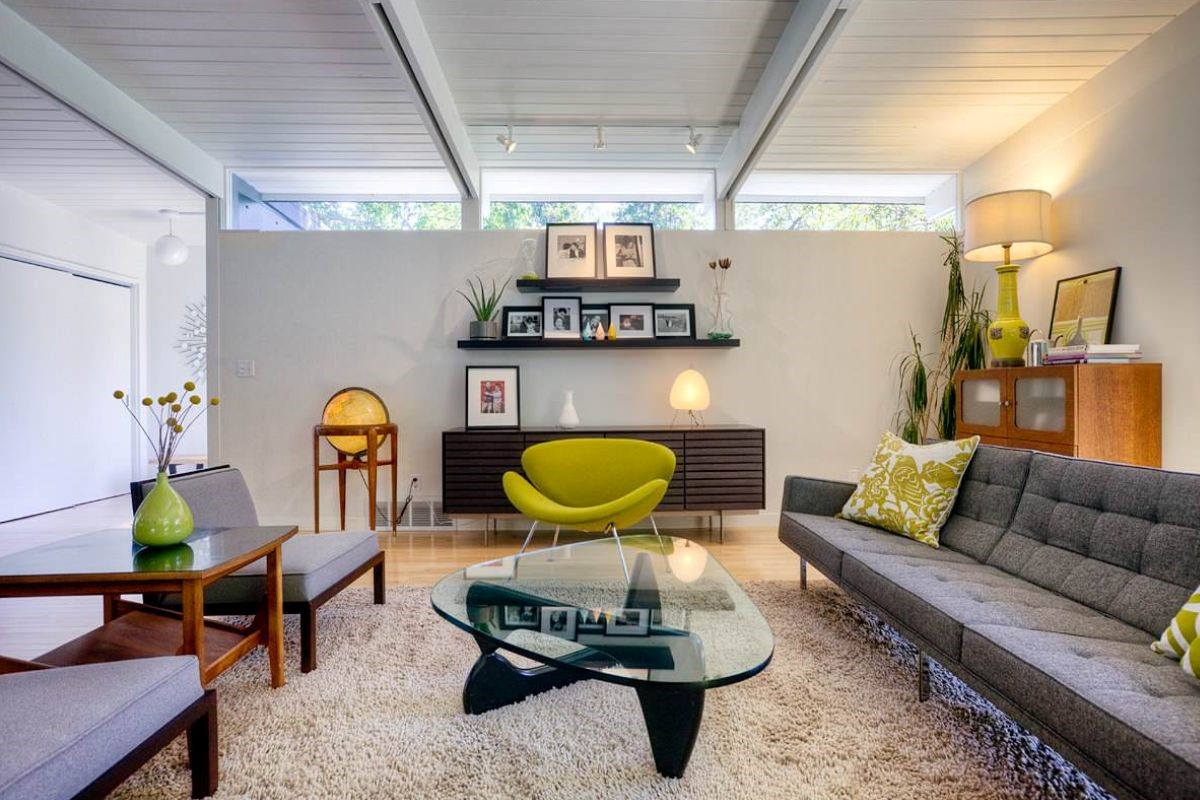
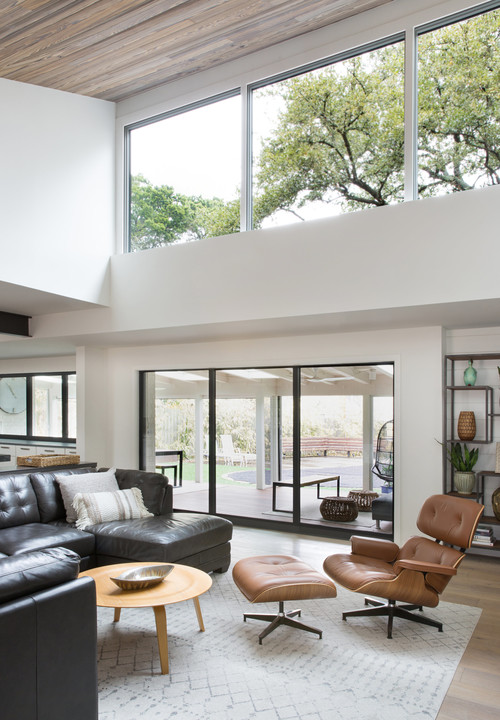
A handful of signature pieces can anchor a living room and set the tone for the whole house. Iconic seating and tables—like the Eames Lounge Chair and Ottoman, Noguchi coffee table, Bertoia Diamond, and Saarinen Tulip—balance proportion, comfort, and clear purpose. These pieces show how good furniture design makes rooms feel effortless.
Woods such as walnut and teak bring warmth, while stone and glass add clarity. Metal frames provide structure and contrast. These natural materials were chosen for honest texture and long life.
Colors and texture favor earthy neutrals with confident accent hues. Soft wool rugs, leather seating, and matte ceramics (think Edith Heath’s Coupe) layer tactility without clutter.
Scandinavian designers like Wegner, Jacobsen, and Mogensen pushed democratic design: inviting silhouettes, durable finishes, and clear joinery. Craftsmanship details—molded plywood, welded wire, and solid joinery—affect comfort and longevity.
When buying vintage or reissues, check veneer thickness, foam quality, and maker labels. Arrange furniture to keep sight lines open and circulation smooth. The right process links form with function, so well-made pieces serve daily life and reduce the need to replace items often.
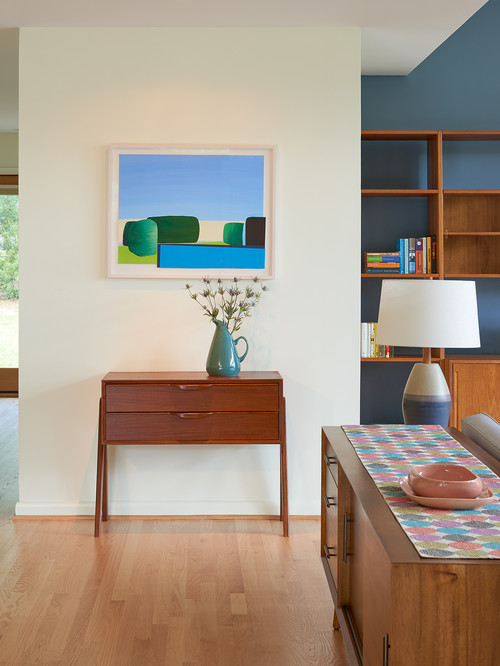
Regional Perspectives: United States, Brazil, and Europe
From sun-drenched deserts to planned capitals and northern workshops, regional differences reveal how the style adapts without losing core values of clarity, proportion, and livability.
United States: Palm Springs and tract homes
Palm Springs became a living gallery for desert-adapted architecture. Architects like Richard Neutra and Albert Frey used glass, deep overhangs, and indoor‑outdoor flow to tame heat and frame views.
Developers such as Joseph Eichler translated these ideas into accessible tract homes. Eichler houses used post-and-beam frames, open plans, and glass walls to bring modern living to many American families.
Brazil: Brasília and expressive civic forms
Brasília (inaugurated 1961) is a rare national capital built around the new aesthetic. Oscar Niemeyer’s sculptural buildings—Congress, the cathedral, Palácio da Alvorada—turn concrete into graceful, public art.
Wide plazas, bold curves, and expressive concrete give the city a regional flavor while staying true to the movement’s ideals.
In Northern Europe, designers such as Alvar Aalto and Hans Wegner emphasized natural materials and human scale. Their furniture promoted democratic design: beautiful, durable, and widely usable.
European émigré architects (Gropius, Mies, Saarinen) also shaped American schools of thought, proving how ideas crossed oceans and evolved by climate and culture.
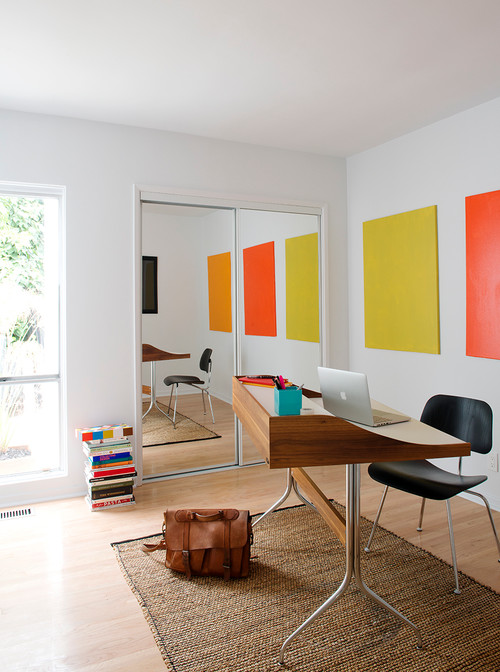
Mid-century modern in Practice: How to Get the Look at Home
Focus on how a space breathes: circulation, daylight, and views shape a lasting interior. Start small by editing clutter and opening sight lines so rooms feel larger and calmer.
Start with the shell
Open up circulation where possible. Align window heights and invite light deeper into rooms to get the look without a full renovation.
Materials that matter
Choose teak or walnut for warmth, and pair stone and glass for clarity. Add metal accents for crisp contrast and favor honest finishes you can maintain over time.
Color palette and accents
Set a base of warm whites, taupes, or muted olive. Use confident pops—art, a statement chair, or pillows—to lift the decor without overwhelming the room.
Room-by-room and mixing eras
In living areas, float seating on a rug to keep sight lines open; in dining, try a pedestal table; in bedrooms, choose low platforms. Pair classic modern furniture icons with contemporary lighting and soft textiles for comfort.
Where to source
Combine vintage finds, reputable reissues, and sustainable pieces. Verify joinery and foam quality, refinish rather than replace when possible, and invest in one or two hero pieces that anchor the design.
Practical tip: Edit first, then follow a simple process: invest in key furniture, layer texture, and keep pathways wide so the layout works every day.
Conclusion
Across continents and decades, the movement stays relevant by marrying function with elegant shapes.
The mid-century modern style endures because it balances clarity, comfort, and everyday beauty. This approach improves how a room feels and works without excess.
Good architecture and thoughtful furniture shape a calm, flexible space. Open plans, considered shapes, and smart furniture choices link structure with interior design.
Apply the lessons of proportion, honest materials, and human-centered planning to any home. Start with a few changes, then build a cohesive collection that reflects your taste over time.
Celebrate the global roots of the style and trust that simple, well-made design can be timeless and personal. With confident choices, you can capture the spirit of modern architecture in a way that feels unmistakably yours.
Frequently Asked Questions
More Mid-century Modern Style Decor
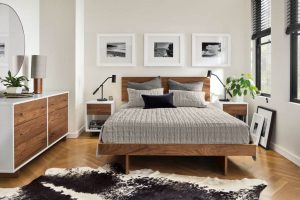
- Mid-Century Modern Style Bedroom: Iconic Sleep Sanctuary
- Mid-Century Modern Style Living Room: Timeless Elegance
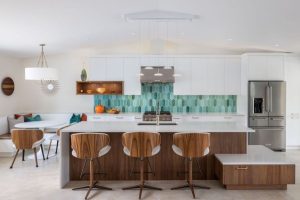
- Mid-Century Modern Kitchen: Stylish Culinary Spaces