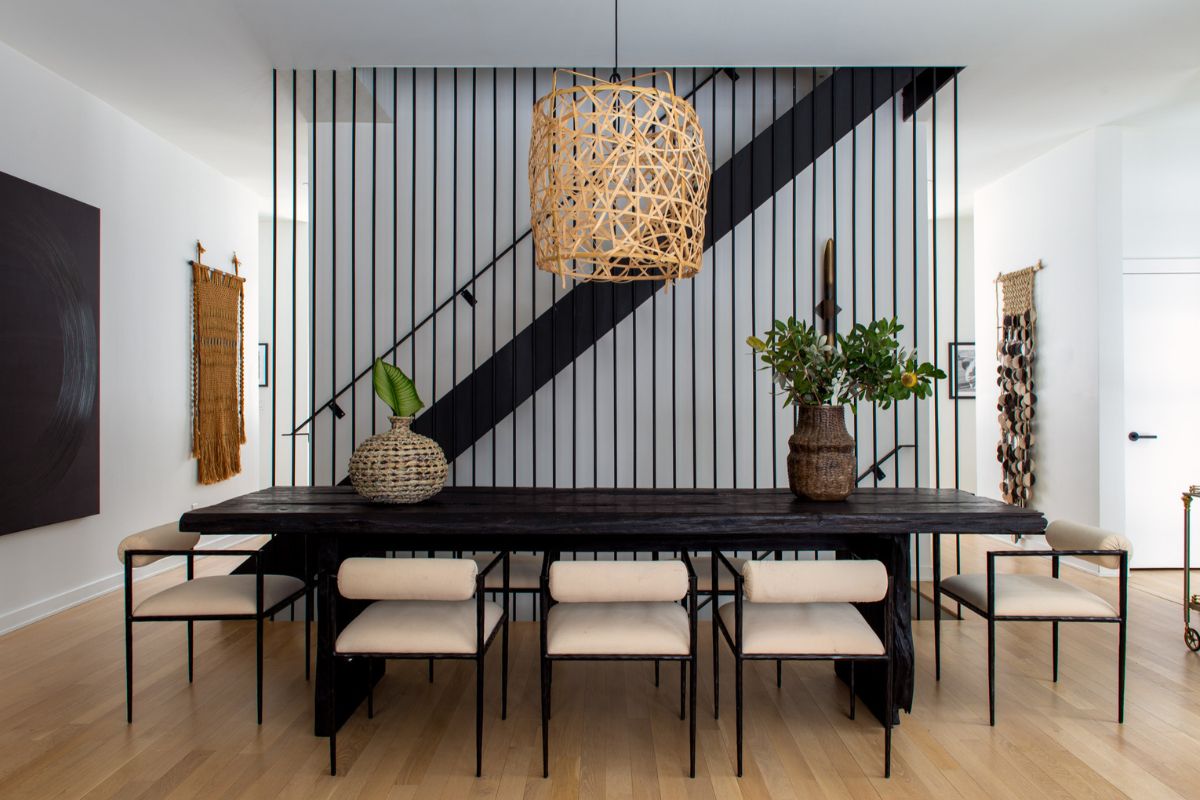
A contemporary style dining room feels polished, relaxed, and ready for company. An oval table with a travertine top rests on a sculptural pedestal base, surrounded by curved upholstered chairs in a soft boucle. Above it, a cluster of opal glass globes hangs at different heights, while a fluted oak sideboard runs along one wall beneath a large abstract canvas. The colors are warm and earthy, the shapes are rounded, and the light is soft enough to linger over dinner.
Contemporary design follows what is current, which makes the dining room a natural place to explore new ideas in shape, color, and material. The style keeps clean lines and uncluttered surfaces, but it welcomes curves, tactile fabrics, and statement lighting that make the room feel personal. The aim is a stylish dining space that works for weeknight meals as well as long gatherings with friends.
Key Takeaways
- Contemporary dining rooms combine clean lines with soft curves and tactile materials.
- Round, oval, and pedestal tables are popular for both style and conversation.
- Upholstered and mixed seating adds comfort and personality.
- Warm earthy palettes with stone, wood, and brushed metal feel current and inviting.
- A statement pendant or chandelier anchors the room, supported by layered light.
- A rug, curtains, and upholstered pieces soften sound and add warmth.
How Contemporary Dining Style Differs
Contemporary is often confused with modern and traditional styles. The differences guide better choices.
Contemporary vs. Modern
Modern design refers to the mid-twentieth-century movement, with tapered legs, molded plywood, and teak furniture. Contemporary design is about the present, so it can include modern pieces, but it also embraces curved silhouettes, natural stone, and new finishes.
Contemporary vs. Traditional
Traditional dining rooms feature carved wood, matching sets, formal chandeliers, and china cabinets. Contemporary rooms favor simple forms, mixed seating, sculptural lighting, and closed, low storage instead of display cabinets.
Current Design Ideas
Several themes define the contemporary dining room at the moment. Rounded shapes soften rooms full of straight lines, natural materials such as travertine and oak add warmth, and earthy colors like terracotta and olive create an inviting backdrop. Comfort matters too, so upholstered chairs have largely replaced hard, formal seating.
Choosing the Dining Table
The table sets the tone for the room, and contemporary tables often double as sculpture.
Shapes and Sizes
Round tables encourage conversation and suit square rooms; a 48-inch round seats four comfortably and a 60-inch round seats six. Oval tables soften rectangular rooms and seat six to eight at 84 to 96 inches long. Rectangular tables remain practical for large gatherings, with about 24 inches of width per person.
Materials
Travertine, marble, and sintered stone tops pair beautifully with pedestal or slab bases. Solid oak and walnut bring warmth and age well. Glass tops on metal or wood bases make small rooms feel larger, while lacquered tops in deep colors create a bold statement.
Bases and Legs
Pedestal bases free legroom and make it easy to add an extra chair. Chunky cylindrical legs, sled bases, and sculptural crossed supports all suit the style. Check that chair arms fit beneath the tabletop before buying.
Seating Options
Comfort and character are equally important when choosing contemporary dining seating.
Upholstered Chairs
Curved-back chairs in boucle, velvet, performance linen, or leather are comfortable for long dinners. Choose performance fabrics that resist stains for households with children, and consider slipcovers for easy cleaning.
Benches and Banquettes
A built-in banquette with upholstered cushions saves space and creates a relaxed, restaurant-like feel. A simple bench on one side of the table seats extra guests and slides away when not in use.
Mixing Seating
Contemporary rooms often combine two chair styles, such as upholstered host chairs at the ends with wood side chairs. Keep one common thread, such as color, material, or leg finish, so the mix looks intentional.
Storage and Layout
Good planning keeps a contemporary dining room comfortable and uncluttered.
Sideboards and Buffets
A low sideboard in fluted wood, lacquer, or walnut veneer holds serveware, linens, and candles. Its top works as a serving station during meals and a display surface for a lamp, a sculptural vase, and a stack of books.
Clearances and Flow
Leave about 36 inches between the table and walls or furniture, and 42 to 48 inches where people need to pass behind seated guests. In an open-plan space, use the table and pendant to define the dining zone, and align the table with the light fixture.
Rugs
Choose a rug that extends at least 24 inches beyond the table on every side so chairs stay on it when pulled out. Flat-weave wool, low-pile, or indoor-outdoor rugs are easier to clean than shag or high-pile styles.
Color and Materials
Contemporary dining rooms use color and material to create warmth and interest.
Current Color Palettes
Warm whites and creamy beiges create a soft base. Earthy tones such as terracotta, olive, clay, and mushroom feel welcoming, while deep shades like forest green, ink blue, and charcoal create drama. A popular pairing is warm white walls, an oak table, cream boucle chairs, and terracotta accents.
Wood, Metal, Glass, and Stone
Combining two or three materials creates depth. Travertine and walnut feel warm and earthy, oak and brushed brass feel bright and elegant, and black metal with smoked glass feels sleek and urban.
Layering Texture
Fluted wood, boucle upholstery, linen curtains, and a nubby wool rug add tactile interest. Mixing matte and lightly reflective surfaces keeps the room from feeling flat.
Sustainable Choices
Reclaimed or responsibly sourced wood, natural fibers such as wool and linen, and vintage furniture are good choices for the environment. A vintage sideboard or set of chairs also adds character to a new room.
Lighting and Ambiance
Lighting is one of the most important design decisions in a contemporary dining room.
Statement Fixtures
Sculptural pendants, multi-globe chandeliers, linear fixtures, and oversized paper lanterns all suit the style. Choose a fixture about one-half to two-thirds the width of the table, and hang it so the bottom is 30 to 36 inches above the tabletop.
Layered Lighting
Add dimmable recessed lights or a cove for general light, wall sconces for a soft glow, and a lamp on the sideboard. Use warm bulbs around 2700K so food and faces look their best, and put every circuit on a dimmer.
Candles
Low candles or a cluster of glass votives add a warm, flickering layer. Unscented candles work best at the table. Ceramic or brass candleholders in varied heights add a sculptural note that suits the style.
Art, Mirrors, and Textiles
Accessories give a contemporary dining room its personality.
Wall Art and Mirrors
One large abstract painting, a pair of framed prints, or a gallery of black-and-white photography works well. A large round or arched mirror reflects light and makes the room feel larger. Hang art with its center around 57 to 60 inches from the floor, or lower above a sideboard.
Table Styling
A sculptural bowl, a low arrangement of seasonal branches, or a pair of candlesticks is enough for daily life. Remove centerpieces during meals so they do not block views across the table. Keep arrangements below about 12 inches tall, or use tall, slender stems that guests can see around.
Table Linens and Window Treatments
Linen napkins and runners in earthy tones add softness. Simple linen or sheer curtains hung high and wide make windows look larger and filter light gently. Choose fabrics in the same family as the chairs so the room feels pulled together.
Small Spaces and Open Plans
Contemporary style works well in compact dining areas and open-plan homes, where the dining zone must feel defined without walls.
Compact Dining Corners
A round pedestal table with three or four armless chairs fits neatly into a corner or bay window. A built-in banquette along one or two walls saves the space chairs need to pull out, and storage drawers under the seat can hold linens and placemats.
Defining the Zone
In an open plan, a rug, a statement pendant, and a change in wall color or texture can mark the dining area. Echo one color or material from the kitchen, such as the island stone or cabinet wood, so the two zones relate to each other.
Flexible Furniture
Extendable tables, stackable chairs, and a slim console that opens into a serving surface help small homes host larger groups. Choose extension mechanisms that store the leaf inside the table, so there is nothing to find in a closet before guests arrive.
Care and Upkeep
Contemporary materials need a little care to stay beautiful. Seal travertine and marble tabletops regularly and wipe spills quickly, especially wine, citrus, and coffee, which can etch stone. Use placemats and coasters on lacquered and wood finishes, and rotate the rug every few months so it wears evenly. Vacuum upholstered chairs weekly and treat stains promptly according to the fabric’s cleaning code.
Common Mistakes
A few common errors can make a contemporary dining room feel uncomfortable or dated:
- Choosing a light fixture that is too small for the table.
- Buying a table that blocks walkways around the room.
- Using only hard surfaces, which causes echo and a cold feel.
- Following too many trends at once instead of choosing one or two.
Conclusion
A contemporary style dining room combines sculptural tables, comfortable seating, warm materials, and statement lighting. Clean lines and soft curves work together to create a stylish space that feels current and welcoming.
Choose a table that fits the room, layer light and texture, and add one or two personal pieces of art. The result is a dining room that suits everyday meals and memorable gatherings alike.
Frequently Asked Questions
More Contemporary Style Decor
- Contemporary Style: The Definitive Guide
- Contemporary Style Bedroom: A Blend of Elegance and Simplicity
- Contemporary Style Living Room: Sleek and Sophisticated Design