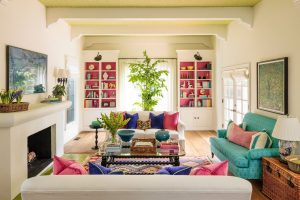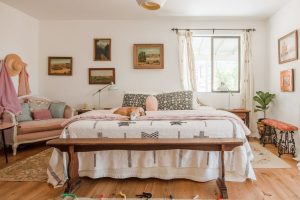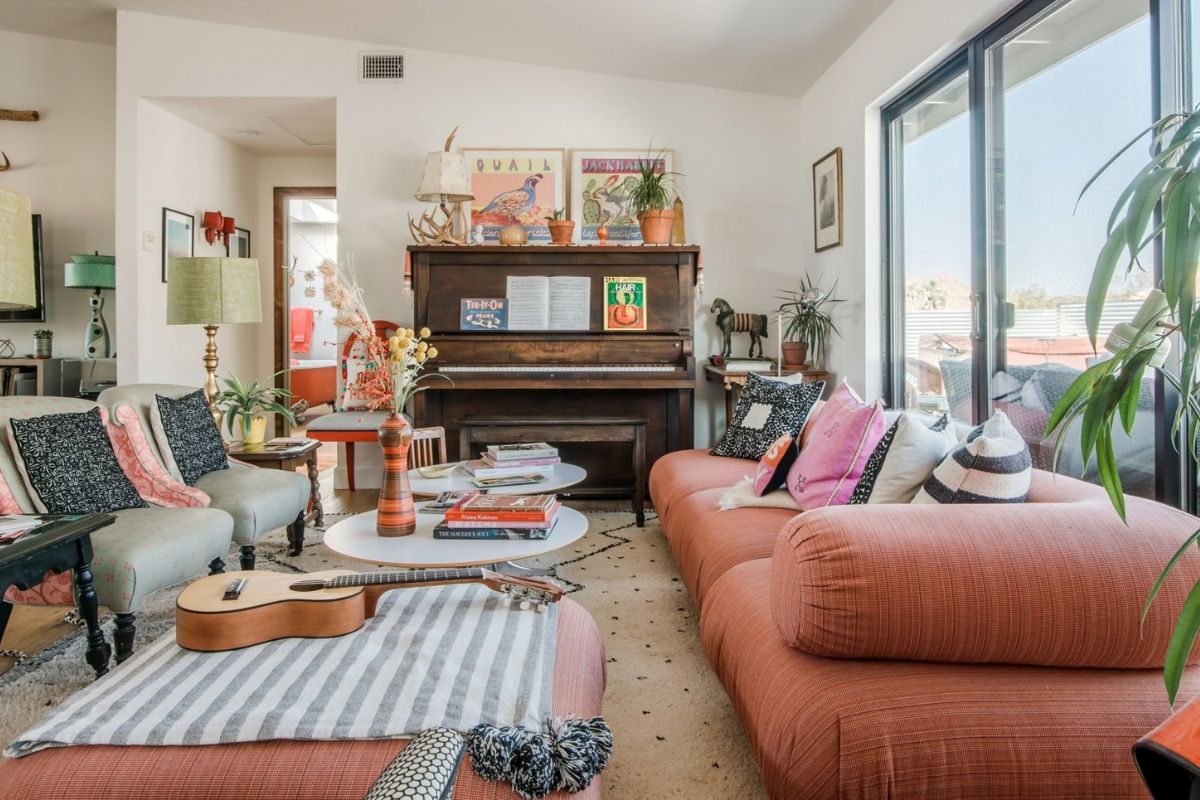
Picture a living room where a deep green velvet Chesterfield faces a pair of molded mid-century lounge chairs, with a round travertine coffee table between them. A worn Persian rug in faded reds runs underfoot, built-in shelves hold stacked books and handmade ceramics, and a gallery wall mixes an old landscape painting with bold modern prints. It sounds like a lot, yet the room reads as relaxed and inviting.
That is the essence of an eclectic living room. It borrows from several design genres, often traditional, mid-century, industrial, bohemian, and global, and lets them meet in one social space. What keeps it from tipping into chaos is a clear layout, a disciplined palette, and a few repeated materials that let very different pieces talk to each other.
Key Takeaways
- An eclectic living room mixes design genres around a clear focal point and a practical seating layout.
- A dominant neutral or single deep color lets furniture from different eras share the room.
- Seating can be mixed freely if pieces are similar in seat height and visual weight.
- The rug is often the best starting point for the room’s palette.
- Shelves, gallery walls, and coffee tables are the main stages for personal collections.
- Layered lamps and fixtures from different periods add both function and character.
Plan the Layout First
Before mixing styles, the room needs a sensible structure. A living room that works well for conversation and daily use can carry far more variety than one with an awkward layout.
Choose a Single Focal Point
Most living rooms have a natural focus: a fireplace, a large window, built-in shelves, or the television wall. Decide which one leads, and arrange the main seating to face it. An eclectic room already has plenty of interest, so a clear focal point keeps the eye from wandering.
Build a Conversation Zone
Group the sofa and chairs so people can talk without raising their voices, typically within about 8 to 10 feet of each other. Leave around 16 to 18 inches between the sofa and coffee table, and keep main walkways at least 30 to 36 inches wide. In open-plan spaces, a large rug helps define the living area.
Small and Open-Plan Rooms
In a small living room, keep the sofa simple and let one or two accent pieces carry the eclectic mix. Leggy furniture, a round coffee table, and a large mirror keep the space feeling open. In open-plan homes, repeat the living area’s main colors in the kitchen or dining zone so the whole space reads as one.
Mixing Seating From Different Eras
Seating takes up the most floor space and has the biggest effect on how a living room looks. It is also where eclectic mixing can be the most rewarding.
Start With a Comfortable Sofa
The sofa should be chosen for comfort first. A classic shape such as a tuxedo, rolled-arm, or Chesterfield sofa works with almost any accent chairs, while a sleek modern sofa gives antique or carved chairs a crisp backdrop. Solid upholstery in a durable fabric, such as performance velvet, wool blends, or tightly woven linen, keeps the sofa flexible as the room evolves.
Add Contrasting Accent Chairs
Accent chairs are where genres meet. A pair of cane-back French chairs next to a modern sofa, a leather sling chair with a tufted settee, or a mid-century lounge chair beside a skirted armchair all work. Keep seat heights roughly similar, around 17 to 19 inches, so the group feels comfortable and level.
Balance Visual Weight
Heavy, fully upholstered pieces pair well with leggy, open ones. If the sofa is chunky and low, choose chairs with exposed legs or open frames. This mix of solid and airy forms helps a room full of different styles feel balanced.
Genre Pairings That Work
Many successful eclectic living rooms combine two or three distinct genres rather than many. These pairings are especially reliable.
Mid-Century Modern With Traditional
Tapered legs, teak, and walnut from mid-century design sit comfortably with rolled arms, turned legs, and classic florals. A walnut credenza beneath a gilt mirror, or a mid-century sofa with a pair of Queen Anne-style side chairs, shows how the clean and the ornate can balance each other.
Industrial With Bohemian
Metal, reclaimed wood, and exposed brick from industrial style gain warmth from bohemian layers. Think of a steel-frame coffee table on a kilim rug, a leather sofa with patterned cushions, and trailing plants on open metal shelving. The hard surfaces keep the boho layers from feeling too soft.
Global Pieces in a Modern Room
Handcrafted objects from around the world, such as a carved wooden stool, a block-printed textile, or a woven basket, add depth to a clean, contemporary room. Choose pieces for their craftsmanship and give them space, so they read as considered choices rather than souvenirs.
The Rug and Color Plan
Color is the glue of an eclectic living room. Many designers find it easiest to start with the rug.
Let the Rug Set the Palette
A vintage Persian, Turkish, or Moroccan rug usually contains several colors already. Pull two or three of them out for upholstery, cushions, and art. The rug should be large enough for at least the front legs of all main seating to rest on it.
Palettes for Eclectic Living Rooms
A few combinations that suit a mixed living room:
- Warm white, deep green, rust, and brass.
- Soft gray, navy, mustard, and walnut.
- Plaster pink, olive, terracotta, and black.
- Charcoal walls with cognac leather, ochre, and emerald.
Repeat Every Color
A color used only once looks like a mistake. Use each key color at least three times in different places, such as a cushion, a book spine, and a vase, so the eye moves around the room.
Tables, Surfaces, and Storage
Tables and storage pieces are easy places to bring in a new material or era.
Coffee and Side Tables
Mixing tables adds texture without much risk. A marble or travertine coffee table, a brass-and-glass side table, and a small carved wooden stool can all live in the same room. Keep side tables close to the height of the sofa or chair arm they serve.
Consoles and Cabinets
A vintage sideboard, an apothecary chest, or a painted armoire offers storage and becomes a display surface. Closed storage is especially valuable in an eclectic living room, since it hides remotes, cables, and everyday clutter that would compete with collections.
Handling the Television
A large black screen can feel out of place among vintage pieces. Mounting it within a gallery wall, setting it on a low vintage credenza, or framing it with shelves full of books and objects helps it blend in. A wall painted in a deep color also makes the screen less noticeable when it is off.
Walls, Shelves, and Collections
Walls and shelving give an eclectic living room its personality and tell the story of the people who live there.
Building a Gallery Wall
Mix paintings, prints, photographs, textiles, and small mirrors in a gallery wall above the sofa. Lay the arrangement out on the floor first, keep spacing consistent at around two to three inches, and hang the grouping so it spans about two thirds of the sofa’s width.
Styling Bookshelves
Shelves look best when books, objects, and empty space are balanced. Mix vertical and horizontal book stacks, add a few ceramics or sculptures, and leave some gaps. Group small objects by color or material so the shelf reads as a whole rather than many separate items.
Displaying Collections
Group collections in one place, such as a set of vintage glass on a tray or a cluster of baskets on one wall. Rotate pieces seasonally to keep the room fresh and avoid overcrowding.
Lighting the Eclectic Living Room
Lighting offers another chance to mix styles while making the room comfortable at all hours.
Layer Several Sources
Use at least three or four light sources at different heights: a ceiling fixture, floor lamps beside seating, table lamps on consoles or side tables, and perhaps a picture light. Warm bulbs, around 2700K, and dimmers make the room feel welcoming in the evening.
Mix Fixtures With Intent
A Sputnik-style chandelier with ceramic table lamps, or an arched floor lamp beside a vintage brass reading lamp, adds variety. Repeating one finish, such as brass or black, across two or three fixtures keeps the mix coherent.
Keeping It Expressive, Not Chaotic
Eclectic living rooms go wrong when nothing is edited. Too many strong patterns, colors, or collections compete, and the room loses its focus. Choose one or two areas for the boldest moves, such as a patterned rug and a gallery wall, and keep the rest calmer.
Scale is the other common problem. A tiny side chair beside an oversized sofa, or a small rug floating in the middle of a large room, makes a mix look accidental. Check proportions and give each piece enough space, and the variety will read as intentional.
Budget-Friendly Eclectic Living Rooms
Eclectic style is one of the most affordable looks to create. Thrift stores, estate sales, flea markets, and online resale listings are full of solid wood side tables, lamps, frames, and chairs that suit the style. A dated chair can be reupholstered in a bold fabric, and a plain dresser can become a media console with paint and new hardware.
Invest first in the sofa and rug, which take the most wear and set the tone, and fill in gradually with smaller finds. Thrifted frames, printed artwork, and inherited pieces can fill a gallery wall at little cost.
Conclusion
An eclectic living room brings together design genres, eras, and cultures in a space built for conversation and comfort. A clear focal point, a rug-led color palette, mixed but balanced seating, and layered lighting help very different pieces feel at home together.
Start with the layout and the largest pieces, then add art, collections, and lamps over time. Editing as the room grows keeps it expressive, personal, and easy to live in.