Imagine a sunlit room with a worn Persian rug layered over a flatweave kilim, a low rattan chair heaped with mudcloth and velvet cushions, and a vintage leather sofa draped in a faded Indian quilt. Trailing pothos spill from a macramé hanger, a pierced brass lantern throws patterns across the ceiling, and a wall of mismatched frames holds travel photos, botanical prints, and a child’s painting. Nothing matches, yet everything seems to belong.
That is bohemian style: relaxed, layered, and personal. It favors collected objects over sets, handmade over mass-produced, and comfort over formality. This guide explains where the style came from, what defines it, and how to build a bohemian home through color, furniture, textiles, plants, and lighting, while keeping it livable and uncluttered.
Key Takeaways
- Bohemian style grew out of 19th-century artistic circles and the free-spirited interiors of the 1960s and 1970s.
- Layered textures, mixed patterns, and collected global and vintage pieces define the look.
- Warm earth tones paired with jewel colors form the classic boho palette, grounded by neutrals.
- Low seating, rattan, carved wood, and vintage finds create a relaxed, lived-in feel.
- Plants and natural materials are as central to the style as textiles.
- Good boho rooms are edited: every object should be loved or useful, not just added.
The Essence of Bohemian Style
At its heart, bohemian design is a philosophy as much as a look. It celebrates creativity and individuality, and the best boho rooms feel like a portrait of the people who live there.
Origins of the Bohemian Spirit
The word “bohemian” comes from the French “bohémien,” once used for Romani travelers who were thought to have come from Bohemia, now part of the Czech Republic. In 19th-century Paris, the term was adopted for artists, writers, and musicians who lived unconventional lives on little money. Henri Murger’s stories of Parisian artists, later the basis of Puccini’s opera “La Bohème,” helped romanticize their cluttered, colorful garrets filled with secondhand furniture and souvenirs.
Artists’ Homes and Free Spirits
In the early 20th century, the painters of the Bloomsbury group turned Charleston, their Sussex farmhouse, into a famous example of the style, painting walls, furniture, and doors by hand. The 1960s and 1970s brought a new wave, as travel, counterculture, and a love of handcraft filled homes with Moroccan poufs, Indian textiles, macramé, and houseplants.
Core Values: Freedom and Self-Expression
Bohemian design values nonconformity, creativity, and comfort. There are no strict rules about matching finishes or periods. Instead, rooms are built slowly from pieces with meaning: a rug found on a trip, a chair rescued from a flea market, a ceramic bowl made by a friend.
Modern Bohemian
Today’s boho interiors often sit on a lighter base of white walls and pale wood, with rattan, jute, and greenery doing much of the work. This lighter take, sometimes called modern boho, keeps the spirit of the style while feeling calmer and easier to maintain.
Key Elements of Bohemian Decor
Bohemian decor is built on collecting and combining. A few core techniques make an eclectic mix look intentional rather than accidental.
Layering and Texture
Texture is the backbone of a boho room. Combine velvet with linen, rattan with carved wood, leather with wool, and brass with clay. Layer rugs on rugs, throws on sofas, and cushions on chairs so the room feels soft and welcoming from every angle.
Mixing Patterns
Boho rooms mix stripes, florals, paisleys, ikats, and geometrics freely. To keep the mix lively rather than chaotic, repeat a few colors across the patterns and vary their scale, pairing a large-scale print with smaller ones and solid textured fabrics.
Global and Vintage Influences
Moroccan, Indian, Turkish, West African, Mexican, and Southeast Asian crafts all appear in bohemian homes. Look for handwoven rugs, block-printed cottons, mudcloth, suzani embroideries, and hand-thrown pottery. Vintage furniture and flea market finds add history and keep the room from looking like it came from a single store.
Sourcing Thoughtfully
Buy handmade pieces from artisans, fair trade sellers, and reputable vintage dealers when you can. Learn a little about the meaning of the objects you bring home, and avoid using sacred or ceremonial items as casual decoration.
Building a Bohemian Color Palette
Color sets the warmth and mood of a boho room. The palette can be rich and saturated or light and earthy, but it always feels warm.
Warm Earth Tones
Terracotta, rust, burnt orange, ochre, mustard, sienna, and umber form the classic bohemian base. These colors come naturally from clay, wood, leather, and many traditional dyes, which is why they feel at home with handmade textiles.
Jewel Colors
Emerald, sapphire, ruby, amethyst, and deep teal add depth and a sense of luxury. Use them in velvet cushions, a painted cabinet, a glass lantern, or a richly colored rug.
Neutrals as Anchors
Warm white, cream, sand, and natural wood give the eye somewhere to rest. In a modern boho room, neutrals may cover most of the walls and large furniture, with color arriving through textiles and art.
Balancing Color
Start with a neutral or earthy base, then choose three or four main colors and repeat them across the room in different textures. A good pairing for beginners is terracotta, mustard, and deep teal on a cream background. Add black accents, such as an iron lamp or a mudcloth pillow, for definition.
Lighter Modern Boho Palettes
For a calmer take, keep walls warm white and build the room around sand, oatmeal, caramel, and olive, with terracotta or dusty blush as the only strong accents. Natural rattan, jute, and pale oak carry much of the color, and greenery supplies the rest. This approach suits small rooms, rentals, and anyone who loves boho textures but prefers a quieter backdrop.
Selecting Furniture for Bohemian Interiors
Bohemian furniture is comfortable, collected, and often a little worn. Mixing periods and materials is expected.
Low and Floor Seating
Low seating encourages lounging and conversation. Floor cushions, Moroccan leather poufs, and large floor pillows can be moved wherever they are needed. A low sofa or a mattress-style daybed piled with cushions sets a relaxed tone.
Daybeds, Chaises, and Rattan
Daybeds and chaise lounges double as seating and a place to nap. Rattan, wicker, and cane pieces, from peacock chairs to hanging egg chairs, add lightness and texture.
Vintage and Repurposed Pieces
Vintage furniture brings character that new pieces lack. Look for leather sofas with a soft patina, carved wood chests, painted dressers, and bentwood chairs. Repurpose freely: an old trunk as a coffee table, a ladder as a blanket rack, or a carved door as a headboard.
Statement Pieces
Give each room one or two pieces with real presence, such as a hand-carved cabinet, a brightly upholstered velvet sofa, or an inlaid side table. These become conversation starters and anchor the rest of the mix.
Mixing Woods and Metals
Boho rooms rarely stick to one wood tone. Pair dark carved teak or mango wood with pale rattan and honey-toned pine, and repeat each tone at least twice so the mix looks deliberate. For metals, aged brass, hammered copper, and black iron all suit the style and can be combined freely.
Textiles and Fabrics in Bohemian Design
Textiles carry much of the bohemian look. They bring color, pattern, warmth, and softness, and they are the easiest element to change.
Rugs and Layering
Rugs ground a boho room and define zones in open spaces. Start with a large jute, sisal, or neutral wool rug, then layer a smaller patterned rug on top at a slight angle. Kilims, vintage Persian and Turkish rugs, and Moroccan Beni Ourain and boucherouite rugs are classic choices, each bringing its own colors and texture.
Pillows, Throws, and Wall Hangings
Mix cushions in velvet, embroidered cotton, mudcloth, kilim, and fringed linen. Drape quilts, Turkish towels, or woven blankets over sofas and beds. Woven wall hangings, macramé, and framed textile fragments add softness to bare walls.
Canopies and Drapery
Fabric can soften architecture and create intimate corners. Hang a gauzy canopy over a bed or reading nook, layer sheer curtains with patterned panels, or use a printed cotton cloth as a room divider. Keep fabrics away from candles and hot bulbs.
Caring for Vintage Textiles
Old rugs and handwoven fabrics last longer with a little care. Use a rug pad to stop layered rugs from slipping, rotate rugs every few months so they wear evenly, and keep delicate pieces out of strong direct sun to limit fading. Spot clean rather than machine wash hand-dyed textiles, and vacuum wool rugs without a beater bar.
Incorporating Plants and Natural Elements
Plants bring life, color, and movement to a bohemian home, and they balance the richness of layered textiles.
Easy-Care Plants
Pothos, snake plants, ZZ plants, and spider plants tolerate a range of light conditions and occasional neglect. They are good starting points and work well on shelves and in hanging planters.
Statement Plants
For more drama, try a fiddle-leaf fig, bird of paradise, monstera, or a large kentia palm. Ferns and trailing string-of-pearls in hanging baskets add softness at eye level.
Natural Materials
Woven baskets, rattan, jute, reclaimed wood, clay pots, and dried grasses reinforce the organic feel. Use baskets as planters and storage, and display found objects like shells, stones, and branches.
Plant Displays
Group plants of different heights together, use tiered stands or ladder shelves, and hang planters in front of sunny windows. Choose pots in terracotta, glazed ceramic, and woven fiber for variety.
Bohemian Lighting
Lighting in a bohemian home is warm, layered, and often decorative in its own right.
String Lights and Paper Lanterns
String lights draped along a headboard or shelf give a soft, playful glow. Round paper lanterns diffuse light gently and come in many sizes. Use warm white bulbs to keep the atmosphere cozy.
Statement Pendants
Pierced metal Moroccan lanterns cast intricate shadows on walls and ceilings, while rattan, seagrass, and beaded pendants add texture. Macramé lamp shades and vintage glass fixtures also suit the style.
Candles and Soft Light
Layer table lamps, floor lamps, and candles at different heights, and fit overhead lights with dimmers. Lanterns, brass candlesticks, and clusters of pillar candles on a tray create warmth in the evening, but never leave flames unattended near textiles or plants.
Walls, Art, and Display
Walls in a bohemian home are rarely bare. They hold art, textiles, mirrors, and collections, and they often carry color or pattern of their own.
Gallery Walls
Mix framed prints, small paintings, woven baskets, vintage mirrors, and textile pieces on one wall. Unlike a strict grid, a boho gallery wall can grow organically. Keep the outer edges roughly even and leave consistent gaps between pieces so the arrangement reads as one composition.
Painted and Papered Walls
A limewash in terracotta or sand adds soft, mottled depth. Hand-painted murals, stenciled borders, or botanical and block-print wallpapers suit the style, and an arched painted shape behind a bed or desk creates a focal point without any furniture at all.
Displaying Collections
Group collections, such as handmade ceramics, vintage glass bottles, or carved boxes, together on a shelf or tray rather than scattering them through the room. Open shelving and glass-front cabinets let favorite pieces be seen while keeping them organized.
Bringing Boho Into Every Room
Bohemian style adapts easily from room to room, as long as each space keeps the same warmth and layered feel.
- Living room: a low sofa piled with cushions, layered rugs, floor poufs, a gallery wall, and plenty of plants.
- Bedroom: a rattan or carved wood headboard, layered quilts and throws, a canopy, and soft lamp light.
- Kitchen and dining: open shelves with handmade pottery, a vintage wood table with mismatched chairs, and patterned tile.
- Bathroom: Moroccan or encaustic-style tile, a vintage mirror, Turkish towels, and humidity-loving ferns.
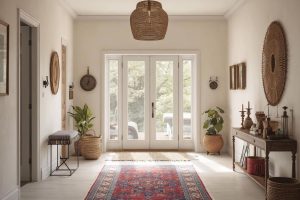
- Entryway: a vintage rug, a woven bench, and a few hooks for hats and bags.
In shared or open-plan homes, repeat a few elements, such as the same terracotta tone, a type of rattan, or brass accents, so each zone feels connected.
Boho in Small Spaces and Rentals
Bohemian style works well in small apartments and rentals because so much of it is portable.
Removable Layers
Textiles, rugs, plants, and lighting can all move with you. Use peel-and-stick wallpaper, plug-in wall lights, and tension rods for curtains or a canopy. Large woven wall hangings cover bare walls without many nail holes.
Keeping Small Rooms Light
In a small room, keep walls and large furniture light, and let color arrive through cushions, a rug, and art. Choose leggy rattan or cane pieces that show the floor, and use mirrors to bounce light. Storage baskets, trunks, and poufs with hidden compartments keep clutter under control.
Bohemian Compared With Similar Styles
Bohemian style overlaps with several other relaxed looks, and knowing the differences helps you choose pieces with confidence.
Boho vs. Eclectic
Eclectic design mixes periods and styles with a planned, often more polished approach. Bohemian rooms are also eclectic, but they lean toward handmade textiles, global crafts, plants, and a more casual, lived-in feel.
Scandinavian rooms share boho’s love of natural wood and light walls but keep pattern and accessories to a minimum. Coastal style shares rattan and jute but favors breezy blues and whites. A “Scandi boho” or “coastal boho” room borrows boho’s textures and plants while keeping the calmer palette of the other style.
Boho vs. Maximalism
Maximalism embraces abundance, bold color, and dramatic pattern, often with a glamorous edge. Bohemian rooms can be maximal, but their richness comes from worn, handmade, and natural materials rather than gloss and gilt, and the overall mood stays easygoing.
Common Mistakes to Avoid
The relaxed nature of bohemian style can tip into clutter. A few habits keep it fresh.
Collection Versus Clutter
Edit regularly. Group similar objects together, leave some empty space on shelves and walls, and store what you are not displaying. Rotating pieces seasonally keeps the room fresh without adding more.
Too Many Colors and Patterns
Repeat a limited set of colors across the room and anchor busy patterns with solid textured fabrics. If a room feels chaotic, remove one pattern at a time until it settles.
Forgetting Comfort and Function
Low seating should still be comfortable for guests of all ages, so include at least one sofa or chair at standard height. Rooms also need clear walkways, a place to set down a drink, and good task lighting for reading.
Spending in the Wrong Places
Invest in a few key pieces, like a good sofa or a quality rug, and fill in with flea market finds, secondhand furniture, and simple projects such as painting a dresser or making a macramé hanger.
Conclusion
Bohemian style is about creating a home that feels personal, relaxed, and full of stories. Layered textiles, warm earth tones, collected furniture, plants, and soft lighting work together to create rooms that invite you to settle in.
Start with a neutral base and add pieces slowly, choosing what you love and editing as you go. Over time, your home will become a true reflection of your travels, interests, and creativity.
Frequently Asked Questions
More Bohemian Style Decor
- Bohemian Style Bedroom: Expressive Tranquility and Vibrant Comfort
- Bohemian Style Living Room: Embracing Diverse Warmth and Creativity
- Bohemian Style Kitchen: Culinary Spaces Infused with Boho Vibes
- Bohemian Style Bathroom: Relaxing Retreat with Artistic Flair
- Bohemian Style Entryway: Artistic First Impressions with Free-Spirited Vibes